Creating a Balanced Lighting Scheme With Overhead, Task, and Backlighting
You need all three layers-overhead, task, and backlighting-for a balanced lighting scheme that reduces eye strain and boosts focus. Use dimmable ceiling LEDs (2700K–3000K) for even ambient light, add adjustable desk lamps with 90+ CRI for precision work, and install LED strips behind monitors to soften shadows. Avoid glare with shielded bulbs and diffusers, and keep color temperatures consistent. Get the layering right, and you’ll see the difference in comfort and clarity by day and night.
Notable Insights
- Combine overhead, task, and backlighting to create depth and visual comfort in layered lighting schemes.
- Use dimmable LED overheads with diffusers for uniform ambient light at 2700K–3000K color temperature.
- Position adjustable task lights above and behind the work surface to reduce glare and eye strain.
- Install LED strip backlighting behind monitors to minimize shadows and balance screen brightness.
- Maintain consistent color temperature and use 90+ CRI, flicker-free lights across all layers for cohesion.
Define the Room’s Purpose First
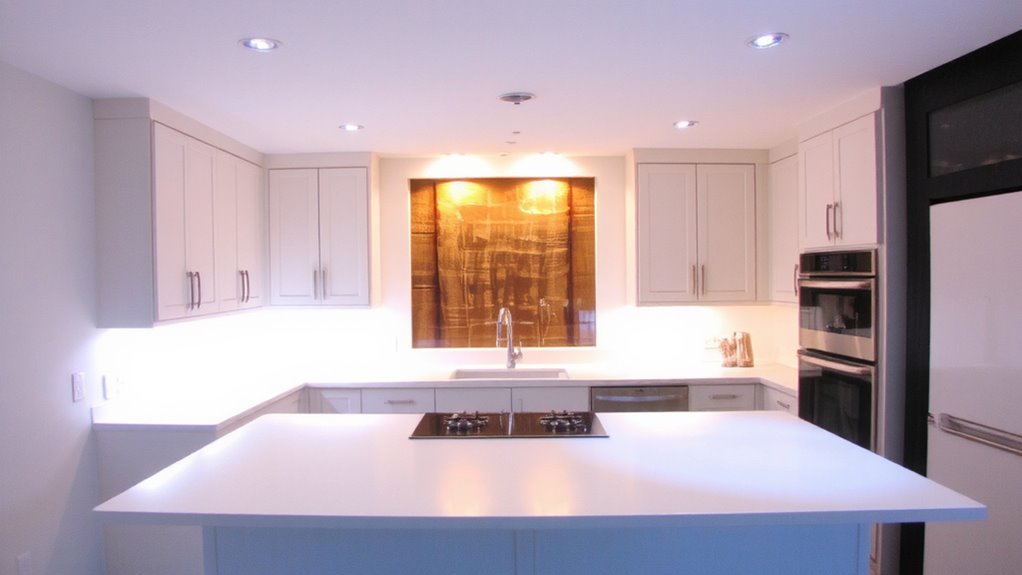
If you’re setting up a space where focus and comfort matter, the first thing to get right is the room’s purpose-because a home office that doubles as a guest bedroom needs a different lighting plan than a dedicated workspace. Clearly defining the room function shapes everything from fixture types to placement. For instance, a hybrid room benefits from layered lighting zones: ambient light for welcoming guests, task lighting near the desk, and dimmable options to shift moods. Ignoring this step risks glare, eye strain, or underlit corners. Be honest about how often the space changes use-frequent switching demands flexible controls and reversible setups. Use painter’s tape to mock up furniture placement and trace likely lighting zones before wiring. There’s no one-size-fits-all, but getting room function right upfront cuts costly retrofits later. A well-organized workspace starts with choosing the right foundation, such as an ergonomic home office desk that supports both comfort and productivity.
Install Overhead Lights for General Illumination
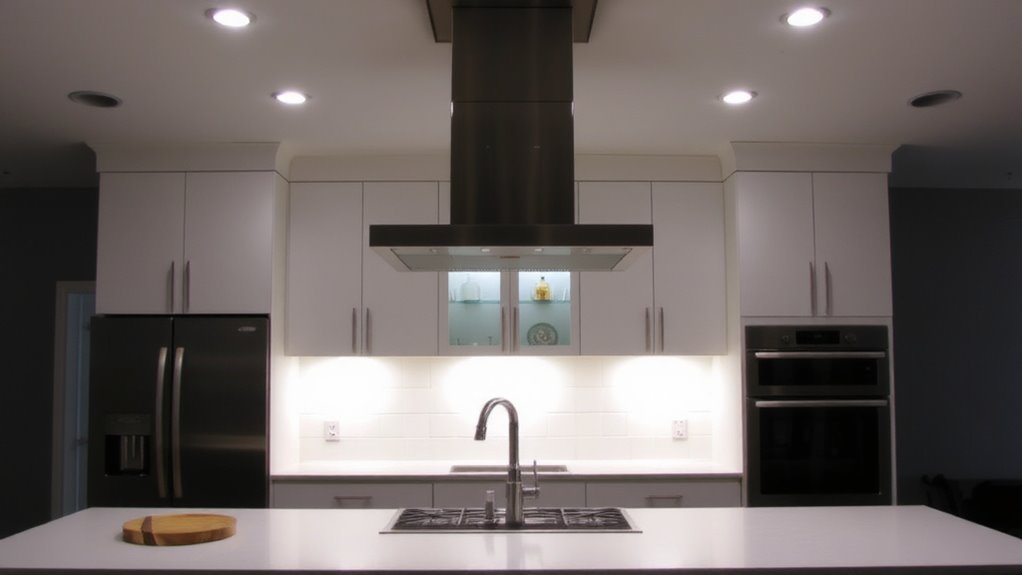
While ambient lighting sets the foundation for any room, installing overhead lights properly guarantees even, functional illumination without relying on floor or desk lamps alone. You’ll want to choose ceiling fixtures that match the room’s scale-too small, and they underperform; too large, and they overwhelm. Mounting height matters: in most spaces, keep fixtures 7 to 9 feet from the floor to avoid shadows and glare. For vaulted ceilings, use semi-flush mounts or pendants with adjustable rods to maintain balance. LED ceiling fixtures with diffusers provide even light while reducing harshness. Look for models with a minimum 2,700–3,000K color temperature for warmth, and check lumens-not watts-to verify adequate output. Remember, dimmable options add flexibility, but confirm compatibility with your switches. Overhead lighting works best when layered, so don’t count on it to handle every task. For optimal performance in office environments, consider selecting from the best office ceiling lights that combine efficiency, durability, and balanced illumination.
Add Task Lighting Where You Work and Read
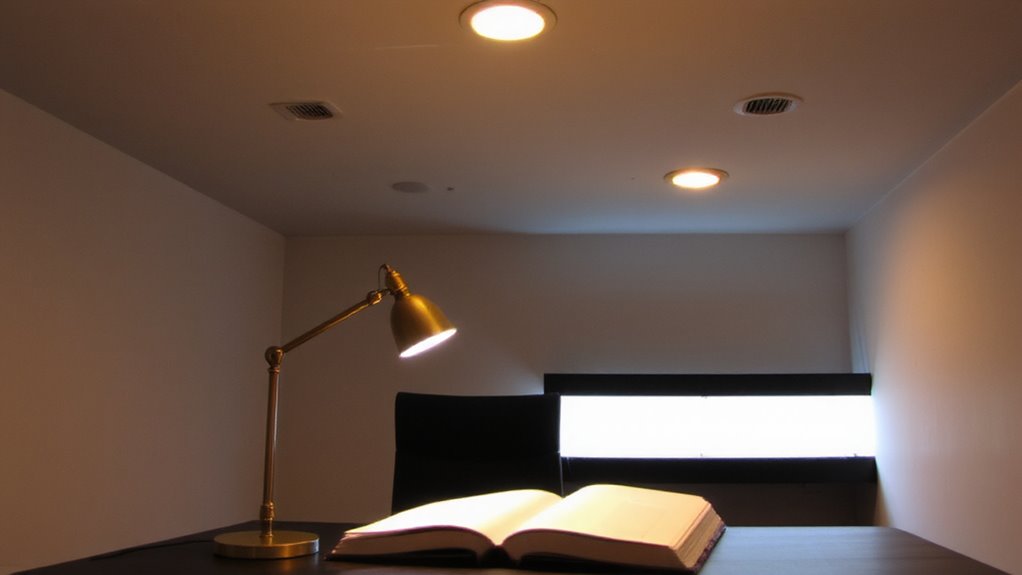
Task lighting isn’t just about adding another lamp-it’s about giving your eyes reliable support exactly where you need it. You’ll reduce eye strain and improve focus by placing desk lamps with adjustable arms or swing heads over workspaces, where light can be directed precisely. For reading nooks, choose lamps with warm-color temperature LEDs (2700K–3000K) and dimming controls to match ambient levels. Look for models with a CRI above 90 to guarantee text contrast and color accuracy. Desk lamps with shielded bulbs prevent glare, especially important if you wear glasses. While many budget options exist, they often lack durability-check for metal housings and at least a 3-year warranty. Avoid overly bright settings; task lighting should complement overheads, not overpower them. Proper placement-just above and behind the work plane-is key for even coverage. For top-performing options, consider lamps from the best office table lamps roundup to ensure quality and functionality.
Use Accent Lighting to Soften and Define Spaces
Though often overlooked, accent lighting plays a vital role in shaping the mood and structure of your workspace without overwhelming it. You can use wall sconces to add soft, directional light that defines zones and reduces harsh contrasts. They’re ideal when placed beside desks or shelves, but avoid bulky designs that encroach on usable space. For art illumination, slim track heads or adjustable picture lights work well-they highlight textures and frames without glare, provided you aim them carefully. LED models with 2700K–3000K color temperature mimic warm ambient light and preserve visual comfort. Install dimmers to control intensity, since too-bright accents defeat their purpose. While accent lights aren’t functional for reading or tasks, they subtly improve depth and warmth. Just remember: overuse creates clutter. Stick to one or two focal points per room to maintain clarity and balance.
Layer Lights for Balance and Comfort
You’ll get the best results when you combine accent lighting with broader layers to create a fully balanced workspace. Light layering-mixing overhead, task, and backlighting-ensures visual comfort and reduces eye strain during long work sessions. Overhead fixtures like matte-finish ceiling panels provide even ambient light, while adjustable desk lamps target specific areas without glare. Backlighting, such as LED strips behind monitors, softens shadows and improves contrast. Use diffusers to soften harsh sources and aim for 300–500 lux on work surfaces. While layered setups enhance focus, overdoing it can cause clutter or conflicting color temperatures. Stick to 2700K–4000K for consistency. Quality matters: look for flicker-free circuits, 90+ CRI bulbs, and dimmable options. Some brands offer 5-year warranties, especially on commercial-grade units. Test configurations over a week-adjustments often reveal what specs alone won’t.
Fix Common Lighting Mistakes
When poorly designed, lighting can undermine even the most carefully arranged workspace, so addressing common mistakes early saves both time and strain. You’ll want to prioritize glare reduction by angling task lights downward and using diffused bulbs-matte shades and indirect fixtures help, especially near screens. For shadow elimination, position lights closer to your work surface and layer multiple sources to fill dark zones. Avoid relying solely on overheads; they create harsh contrast and eye fatigue. Instead, combine adjustable desk lamps with wall-mounted fixtures to balance brightness. Watch bulb temperature: 3000K–4000K gives a natural tone without cool harshness. Check lumens, too-450 to 800 is ideal for detailed tasks. Some LED models offer dimming and color tuning, but test them first; inconsistent performance varies even within brands. Good lighting isn’t about price-it’s smart placement and measurable output.
Lighting Layouts by Room: Kitchen, Living Room, Bedroom
While every room serves a distinct purpose, choosing the right lighting layout comes down to matching function with atmosphere-especially in high-use areas like the kitchen, living room, and bedroom. In the kitchen, layer overhead lighting with under-cabinet task lights and pendant lamps over islands to balance brightness and style. Natural light should complement-never conflict-with artificial sources, so position lights where shadows are minimized. For the living room, combine recessed ceiling lights with floor lamps and accent lighting; dimmable options let you shift from lively to relaxed with ease. Bedrooms benefit from soft, layered lighting-use wall sconces or adjustable fixtures near beds to reduce glare at night. Avoid relying solely on ceiling fixtures; they often create harsh contrast. Pendant lamps work well but scale them to room size-oversized ones can overwhelm. Always test bulb temperature and brightness in real conditions before finalizing.
On a final note
You’ll get the best results by layering overhead, task, and accent lights to match each room’s use. Balance brightness with dimmers and proper placement to avoid glare and shadows. While LED fixtures save energy and last longer, check color temperature-2700K to 3000K feels warm and inviting. Hardwired options offer permanence; plug-ins give flexibility. Always test light levels at different times, since real-world use varies.