Creating a Desk Nook Within a Built-In Window Seat
Yes, you can turn your window seat into a desk nook-just raise it to 28–30 inches so your elbows stay at 90 degrees when typing. Use a solid wood or HPL surface cut to fit, at least 18 inches deep and 1 inch thick for stability. Add a swing-arm LED lamp opposite natural light, mount shelving into studs, and include pull-out trays or hidden storage. Watch weight limits and test lighting at different times; small tweaks make a big difference. There’s more to get right for long-term comfort and function.
Notable Insights
- Raise the window seat to 28–30 inches to align with proper desk height for comfortable work posture.
- Set the monitor at eye level and maintain a 90-degree elbow angle to reduce neck and arm strain.
- Choose a solid wood or HPL desk surface cut to fit the window seat, ensuring at least 18 inches of depth.
- Install custom shelving, hidden compartments, or pull-out trays to maximize storage in the confined space.
- Use a swing-arm LED lamp and ambient lighting, adjusting placement to minimize glare throughout the day.
Can Your Window Seat Be a Desk?
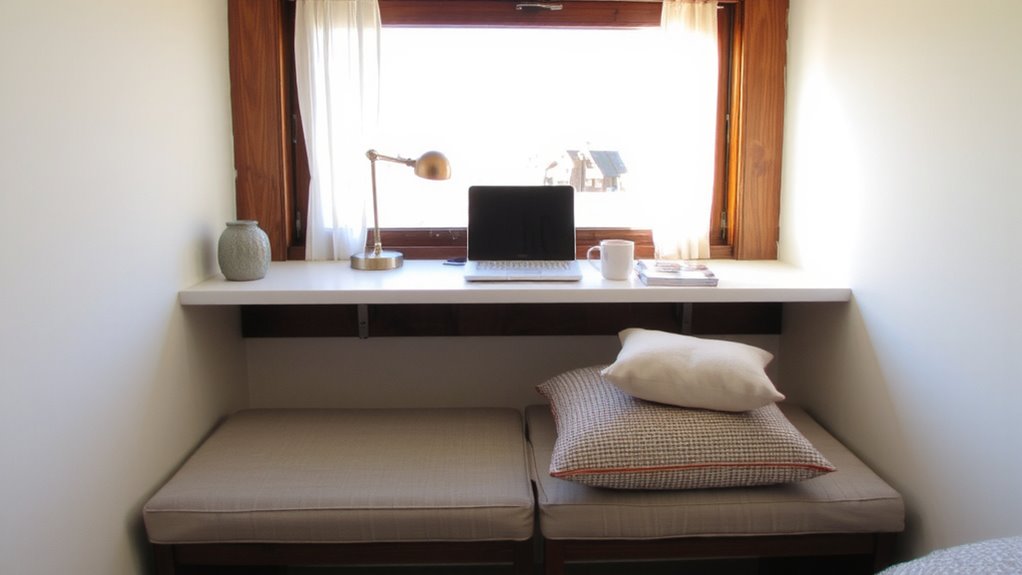
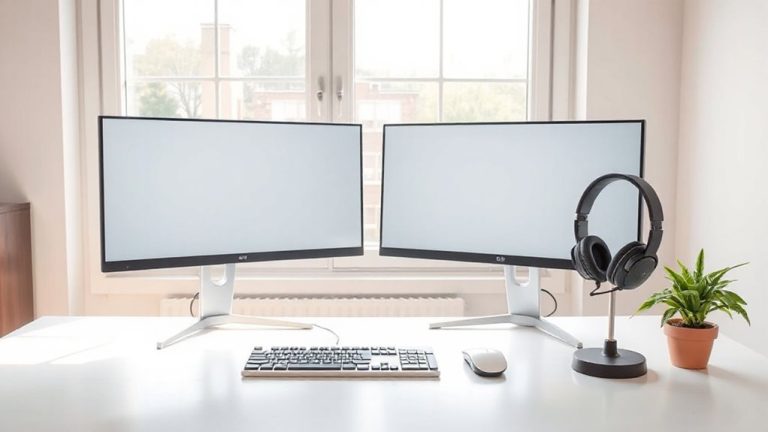
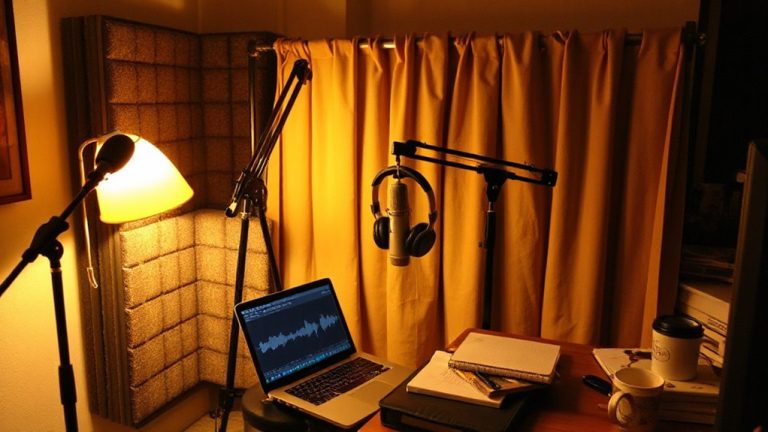
Could your window seat do double duty as a desk? Yes, if you prioritize ergonomic positioning and noise reduction. Raising the seat to 28–30 inches allows a proper desk height, letting your elbows rest at 90 degrees while typing. Add a firm cushion for support and slide a desktop securely across the sill. Position your monitor at eye level to prevent neck strain. The surrounding walls naturally provide noise reduction, especially with double-pane windows or added acoustic panels. But consider light control-glare can strain your eyes, so use adjustable blinds. Limited legroom and outlet access are common trade-offs. Built-in shelving helps with storage, but check weight limits before loading gear. Test the space with a folding desk first. Not every window seat works, but with careful adjustments, many can become quiet, efficient work zones-just confirm measurements and daily comfort before committing. For even better workspace ergonomics, consider pairing your setup with one of the top home office desks recommended for comfort and functionality.
Pick the Right Desk Surface
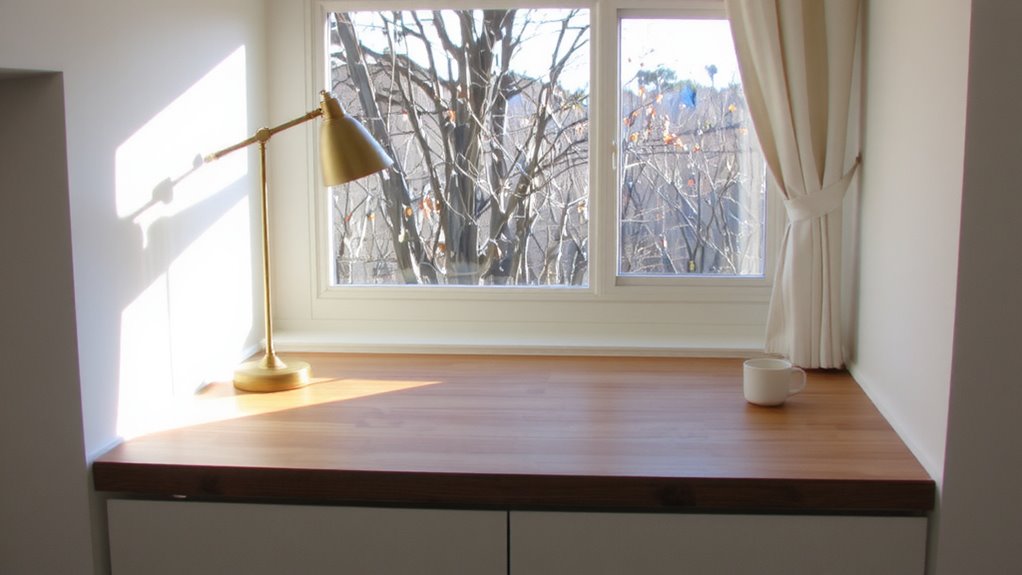
While your window seat offers a scenic spot for work, choosing the right desk surface means balancing fit, function, and durability-so go with a custom-cut solid wood or high-pressure laminate (HPL) top if you want long-term stability and style. Your material selection affects not just looks but wear resistance; solid wood feels warm but needs sealing, while HPL resists scratches and moisture with minimal upkeep. You’ll need precise surface dimensions to guarantee the desktop fits the nook without overhang that crowds walkways or hinders seating. Measure the window seat’s depth and width carefully-ideally leaving at least 18 inches of depth for laptop and notebook space. Avoid standard desktops unless they match your measurements exactly. Thicker tops (1 to 1.5 inches) add sturdiness, but confirm your supports can handle the weight. Each material has trade-offs: beauty versus maintenance, cost versus longevity. Choose based on your daily use and how much you value upkeep versus endurance.
Build Storage Into Your Nook
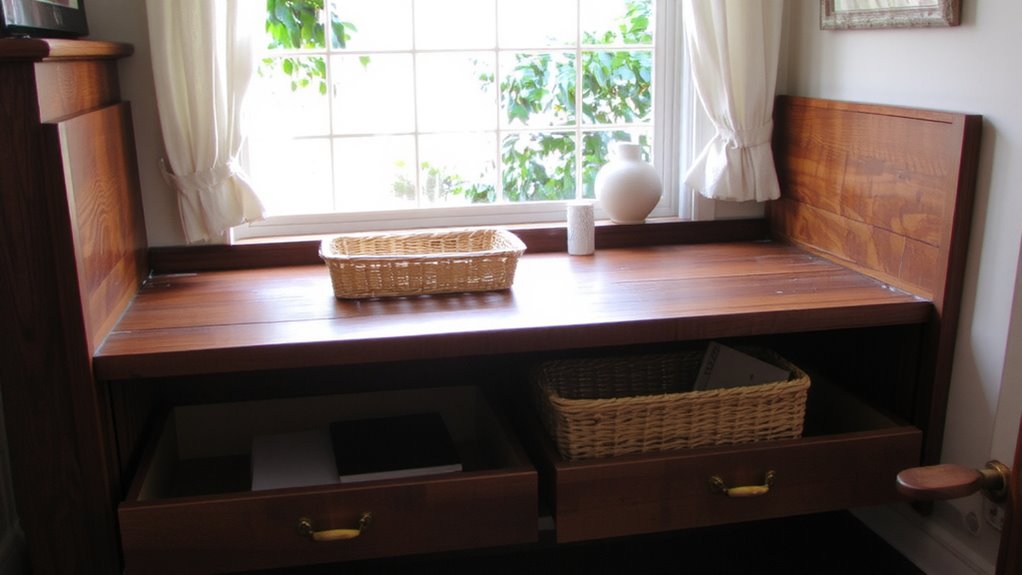
If you’re making the most of your window seat as a workspace, integrating storage directly into the nook is a smart move that keeps essentials within reach without cluttering your surface. Built-in custom shelving maximizes vertical space and suits odd dimensions most off-the-shelf units can’t. For discreet organization, consider hidden compartments under the seat or behind lift-up panels-ideal for stashing notebooks or cords. While permanent features add value, they require precise measurements and structural planning.
| Feature | Benefit |
|---|---|
| Custom shelving | Fits unique window seat dimensions |
| Hidden compartments | Keeps items secure and out of sight |
| Drawer inserts | Improves small-item organization |
| Pull-out trays | Adds workspace without footprint |
| Lidded bins | Reduces visual clutter |
Weigh accessibility against remodeling effort-once installed, changes are costly.
Light It Right for Work and Reading
Good lighting makes or breaks a window seat workspace, even if you’ve already built in shelves and hidden storage. You’ll need both task lighting and ambient glow to stay productive and comfortable. Position a swing-arm wall lamp with a 400-lumen LED on the side opposite your natural light source to reduce glare-this gives sharp illumination right where you write or type. Make sure the fixture has a dimmer so you can adjust brightness; 2700K to 3000K color temperature works best for reducing eye strain. Complement it with a small floor lamp behind you or LED strip lights under the shelf for ambient glow, which balances contrast and creates a steady visual field. Avoid bare bulbs-they cause fatigue. Test placements during morning and evening hours, since natural light shifts. Poor positioning leads to shadows or glare, even with high-CRI lights.
Organize Vertically to Save Space
A window seat workspace only works when you make the most of vertical space-otherwise, even a deep sill crowds fast. You’ll want to install wall shelving just above desktop height to keep books, notebooks, and supplies within reach but off the surface. Opt for shelves anchored into studs-they support up to 50 pounds, unlike drywall anchors, which can fail over time. Floating shelves save floor space and simplify cleaning. For lightweight items like headphones or charging cables, hanging baskets clipped to a rail or side wall offer quick access without damaging walls. Just make sure baskets don’t swing into your arm space. Avoid overloading high shelves-clutter creates visual noise and slows focus. While vertical storage maximizes efficiency, poor placement can strain your neck or back. Keep frequently used items at eye to chest level. Measure clearance before mounting anything. A well-chosen Top Desk Accessories Picks can enhance both function and aesthetics in your compact workspace.
Make It Comfortable and Yours
Your window seat desk should feel like an extension of you-comfortable enough for long sessions and styled to reflect your taste without sacrificing function. Start with firm, high-density foam for cozy cushions that support posture but don’t sag over time; cover them in durable, washable fabric to handle daily wear. Add personal decor like framed photos, a small plant, or meaningful artwork, but keep surfaces clutter-free to maintain workspace efficiency. Use adhesive hooks or removable strips for decor to preserve walls. A plush throw blanket can boost comfort during breaks but store it when not in use. Avoid deep cushions-they reduce legroom and strain your back. Test fabric durability ratings (look for 15,000+ double rubs) if used daily. Balance style and use: your space should inspire focus, not distract from it.
On a final note
Yes, your window seat can become a functional desk, especially if you use a ¾-inch thick solid wood or plywood surface mounted securely to brackets for stability. Build shallow drawers or open shelves underneath for supplies, and add LED tape lighting under the lip to reduce glare. A slim, mesh-back chair or floor cushion works if space is tight, but limit sessions to 90 minutes without back support. Measure legroom first-aim for 24 inches depth minimum. Natural light helps, but pair with adjustable task lighting for evening work. Avoid sealing the space entirely; airflow and easy access matter. Test the setup with your laptop and charger for a week before finalizing.