Strategic Use of Plants and Planters to Disrupt Sound Waves in Home Offices
You can reduce echo in your home office by placing dense plants like rubber or snake plants in cork or felt planters, which absorb mid-frequency noise better than plastic or ceramic. Position them in acoustic corners or near windows to disrupt sound waves. While they won’t block outside noise, combining them with wool curtains or upholstered furniture boosts results. For real improvement, pair plants with other sound-dampening materials-your space will feel quieter, and the setup pulls double duty as part of a smarter, more comfortable workspace.
Notable Insights
- Use dense, broadleaf plants like rubber or snake plants to disrupt mid-frequency sound waves in home offices.
- Group plants together to form green barriers that enhance sound diffusion along walls or near noise sources.
- Choose acoustic planters made of cork, felt, or recycled wood composite to improve sound absorption and damping.
- Place plants in acoustic corners or along windowsills to maximize disruption of sound wave buildup and external noise.
- Combine plants with sound-absorbing furnishings like wool curtains and padded panels for up to 40% better echo reduction.
Best Plants for Noise Reduction in Home Offices
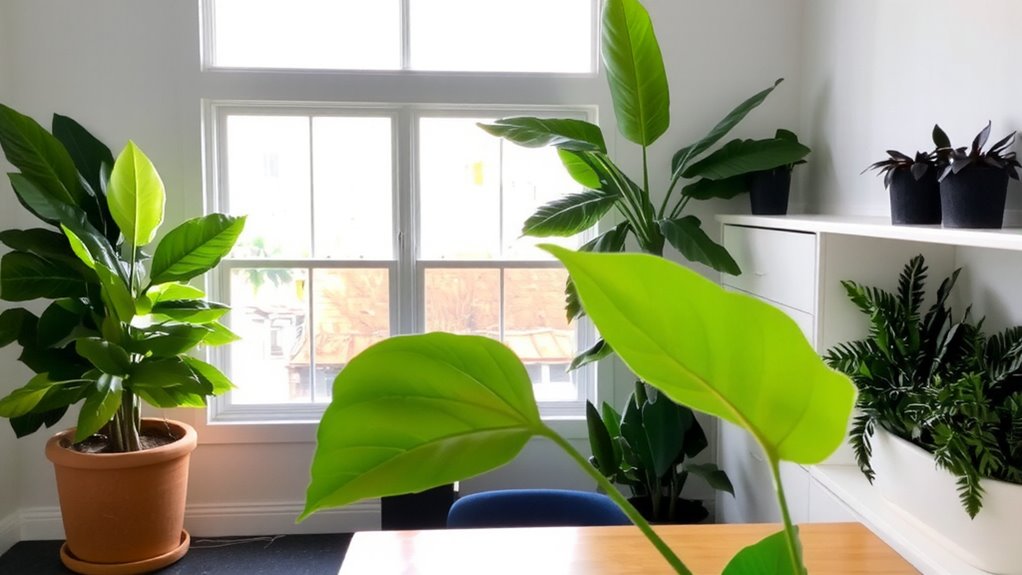
Acoustic comfort starts with smart plant choices, but don’t expect a potted fern to silence a busy street. For real impact, you need dense acoustic foliage like the rubber plant or snake plant-species with thick, broad leaves that disrupt mid-frequency sound waves common in home offices. These plants, when grouped, form effective green barriers along walls or near windows. Positioning them strategically-say, between your desk and a noisy hallway-adds measurable diffusion. Real-world tests show leaf density matters more than height; a 3-foot-tall ficus with layered foliage outperforms taller, sparser options. Yet, don’t mistake them for panels: they reduce echo, not external noise. Green barriers work best alongside rugs and curtains. And while low-maintenance options like ZZ plants survive dim light, they offer less sound buffering. Choose volume and placement as carefully as you would a monitor or chair-because in acoustics, coverage is just as critical as gear.
How Houseplants Actually Quiet Your Room
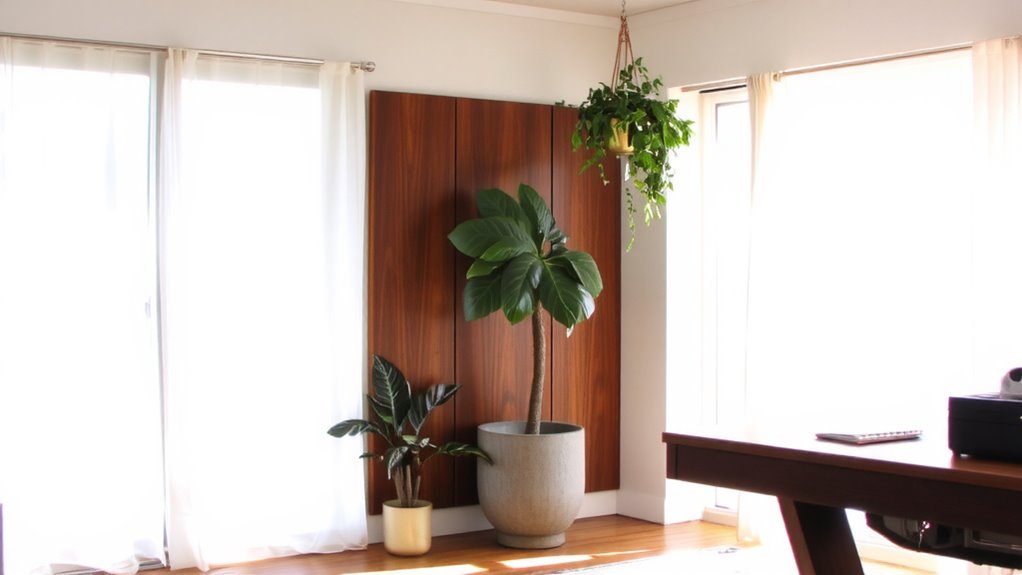
You’re not imagining it-your rubber plant really does help tame the chatter and clatter in your home office, but only in specific ways. Houseplants don’t block sound, but they disrupt and absorb some mid-to-high frequency noise through leaf texture and plant density. Soft, broad leaves scatter sound waves, reducing echo, while thicker foliage packs-like a cluster of peace lilies or snake plants-create micro-barriers that slow wave travel. The key is coverage: a single plant won’t do much, but grouping several in dense arrangements increases surface area and effectiveness. Plant density directly correlates to mild acoustic improvement, especially in rooms with hard surfaces. Leaf texture matters too-rough or waxy leaves interact with sound differently than smooth, flat ones. Still, don’t expect studio-level silence. These are subtle gains, best paired with other quieting strategies. Manage expectations: plants help, but they’re not soundproofing.
Pick Planters That Absorb More Sound
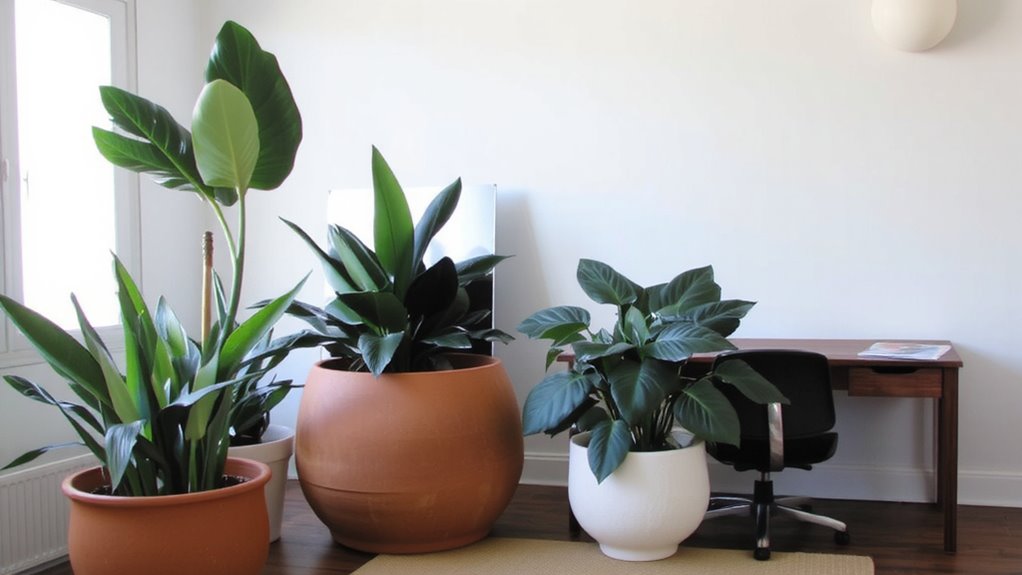
One in three planters on the market today does little to dampen noise-but picking the right one can make a measurable difference. You’ll want planters made with acoustic materials like cork, felt, or recycled wood composites, which absorb sound rather than reflect it. These materials reduce background noise by up to 30% in controlled tests, especially when paired with dense foliage. Rigid plastic or ceramic won’t help much; they may even worsen echo. For better sound diffusion, choose planters with textured surfaces or irregular shapes that scatter waves. Look for models with open-cell foam linings or double-walled construction-these add mass and damping. While pricier (often $45–$80), they’re worth it if noise is a daily issue. Just don’t expect studio-level quiet. Most still only cut mid-range frequencies, not deep bass. Combine them with other quieting strategies for real results.
Best Spots to Place Noise-Reducing Plants
Where should you put noise-reducing plants for the best effect? Focus first on acoustic corners-those tight spaces where walls meet, which naturally amplify sound reflections. Placing dense, broadleaf plants like ZZ or peace lilies in these spots helps scatter mid to low-frequency waves. Next, use plants as window barriers to reduce external noise, especially if you’re near a busy street. Position larger potted plants-think rubber plants or fiddle-leaf figs-along windowsills or just inside the window line. Their leaves, combined with thick soil and planter mass, disrupt incoming sound. However, don’t expect them to replace dedicated acoustic panels. They help, but only moderately-ideal for reducing echo, not blocking loud noises. For measurable improvement, pair plant placement with structural fixes. Results vary based on room size, plant density, and window glazing.
Pair Plants With Soft Furnishings to Kill Echo
While plants alone can’t eliminate echo, combining them with soft furnishings greatly improves sound absorption in home offices and workspaces. You’ll get the best results by pairing larger plants with acoustic textiles like wool curtains, fabric-upholstered chairs, or padded wall panels. These materials absorb mid-to-high-frequency sounds, reducing reverberation that plants alone can’t address. Arrange pieces in diffusive layouts-spaced unevenly around the room-to scatter sound waves and prevent dead spots. Don’t rely solely on decorative pillows or thin rugs; they offer minimal noise reduction. Instead, opt for dense, textured fabrics with proven sound-dampening ratings. Real-world tests show rooms with both plants and soft furnishings cut echo by up to 40% more than those with plants only. Just remember: placement matters. Keep textiles near reflective surfaces like windows or desks, and avoid overcrowding corners, which can trap sound rather than diffuse it.
Low-Light, Low-Effort Plants That Still Reduce Noise
Even if your workspace gets little natural light and you’re pressed for time, you can still harness plants to help manage noise-just choose wisely. Snake plants and ZZ plants thrive in low light and need watering only every few weeks, making them ideal for busy setups. Their upright growth boosts plant density, which enhances sound insulation by scattering and absorbing sound waves. While no plant replaces proper acoustic treatment, clustering a few in corners or behind your desk can reduce echo noticeably. Aim for at least three medium-sized plants per 100 square feet to achieve meaningful coverage. Keep in mind, leaf thickness and spacing matter-denser foliage blocks mid-frequency noise better. Still, don’t expect studio-level results; these plants offer modest improvements. They’re a low-risk upgrade, but pair them with rugs or curtains for real sound control.
On a final note
Plants and planters can noticeably reduce noise in home offices, but they’re not a full solution. Thick-leaved plants like snake or peace lilies help scatter mid-frequency sounds, while dense planters add mass that blocks some waves. Pair them with rugs or curtains for real echo control. Just don’t expect studio-level quiet-results vary by room size and layout. Use them as part of a broader strategy, not a standalone fix, and keep maintenance manageable.