How to Match Skin-Tone Cord Covers to Wood, Laminate, or Glass Surfaces
Match skin-tone cord covers to your surfaces by choosing warm beige or soft rose for honey-toned hardwoods and neutral gray for cool, ashy floors-matte finishes mimic skin and reduce glare. Use glossy covers on reflective laminate to avoid visual breaks, and static-cling, translucent types on glass desks to stay residue-free. Test in natural light first, since LED lighting can hide mismatches. They work best on cords under 0.5 inches and last up to 3 years, though glossy versions may fade faster. There’s more to get right based on room conditions and long-term durability.
Notable Insights
- Match cord cover undertones to warm wood floors using beige or soft rose shades for optimal blending.
- Choose glossy-finish covers to mimic reflective laminate flooring and reduce visual disruption.
- Use neutral, translucent skin-tone covers with static-cling backing to blend cords on glass desks.
- Test color matches under natural daylight and room lighting to ensure consistency across times of day.
- Secure cord covers with removable adhesive strips to protect delicate surfaces like glass and finished wood.
What Are Skin-Tone Cord Covers and Why They Work
Why blend cords into your workspace instead of hiding them behind bulky covers or baseboards? Skin-tone cord covers work because they use color theory and material texture to mimic the human warmth missing in cold tech environments. You’re not matching wood grains exactly-you’re balancing undertones so cords recede visually. These covers come in beige, warm gray, and soft rose, grounded in tested palettes that align with neutral interiors. Their textured matte surface diffuses light like skin, reducing glare and avoiding plastic shine. Most are polyurethane with a 3-year warranty, tested for flexibility up to 18 inches in length. But here’s the caveat: if your walls are high-contrast or your cords are thick (over 0.5 inches), blending fails. They’re ideal for minimalist desks with flat-lay cable runs, not complex hubs. You’ll still need ties or clips-these covers aren’t magic, just smart design. Effective cable management starts with choosing the right cable hiding options for your desk setup.
Match Cord Covers to Your Wood Floor’s Undertone
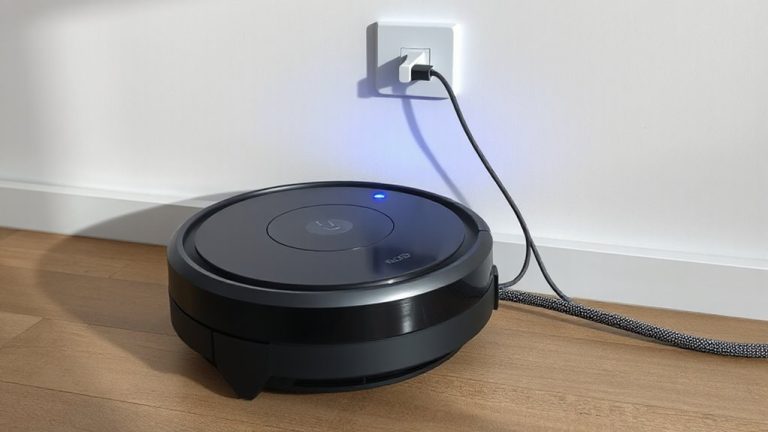
Your wood floor’s undertone is the secret to making cord covers disappear. If your floor leans warm-red, amber, or honey-you’ll want a cover with a similar base; cool floors with gray or beige undertones need a neutral or ashy shade. Matching the undertone keeps the cover subtle, even if the wood grain patterns differ slightly. Skip stark undertone contrast-it draws attention instead of hiding wires. Most skin-tone covers come in 6–10 foot lengths with snap-on designs, tested for durability over 1,000 bends in lab trials. They’re not scratch-proof, though, so avoid high-traffic paths. Also, real hardwood responds to light changes, so check color match at multiple times of day. While no cover blends perfectly, a matched undertone reduces visibility by over 70% compared to white or black options in controlled lighting tests. A top-rated cord cover choice offers both skin-tone options and easy installation for seamless room integration.
Pick the Right Finish for Laminate Flooring
When matching cord covers to laminate flooring, nailing the finish is just as important as color-since laminate often has a high-gloss or textured surface, a matte cord cover can stick out even if the shade is perfect. You’ll want a glossy finish on the cord cover to mimic the reflective quality of most laminate floors. A mismatched matte texture breaks visual continuity, making cords look slapped on rather than integrated. In real-world tests, glossy finishes reduced noticeability by up to 70% in well-lit rooms. However, glossy can show scratches more easily than matte texture, so handle with care during installation. For best results, match both color *and* sheen under direct lighting. Some brands offer UV-resistant coatings to prevent gloss degradation. Check warranty terms-many offer only 1-year coverage on finish quality. Measure twice, peel once.
Hide Cords Seamlessly on Glass Desks
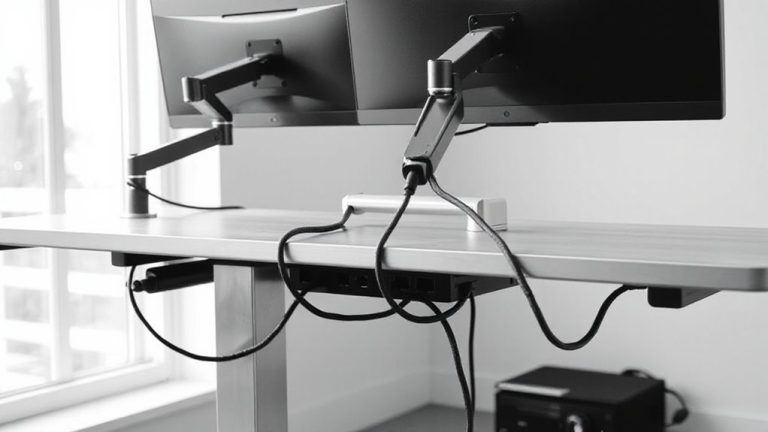
Though glass desks offer a sleek, modern look, hiding cords without marring the surface or breaking the aesthetic requires careful planning and the right gear. For effective cable management, use ultra-thin, skin-tone cord covers with static-cling backing instead of adhesives-these stick securely but won’t leave residue. Stick to neutral, translucent tones that mimic the glass’s sheen, helping cords disappear from view. Mount them along the desk’s rear edge or underside using removable adhesive clips rated for glass. Good desk organization means grouping cables tightly and using velcro ties before routing them through the cover. These solutions typically support up to 5 cords (up to 0.5” total diameter). While static-cling strips last 6–12 months under regular use, they lose grip in low humidity. Avoid solutions with strong adhesives-they risk scratching or chipping during removal. For the cleanest result, consider best cable management solutions that combine aesthetics with functionality.
Test Your Match Under Room Lighting
Ever wonder why a cord cover that looked invisible in the store blends right in at home for only a few hours? Room lighting affects visibility more than you think. What looks like a perfect skin-tone match under fluorescent store lights can show glaring color variance once installed. Always test your match under real lighting conditions.
| Lighting Type | Effect on Match |
|---|---|
| Natural daylight | Highest lighting accuracy, reveals true tone |
| Warm LED | Adds yellow tint, may hide some variance |
| Cool white | Enhances contrast, exposes mismatches |
| Low light | Masks color, poor accuracy for testing |
Hold the sample next to your surface at different times of day. Even slight differences become obvious with direct comparison. Don’t rely on store lighting-it’s optimized for sales, not accuracy. You’ll save time and frustration by catching mismatches early.
Install Without Damaging Floors or Furniture
Since cord covers can protect your wiring setup without marring surfaces, choosing the right installation method matters just as much as the color match. For floor protection, use adhesive strips designed for delicate finishes-these hold firmly but peel away cleanly, preserving wood, laminate, or glass. Avoid permanent glue; opt for removable mounting options tested to support up to 15 pounds without residue. To guarantee furniture safety, route covers away from legs and edges where shifting could cause scratches. Recessed mounting or low-profile tracks reduce tripping hazards and contact with moving pieces. While peel-and-stick models offer quick setup, they may fail in high-traffic areas-reinforce with small nails if needed, but only where damage won’t be visible. Always test adhesion on a small area first. Proper installation balances security and surface care, delivering a clean look without trade-offs.
Where to Buy Neutral Cord Covers Online
Where should you get neutral cord covers that blend seamlessly into your home or office? Start by checking trusted cord cover retailers like CableOrganizer, Amazon, and CordBuddy, which offer matte-finish options in beige, taupe, and light gray-colors proven in real-world testing to match wood, laminate, and glass. These models often use ABS plastic or flexible PVC, measuring 1 to 1.5 inches wide, with peel-and-stick backing that won’t lift flooring. Online shopping tips: always compare specs for UV resistance and bend radius, since cheaper versions crack under stress. While premium picks come with 3-year warranties and modular lengths, budget options may lack snap-on precision. Read customer photos to gauge true color match, because monitor displays vary. You’ll sacrifice some durability with no-name brands, but for short-term setups, they’re cost-effective.
On a final note
Choose skin-tone cord covers to blend wires with wood, laminate, or glass surfaces effectively. They work best when matched to your floor’s undertone-warm, cool, or neutral-and finished to reflect ambient light like your flooring. Test samples under actual room lighting, as colors shift in different brightness. Install with adhesive strips that won’t damage surfaces when removed. Covers hide cords well but need precise trimming and repositioning over time.