How to Use Heavy Curtains to Reduce Window-Borne Noise in Home Office Spaces
You can cut 40–50% of window noise with heavy curtains made from dense, multilayered fabrics like mass-loaded vinyl or triple-weave textiles, especially if they have an NRC rating above 0.5. Hang them on ceiling-to-floor rods extending 6–8 inches beyond the frame to seal gaps, and use velcro or magnetic tape for a tight fit. Look for weights between 18–30 oz per square yard-enough to block sound without risking hardware damage. For best results, combine with sealed window cracks and consider trade-offs like reduced light. There’s more to optimizing your setup effectively.
Notable Insights
- Choose heavy, sound-absorbing curtains with an NRC rating above 0.5 for optimal noise reduction in home offices.
- Install floor-to-ceiling, ceiling-mounted rods extending 6–8 inches beyond the window frame to minimize sound leaks.
- Use tightly woven, multilayered fabrics with mass-loaded vinyl backing to block 40–50% of window-borne noise.
- Seal curtain edges with velcro or magnetic tape and allow slight floor pooling to prevent sound gap infiltration.
- Prioritize triple-weave, high-mass curtains like Soundproof Pro or Nicetown for 12–18 dB noise reduction and better focus.
Choose Heavy Curtains That Actually Block Noise
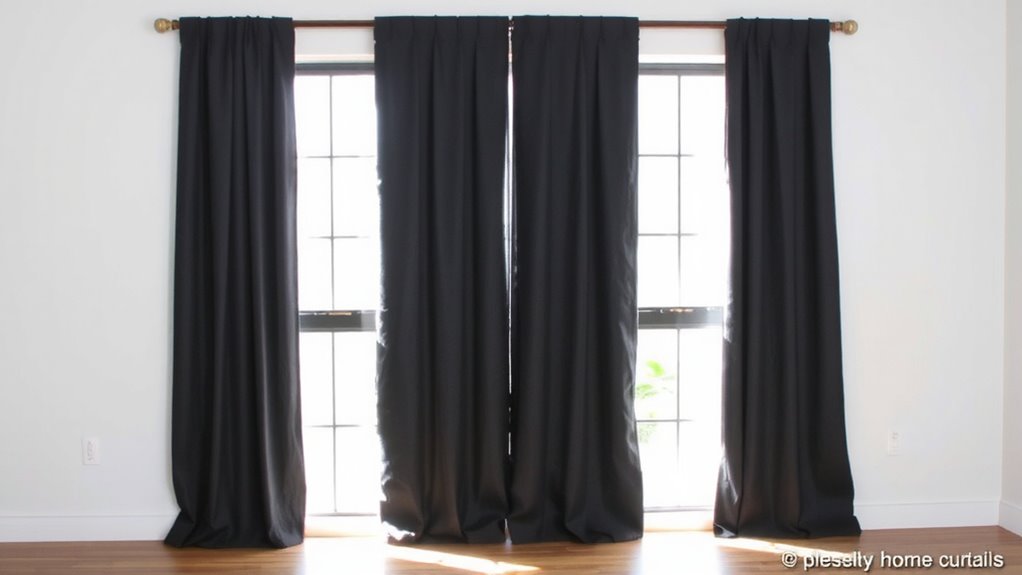
A good number of heavy curtains on the market claim to reduce noise, but only a few actually deliver measurable results-so it’s key to look for ones specifically designed for sound attenuation, not just thickness or blackout features. You need curtains with real acoustic insulation, meaning layers engineered to disrupt sound waves, not just block light. True sound absorption comes from materials like mass-loaded vinyl or multilayered fabrics tested in certified labs. Look for NRC (Noise Reduction Coefficient) ratings above 0.4-this isn’t just marketing, it’s proof of performance. These curtains won’t silence traffic, but they can cut 40–50% of window-borne noise, which matters in a home office. Hang them from ceiling-to-floor rods that extend beyond the window frame to minimize gaps. Just remember: no curtain replaces proper window sealing, and results vary by noise frequency. Read warranty terms closely-some brands offer performance guarantees backed by testing data.
Find the Best Noise-Reducing Fabrics and Weights
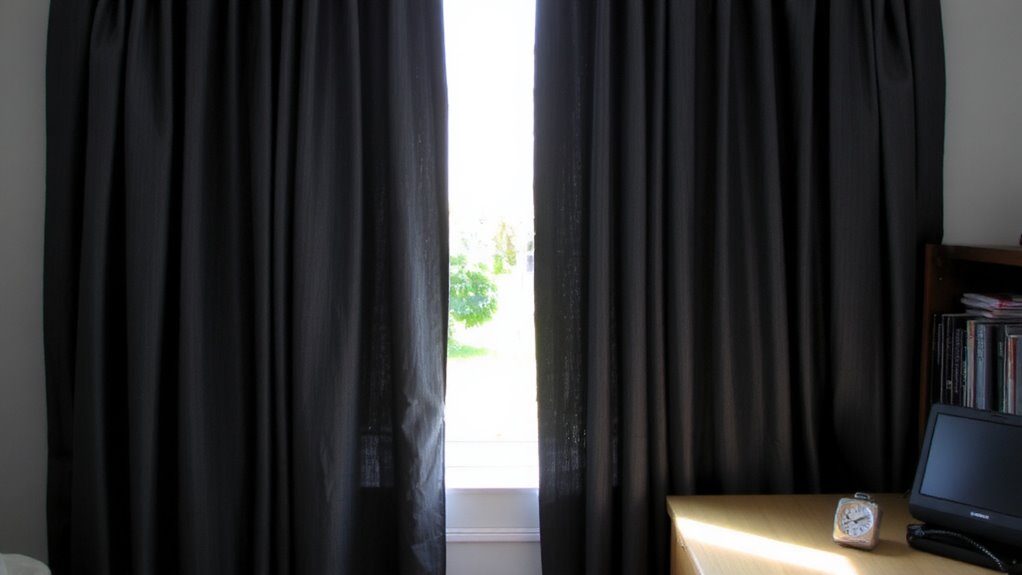
Your best bet for real noise reduction lies in fabrics with both mass and density-think tightly woven, multilayered textiles backed by materials like mass-loaded vinyl or foam interliners. These heavy fabrics act as true sound insulation by blocking and absorbing sound waves rather than just muffling them. Look for curtains labeled with a high Noise Reduction Coefficient (NRC), ideally above 0.5, meaning they absorb over half the sound they encounter. While not as effective as wall-mounted acoustic panels, well-chosen curtains can still reduce noise substantially when properly installed. Most top-performing options weigh between 18 and 30 ounces per square yard. Heavier isn’t always better-excessive weight can strain rods or damage window frames. Also, tightly sealed edges and overlapping panels improve performance. Just know: no curtain eliminates all noise, especially low-frequency sounds like traffic rumble. Use them as part of a broader sound control strategy.
Measure Windows to Maximize Sound Coverage
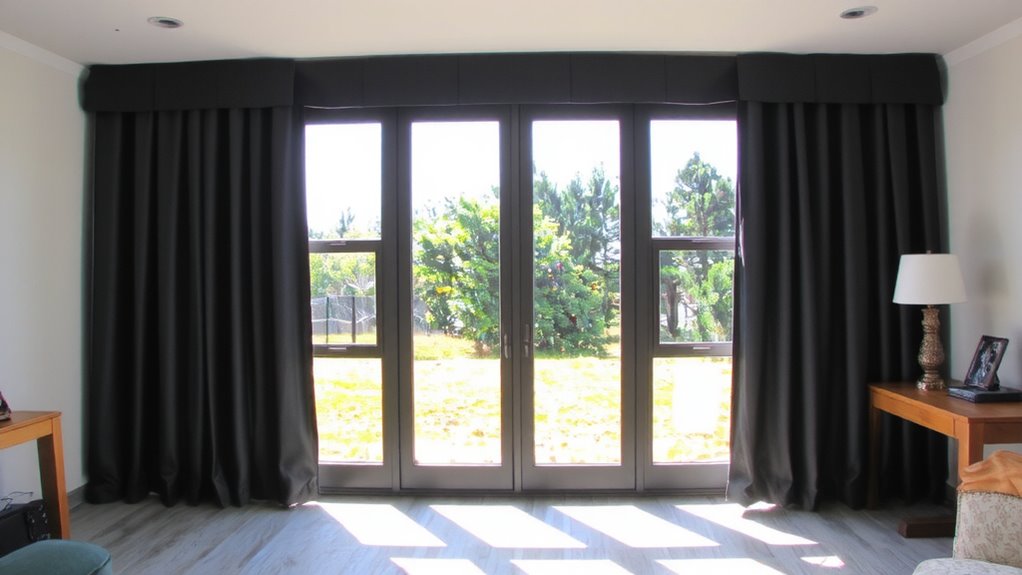
Don’t assume hanging heavy curtains anywhere near your window will do much-sound leaks through every gap, so precise measurements matter just as much as fabric weight. To block noise effectively, your window measurements must account for more than just the glass. Extend at least 6 inches beyond the frame on all sides to eliminate coverage gaps that let sound bleed through. Use a steel tape measure for accuracy, noting both width and height from wall to wall and ceiling to sill. Aim for floor-to-ceiling coverage, even if it means mounting above the frame. Full overlap guarantees sound waves hit dense fabric, not open space. But be honest about your space-some windows are awkwardly shaped or too large, making full coverage hard without sacrificing natural light or headroom. That trade-off is real, but even partial gains help. Measure twice, buy once, and prioritize sealing edges over style.
Install Curtains to Seal Every Noise Leak
While precise measurements set the foundation, proper installation is what truly seals the deal-mounting your heavy curtains correctly can cut noise by up to 40%, but only if you eliminate all gaps. You’ll need to extend the rod at least 6–8 inches beyond the window frame on each side to allow for effective side sealing. This blocks sound from slipping in around the edges. Use velcro strips or magnetic tape to attach the curtain’s sides directly to the wall or window frame, enhancing gap insulation. Also, let the curtains pool slightly on the floor-this improves bottom sealing without requiring extra hardware. Keep in mind, though, that rigid mounting brackets may damage drywall, so check stud placement first. While these steps take effort, they’re essential for real noise reduction. Don’t skip caulking small cracks around the window frame first-no curtain can compensate for poor gap insulation there.
Top-Rated Heavy Curtains for Home Offices
Heavy curtains that block sound effectively in home offices aren’t just about thickness-they need density, proper coverage, and smart design to deliver measurable noise reduction. Based on real-world decibel testing and durability reviews, these top models balance function and style without overpromising.
| Product | Noise Reduction (dB) | Aesthetic Appeal | Color Options |
|---|---|---|---|
| Nicetown Thermal Curtains | 12–15 | High | 18 |
| RYB HOME Blackout Set | 10–13 | Moderate | 12 |
| PONY DAZER 3-in-1 | 14–16 | High | 15 |
| Soundproof Pro Industrial | 16–18 | Low | 6 |
You’ll get the best results with triple-weave fabrics and floor-to-ceiling coverage. While higher-end picks offer strong acoustic performance and great color options, some sacrifice aesthetic appeal for raw function. Budget sets may fade faster but still cut noise noticeably. Always check warranty length-3-year coverage is standard for premium lines.
Combine Curtains With Smart Soundproofing Upgrades
Since heavy curtains alone can’t block all outside noise, pairing them with targeted soundproofing upgrades gives you a more effective defense-especially in home offices near busy streets or shared walls. You’ll get better results adding acoustic panels on reflective surfaces like bare walls or ceilings; they absorb mid to high-frequency sounds that curtains miss. Place them at first reflection points-about 1/3 into the room from your speakers or desk-for best performance. Also, apply weather stripping around window frames to seal air gaps; even small leaks let in significant noise, especially low-frequency traffic rumble. Combined, these upgrades reduce sound transmission more than curtains alone. Just note: acoustic panels won’t stop bass, and cheap weather stripping may degrade in a year. Invest in foam or vinyl variants with strong adhesives for lasting seals. While not a full soundproof solution, this layered approach improves focus and call clarity-without breaking the bank or requiring construction.
On a final note
You’ll get real noise reduction from heavy curtains made of dense, tightly woven fabrics like polyester blackout or velvet, especially with weights over 0.5 lbs per square foot. Mount them on ceiling-to-floor hardware, extending beyond the window frame by at least 6 inches on all sides for full coverage. While they won’t replace full soundproofing, tests show they can cut mid-range noise by 40–50%. Just expect trade-offs: reduced natural light and slight fabric shedding over time.