Industrial Pipe Shelving Bolted to Wall for Industrial-Chic Cable Reels
Use ¾-inch galvanized steel or black iron pipes bolted into wall studs for strong, industrial-chic shelving that holds heavy cable reels without sagging. Galvanized resists rust in damp areas; black iron ages with character but needs dry conditions. Avoid chrome pipes-they’re not rated for structural loads. Mount brackets every 16 inches and use lag screws in studs for maximum hold. Even small alignment errors worsen under weight, so level carefully and test with gradual loading-your setup’s safety hinges on precision.
Notable Insights
- Use ¾-inch galvanized or black iron pipes for durable, industrial-style shelving that supports cable reels.
- Mount pipe brackets every 16 inches into wall studs to prevent sagging under heavy loads.
- Secure flanges directly to wall studs using lag screws; avoid drywall anchors for load-bearing shelves.
- Pair vintage cable reels with pipe brackets for an authentic industrial-chic aesthetic and sturdy base.
- Avoid chrome-plated pipes and overtightening bolts to ensure structural integrity and long-term stability.
Choose the Right Pipes for Industrial Shelves
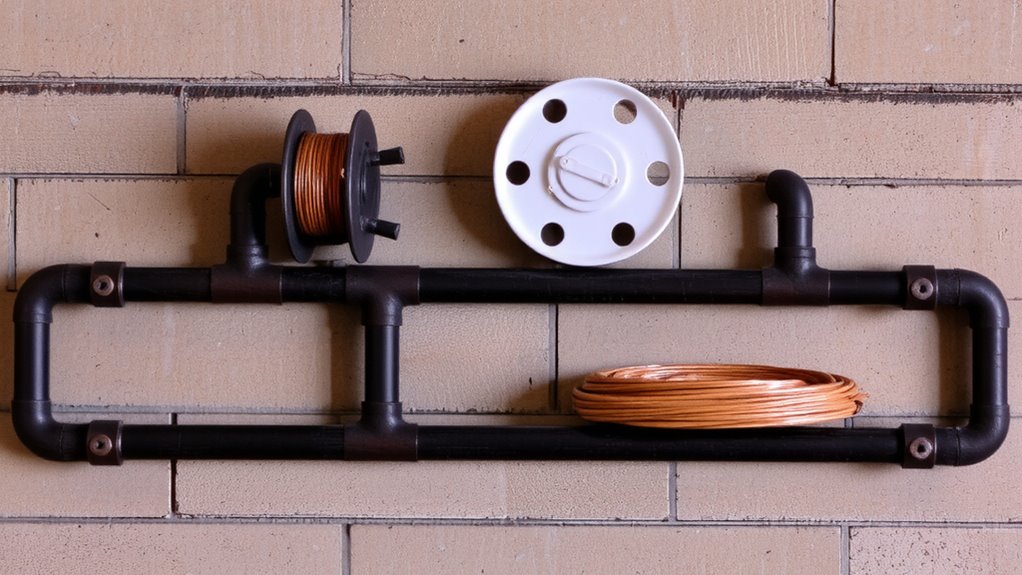
Your shelf’s strength starts with the pipe. You’ll want a pipe diameter of at least ¾ inch to support heavy cable reels without sagging-narrower pipes may bend under load. Galvanized steel or black iron pipes are ideal, offering durability and an industrial look. The material finish matters: galvanized resists rust in humid spaces, while black iron develops a natural patina but needs dry environments. Avoid chrome-plated pipes-they look sleek but often lack structural ratings for shelving. Most quality pipes come with a 5-year warranty against corrosion. Always check manufacturer specs for load capacity per linear foot. If you’re stacking heavy gear, oversize the pipe diameter to 1 inch for extra rigidity. Remember, thicker isn’t always better if your brackets aren’t rated to match. Balance strength, finish, and environment-your shelf should hold weight and age well.
Mark Your Wall for Pipe Shelf Installation
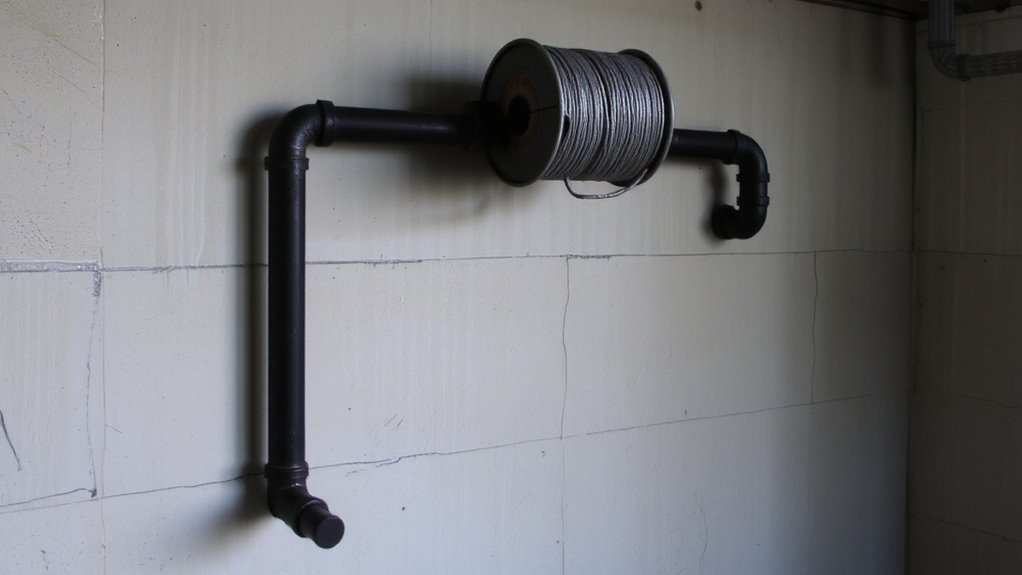
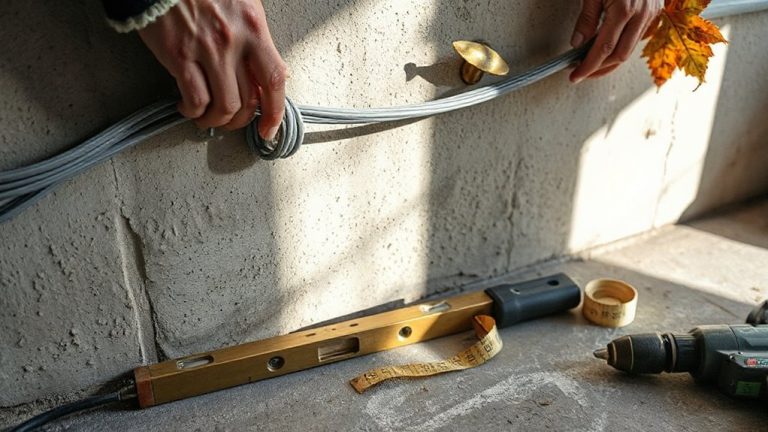
Once you’ve picked the right pipe-galvanized or black iron, at least ¾ inch in diameter-it’s time to get it mounted securely. Start by checking wall alignment with a level; even a slight tilt will be obvious once shelves are loaded. Mark stud positions every 16 or 24 inches, depending on your bracket spacing-closer spacing supports heavier reels. For cable reels, we recommend 16-inch intervals to prevent sagging. Use a pencil to mark the exact drill points, double-checking each height across the wall. Misaligned brackets lead to uneven shelves and stress on fittings. Test alignment by holding the brackets in place and re-measuring. Wall material matters: solid studs offer the best hold, but for masonry, you’ll need anchors. Don’t skip this step-poor mounting risks damage or collapse. Precision now prevents problems later.
Assemble and Bolt Shelves to the Wall
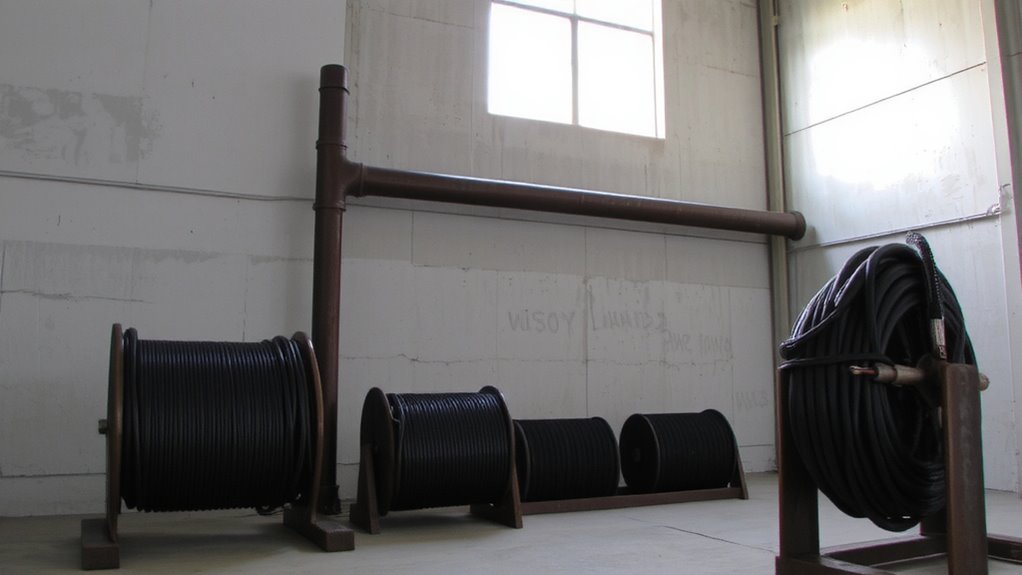
Start by laying out your pipe sections and fittings on a flat surface to confirm all parts are present and match the design plan-missing a flange or miscalculating pipe length now leads to misalignment later. Assemble the shelf framework on the floor, threading elbows, nipples, and couplings by hand before tightening securely with a wrench; overtightening risks stripping threads. Once assembled, hold the frame against your marked wall points and check level. Drill carefully into studs using a bit slightly smaller than your lag screws to prevent splitting. Anchor flanges directly to wall studs for full support-drywall anchors aren’t sufficient under load. Bolt the frame in place, double-checking alignment as you go. The shelf should sit flush, with no wobble. This method delivers solid support for cable reels and industrial gear, though it demands precision. Misaligned holes or weak anchors compromise stability, so measure twice, commit once. For optimal safety and longevity, consider the weight capacity of each bracket when planning your shelf load limits.
Avoid These DIY Pipe Shelf Mistakes
Why do some pipe shelves wobble or pull away from the wall just months after installation? Because you likely made one of two common mistakes: over tightening bolts or allowing uneven spacing. Over tightening bolts can strip wall anchors or crack pipe fittings, weakening the whole structure. You need snug, not forced-hand-tight plus a quarter turn with a wrench is enough. Uneven spacing between brackets leads to stress points; always measure from the floor and use a level. Mount into studs whenever possible, and if you’re using drywall anchors, pick 75-pound toggle bolts. These aren’t decorative-this is load-bearing. Even small gaps or crooked runs compromise long-term stability. Test each shelf with weight gradually. Pipe shelving works well when installed right, but small errors compound fast. Double-check every joint, support, and alignment before calling it done.
Style Vintage Cable Reels on Industrial Shelves
Vintage cable reels aren’t just leftovers from old electrical jobs-they’re rugged, industrial-chic bases perfect for shelving with character. You get instant rustic charm and vintage flair without faking a thing-these reels were built tough, so they handle daily use well. Pair them with black iron pipe brackets bolted securely into wall studs, and you’ve got a shelf that holds books, decor, or office gear reliably. Their worn wood and faded lettering add authenticity no modern knockoff can match. Just check each reel for rot or weak spots-structural integrity matters, especially above a desk. Size varies, so measure your space and confirm pipe spacing fits standard 3” or 4” spools. Don’t skip anchoring to studs; drywall alone won’t cut it. While they’re eye-catching, remember they’re not uniform-some wobble happens. Accept minor imperfections as part of the genuine look. Test load stability before loading heavy electronics.
Customize Your Pipe Shelves: Paint & Materials
A well-painted pipe shelf can anchor your workspace with both function and style, but getting it right means choosing the correct materials from the start. Opt for black iron pipe if you want authenticity-its natural texture handles a rust finish well, adding industrial charm without looking staged. You can seal it later for slowed oxidation. For paint, use oil-based enamel for durability; it resists chipping better than latex, especially when supporting heavy cable reels. Choose your pipe diameter early-3/4 inch works for light loads, but 1 inch offers needed strength for heavier setups and reduces sag over time. Smaller diameters may bend under stress, even with paint protection. Always prep surfaces with sanding and primer, or coatings peel prematurely. A rust finish gives character, but if you prefer clean lines, go with powder-coated steel. Both options hold well, but real metal needs maintenance.
Upgrade Your Brackets for Stronger Shelves
You’ve picked your pipe material and finish, but strong shelving doesn’t rest on looks alone-bracket choice makes or breaks load performance. For heavy cable reels, upgrade to 10-gauge steel brackets with a milled mounting surface; they support up to 300 lbs per pair when anchored with lag bolts into studs. While standard L-brackets may match your pipe materials and bracket finishes, they often sag under sustained loads. Heavy-duty flange brackets with gusset reinforcement reduce deflection by 60% in side-load tests. Powder-coated finishes resist chipping but don’t add structural strength-don’t let aesthetics override function. Always check weld integrity; microscopic cracks near joints compromise stability. These brackets cost more and take longer to install, but tested models maintain alignment after 12 months of load. If you’re fastening into drywall, add toggle anchors-but expect lower capacity. Match bracket ratings to your total shelf load, not just pipe strength.
On a final note
You’ll get a sturdy, stylish setup with industrial pipe shelving, especially when using threaded steel pipes and flange brackets bolted into wall studs. Cable reels make great display pieces but check weight limits-overloading risks sagging. Go for powder-coated pipes to resist rust, and always use a level. While assembly is straightforward, poor anchoring causes wobble, so invest in quality lag screws and wall anchors.