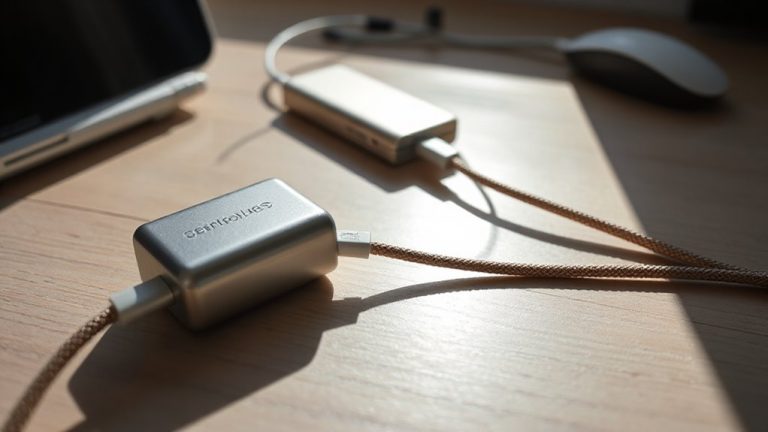
Monthly Cable Inspection Checklist for Identifying Frayed Wires and Safety Risks
Check your power cables monthly for fraying, exposed wires, or cracked insulation, especially near plugs and bends. Replace any damaged cable-even if it still works-to avoid short circuits. Look for melted spots or discoloration, which signal past overheating. Make sure cables aren’t pinched, stretched, or routed where pets can chew them. Use clips or sleeves to protect high-traffic areas, and confirm replacements match the original gauge and insulation. More details on identifying subtle risks follow.
Notable Insights
- Inspect cables monthly for fraying, exposed wires, or cracked insulation to prevent electrical hazards.
- Check plugs for wobbling prongs, bent pins, or corrosion like green tint and fuzzy residue.
- Look for brown or black discoloration near connectors, indicating past overheating and fire risks.
- Ensure cables are routed flat without tight bends, pinching, or high-traffic area exposure.
- Examine low-lying cables for pet damage and moisture signs such as swelling or brittle sheathing.
Check Power Cables for Fraying and Exposed Wires
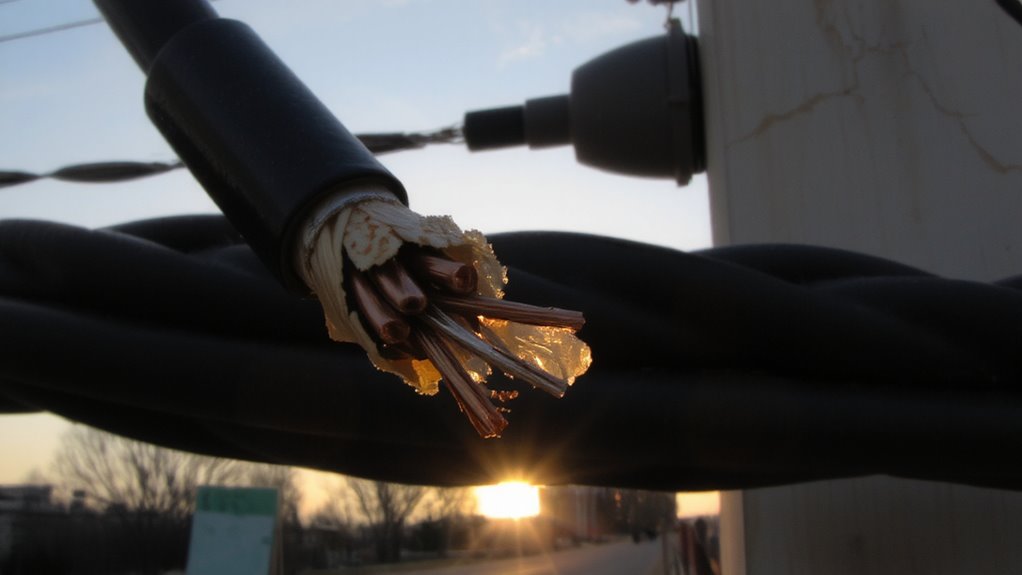
You should inspect your power cables monthly-fraying or exposed wires aren’t just common signs of wear, they’re real fire hazards. Pay close attention to the cable insulation; if it’s cracked, brittle, or missing, the protective layer is compromised, increasing shock and fire risk. Don’t assume all cables are built the same-check the wire gauge to guarantee it matches the device’s power needs. Too thin a gauge for high-draw devices can overheat, especially under load. You’ll want to replace any cable showing damage, even if it still powers the device. While some repairs use heat-shrink tubing, they’re temporary fixes at best. A full replacement with manufacturer-specified gauge and insulation type is safer. Don’t risk safety for convenience-faulty cables cause preventable failures. Inspect thoroughly, act promptly.
Inspect Plugs and Connectors for Loose or Damaged Parts
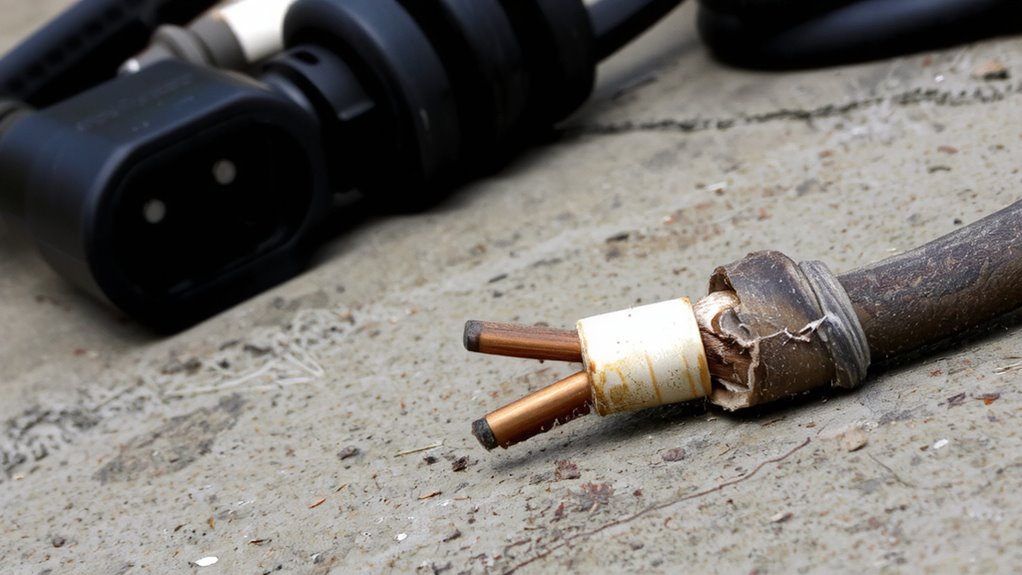
While a secure connection might seem like a small detail, loose or damaged plugs and connectors can lead to intermittent power, device failure, or even electrical hazards. You should check every plug and connector for wobbling prongs, cracked casings, or bent pins-these flaws increase the risk of electrical arcing, which can ignite nearby materials or damage connected equipment. Over time, connector corrosion can develop, especially in humid environments, reducing conductivity and causing malfunctions. If you notice fuzziness, greenish tinting, or flaky residue, replace the cable immediately. Gently wiggle connectors while inspecting; movement means internal damage. Most manufacturer warranties don’t cover damage from physical wear, so regular checks are on you. While replacement parts are often inexpensive, compatibility matters-verify plug type, voltage rating, and gender. Prevention beats repair when safety’s on the line.
Look for Signs of Overheating: Melting or Discoloration
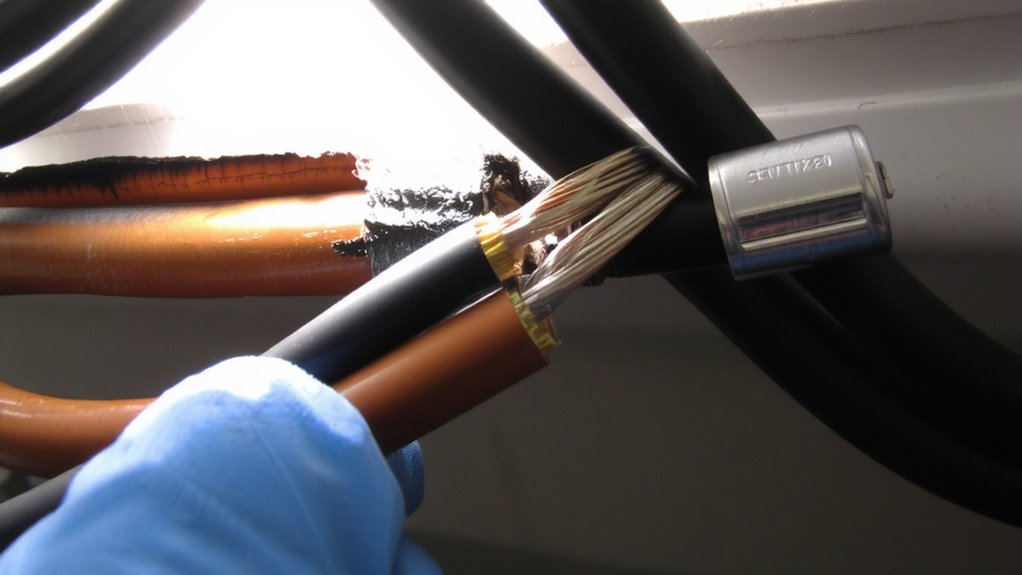
Melting or discoloration on a cable, plug, or connector signals that overheating has occurred-something no amount of secure connection can fix. You’re seeing clear evidence of thermal stress, which degrades materials over time. Look closely: brown or blackened areas near plugs or along insulation suggest excessive heat buildup, often from overloaded circuits or poor conductivity. This isn’t just cosmetic-thermal stress accelerates insulation degradation, raising the risk of short circuits or fire. Cables exposed to high temps repeatedly become brittle and unsafe, even if they still power your devices. Replace any cable showing these signs immediately; continued use is a hazard. Don’t assume a working connection means it’s safe. While quality cables with thicker jackets handle heat better, no standard consumer cable is designed to endure sustained overheating. Prevention includes using correctly rated power sources and avoiding daisy-chained adapters that increase load.
Check for Pinched, Stressed, or Poorly Routed Cables
If cables are forced into tight bends, compressed under heavy furniture, or stretched across high-traffic areas, they’re likely to develop internal damage even if the outer insulation looks intact. You need to check for cable tension-any taut or pulled wiring can weaken conductors over time, increasing failure risk. Poor routing alignment, like sharp edge bends or tangled bundles, also stresses materials and hampers airflow. Routinely trace each cable’s path, ensuring it lies flat, follows natural curves, and avoids pressure points. Use cable clips or sleeves to maintain alignment without over-tightening. Avoid routing cables where foot traffic or furniture movement strains connections. Even minor tension can degrade performance or create hazards months later. While managing cable paths takes effort, it prevents avoidable wear and boosts system reliability. Just remember-neat doesn’t always mean safe; prioritize slack and smooth pathways over tight appearances. Implementing a dedicated cable management solution can significantly reduce long-term wear and improve overall workspace safety.
Watch for Environmental Damage From Moisture and Pets
Moisture and pets rank among the most common but overlooked threats to cable integrity, often causing failures that aren’t visible during routine visual checks. Moisture intrusion can corrode conductors and degrade insulation, especially in damp basements or near leaky windows-look for swelling, discoloration, or brittle sheathing. Even minor water exposure over time weakens performance and increases fire risk. Pet chewing is just as dangerous; dogs and cats often gnaw on cords, exposing live wires and creating shock or short-circuit hazards. Inspect baseboards and low-lying cables where pets roam. Use braided nylon cable sleeves or conduit covers as deterrents, but don’t rely on them entirely-consistent monitoring matters more. No protective housing eliminates risk completely, and replacements wear out. Test continuity after any suspected damage. Early intervention prevents costly repairs or safety events.
On a final note
You should inspect cables monthly-it’s a quick habit that prevents hazards. Look for frayed wires, cracked insulation, or loose connectors, especially near bends and plugs. Discoloration or melting means overheating; replace those cables immediately. Keep cords away from edges, moisture, and pets to avoid damage. Even durable cables wear down over time, so check them regularly. No cable lasts forever-when in doubt, swap it out. Safety’s worth more than saving a $10 cord.