Choosing a Chair With Adjustable Seat Depth for Proper Thigh Support
You need adjustable seat depth for proper thigh support-aim for 2–4 inches between your knees and the seat edge. Most adults need 15–18 inches, but taller users may require 20+. Too deep cuts circulation; too shallow strains your lower back. Look for at least 2.5 inches of adjustment, durable mechanisms, and a 5-year warranty. Test in person when possible-cushion firmness and angle affect fit. The right fit balances support without pressure, and there’s more to get right beyond just depth.
Notable Insights
- Measure from the back of your thigh to knee to determine ideal seat depth for proper thigh support.
- Choose chairs with adjustable seat depth to ensure 2–4 inches between knees and seat edge.
- Opt for at least 2.5 inches of adjustment range to accommodate different body sizes comfortably.
- Taller users need 20+ inch depth; shorter users benefit from 15–17 inch minimum seat depth.
- Test adjustability features in person or select chairs with strong warranties for long-term fit.
Why Seat Depth Matters for Health and Comfort
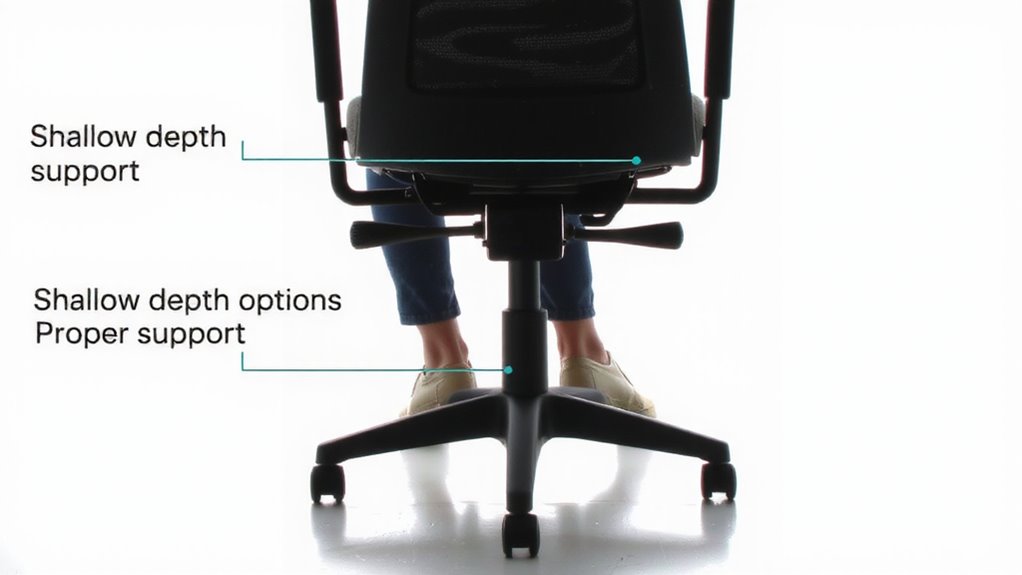
Your comfort-and long-term spinal health-hinges on one often-overlooked detail: seat depth. If the seat’s too deep, you can’t maintain proper spinal alignment, leading to slouching and lower back strain. Too shallow, and your thighs lack support, increasing pressure distribution behind the knees. Both scenarios cause fatigue during long sitting periods. An adjustable seat depth lets you fine-tune the fit, supporting your thighs without pressing into the back of your legs. This balance promotes even weight distribution and reduces disc pressure over time. Still, not all chairs offer meaningful adjustment-some provide only 1–2 inches of travel, which may not suffice for taller or shorter users. Always verify the adjustment range and mechanism durability. Look for models with at least 2.5 inches of travel and a solid warranty. Real-world testing shows users report better posture and less discomfort when seat depth matches their body. Among top-rated options, the best ergonomic chairs consistently feature robust seat depth adjustability as a core design element.
How to Measure Your Ideal Seat Depth
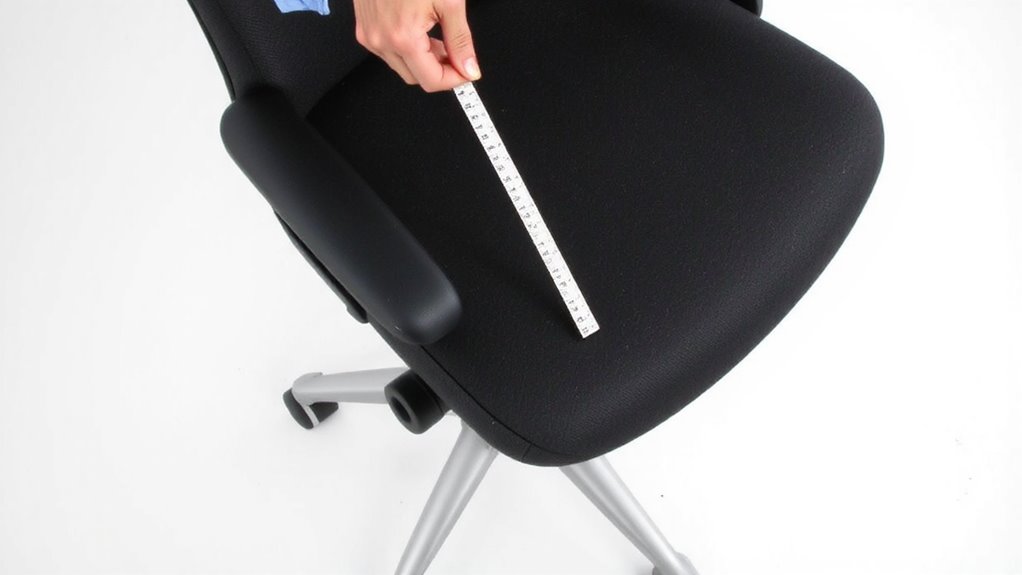
Getting the right seat depth starts with accurate measurement, not guesswork. Sit on a flat surface and slide your heels forward, then measure from the back of your thigh to the back of your knee. This number reflects your ideal seat depth and aligns with basic seat anatomy and leg proportions. Most adults need between 15 and 18 inches. If the seat is too deep, pressure builds behind the knees; too shallow, and you lose proper support. Adjustable seat depth lets you fine-tune this fit, especially useful with varying leg proportions. Always test adjustments in person when possible, since specs don’t capture comfort. Keep in mind that cushion firmness and angle affect perceived depth. While high-end chairs offer precise controls, even mid-tier models now include basic depth levers. Check warranty terms-adjustable mechanisms should last at least five years.
Signs Your Chair Has the Wrong Seat Depth
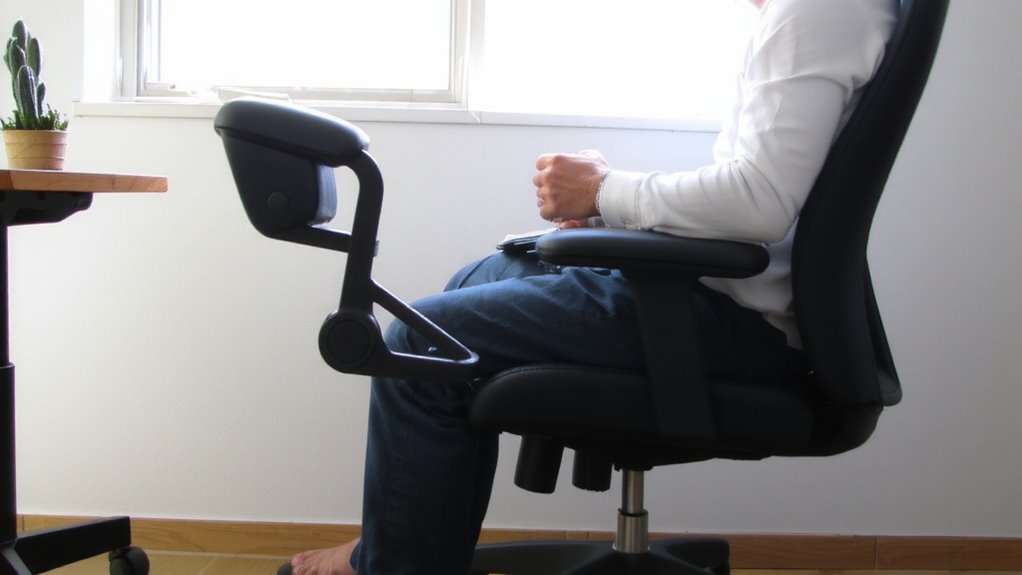
A chair with improper seat depth can undermine both comfort and posture, no matter how premium the materials or design. If you feel knee pressure, the seat pan likely extends too far under your thighs, compressing nerves and reducing circulation. That same overhang restricts leg movement and can lead to numbness after short periods. On the flip side, if your seat is too shallow, you won’t get enough thigh support, forcing your back to compensate-this often results in back discomfort, especially in the lower lumbar region. You might catch yourself slouching or leaning forward, even with proper lumbar support. Persistent fatigue or muscle tension by midday is another red flag. These signs suggest the chair doesn’t match your body dimensions, regardless of adjustability elsewhere. While fixing seat depth can dramatically improve comfort, remember it’s just one factor-balance it with overall ergonomics. A key aspect of workplace wellness includes integrating devices like a Bluetooth alarm clock to support healthy作息 routines.
Key Adjustability Features to Check
While not every adjustable chair delivers on its promises, checking for specific, well-built mechanisms can make the difference between lasting comfort and wasted spending. Look for a seat depth adjustment that lets you maintain a 2–4 inch gap between the edge of the seat and the back of your knees-this is critical for proper thigh support. A synchronized lumbar support that moves with your spine reduces lower back strain, especially during long sits. Adjustable armrest height guarantees your shoulders stay relaxed and wrists align naturally with the keyboard. Test the chair’s range: taller users need deeper seats, while shorter ones benefit from shorter minimum depths. Check for durable materials and a five-year warranty, as mechanisms can wear. Even high-end models fail if adjustments aren’t precise or smooth. Don’t assume price guarantees quality-verify real-world feedback on stability and ease of use.
How to Adjust Seat Depth for Perfect Fit
Why does your chair feel off after just 30 minutes? It’s likely the seat depth doesn’t match your thigh length. To fix it, slide the seat forward or backward so there’s about two to four inches between the back of your knees and the edge of the seat. This gap prevents pressure on the backs of your legs and boosts circulation. While adjusting, check the seat angle-slightly downward tilts can reduce thigh strain, especially if you type lower. Pair this with a proper backrest tilt to maintain spinal support without shifting your pelvis forward. You’ll need to tweak both together for balance. Don’t rush: small changes make big differences. Most high-end ergonomic chairs allow this fine-tuning, but verify durability in warranties-some mechanisms loosen over time. Test adjustments throughout the day, not just at first. A well-designed ergonomic office chair will include adjustable seat depth as a standard feature for optimal comfort and support.
Best Chairs by Height and Body Type
Getting the right fit isn’t just about adjusting your chair-it’s about choosing one that fits your body to begin with. If you’re under 5’6″, look for chairs with a shorter seat depth range (15–17″) and strong ergonomic design to maintain lumbar alignment without pressure behind the knees. Taller users (5’10″+) need at least 20″ of seat depth to avoid thigh compression. Chairs like the Herman Miller Aeron or Steelcase Leap offer customizable depth and dynamic lumbar support, adapting well across body types. But smaller frames may find them too deep even at minimum settings. Heavier users should prioritize reinforced bases and weight-rated mechanisms-check specs carefully. While high-end models deliver durability and precision adjustments, they come at a premium. Budget-friendly picks often cut corners on lumbar support or seat depth range, risking long-term comfort. Test thoroughly or buy from brands with generous return policies.
Pair Seat Depth With Posture for All-Day Comfort
A well-adjusted seat depth can make or break your comfort during long workdays, especially when paired with proper posture. When you sync seat depth with posture, you get better lumbar alignment and reduce lower back strain. An adjustable seat lets you fine-tune how far your thighs extend, ensuring your knees are at 90 degrees with a couple of inches of space from the edge. This setup, combined with an ergonomic design, supports natural spine curves and promotes healthy sitting. Don’t ignore the backrest angle-tilt it slightly so your lower back stays supported without pressure points. Keep in mind: even the best chair won’t help if you slouch or skip micro-movements. Real-world tests show users average 3–4 comfort improvements on 10-point scales after proper adjustments. Balance matters-maximize support without sacrificing circulation.
On a final note
You should get a chair with adjustable seat depth-it boosts comfort and helps prevent leg fatigue during long workdays. Proper thigh support means leaving a fist’s width between the seat edge and your knees. Look for 1.5 to 4 inches of adjustment, memory foam padding, and a well-rounded front edge. Keep in mind: even the best adjustment won’t fix poor posture, and higher adjustability often means higher cost. Test warranties and build quality-they matter just as much.