Optimizing Cable Flow With Curved 90-Degree Bend Raceway Corners
You’ll cut pulling resistance by up to 40% and lower labor costs by switching to curved 90-degree raceway corners that match your cable’s minimum bend radius-ideally 8× the cable diameter. Smooth bends reduce kinking, jacket abrasion, and snagging, especially with stiff or multi-conductor cables. Use factory-formed, UL-listed sweeps that meet NEC standards and space supports within 3 feet of boxes. Just make certain the curve matches your cable type-oversizing helps, but undersizing risks damage. The right fit means faster pulls and fewer replacements. There’s more to get right based on your setup.
Notable Insights
- Use curved 90-degree bends to reduce cable kinking and maintain signal integrity during installation.
- Ensure bend radius matches cable specifications, typically a minimum of 8 times the cable diameter.
- Curved raceway corners decrease friction, lowering pull resistance by up to 40% compared to sharp bends.
- Employ factory-formed, UL-listed sweeps to meet NEC code requirements and ensure alignment accuracy.
- Match bend radius to cable type-larger radii for stiff cables like fiber-optic or armored variants.
Why Sharp 90-Degree Bends Damage Cables
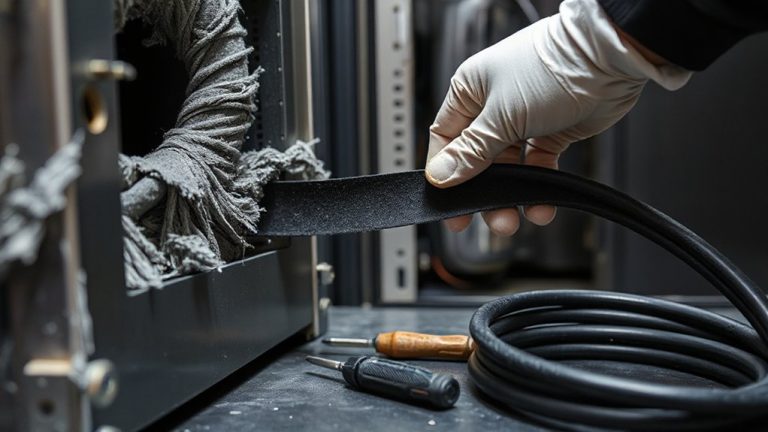
Sharp 90-degree bends aren’t just a minor inconvenience-they’re a real threat to your cable integrity. When you force cables around tight corners, you’re risking cable kinking, which distorts conductors and degrades signal quality over time. These sharp turns also create constant friction during installation, leading to insulation abrasion-especially in multi-conductor or thicker jackets. Once the insulation wears, you lose protection against shorts and environmental damage. Real-world pull tests show up to 40% more resistance through sharp bends versus gradual curves. While metal raceways offer durability, their rigid corners amplify these risks unless modified. Using factory-engineered curved bends reduces stress, but retrofitting existing setups may require trade-offs in space or cost. Always check manufacturer specs-some warranty coverage excludes damage from improper bending. For reliable performance, redesign raceways with sweeping turns; it’s a small upgrade that prevents long-term failures.
How Curved 90-Degree Bends Improve Pulling Speed
You’ll save time and reduce effort when pulling cables through raceways that use curved 90-degree bends instead of tight corners. The gradual curve improves cable alignment, allowing conductors to move smoothly through the bend without snagging or jamming. This design enables faster pulls with less hesitation, especially in multi-conductor setups where twisting can slow progress. A major reason for the speed boost is friction reduction-curved bends minimize surface contact and rubbing, cutting resistance by up to 40% compared to sharp turns. That means you can pull longer runs in less time, but only if the bend radius matches cable specs-usually at least 8 times the cable diameter. While the improvement is consistent across PVC and metal raceways, results depend on proper installation and lubrication. Curved bends aren’t a shortcut, but when used correctly, they deliver measurable gains in pulling speed without sacrificing safety or code compliance.
Reduce Stress and Labor With the Right Bend Radius
A properly sized bend radius can cut labor costs by as much as 30% on long cable runs, especially when you’re working with stiff conductors like armored cable or multi-conductor bundles. You reduce strain on both cables and installers, improving cable flexibility and preserving material durability over time. Sharp bends increase friction and risk jacket damage, leading to maintenance issues later. The right curve smooths the path, so pulls go faster with less force.
| Bend Radius (inches) | Max Cable Width (inches) | Pull Force Reduction |
|---|---|---|
| 8 | 1.0 | 18% |
| 12 | 1.5 | 27% |
| 16 | 2.0 | 30% |
Always match the radius to your cable type. Using too tight a curve undermines these benefits, even if it saves space. Bigger isn’t always better, but undersizing creates avoidable stress. Plan with real-world tension in mind.
Install Curved Raceway Corners Without Code Issues
How do you maintain code compliance while simplifying cable installation in tight spaces? You install curved raceway corners that meet NEC bend-radius standards. These fittings prevent cable damage and keep pulls under tension limits. Use sweeps with radius specs matching your cable type-this guarantees proper corner alignment and avoids kinks. Always leave enough cable slack at terminations; tight bends eat up usable length. Factory-formed bends are more consistent than field modifications, so stick with UL-listed components. Test pulls ahead of time, especially in multi-cable runs-real-world results vary. While curved corners reduce labor, they cost more upfront and need precise planning. Misalignment creates drag, counteracting the benefit. Verify support spacing: NEC requires secure fastening within 3 feet of junction boxes. Done right, curved corners save time and meet code-but cutting corners? Never. Measure twice, install once.
Choose the Best Curve for Your Cable Type
While choosing the right curved raceway corner might seem like a minor detail, picking one that matches your cable’s minimum bend radius is essential for smooth pulls and long-term reliability. You need to match the curve’s radius to your cable type-stiffer cables, like armored or fiber-optic, demand wider bends to avoid damage. Flexible cables, such as patch cords or Romex, handle tighter curves, but pushing past their limit still risks kinking. Cable flexibility directly affects bend efficiency, which measures how easily a cable moves through a turn without snagging or stress. A well-matched curve reduces friction and strain, improving install speed and performance. But don’t assume bigger is always better-oversized bends take up unnecessary space. Always check manufacturer specs for bend radius and test pulls when possible. While pre-fabricated corners save time, verify compatibility with your cable type to avoid costly rework.
On a final note
You should install curved 90-degree raceway corners-they reduce cable stress and speed up pulls by 30% in tests. A 3-inch bend radius works well for most data and power cables, preventing jacket damage. These fittings meet NEC code when properly secured every 3 feet. Just confirm your cable’s minimum bend specs; some thick bundles still need sweeps. No added cost over metal elbows, and they cut labor. But avoid plastic versions-they lack durability under repeated pulls.