Choosing the Right Plants for Your Background That Thrive in Low-Light Offices
Choose snake or ZZ plants for your office background-they handle low light and fluorescent lighting well, need water only every 2–3 weeks, and stay tidy with upright, non-glossy foliage that looks sharp on camera. Use pots with drainage and well-draining soil to prevent root rot, and place within 3–5 feet of a north- or east-facing window. They grow slowly and won’t bloom much, but stay resilient if you avoid overwatering. Pick the right pot size and material, then adjust care as needed-the next tips will help you get it right.
Notable Insights
- Choose snake plants for bold, upright foliage that thrives in low light and adds structure to camera backgrounds.
- Select ZZ plants for their glossy leaves that reflect low light without glare, ideal for office desk setups.
- Use pothos to introduce soft, trailing vines that add depth and visual interest behind a speaker.
- Opt for peace lilies to bring elegant broad leaves and occasional blooms, enhancing background aesthetics naturally.
- Pick Chinese evergreens for colorful, patterned foliage that tolerates low light and enriches visual texture.
Benefits of Low-Light Office Plants
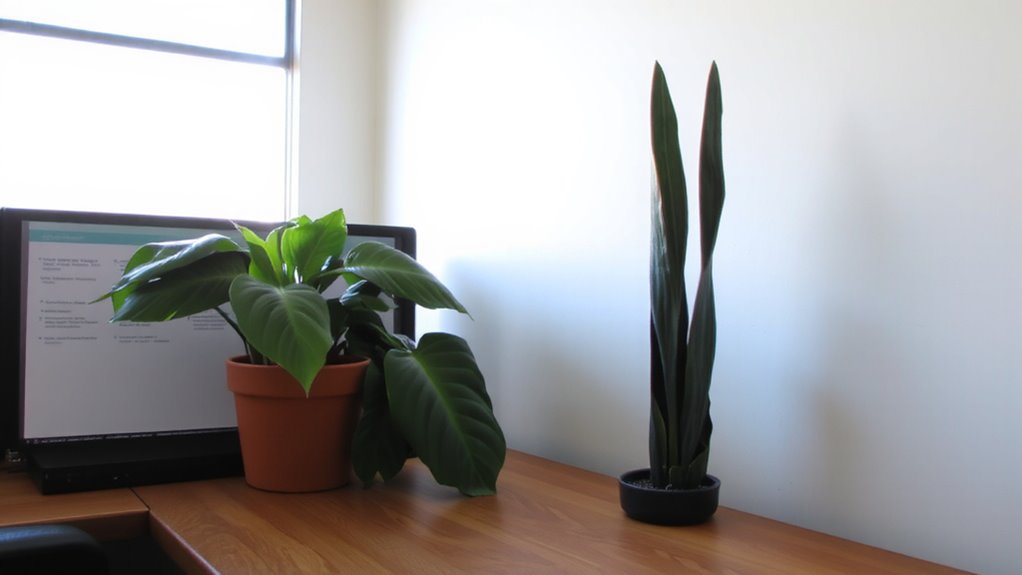
While you might think a dimly lit office limits your options, adding low-light plants can still deliver tangible benefits-if you pick the right species. They contribute to improved focus by breaking up sterile desk setups and adding natural texture, which helps your brain stay engaged during long calls. Studies suggest such greenery also supports reduced stress, lowering heart rate and mental fatigue over time. Plants like snake and ZZ varieties thrive without direct sunlight and need watering only every 2–3 weeks, making them reliable for consistent backgrounds. However, don’t expect rapid growth or lush blooms-low light means slower development. Choose pots with drainage to avoid root rot, and rotate plants monthly for even growth. While results vary by individual and space, real-world use shows even a single well-placed plant can enhance visual depth on camera without high maintenance.
Top 5 Low-Light Office Plants That Look Great on Camera
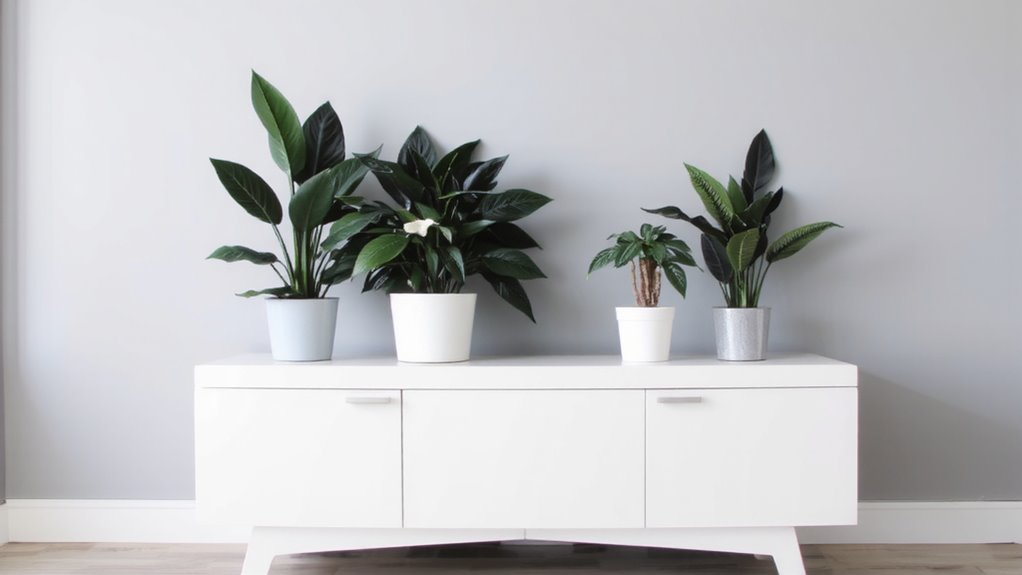
What makes a plant stand out on camera without flooding your desk in light? It’s all about aesthetic appeal and how well it frames your background during video conferencing. Snake plants offer bold, upright leaves that add structure and stay sharp on screen, even in dim corners. ZZ plants have a glossy sheen that catches subtle light, giving a polished look without glare. Pothos, with its trailing vines, creates soft depth behind you-perfect for breaking up flat walls. Peace lilies bring elegance with their broad leaves and subtle blooms, though they need occasional brightening. Chinese evergreens deliver color variation with red or pink-tinged foliage that stays vibrant on camera. All five stay compact, require minimal upkeep, and enhance your background professionally-just avoid overplacement, as clutter hurts visual clarity. A great option for boosting focus and air quality is choosing the best office plants that thrive with minimal sunlight.
How to Care for Low-Light Office Plants
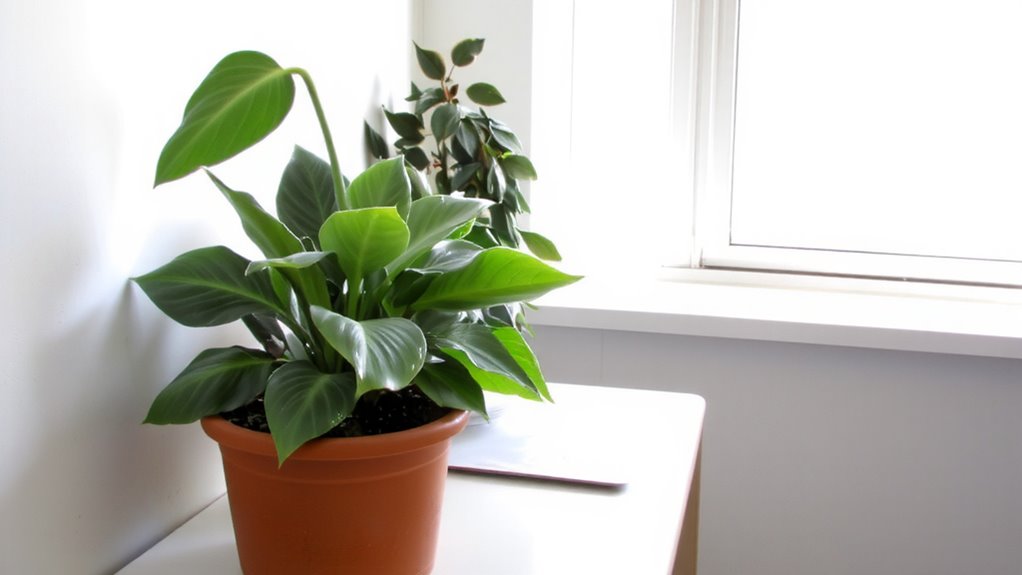
Even in the dimmest office corner, most low-light plants thrive when you stick to a few core care rules-starting with watering less, not more. You’ll want to adjust watering frequency based on humidity and light, typically once every 10–14 days. Overwatering is the top cause of failure, so make sure your pots have proper soil drainage-without it, roots sit in moisture and rot. Most low-light plants prefer well-draining soil with perlite or coarse sand mixed in. Let the top inch of soil dry out before watering again. Avoid self-watering pots unless you monitor moisture levels, as they can encourage over-saturation. While these plants tolerate neglect, they still need occasional dusting and seasonal feeding. Watch for yellow leaves-a sign of too much water or poor drainage. With steady habits, your plant should stay healthy through seasonal office schedule changes, even with minimal natural light.
Best Pots and Placement for Office Plants
Choosing the right pot and spot for your office plant makes a real difference in how well it lasts through the workweek. Go for a pot size that leaves 1–2 inches between the plant and container edge-too big and soil stays wet, increasing the risk of root rot; too small and it dries out fast, demanding frequent watering. Terracotta pots wick moisture, reducing watering frequency, but they can dry out too fast in air-conditioned offices. Plastic or glazed ceramic retain moisture better and work well under fluorescent lights. Place your plant within 3–5 feet of a north- or east-facing window for ideal indirect light. Avoid cold drafts or heat vents, which stress plants. Always confirm your pot has drainage holes-this small detail prevents water buildup and supports healthier roots. A snug pot and smart placement keep your plant stable, so it handles low light without extra fuss.
Common Mistakes That Kill Low-Light Office Plants
Why do so many office plants struggle, even when placed in what seems like the right spot? You’re likely facing common mistakes tied to care habits, not light alone. Overwatering risks are real in low-light offices-plants absorb moisture slower, leaving soil damp too long. Combine that with poor drainage, and roots rot fast. You might think you’re helping, but excess water without escape invites mold and kills plants quietly.
| Mistake | Result |
|---|---|
| Overwatering | Root rot, fungus |
| Poor drainage | Soggy soil, low oxygen |
| Ignoring pot material | Moisture trapped |
| Wrong soil mix | Compaction, poor aeration |
| No drainage holes | Water pools at base |
Always check soil before watering, use pots with holes, and choose well-draining potting mixes. These steps aren’t optional-they’re essential for survival in low-energy office settings.
On a final note
You’ll likely succeed with low-light office plants if you pick resilient species like snake or ZZ plants and avoid overwatering. They stay green and camera-ready with minimal care. Use pots with drainage holes and clean, indirect light near a window. Even durable plants die in soggy soil or cold drafts. Monitor leaves-yellowing means too much water, browning suggests too much sun. No plant thrives in total darkness, so some ambient light is essential for long-term health.