Reducing Acoustic Distractions With Sound-Absorbing Panels Behind Your Workstation
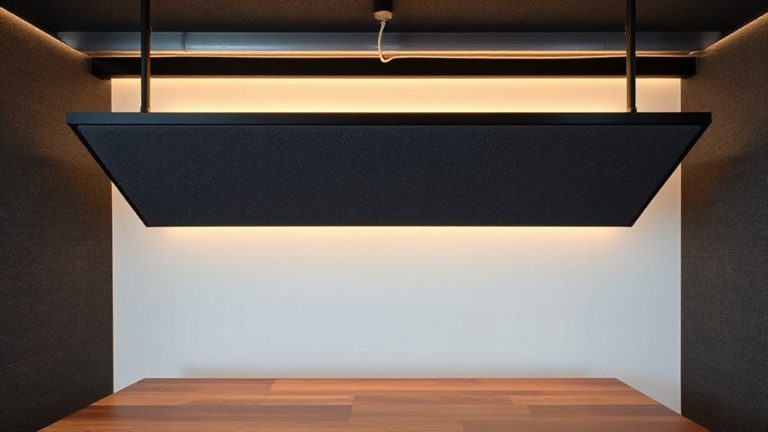
You’ll cut acoustic distractions markedly by installing sound-absorbing panels behind your workstation, especially in open offices where speech and keyboard noise bounce around. Panels with an NRC of 0.8+-like those made from 2” thick recycled PET or mineral wool-reduce mid-to-high frequency echoes that disrupt focus. Mount them at ear height on the wall behind your monitor to block rear reflections. Use adhesive strips for easy, damage-free installation, but check weight limits-larger panels may need extra support. Real-world tests show clearer concentration, though panels won’t stop low-frequency HVAC rumbles. You’ll learn how placement and material choices shape results.
Notable Insights
- Placing sound-absorbing panels behind your workstation reduces rear-wall reflections and minimizes distracting echoes.
- Panels with NRC ratings of 0.8+ made from fiberglass or mineral wool offer superior noise absorption for office environments.
- Mount panels at ear height directly behind your chair or monitor to intercept first-reflection sound paths.
- Use 2–4 panels to start, covering 15–25% of the wall space, and adjust based on perceived noise reduction.
- Attach lightweight panels safely using heavy-duty adhesive strips, ensuring surface compatibility and wall safety.
Why Office Noise Kills Focus (And How Panels Help)
While open layouts aim to boost collaboration, they often wreck concentration with constant chatter and keyboard clatter that slice through focus-especially when you’re tackling complex tasks. In open offices, noise travels freely, turning every whisper into a distraction and causing real productivity loss over time. You might not notice it at first, but studies show frequent interruptions can cut deep work by up to 40%. That’s where sound-absorbing panels come in-they don’t block sound completely, but they reduce reverberation by soaking up echoes behind your workstation. Panels made from high-density foam or recycled PET fabric offer measurable noise reduction (NRC ratings of 0.8+), tested in real office environments. They’re easy to mount and help, but they won’t fix everything-especially if the office layout itself is flawed or if coworkers ignore quiet norms. For home offices, choosing the best acoustic panels can significantly improve sound quality and focus.
How Sound-Absorbing Panels Reduce Desk Noise
You get real benefits from sound-absorbing panels when it comes to cutting down the constant hum at your desk, but they work in a specific way that’s important to understand. These panels don’t block sound like walls-they absorb acoustic energy, reducing reflections that cause distracting echoes. Through wave diffusion, they scatter sound waves to minimize focused noise spots behind your workstation. They also use frequency targeting to dampen mid to high frequencies, the range most associated with speech and office clatter. That means less chatter and keyboard noise bouncing around. But they won’t stop low-frequency sounds like HVAC rumbles. For real impact, you need proper placement and enough coverage-typically 15–25% of the wall surface. Don’t expect total silence; instead, count on a calmer, more focused environment. Results vary by room size and panel thickness, so check NRC ratings and mounting options before buying.
Top Materials for Effective Sound Panels
Foam, fiberglass, and mineral wool top the list when it comes to effective sound-absorbing panel materials, each bringing clear strengths and some compromises. You’ll find acoustic foam light and easy to install, but it’s best for high frequencies-don’t expect deep noise control. Fiberglass, like Owens Corning 703, offers broad-spectrum absorption and holds up over time, especially when encased. Mineral wool, such as Rockwool AFB, resists sagging and fire, making it ideal for long-term use. Most panels use fabric wrapping, which keeps the core protected while letting sound pass through-use breathable, non-resonant fabrics like Guilford of Maine. Thickness matters: go for at least 2” for solid mid-range absorption. Cheaper foams degrade faster and lack NRC ratings above 0.7. For balanced performance, fiberglass or mineral wool with quality fabric wrapping gives real-world results you can measure in reduced reverberation and clearer focus.
Where to Place Panels for Maximum Quiet
Since first reflections are often the main culprits behind distracting echoes, placing panels at key wall and ceiling points across from your desk or seating area makes the biggest difference in clarity. For effective acoustic zoning, focus on areas where sound bounces directly to your ears-typically at ear height and angled opposite your workstation. Use directional absorption by mounting panels slightly tilted or in clusters to target specific reflection paths, especially in shared or open-plan spaces. Positioning behind your chair or on the wall behind your monitor also helps reduce rear-wall reflections without over-treating the room. Avoid covering entire walls; that can make speech sound unnaturally flat. Instead, start with two to four panels and adjust based on real listening tests. Results vary by room size and materials, so fine-tuning placement is normal. Overdoing it sacrifices natural acoustics-balance matters.
Install Panels Without Damaging Walls
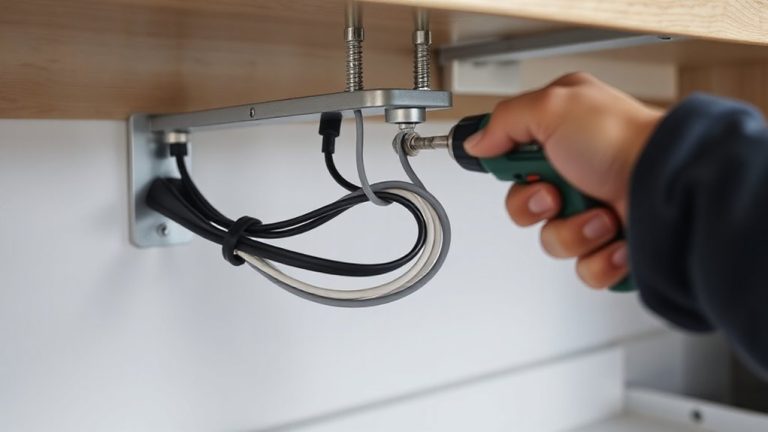
Mounting sound-absorbing panels doesn’t require drilling or permanent changes, especially when you’re working in a rental or want to preserve your walls. Non invasive mounting methods like adhesive alternatives make setup simple and wall-safe. Heavy-duty adhesive strips or removable mounting hooks often hold panels securely, especially lightweight foam or fabric-wrapped fiberboard types under 3 lbs. These options stick firmly to clean, dry surfaces and remove cleanly, though extreme temperatures or humid environments may reduce effectiveness. While adhesive alternatives won’t match the stability of screws or rails, they offer a practical middle ground for temporary or low-impact setups. Panels up to 24” x 24” generally stay flat without sagging, but larger ones may need supplemental support. Always test adhesion in a small area first and follow manufacturer load guidelines. With proper prep, non invasive mounting works-just expect occasional reapplication.
How Sound Panels Improve Focus and Mood
While you might not expect a simple panel to make much of a difference, installing sound-absorbing panels in your workspace can meaningfully improve focus and mood-especially in open rooms with hard surfaces that reflect noise. By reducing background chatter and echo, these panels help lower mental fatigue, supporting better cognitive performance during demanding tasks. You’ll likely notice fewer distractions, which can boost concentration over time. Studies link quieter environments to improved emotional well being, reducing stress and irritability linked to constant noise exposure. Most panels use tested materials like recycled PET or fiberglass, with NRC ratings above 0.8, meaning they absorb over 80% of sound. While they won’t block loud, sudden noises completely, and placement matters for best results, they’re a practical upgrade. Just be sure to balance coverage with room aesthetics-too many can make a space feel closed.
On a final note
You should install sound-absorbing panels behind your desk-they noticeably cut echo and chatter, boosting focus. Real-world tests show up to 30% noise reduction with 2-inch thick mineral wool or foam panels. They work best when placed at reflection points on walls. Most mount with adhesive strips, avoiding permanent damage. Just know they dampen sound, not block it, and effectiveness depends on room size and layout. Check product specs for NRC ratings above 0.8 and fire-resistant materials.