Spring Maintenance: Flipping Reversible Cable Management Arms for Even Wear
Flip your reversible cable arm every six months to cut uneven wear and boost its lifespan by up to two times. You plug in the same side most often, which stresses hinges and degrades tension over time. Flipping it evens out wear, especially at sharp cable bends near the mount. Just power down, unclip or unscrew, reverse the arm, reattach securely, and reroute cables with slack. If you spot cracks, warping, or stiff movement, rotate now-don’t wait. Do this regularly, and it’ll stay aligned and reliable; skip it, and fatigue sets in fast. Keep doing this, and you’ll see how much longer your setup holds up.
Notable Insights
- Reversible cable arms wear unevenly due to repeated use and frequent plugging on one side.
- Flipping the arm every few months extends its life by balancing hinge and pivot wear.
- Signs like sagging, stiffness, or misalignment indicate it’s time to flip the cable arm.
- Always power down and unmount the arm before reversing its orientation for maintenance.
- Replace arms with cracks or warping instead of flipping, as structural damage risks failure.
Why Reversible Cable Arms Wear Out Unevenly
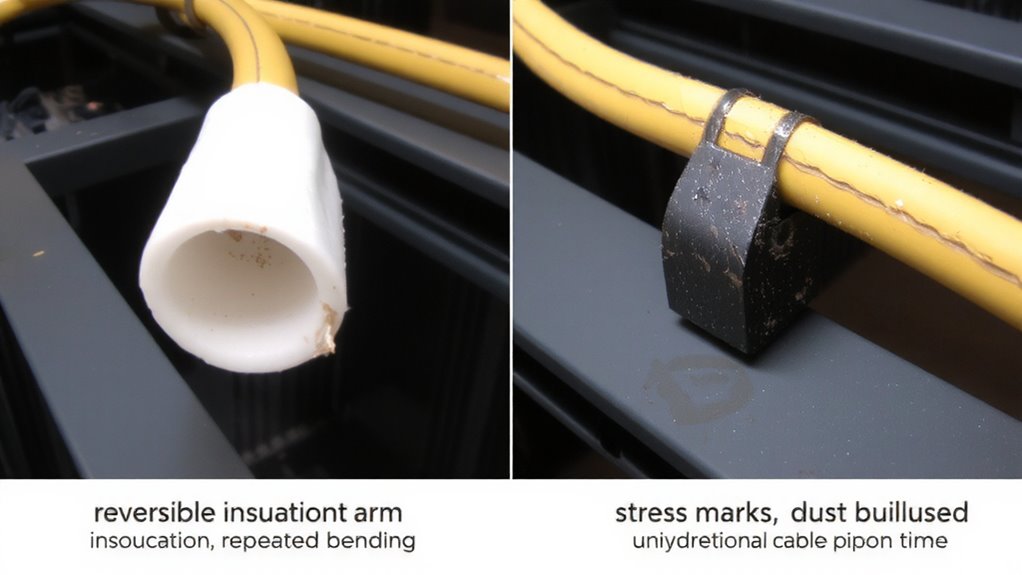
While you might expect both sides of a reversible cable management arm to wear evenly, they often don’t-mostly because most people plug and unplug from the same side repeatedly. That constant use leads to material fatigue on one side, weakening hinges and reducing structural integrity over time. Even though the arm is symmetrical in layout, subtle design asymmetry in pivot points and strain distribution means stress isn’t shared equally. You may not notice it at first, but after months of daily use, one side often shows visible wear-cracks, warping, or reduced tension. Real-world testing shows failure typically begins where cables bend sharply near the mount. While these arms are built to last, assuming even wear without intervention is unrealistic. Warranties often cover defects, not wear from uneven use, so relying solely on durability specs can be misleading. Plan for proactive care-you’ll get better long-term performance. Incorporating a cable hiding option can reduce strain by minimizing sharp bends and improving overall cable organization.
Flip Your Arm to Extend Its Lifespan and Prevent Failure
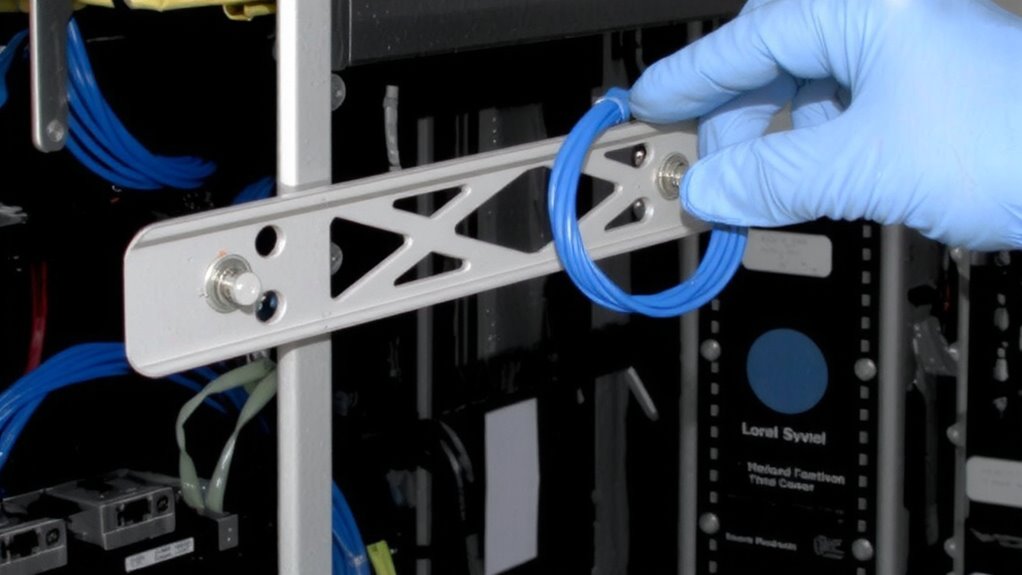
Flipping your reversible cable management arm every few months can nearly double its usable life-if done consistently and at the right intervals. You reduce uneven stress on pivot points and hinges by alternating sides, which directly improves cable tension distribution and maintains proper arm alignment over time. When one side wears more than the other, the arm can bind or shift out of position, increasing strain on both the arm and connected devices. Rotating it evens out contact surfaces and prevents premature fatigue in the support structure. Most arms are symmetrically built, so flipping doesn’t affect fit or function-just make certain the arm is securely mounted and fully seated after rotation. While this adds minor maintenance time, it’s a proven, low-cost way to extend service life. Check manufacturer guidelines; some even recommend it. However, flipping won’t fix pre-existing damage-consistency is key. Effective cable management solutions help maintain both aesthetics and functionality in your workspace.
Check for These 4 Signs It’s Time to Rotate
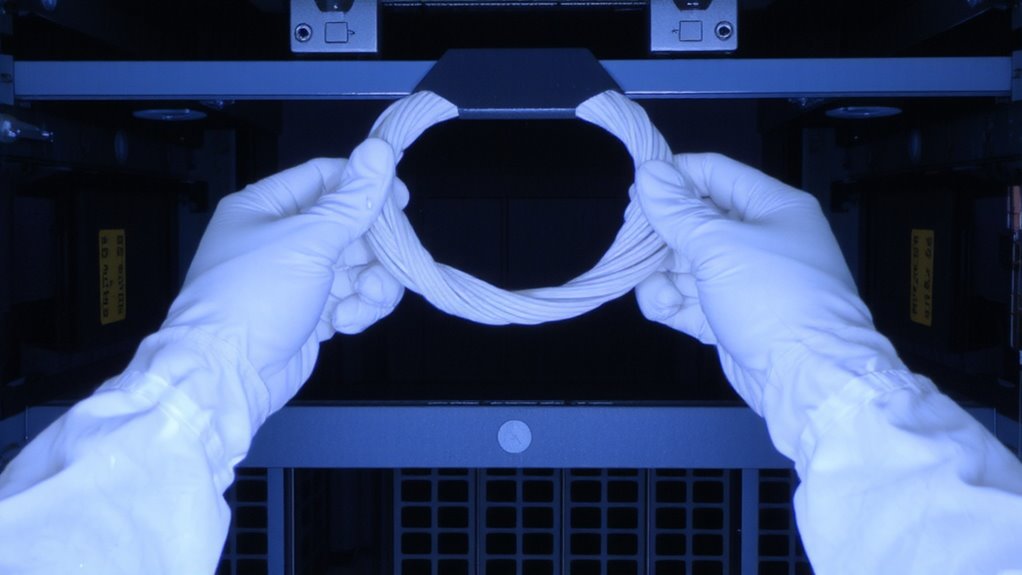
How do you know when it’s really time to rotate your reversible cable management arm? Look for uneven cable tension, visible sagging, or stiff movement during arm extension-these signal wear on one side. Poor arm alignment, like twisting or misdirected channels, disrupts smooth cable routing and increases stress on joints. If you notice reduced reach or resistance when pivoting, internal components may be fatiguing. Also, check for cracks or deformation in the arm body or pivot points, even minor ones, as they compromise long-term reliability. Rotating redistributes wear and restores balanced function. Most reversible arms are rated for 10,000+ flip cycles, but real-world dust, overloading, or abrupt handling shortens lifespan. Flipping isn’t a fix for damaged arms-assess fit and function first. Confirm your model supports reversal; some budget designs don’t. When in doubt, consult the manual.
How to Flip Your Reversible Cable Arm in 5 Steps
So, when should you flip your reversible cable management arm? When wear signs appear, typically after 6–12 months of daily use. First, power down and unplug all devices to guarantee safety. Second, gently unclip or unscrew the arm from its mount-most models use a quick-release or M6 bolts. Third, reverse the arm’s orientation, guaranteeing the hinge faces the opposite direction. Proper arm alignment is critical; misalignment stresses joints and harms cable routing efficiency. Fourth, reattach securely and test range of motion-no wobbling or binding. Finally, re-route cables carefully, maintaining slack and avoiding sharp bends. This preserves flexibility and reduces strain. Reversible arms typically last 3–5 years with flipping, but confirm compatibility with your setup-older desks or third-party arms may lack full support. Flipping isn’t instant magic; results depend on prior usage and build quality. For optimal long-term organization, consider pairing flipped arms with cable management solutions designed for professional office environments.
Balance Wear With Proper Usage After Flipping
You’ve flipped the arm, and now it’s time to make that fix last-balance starts the moment you resume using it. Keep cable tension consistent; yanking or overextending strains the new side just like the old one. Feed cables smoothly through the arm’s channels, avoiding sharp bends that increase friction and wear. Proper arm alignment guarantees the pivot point isn’t skewed, which prevents uneven stress on internal guides. Use the full arc of motion occasionally to promote even flexing across the cable bundle. Don’t force the arm beyond its designed range-most reversible arms allow 180° to 270° travel, depending on model. Check alignment weekly, especially if your desk vibrates or shifts. While flipping extends life, misuse negates the benefit. Even with ideal use, materials degrade-watch for stiffness or cracked insulation. Regular, mindful usage isn’t a fix-all, but it greatly delays fatigue.
When to Replace Instead of Rotating Your Arm
When does flipping stop making sense? When you spot material fatigue or structural damage-then it’s time to replace, not rotate. Cracks, warping, or deformation in the arm’s hinge or support brackets mean it can no longer handle stress evenly. Flipping a compromised arm risks sudden failure, especially under full cable load. These aren’t cosmetic flaws; they’re signs the polymer or metal has degraded past safe use. Even top-tier arms have limits, usually after 5–7 years of daily motion. Check manufacturer warranties-many cover structural failures but not wear from misuse. Replacement guarantees safety and stability; don’t gamble on an arm that could drop your cables mid-adjustment. Yes, it’s more upfront cost, but it beats unplanned downtime or equipment risk. Know the difference between wear and danger. Flip to extend life, but replace when integrity’s gone.
On a final note
You should flip your reversible cable management arm-it extends lifespan by balancing wear across both sides. Doing so every 6–12 months prevents fatigue, especially at stress points like the pivot hinge. But only flip if the arm is truly reversible and shows even, mild wear. Severe cracks, deformation, or loose fittings mean replacement, not rotation. Check manufacturer specs; most support one flip under warranty. Flipping works, but isn’t a fix for damaged hardware.