Step-by-Step Guide to Installing Soundproof Windows in a Home Office
You’ll cut home office noise by up to 90% with soundproof windows, but only if you choose double- or triple-pane units with laminated glass and an STC rating of 35 or higher. Measure the rough opening carefully-three times each for width and height-and use the smallest dimension, rounding down to the nearest 1/8 inch. Install with vinyl or fiberglass frames for better seals, avoid aluminum for its sound-conducting flaws, and use acoustic caulk on all gaps since even a 1/8-inch opening can leak significant noise. Follow manufacturer prep steps exactly-skip nothing, or you could lose 10+ STC points and void the warranty. Proper installation means using a level, expandable foam, and weather stripping without over-compression. Keep in mind that casement windows offer the tightest seal thanks to crank-driven compression. Real-world performance depends on perfect measurements, full sealing, and frame material-cutting corners risks near-total sound bypass. Long-term results in extreme climates require rechecking seals every few years. Next, you’ll see exactly how each step fits into a seamless, error-proof process.
Notable Insights
- Measure the rough opening inside the frame three times, recording the smallest width and height to the nearest 1/8 inch for a precise fit.
- Choose double- or triple-pane windows with laminated glass and an STC rating of 35 or higher for optimal noise reduction.
- Select casement windows with vinyl or fiberglass frames to ensure a tight seal and ease of DIY installation.
- Prepare tools like a pry bar, level, caulk gun, and acoustic caulk, and follow manufacturer instructions to avoid voiding the warranty.
- Seal all gaps with acoustic caulk and add weather stripping to prevent noise leaks, ensuring long-term soundproof performance.
Reduce Home Office Noise With Soundproof Windows
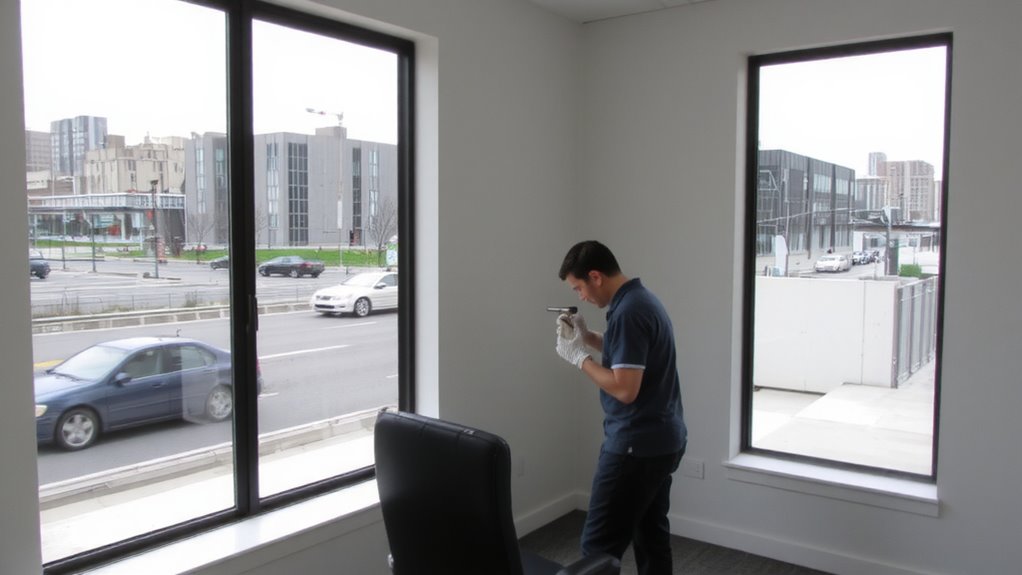
Ever wonder why your home office still feels noisy even with the windows closed? Standard window types often fail to block common noise sources like traffic, sirens, or lawn equipment. Upgrading to soundproof windows can cut noise by 70–90%, especially models with laminated glass and sealed frames. Double- or triple-pane units with argon gas filling perform best, reducing sound transmission through both mass and dampening. Look for a Sound Transmission Class (STC) rating of 35 or higher-real-world tests show these make speech hard to distinguish from outside. Still, results depend on installation quality and wall insulation. Cheaper window types may claim “sound-reducing” benefits but lack lab-verified STC scores. Retrofitting can cost $500–$1,200 per window, often with 10–20 year warranties. No window blocks all sound, but the right type markedly improves focus-just don’t expect complete silence.
Measure Your Window Opening Right the First Time
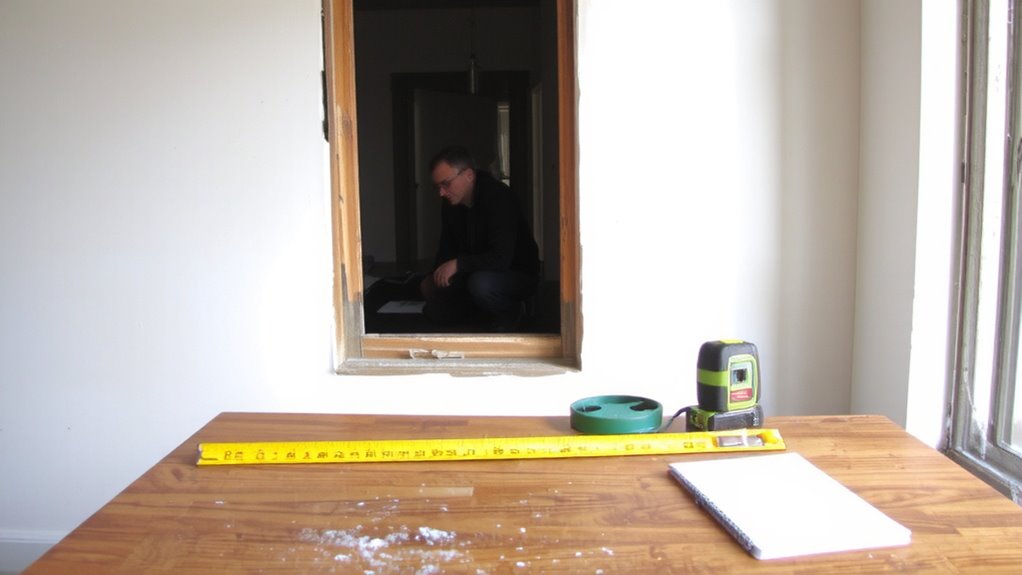
Getting the right soundproof windows starts with accurate measurements-skip this step, and even the best units won’t seal properly or perform as rated. You need window accuracy to guarantee a tight fit that blocks noise; small gaps can undermine sound insulation by up to 75%. Use a steel tape measure for measurement precision: take three width and three height readings-top, middle, bottom-since openings often aren’t perfectly square. Record the smallest dimension for each. Don’t measure the trim or existing sash; measure the rough opening inside the frame. Round down to the nearest 1/8 inch to allow for shimming and sealing. Double-check each number-typos cause costly mistakes. Most manufacturers won’t honor warranties if your measurements are off. Mistakes here mean delays, added expense, and poor performance. Measure twice, order once.
Choose the Best Soundproof Window for DIY Installation
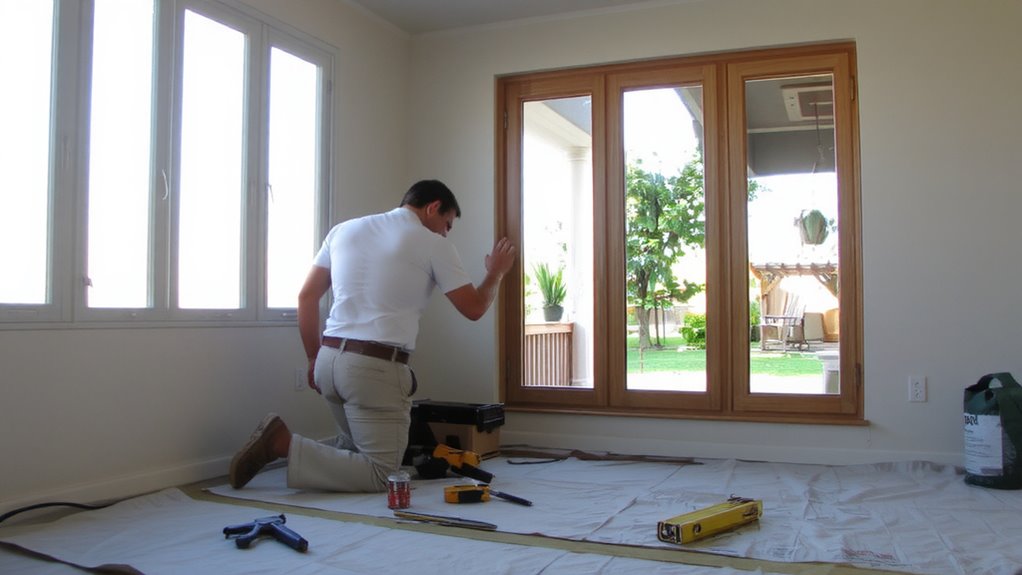
Why install soundproof windows if they’re not going to fit right or actually reduce noise? You need the right balance of Window types and Material options for real results. Double- or triple-pane windows with laminated glass consistently deliver STC ratings of 35–45, meaning they cut mid-to-high frequency sounds like traffic and voices. Vinyl and fiberglass frames are strong DIY choices-they’re lightweight, resist warping, and seal tightly. Aluminum may look sleek but conducts sound and heat, reducing effectiveness. Sliding and double-hung models cost less but often leak air and noise unless tightly calibrated. Casement windows, with their crank operation, typically offer the best compression seal. Check manufacturer warranties-10+ years signals durability. Prioritize certified acoustical labs’ test data over marketing claims. Keep in mind: heavier units need solid framing support. Don’t sacrifice performance for ease-install only what matches your noise profile and structure.
Tools and Prep for Installing Soundproof Windows
While proper tool selection won’t eliminate outside noise on its own, it directly impacts whether your soundproof windows perform as tested. You’ll need a digital caliper for precise measurements, a pry bar, level, caulk gun, and insulation expandable foam. Always match your tools to the window design-especially if you’re installing dual-pane or laminated glass units. The frame material, whether vinyl, wood, or aluminum, affects both the installation process and sound attenuation. Vinyl frames typically offer better noise reduction and easier DIY handling, while wood adds insulation but requires more maintenance. Check manufacturer specs for exact dimensions and clearance needs. Improper prep can create air gaps, reducing real-world STC ratings by 10 points or more. Verify warranty terms-some void coverage if installation steps aren’t followed precisely. Prep thoroughly; it’s the foundation of performance.
Install Your Soundproof Window: Step-by-Step Guide
You’ve measured twice, picked the right frame material, and assembled the tools-now it’s time to get the soundproof window in place. Carefully lift the unit and position it in the opening, checking window alignment with a level to guarantee even gaps on all sides. Misalignment can cause stress fractures and reduce noise reduction. Secure the frame incrementally, starting from the center of each side, to maintain frame stability. Use corrosion-resistant fasteners at recommended intervals-typically every 12 inches-to prevent warping over time. Don’t overtighten, as this may distort the frame and compromise performance. Double-check plumb and level after fastening. Most manufacturers require proper alignment and stability to honor warranties, especially for laminated or dual-pane glass. Installation errors are responsible for over 60% of real-world sound leakage, even with high-STC windows. Take your time-it’s not just about fitting the window, it’s about securing long-term performance.
Seal Gaps to Block Noise Leaks Completely
A high-performance soundproof window won’t reach its full potential if gaps around the frame go unsealed-those small openings let sound sneak through like air under a door. You’ve got to seal every crack with acoustic caulk, which stays flexible and blocks vibrations better than regular caulk. Apply it around the window frame where it meets the wall, pressing it smoothly into gaps no wider than 1/4 inch. For moveable parts, like the sash or tracks, add weather stripping-look for dense foam or rubber variants that compress well without deforming. It’s cheap, easy to install, and stops flanking noise at weak points. Just don’t over-compress it, or you’ll damage the seal and make operation harder. While these fixes won’t eliminate all sound, they cut mid-range frequencies markedly, especially from traffic or voices. Some acoustic caulk brands offer 20-year warranties, but recheck seals every few years, especially in climates with high temperature swings.
Test Your Soundproofing and Fix Common Issues
How well is your window actually blocking noise once everything’s installed? Test sound transmission by playing white noise outdoors or using a speaker near the glass while measuring decibel levels inside with a smartphone app. Compare results before and after installation to gauge improvements in acoustic insulation. If you still hear significant noise, check for weak spots-especially around edges or frames-where gaps might compromise performance. Poor seals or thin glass reduce effectiveness, even with double or triple glazing. Consider adding mass-loaded vinyl or acoustic curtains if upgrades are limited by structure or budget. Keep in mind that no window eliminates all sound; most reduce noise by 70–90%, depending on installation quality and exterior conditions. Always verify manufacturer claims against real-world results.
On a final note
You’ll get real noise reduction with properly installed soundproof windows, especially dual-pane units with laminated glass and an STC rating of 35 or higher. Just make sure your frame seals are airtight-any gap over 1/8 inch undermines performance. These windows aren’t cheap, often costing $500+ each, and DIY errors can void warranties. Test with a decibel app before and after to confirm results.