How to Adjust Chair Depth So Thighs Are Fully Supported Without Pressing Behind the Knees
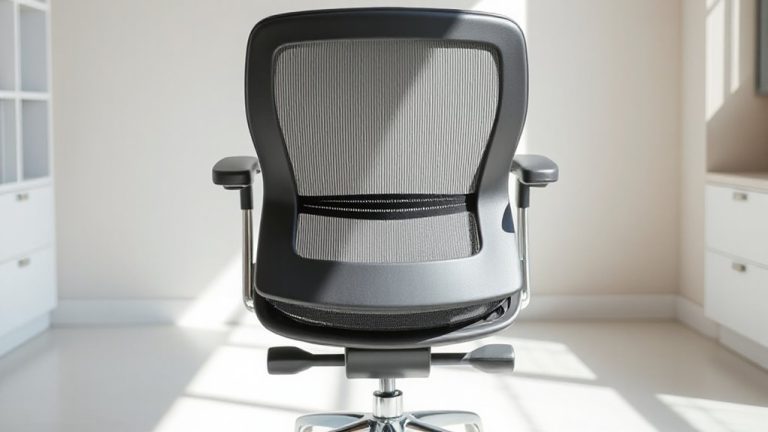
Set your seat depth so there’s 1–3 inches between the back of your knees and the seat edge-this prevents pressure behind the knees and guarantees full thigh support. Sit back fully, feet flat, then adjust the sliding mechanism under the front of the seat. Most ergonomic chairs offer 15–20 inches of depth range; look for high-resilience foam and independent adjustments for lasting comfort. If your chair lacks adjustability, proper positioning becomes even more critical to avoid strain. Getting this right means you’re set up to stay supported, balanced, and focused longer.
Notable Insights
- Sit with your back against the chair and feet flat to measure from the back of the seat to the back of your knees.
- Adjust the seat depth so there’s 1–3 inches of space between the back of your knees and the seat edge.
- Use the lever or knob under the front of the seat to slide it forward or backward for proper fit.
- Ensure your thighs are fully supported without pressure at the knee crease or hanging over the edge.
- Test the position by sitting fully back; your lower back should contact the backrest with no knee discomfort.
Why Seat Depth Matters for Comfort and Health
Comfort isn’t just about cushioning-it starts with fit, and seat depth plays a big role in both comfort and long-term health. If the seat’s too deep, you can’t recline properly, and pressure builds behind your knees, restricting blood circulation. Over time, that leads to swelling, numbness, and fatigue. A shallow seat might seem safer, but it often leaves your thighs hanging, increasing nerve compression risk along the sciatic pathway. Proper depth supports most of your thighs without pressing into the back of your knees-ideally, 1–3 inches of space there. You’ll maintain alignment, reduce strain, and stay alert longer. However, adjustable depth isn’t universal; some chairs use fixed shells, limiting customization. Always test sit before committing, especially if you’re taller or shorter than average. Real-world feedback shows users with proper seat depth report less lower back pain and better focus-worth the extra setup time. Top ergonomic office chairs often feature adjustable seat depth to accommodate a wider range of body types and promote optimal posture.
How to Measure Your Ideal Seat Depth in 3 Steps
You’ve probably noticed how an ill-fitting chair can throw off your entire workday, and if your seat pan feels too long or too short, it’s likely a depth issue. To find your ideal seat depth, start by sitting with your back against the chair and feet flat. First, measure from the back of your seat to the back of your knees-aim for 1–3 inches of space to avoid pressure behind the knees. Second, consider your leg length: taller users often need deeper seats, while shorter users risk poor posture alignment with too much depth. Third, adjust accordingly and check that your thighs are fully supported without hanging or pressing. An accurate fit improves posture alignment and comfort during long sessions. Keep in mind that seat foam density and chair design can slightly alter fit, so test adjustments over time-not just at first glance.
How to Adjust Seat Depth on Any Office Chair
While not every office chair lets you tweak the seat depth, most mid-to-high-end models designed for ergonomic support do offer this essential adjustment-giving you control over how well your thighs are supported and how much clearance you have behind the knees. Look under the front edge of the seat for a lever or knob; pulling it lets you slide the seat forward or back. Release it to lock into place. Aim for 1–2 inches between the back of your knees and the chair’s edge. Proper seat depth also improves lumbar support effectiveness, since sitting too close or too far throws off spinal alignment. It can even influence armrest positioning, as poor thigh support may force you to shift forward, straining shoulders. Not all chairs adjust smoothly, and some mechanisms feel flimsy over time. Test seat depth alongside other settings-especially lumbar support and armrests-for best results.
Key Chair Features for Proper Thigh Support
Proper thigh support hinges on a few critical design elements that go beyond simple adjustability. You’ll need a seat with sufficient depth range-typically 15 to 20 inches-to align the edge just 1–2 inches from the back of your knees. Cushion firmness plays a big role: too soft, and you’ll sink, reducing support; too firm, and you risk pressure points. A high-resilience foam base strikes the best balance, maintaining shape over time. While lumbar support mainly aids your lower back, it indirectly affects thigh posture by promoting an upright pelvis position. Look for chairs with independent adjustments-tethered lumbar or fixed pods often compromise customization. Testing over hours, models with 3–5-year warranties tend to hold up better. Keep in mind, even premium chairs fail if dimensions don’t match your build-measure first, then prioritize materials that endure daily use without molding prematurely.
Signs Your Seat Depth Is Too Deep or Too Shallow
A seat that doesn’t match your torso-to-thigh ratio can undermine even the most supportive chair design, no matter how well it cushions or adjusts. If you feel leg discomfort or persistent knee pressure, your seat depth is likely off. If the seat is too deep, you can’t sit back far enough to use the lumbar support properly, leaving your thighs overloaded near the knees. You’ll often see a gap between your lower back and the chair backrest. When the seat is too shallow, your thighs aren’t fully supported, reducing stability and increasing pressure on the sit bones. You might also shift forward, straining your lower back. Leg discomfort typically develops within 30 minutes of sitting. These signs appear most often in chairs with fixed dimensions, especially those designed for average builds. Always test seat depth adjustments before buying-what works for one frame may not suit yours. Choosing a chair with adjustable seat depth ensures optimal thigh support and overall ergonomic alignment.
Quick Fixes for Chairs Without Adjustable Depth
How do you fix seat depth when your chair doesn’t offer an adjustment? You can use simple, low-cost tweaks like cushion placement or folded towel support to improve thigh alignment and reduce knee pressure. Place a firm cushion toward the front of the seat to move your body backward, effectively shortening the seat depth. This helps support most of your thighs without leaving the back of your knees pressed. A rolled or folded towel behind your lower back also pulls you slightly rearward while adding lumbar support. These fixes work best on chairs with deep seats and minimal adjustability. However, they’re temporary-long-term use may lead to slipping or uneven support. For enduring comfort, an adjustable chair is still the better choice, but these solutions can help in a pinch. Incorporating Stylish Bookshelf Accessories can also refresh your workspace environment while maintaining functional ergonomics.
On a final note
You’ll sit more comfortably and avoid knee pressure with properly adjusted seat depth. Aim for 1–2 inches between the back of your knees and the chair’s edge when your feet are flat. Adjustable seat pans make this easier, but fixed-depth chairs may need a cushion or different model. Even high-end chairs can fit poorly if not sized right, so check dimensions and return policies before buying.