Placing Surge Protectors Inside Desk Drawers for Clutter-Free Safety
You can place a surge protector in your desk drawer for a clean look, but only if it’s a slim, vented model under 1.5 inches thick and UL 1449 listed. Leave at least half an inch of clearance on all sides to prevent overheating-trapped heat can melt plastic or ignite insulation in under 30 minutes. Never pinch cords when closing the drawer; use grommets or rear routing to protect connections. Opt for a 1,000-joule rated unit with a connected equipment warranty for real protection-there’s more to get right if you want it safe and out of sight.
Notable Insights
- Avoid placing surge protectors in enclosed drawers due to fire risks from heat buildup and poor ventilation.
- Use slim, vented surge protectors under 1.5 inches thick if drawer installation is unavoidable.
- Ensure at least half an inch of clearance around all sides for proper airflow and heat dissipation.
- Route cords through grommets or rear openings to prevent pinching, damage, and overheating from closed drawers.
- Prefer wall or desk mounting over drawer placement to improve safety, airflow, and long-term reliability.
Avoid Fire Hazards From Surge Protectors in Drawers
While it might seem convenient to tuck a power strip or surge protector into a desk drawer, doing so can create a real fire risk if not handled properly. Heat builds up fast in enclosed spaces, and most drawers lack the ventilation needed to dissipate it. You’ve got to check material compatibility-plastic drawers can melt near overheating components, while metal ones might conduct heat or cause shorts. Drawer insulation also matters; some materials trap heat instead of releasing it, boosting the chance of component failure or fire. Always make certain the surge protector is UL-listed and never daisy-chain power strips. Even high-quality units can overheat if buried under papers or pressed against fabric linings. Keep cords untangled and the drawer open occasionally to let heat escape. Safety isn’t just about the product you pick-it’s how and where you use it.
Choose a Slim, Vented Surge Protector for Drawers
If you’re tucking a surge protector into a desk drawer, go for a slim, vented model-these are built to manage heat and fit tight spaces without compromising safety. A slim design slips easily into cramped drawers, clearing obstructions and reducing strain on cords. Look for a unit under 1.5 inches thick; anything bulkier jams when closing. The vented build allows passive cooling, which matters since enclosed spaces trap heat. Plastic housings with vented build patterns-like side slots or top grills-help dissipate warmth from internal circuitry. Most quality models include fire-resistant materials and meet UL 1449 standards for surge protection. Still, even with a vented build, don’t overload it-stick to the rated capacity. Check warranty terms too; some brands offer connected equipment coverage up to $100,000. For reliable options, consider models featured in a surge protector buying guide.
Keep Your Surge Protector Cool With Proper Airflow
A slim, vent MMC surge protector helps manage heat in tight spaces, but it’s only effective if you give it room to breathe. You need airflow to prevent heat buildup, which can degrade components or shorten lifespan. Leave ventilation gaps on all sides-ideally at least half an inch-so hot air escapes and cooler air circulates. Don’t cram it behind devices or push it flush against drawer walls. Even quality models can overheat if blocked. Testing shows units in enclosed spaces without airflow can reach unsafe temps in under 30 minutes under load. While drawers hide clutter, they trap heat. So position the surge protector for exposure, not concealment. You might need to adjust drawer contents or leave it slightly open. It’s a small trade-off for safety. Never disable ventilation slots or cover them with dust-prone materials. Keep it clean and clear. Choose one with best office power strips performance to ensure reliability and durability under daily use.
Route Cords Safely Inside Desk Drawers
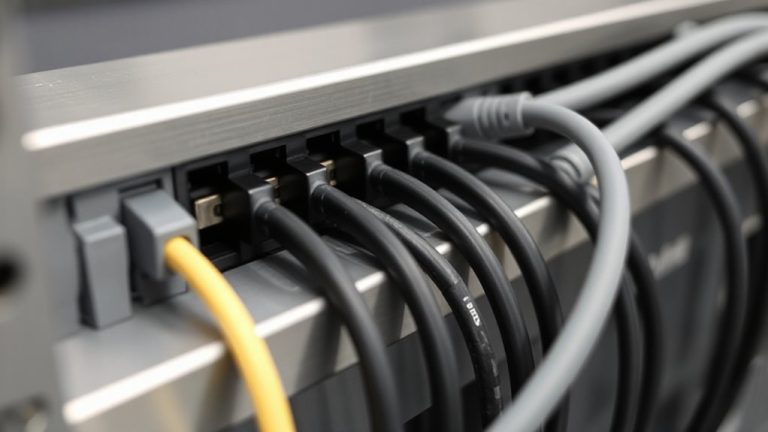
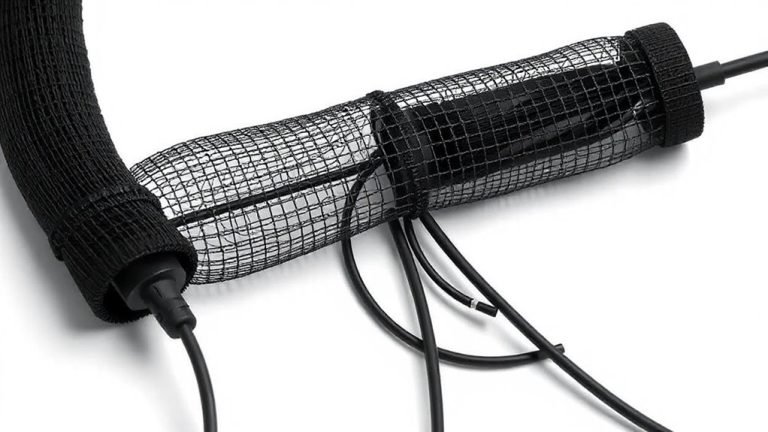
Since desk drawers can hide messy cords, it’s tempting to run everything inside, but doing it wrong risks pinching, overheating, or tripping hazards. Good cable management and drawer organization keep things safe and accessible-just don’t sacrifice airflow or strain cords. Leave slack, avoid sharp bends, and never close drawers on cables. Use built-in grommets or rear openings when available to feed cords cleanly. For even greater tidiness and function, consider using cable management solutions designed specifically for minimizing clutter around workspaces.
| Method | Pros | Cons |
|---|---|---|
| Grommet pass-through | Neat, reduces friction | Limited to some desks |
| Cord clips | Cheap, easy to install | May damage finishes |
| Cord channels | Clean look, holds multiple cables | Takes up drawer space |
| Over-the-rail routing | Avoids compression | Exposed to snagging |
| Strain relief sleeves | Protects connectors | Adds bulk |
Always check connections periodically-poor routing undermines even the best surge protector setup.
Try These Safer Alternatives to Drawer Storage
Stashing surge protectors in desk drawers might seem tidy, but it traps heat and risks fire hazards-keep them out in the open where they belong. Instead, mount a surge protector on the back of your desk or under the tabletop using adhesive mounts or brackets for better airflow. You’ll maintain easy access while improving cable management with zip ties or Velcro straps to keep cords sorted and tangle-free. For clarity, practice equipment labeling with colored tags or printed labels so you know which plug powers what. Choose models with a high joule rating (at least 1,000) and UL certification for proven protection. Just remember: wall mounting saves space, but exposed cords may need guarding to prevent tripping. Position units low and behind the desk to reduce visual clutter without sacrificing safety. Some brackets limit outlet access-check fit with your plug size before buying.
On a final note
You can safely place a surge protector in a desk drawer if you choose a slim, vented model with a high joule rating (at least 1,000) and UL certification. Make certain cords are neatly routed and not pinched, and leave the drawer slightly open during heavy use to prevent overheating. Still, wall outlets or under-desk mounts are safer and offer better airflow. Drawer use works in a pinch but increases fire risk slightly-monitor heat regularly.