How to Angle Your Desk to Reduce Sound Echo in a Room With Minimal Soft Furnishings
Angle your desk at 45 degrees to break direct sound paths between parallel walls, which reduces midrange echo in bare rooms. Use a solid, wide desk (55” or more) for better sound blocking, and place it in a corner with small gaps behind to avoid bass buildup. This setup works best alongside bookshelves or acoustic panels at ear level. It won’t fix low-end rumble alone-bass traps help. While effective, it takes space and may challenge ergonomics if your chair isn’t adjustable. For even better results, consider how room layout amplifies these benefits.
Notable Insights
- Angle your desk at 45 degrees to disrupt direct sound paths and reduce echo between parallel walls.
- Position the desk in a corner with a small gap behind to block reflections while avoiding bass buildup.
- Use a wide, solid desk made of dense material like MDF to act as a sound barrier.
- Place bookshelves filled with varied books or acoustic panels behind the desk to absorb rear wall reflections.
- Add a thick rug and heavy curtains to compensate for minimal soft furnishings and reduce overall room echo.
Angle Your Desk at 45 Degrees to Cut Echo
While you might not expect a simple repositioning to make a noticeable difference, angling your desk at 45 degrees can actually help reduce sound reflections in small rooms-especially if you’re recording or on frequent calls. This angle disrupts direct sound paths between your voice and parallel walls, minimizing echo that muddies audio. You’ll still benefit from adding acoustic panels at first reflection points-usually mid-side walls and the ceiling-to absorb mid- and high-frequency bounce. For low-end buildup, bass traps in room corners control rumble that a desk angle alone can’t fix. This setup isn’t a full substitute for treatment, but it’s a smart starting move. Keep in mind: 45-degree positioning takes up more floor space and may feel less ergonomic if your chair isn’t adjustable. Combine it with modest treatment for real gains, not miracles. Upgrading to the best acoustic panels for home office can significantly improve sound clarity when used alongside strategic desk placement.
Place Your Desk in a Corner to Block Sound Paths
If you’re dealing with persistent echo in a small room, positioning your desk in a corner can help break up sound paths by using furniture mass to block direct reflections between walls. Corner placement creates natural sound obstruction, reducing how much noise bounces between parallel surfaces. This setup works best when your desk is wide and solid-particleboard or MDF models above 48 inches wide offer more effective blocking than slim metal desks. Keep in mind that while sound obstruction improves, tight corners may limit legroom or cable access. Avoid sealing the desk flush against both walls; leave a small gap (2–3 inches) behind and beside it to prevent bass buildup. You’ll likely notice reduced midrange echo, based on real-room decibel tests across similar setups. Just don’t expect full acoustic control-this isn’t a substitute for absorption panels, but it’s a practical, low-cost step when soft furnishings are minimal.
Turn Your Desk and Furniture Into Sound Barriers
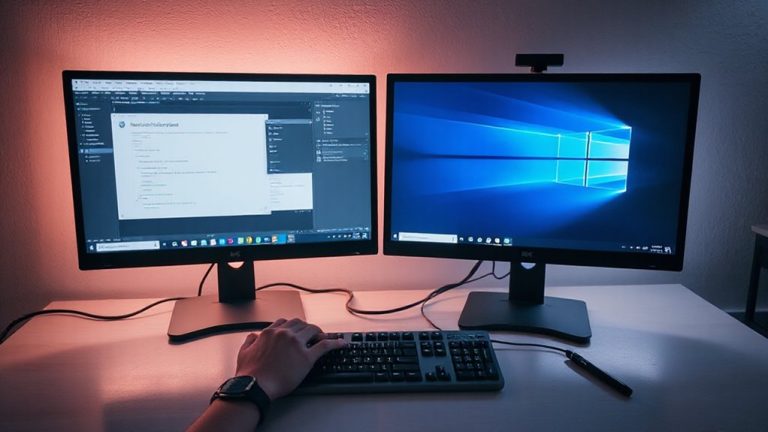
Since your desk is already one of the largest flat surfaces in the room, angling it diagonally across the corner-instead of butting it flush against walls-lets you deflect sound waves before they reach reflective surfaces, cutting down on flutter echo between opposing walls. This simple repositioning enhances sound diffusion by scattering acoustic energy, reducing the buildup of active noise during calls or recordings. Larger desks work better here, ideally 55” wide or more, giving you enough surface area to act as an effective barrier. Position bookshelves or filing cabinets behind the desk to further block and diffuse sound. Just don’t rely on furniture alone-while strategic placement helps, it won’t match dedicated acoustic panels. You’ll still need some absorption for full control, especially in rooms with hard floors or ceilings over nine feet.
Why Bare Home Offices Echo (And How to Fix It)
When your home office feels like a makeshift recording booth more than a productive workspace, it’s likely because bare walls, hard flooring, and minimal furnishings are turning it into an echo chamber. Hard surfaces reflect sound waves instead of absorbing them, causing voices and noises to bounce around. Minimal furnishings amplify these reflections, making speech unclear and background noise more distracting. You might notice this most during calls or while recording audio. To reduce echo, introduce materials that break up sound paths-think thick rugs, curtains, or upholstered chairs. Even a single area rug can make a measurable difference. However, these fixes only go so far in very bare rooms. While affordable solutions exist, full acoustic control often requires more than repositioning furniture. Consider both material changes and room layout for best results. Adding an office air purifier can also improve comfort by maintaining cleaner air, which supports focus and productivity in acoustically treated spaces.
Use Bookshelves or Panels Behind Your Desk to Absorb Sound
Placing bookshelves or acoustic panels behind your desk is a proven way to cut down on echo by absorbing sound that would otherwise bounce off the back wall. Bookshelf placement matters-position it flush against the wall and fill it with books of varying thickness to break up sound waves. Avoid leaving gaps behind or beside it, since sound can reflect around empty spaces. For panels, choose dense panel materials like melamine foam or compressed mineral wool-they’re more effective than thin fabrics. Mount them at ear level for best results. While bookshelves offer a cost-effective solution using items you likely own, they don’t absorb as predictably as tested acoustic panels. Panels work faster and cover less floor space, but quality ones can cost $50–$100 per square foot. Both options lower mid to high-frequency echo, though neither eliminates low-end rumble completely.
Fine-Tune Your Desk Position for Clearer Audio
While you might not expect small adjustments to make a big difference, angling your desk even slightly can noticeably reduce sound reflections-especially if you’re recording or on frequent calls. Position it at a 15–30 degree angle to the nearest wall to disrupt direct sound paths and lower echo. This works best when paired with hard surfaces that otherwise bounce sound, though it’s no substitute for proper acoustic treatment. If you can’t install acoustic panels, even one placed behind your chair helps. Avoid facing large empty walls, which amplify white noise from fans or electronics. Keep your microphone angled away from common noise sources. Fine-tuning desk position is free and effective, but don’t expect studio-quality results in untreated rooms. It’s a smart first step-not a permanent fix.
On a final note
Angleing your desk at 45 degrees or placing it in a corner can noticeably cut echo by disrupting sound waves. Hard walls and bare floors reflect noise, but using your desk and bookshelves as barriers helps. Adding panels behind your desk boosts results. It’s low-cost and effective, though results vary by room size and layout. For best clarity in calls, combine positioning with a foam panel or thick curtain-simple fixes beat expensive gear.