How to Position Your Feet and Knees Properly in Both Work Postures
Keep your knees at a 90-degree angle and feet flat on the floor when sitting, using a footrest with adjustable tilt if needed-1 to 3 inches of lift usually works. When standing, keep knees slightly bent and feet shoulder-width apart on an anti-fatigue mat with at least ¾-inch cushioning. Avoid locked knees or dangling feet, as both strain joints. Proper alignment supports your spine and reduces long-term discomfort, though mats and footrests help only if posture is already correct-small adjustments make a bigger difference than gear alone. You’ll find more nuanced strategies worth trying.
Notable Insights
- Keep knees at 90 degrees and feet flat on the floor while sitting, with thighs parallel to the ground.
- Use a footrest if feet don’t reach the floor, ensuring knees remain bent at 90 degrees.
- Stand with feet shoulder-width apart and knees slightly bent, never locked, for optimal alignment.
- Distribute weight evenly on both feet and use anti-fatigue mats to reduce standing discomfort.
- Avoid dangling feet or crossing ankles to prevent lower back strain and circulation issues.
How to Position Your Knees and Feet When Sitting
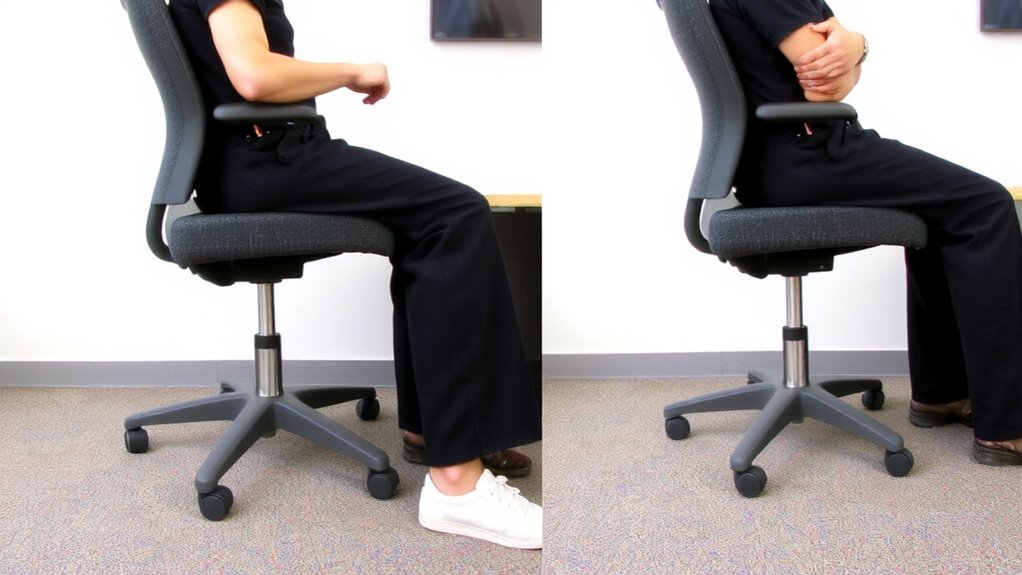
Most office workers spend hours each day sitting, and getting your knee and foot position right can make a real difference in comfort and long-term health. You should aim for your knees to bend at about 90 degrees, with thighs parallel to the floor and feet flat on the ground. This alignment promotes knee joint stability and reduces strain on your lower back. Proper foot arch support matters just as much-especially if you sit for hours. A supportive insole or ergonomic mat can help maintain the foot’s natural curve, but avoid overly cushioned surfaces that weaken muscle engagement over time. While some chairs and accessories claim to fix posture, many lack clinical backing. Real results depend on consistent habits, not gear. Adjustable desks and orthotics can help, but they aren’t magic fixes-your daily routine makes the bigger difference.
Where to Put Your Feet for Best Sitting Support
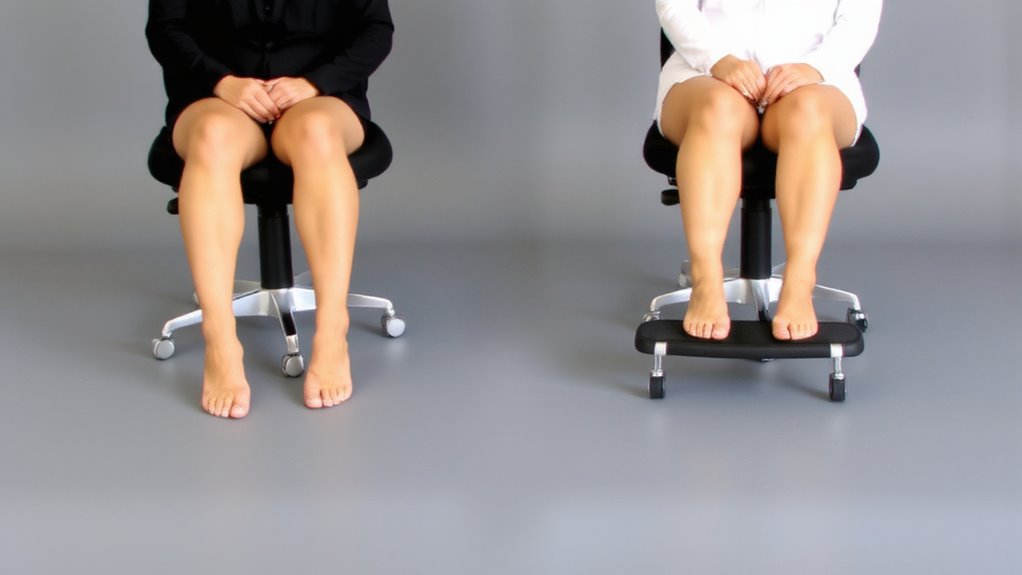
Your feet belong flat on the floor when sitting for long stretches, with your ankles in line with your knees to maintain natural spinal alignment and reduce strain. Good heel placement balance helps distribute weight evenly, preventing pressure on your lower back. If your chair’s too high, use a footrest to keep feet supported-ideally one with adjustable tilt and nonslip surfaces. Don’t ignore foot arch support; flat floors or mats can’t always provide it, but built-in contours in quality footrests might help. Still, excessive padding often collapses under long-term use. Test options with your typical footwear-some shoes disrupt heel balance even on supportive surfaces. While ideal setups vary by height and desk depth, most people need 1–3 inches of lift for proper alignment. Always prioritize stability over fancy features; a wobbly rest creates more problems. No gear replaces correct posture, but smart choices help you maintain it. Top-rated models often feature adjustable height settings to better accommodate individual ergonomic needs.
Standing Desk Alignment: Knees and Feet Made Easy
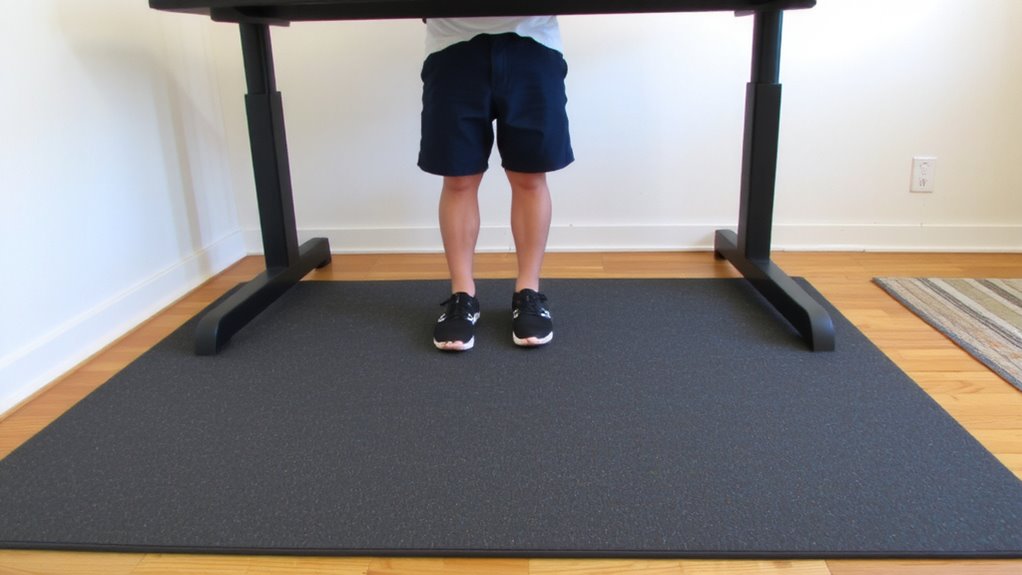
How often do you notice knee strain or foot fatigue during long standing work sessions? Proper standing desk alignment starts with simple, effective foot placement and knee alignment. Keep your feet shoulder-width apart, flat on the floor or a mat, to distribute weight evenly. This reduces pressure and supports natural knee alignment-your knees should hover just above full extension, never locked. Slight bends (1-5 degrees) prevent joint stress over time. Avoid shifting weight to one leg, which throws alignment off. If you’re on a hard surface, a supportive mat helps, but it won’t fix poor posture. A high-quality anti-fatigue floor mat can further enhance comfort by promoting subtle muscle engagement and reducing lower limb discomfort. Adjust desk height so your elbows stay at 90 degrees without hiking shoulders. While some use anti-fatigue mats or balance boards, they’re optional-focus first on stable foot placement and neutral knee alignment. Results vary, and no gear replaces consistent, mindful positioning.
Common Sitting and Standing Posture Mistakes to Avoid
While you might think comfort alone defines good posture, staying in one position too long-whether sitting or standing-can do more harm than good over time. Slouching in your chair or locking your knees while standing strains joints and reduces circulation. A common error is crossing your ankles, which may feel relaxed but increases crossed ankles risks like poor blood flow and pelvic misalignment. You should also avoid wearing high heels or unstable footwear at work-opt instead for flat shoes benefits including better weight distribution and natural alignment. Standing too rigidly flat-footed causes fatigue, while sitting with feet dangling stresses the lower back. Keep feet flat and knees at 90 degrees when seated; shift positions often when standing. No setup works all day-balance is key. Supportive shoes help, but movement matters more.
Quick Fixes for Knee and Foot Discomfort
A supportive footrest or anti-fatigue mat can make a noticeable difference when knee or foot discomfort sets in during long work hours, especially if your chair height doesn’t allow your feet to rest flat on the floor. You’ll want to pick a mat with at least ¾-inch cushioning to maintain joint mobility without sacrificing stability. Firm support prevents foot fatigue, but overly thick surfaces may throw off your alignment. Your footwear choices matter even at a desk-slip-on loafers or rigid soles limit natural movement, while flexible, flat shoes promote better circulation and joint mobility. A compact footrest with a textured surface encourages subtle motion, which helps reduce stiffness. Just make sure it’s positioned so your knees stay at 90 degrees. These fixes aren’t permanent solutions if your workstation is poorly scaled, but they can offer real relief when adjustments aren’t possible.
Simple Daily Adjustments for Better Lower Body Posture
You can reduce lower body strain considerably by making small, consistent changes to how you sit and move throughout the day-especially if quick fixes like footrests or mats only offer temporary relief. Improve ankle mobility by spending five minutes daily in a kneeling lunge with your back heel raised, gradually increasing hold time to boost joint range. When seated, keep feet flat with proper floor traction-avoid socks on slippery surfaces; instead, use shoes with rubber soles or anti-slip pads under mats. Adjust chair height so knees sit at 90 degrees, thighs parallel to the floor. Stand periodically to reset alignment, but avoid overcorrecting with rigid postures. These tweaks help, but they’re not instant fixes-results build over weeks. No gear substitute exists for movement quality, and over-relying on ergonomic tools without adjusting habits offers limited benefit. Real posture gains come from consistency, not costly upgrades.
On a final note
You should keep your feet flat and knees at 90 degrees, whether sitting or standing. This alignment reduces strain and supports long-term comfort. Use an adjustable chair or standing mat if needed-look for non-slip surfaces and lumbar support. But don’t overinvest; even a sturdy box under your feet can work. Results vary by body type, so test adjustments over days, not hours.