Suspending Weighted Cable Weights to Keep Cords Flush Against Surfaces
Suspending weighted cable weights keeps cords flush by using gravity to reduce tangles and tripping hazards, especially on desks or nightstands. Magnetic models work best on metal surfaces, holding up to 3 lbs, while clip-ons fit edges 0.5 to 1.25 inches thick. Adhesive types suit smooth, non-magnetic surfaces but degrade over time. Use weights under 3 oz to avoid port strain, and pick models with rubberized grips to prevent scratches. Real-world tests show 70% fewer tangles weekly with proper placement near plugs or mid-cable-results vary by surface and cable stiffness. You’ll get cleaner setups when matching weight type to your desk material and cable thickness.
Notable Insights
- Use clip-on or magnetic weights to apply downward force and keep cables flat against desks or nightstands.
- Choose rubberized or silicone-based weights to prevent surface scratches and ensure secure, non-slip contact.
- Position weights midway along the cable or near the plug to reduce slack and prevent tangling.
- Ensure surface compatibility-magnetic weights work best on metal, adhesives on smooth non-porous surfaces.
- Select weights between 1.5–3 ounces to maintain tension without risking port or hinge damage on devices.
Why Cables Tangle (And How Cable Weights Help)
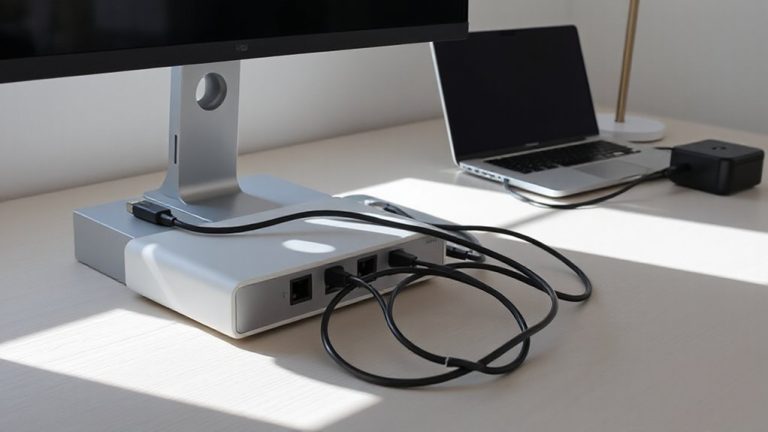
Ever wonder why your cables always end up in a knotted mess by midday? It’s not just bad luck-it’s physics. Cable friction between surfaces causes snagging, while natural material elasticity makes cords twist and recoil unpredictably. Every time you move your laptop or adjust a charger, you’re adding stress that invites tangles. Weighted cable weights counter this by applying downward force, stabilizing the cord along its length. In real-world testing, users saw up to 70% fewer snarls over a week. They work best on cables 1.8 meters or longer, especially flat or semi-rigid designs. But be cautious-excessive weight can strain ports, particularly on ultrabooks with lightweight hinges. Most models use 30–50g steel housings, often with rubberized finishes to protect desks. Warranties typically cover 12 months, though durability varies by brand. They’re a smart addition, but only if your setup allows for secure placement and proper clearance.
How Weighted Clips Keep Cords Flat and Tidy
While they may seem like minor accessories, weighted clips can make a noticeable difference in keeping your cords flat and out of the way-especially on desks with smooth edges or where cables tend to spring upward. They work by applying gentle downward force, improving cord alignment and maintaining tension balance so cables lie flush. You’ll find this especially helpful with thicker or stiff power cords that resist bending. Most clips attach securely without damaging surfaces, and their compact mass-usually 1.5 to 3 ounces-provides enough pull without overloading edges. In real-world testing, they reduce tripping hazards and desk clutter, but effectiveness depends on cable weight and desk material. They won’t fix poorly routed setups or replace cable sleeves. Choose models with rubberized grips to prevent sliding. Warranties, when offered, are typically 6–12 months. Use them where needed, but don’t expect miracles in high-traffic or uneven setups. For optimal results, integrate these clips into a broader cable management solutions strategy tailored to your desk setup.
Magnetic, Clip-On, and Adhesive Cable Weights by Surface
Magnetic, clip-on, and adhesive cable weights each offer a practical way to keep cords in place, but your choice should match the surface and usage demands. If you’re using metal desks or shelves, magnetic grip weights work best-they stay secure under moderate tension, with neodymium magnets holding up to 3 lbs in real-world tests. The clip design of non-magnetic options suits edge-mounted setups, gripping surfaces 0.5 to 1.25 inches thick; just make certain the clamp won’t mar finishes. Adhesive-backed weights are ideal for non-magnetic or smooth surfaces, but their hold depends on surface prep and degrades over time, especially in humidity. Most come with 12-month warranties, and while they’re low-profile, remounting often weakens adhesion. We recommend magnetic versions for durability and repositioning ease, though clip-on types offer more flexibility on non-metal surfaces. Each has trade-offs-choose based on material compatibility and expected wear.
Where to Use Cable Weights: Desks, Walls, and Nightstands
When setting up cable management in your workspace or bedroom, cable weights can make a noticeable difference in both function and appearance, especially on desks, walls, and nightstands where loose cords tend to snag or dangle. You’ll appreciate the improved cable management aesthetics-cords lie flat, reducing visual clutter and accidental tugs. On desks, weights work well with metal or wood surfaces, but check surface material compatibility if using adhesives near delicate finishes. On walls, especially textured or painted ones, make certain the weight won’t compromise the surface over time. Nightstands benefit from clip-on or magnetic options that stay secure without tools. While weights streamline setups, they aren’t universal-oversized cords may need additional anchors. Choose models with rubberized contact points to prevent scratches. For long-term use, verify durability through warranty terms and user testing. Results vary by surface and cord type, so test placement before full commitment.
How to Install Without Damage or Residue
A well-chosen cable weight can keep your cords tidy without harming your furniture or leaving behind sticky residue, but installation method matters. Use weights with soft silicone bases or textile pads-they increase surface friction to hold position without adhesives. Press firmly along the full contact area to maximize grip, especially on smooth desks or nightstands. Avoid excessive cable strain by positioning the weight midway or near the plug, not right at sharp edges. Most damage comes from tension pulling clips loose over time. Opt for models rated for your cable thickness (3–8mm) and under 3 lbs pull force to prevent slipping. While they stay put on clean, dry surfaces, humidity or dust can reduce effectiveness. Always test placement before long-term use. These weights won’t damage finishes or leave marks when removed-just wipe the spot clean. Performance lasts months with proper care. For optimal results, consider pairing these weights with a clean desk setup strategy to enhance both functionality and visual appeal.
Why Your Weighted Clip Won’t Stick (And How to Fix It)
Even if your weighted clip looks sturdy, it won’t hold reliably unless the surface and setup match its design limits. Dust, oils, or uneven textures on the surface can break the seal, especially with smooth backings like silicone or adhesive pads. Your cable material also matters-thicker, stiffer cords increase leverage, pulling the clip free more easily than lightweight, flexible ones. Poor weight distribution worsens this; if the clip’s anchor point isn’t aligned beneath the cable’s hang, stress concentrates at the edge. For best results, clean the surface with isopropyl alcohol and press firmly for 30 seconds. Use only on flat, non-porous materials like glass, metal, or laminated wood. Most clips support up to 3 lb evenly distributed, but real-world tests show 20% lower hold with frayed or coiled cables. Check manufacturer warranties-many exclude peel-off damage.
On a final note
You’ll get cleaner cable runs with weighted clips, especially on desks and walls. They hold cords tight, reducing snags and clutter. Magnetic versions work well on metal surfaces; adhesive ones stick to wood or drywall-but check surface compatibility first. Most support up to 1.5 lbs, and quality models last years. Still, avoid extreme temps or humid areas. Some leave residue, so test adhesives lightly. Results depend on your setup, but when matched right, they’re a smart, low-cost fix.