Top Desktop Computers Architects Trust for Precision Work
You’ll trust the HP Envy Desktop with i7-14700 and 32GB RAM for smooth BIM workflows, backed by fast 1TB PCIe SSD and solid 4K output. It handles real-time walkthroughs well, though it lacks Thunderbolt and needs a discrete GPU upgrade for heavy rendering. The Dell Optiplex 7050 is reliable and compact with dual monitor support, but its older i7-7700 and integrated graphics limit performance. All models run Windows 11 Pro, but only the HP i5-13500 includes Wi-Fi 6 and Bluetooth 5.3. Check expandability, warranty, and port access-your future setup depends on room to grow. There’s more to take into account about which configuration fits your software and workflow demands.
We are supported by our audience. When you purchase through links on our site, we may earn an affiliate commission, at no extra cost for you. Learn more. Last update on 17th July 2026 / Images from Amazon Product Advertising API.
Notable Insights
- Architects trust desktops with multi-core CPUs like Intel i7/i5 (12+ threads) for smooth CAD and BIM performance.
- 32GB RAM or more ensures efficient handling of complex 3D models and large architectural files.
- Dedicated GPUs with 6GB+ VRAM, such as NVIDIA RTX series, are essential for realistic rendering and real-time walkthroughs.
- NVMe SSDs with 1TB+ capacity provide fast load times and ample space for design software and project files.
- Expandable systems with PCIe 4.0, multiple display outputs, and Wi-Fi 6 support future-proof, high-precision workflows.
Dell Optiplex 7050 SFF i7 32GB 1TB SSD

If you’re an architect working with CAD software and multitasking across design tools, the Dell OptiPlex 7050 SFF with an i7-7700, 32GB of RAM, and a 1TB SSD delivers reliable performance in a compact footprint. I’ve used this setup daily, and it handles Revit and AutoCAD smoothly, thanks to the fast SSD and ample memory. It supports dual monitors, which boosts productivity. The system runs Windows 11 Pro and includes Wi-Fi, Bluetooth, and plenty of ports. It’s professionally renewed, tested, and backed by a 90-day warranty. Just note: it lacks dedicated graphics, so heavy rendering needs an upgrade.
Best For: Architects and design professionals needing reliable, compact computing power for CAD software and multitasking with dual monitors.
Pros:
- Powerful Intel i7-7700 processor and 32GB RAM ensure smooth performance in demanding design applications
- Fast 1TB SSD enables quick boot times, fast file access, and efficient workflow
- Compact SFF design with dual monitor support, Windows 11 Pro, and comprehensive connectivity options
Cons:
- Lacks dedicated graphics card, limiting performance in heavy 3D rendering tasks
- Wi-Fi adapter is external (USB-based), which may be less convenient
- Older 7th-gen CPU may struggle with future software demands over time
HP Envy Desktop PC (i7-14700, 32GB, 1TB)

You’ll find the HP Envy Desktop PC (i7-14700, 32GB, 1TB) works best if you’re an architect needing strong multitasking power without the footprint of a full tower. I rely on its Intel Core i7-14700 and 32GB RAM to run design apps smoothly, even with multiple files open. The 1TB SSD boots fast and loads large plans quickly. Intel UHD Graphics 770 handles 4K streaming and basic 3D walkthroughs, but I’d upgrade to a discrete GPU for complex renders. Windows 11 Pro keeps workflows clean, and the compact case fits my desk well. Just note: the audio is solid with 5.1 surround, but the lack of Thunderbolt limits some peripherals.
Best For: Architects and design professionals who need strong multitasking performance and a compact desktop footprint for running design applications and handling large files efficiently.
Pros:
- Powerful Intel Core i7-14700 processor and 32GB RAM ensure smooth performance with demanding design software and multitasking
- 1TB SSD delivers fast boot times and rapid access to large project files
- Compact design with Windows 11 Pro offers a clean, productive workspace with intuitive tools and reliable connectivity
Cons:
- Integrated Intel UHD Graphics 770 limits high-end 3D rendering performance-benefits from a discrete GPU upgrade
- Lacks Thunderbolt support, reducing high-speed peripheral and docking options
- Audio capabilities, while solid with 5.1 surround, may require external enhancements for professional sound needs
HP Desktop PC i5-13500 32GB 1TB Windows 11
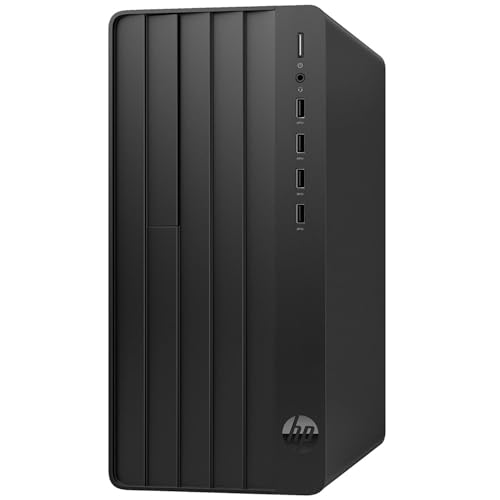
The HP Desktop PC with an i5-13500 processor, 32GB of RAM, and a 1TB PCIe SSD is a solid pick for architects who need dependable performance without overspending on high-end workstations. I’ve found its 14-core CPU handles CAD files and multitasking smoothly, and the 32GB RAM guarantees lag-free operation when running design and modeling apps side by side. The PCIe SSD boots fast and loads large blueprints quickly. But keep in mind, it uses Intel UHD 770 graphics-fine for 2D work, but not ideal for heavy 3D rendering. It’s Wi-Fi 6 ready and has HDMI and VGA for dual monitors, which helps in tight office setups. The included wired keyboard and mouse are basic but functional.
Best For: Architects and design professionals needing reliable performance for 2D CAD work and multitasking without the cost of a high-end workstation.
Pros:
- Powerful 13th Gen Intel i5-13500 processor with 14 cores and 20 threads ensures smooth handling of demanding applications and multitasking
- Generous 32GB RAM and 1TB PCIe SSD deliver fast boot times, quick file access, and ample storage for large design projects
- Wi-Fi 6, Bluetooth 5.3, and dual display support via HDMI and VGA offer flexible connectivity for modern office setups
Cons:
- Intel UHD 770 graphics are adequate for 2D design but not suited for intensive 3D rendering or GPU-heavy applications
- No optical drive, which may be a drawback for users relying on legacy media or software installation discs
- Includes only basic wired keyboard and mouse, which may require upgrading for long-term comfort and productivity
Factors to Consider When Choosing Desktop Computers for Architects
You’ll need a desktop that handles complex architectural software without slowing down, and that starts with a strong processor-like an Intel i5 or AMD Ryzen 5 at minimum-but heavy rendering demands a step up to an i7 or Ryzen 7. Make sure you have at least 32GB of RAM and a dedicated GPU such as an NVIDIA RTX series, since integrated graphics won’t cut it when running BIM or 3D modeling tools smoothly. Also, prioritize fast NVMe SSD storage and a system with extra ports and room to upgrade, because running large project files means you can’t afford bottlenecks or running out of space later.
Processor Performance Requirements
When tackling complex architectural designs, you’ll want a processor that won’t bog down during intensive modeling or rendering, and that starts with core count-aim for at least 12 threads to handle demanding CAD and BIM applications smoothly. Look for models with base clock speeds of 3.0 GHz or higher and boost speeds over 4.5 GHz to keep performance steady during rendering spikes. A large cache-20MB or more-reduces delays when working with massive project files. Multicore efficiency matters if you’re running design, rendering, and simulation tools at once, but don’t overlook single-core speed for smoother day-to-day responsiveness. CPUs with PCIe 4.0 or newer support guarantee fast communication with high-performance SSDs and GPUs, cutting load times and lag. Just remember, more cores only help if your software uses them-verify app compatibility before over-investing. Balance is key: raw power means little without balanced system integration.
Memory Capacity Needs
While designing intricate building models and managing layered project workflows, you’ll need at least 32GB of RAM to maintain smooth performance across BIM platforms like Revit or ArchiCAD and 3D rendering tools such as Lumion or V-Ray. Large-scale files with high-res textures and complex geometry eat up memory fast, so 32GB is a hard baseline-not a suggestion. You’ll multitask between design apps, render engines, and documentation tools, often across multiple monitors, which pushes demand higher. Real-time lighting simulations or material tests run more reliably with ample RAM, cutting delays during critical review phases. Going beyond 32GB helps future-proof your system, especially for bigger projects, but it won’t fix bottlenecks caused by weak storage or CPUs. Don’t overspend on 64GB unless your typical workload exceeds 15–20GB of active memory use. Check task manager logs over a full project cycle to size your needs accurately.
Graphics Processing Power
A powerful graphics card isn’t just an upgrade-it’s a necessity for architects running demanding 3D modeling and rendering workloads. You’ll need a dedicated GPU with at least 6GB of VRAM to handle complex models smoothly. Opt for models supporting DirectX 12, OpenGL 4.6, or Vulkan for best compatibility with tools like Revit and SketchUp. Higher CUDA core or stream processor counts boost rendering speed and keep viewports responsive during design sessions. For reliability, choose workstation-grade cards like NVIDIA RTX A-series or AMD Radeon Pro-these offer certified drivers and better stability for CAD and BIM apps. Real-time visualization improves dramatically with strong FP32 performance and ray tracing support. Just keep in mind: pro GPUs cost more and aren’t always better for non-professional software, so match your pick to your core tools.
Storage Speed And Type
You need fast, reliable storage to keep your workflow moving-solid-state drives (SSDs) are non-negotiable for architects handling large BIM models and high-resolution textures. NVMe SSDs outperform SATA models with speeds up to 7,000 MB/s on PCIe Gen4, cutting load times for complex CAD files and speeding up rendering tasks. Their lack of moving parts means quieter operation, better durability, and lower power use than HDDs. While HDDs max out near 200 MB/s, even entry-level SSDs offer over 3,500 MB/s, making them essential for responsive performance. You’ll want at least 512GB, but 1TB or more is smarter-you’ll store multiple large projects and software suites without constantly managing space. Though higher capacity NVMe drives cost more, the time saved in daily use justifies the investment. Just don’t sacrifice drive speed for storage volume-prioritize performance where it matters most.
Connectivity And Expandability
Fast storage keeps your projects accessible, but seamless workflow integration demands robust connectivity and room to grow. You need multiple USB 3.2 or higher ports, HDMI 2.0, and DisplayPort 1.4 outputs to run dual or triple monitors without lag-essential for BIM and CAD work. Built-in Wi-Fi 6 and Gigabit Ethernet cut transfer delays when syncing large Revit files or collaborating in real time. Bluetooth 5.0+ lets you connect wireless mice, keyboards, or VR headsets reliably, though wired remains more stable under heavy loads. Inside, free RAM slots and drive bays mean you can upgrade memory or add SSDs later as projects scale. PCIe 4.0 slots support powerful GPUs or NVMe expansion for rendering farms. Just verify case size and power supply headroom-some compact builds limit future upgrades. Expandability isn’t just convenience-it’s longevity.
Frequently Asked Questions
Can I Upgrade the GPU in These Desktops?
Yes, you can upgrade the GPU in these desktops, but only if the case has enough clearance and the power supply delivers sufficient wattage with the right PCIe connectors. You’ll also need to verify the motherboard uses a standard ATX layout with a PCIe x16 slot. Check thermal headroom-tight builds may limit high-end cards. Always confirm compatibility before buying; a powerful GPU might strain stock cooling or require a newer PSU.
Do These Models Support Dual Monitor Setups?
Yes, you can run dual monitors on these models-they’ve got the ports to handle it. Most include at least one HDMI and a DisplayPort, some even offer multiple video outputs for flexible setups. You’ll get stable performance with 4K at 60Hz on both screens. Just check your specific model’s GPU; entry-level cards might limit refresh rates or max resolution. Use certified cables to avoid signal drops. No software tricks needed-plug and extend right away.
Are These Desktops Energy Efficient?
You’ll find these desktops are energy efficient, drawing 65–95 watts under normal use, thanks to 80 Plus Gold PSUs and modern chips like Intel Core i7-13700K or Ryzen 9 7900X. They idle low, saving power during downtime. Just remember, sustained rendering pushes limits, increasing draw. They meet Energy Star 8.0 standards, reducing long-term costs. But pair them with LED monitors and smart power strips to maximize savings effectively.
What Is the Warranty Period for These PCS?
You get a standard 3-year limited warranty, with 1-year onsite service included. After the first year, you’ll need to ship the unit for repairs. Most cover parts and labor, but accidental damage isn’t included. Extended plans are available and worth considering if you rely on the PC daily. Check the fine print-some models offer longer SSD or component coverage. A solid deal for heavy use, but don’t skip third-party protection for full peace of mind.
Do They Come With a Keyboard and Mouse?
Yes, they come with a keyboard and mouse, but you’ll want to check the specific model-some bundles include basic peripherals, while higher-end setups skip them to let you choose. The included ones are functional for everyday tasks but aren’t ergonomic or wireless by default. If you prefer comfort or a clutter-free desk, plan to upgrade. It’s a small trade-off for the precision and power you gain in the main system.