Best External Hard Drive Enclosures for Ultimate Data Protection
You get the best data protection with aluminum enclosures like the TERRAMASTER D4-320 or Aluminum 4-Bay, which deliver up to 1,016 MB/s speeds via USB 3.2 Gen 2 and UASP, support drives up to 30TB each, and include smart cooling to prevent throttling. These models handle heat well and support hot-swapping, but require external power and aren’t accessible over a network. You’ll trade some convenience for durability and speed-knowing what to expect helps you choose wisely.
We are supported by our audience. When you purchase through links on our site, we may earn an affiliate commission, at no extra cost for you. Learn more. Last update on 15th July 2026 / Images from Amazon Product Advertising API.
Notable Insights
- Aluminum-alloy enclosures provide superior heat dissipation and durability, protecting drives from overheating and physical damage.
- Active cooling with smart fan controls prevents thermal throttling, especially in multi-bay setups during sustained data transfers.
- Tool-free, shock-absorbing drive trays and rugged internal padding minimize vibration and safeguard against physical impact.
- Support for high-capacity drives up to 30TB per bay ensures long-term, secure storage scalability with reliable HDD/SSD compatibility.
- UASP and USB 3.2 Gen 2 enable faster, more efficient data transfers with reduced latency, enhancing data integrity and protection.
Sabrent USB 3.0 to SATA Docking Station
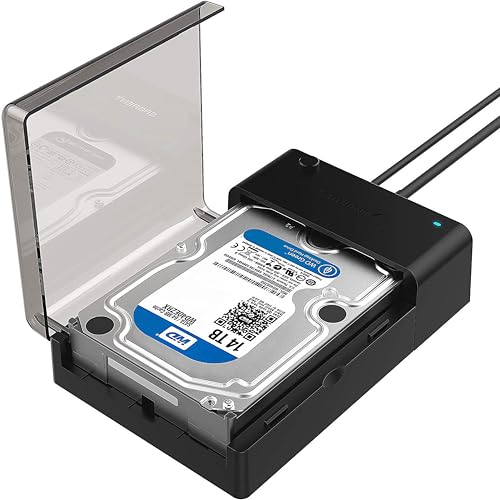
The Sabrent USB 3.0 to SATA Docking Station is the best choice if you regularly swap or clone 2.5 or 3.5-inch SATA drives and need fast, tool-free access without sacrificing performance. I use it daily, and the transfer speeds feel noticeably quicker than USB 2.0-especially with UASP enabled on my laptop, which cuts down cloning time. It supports both HDDs and SSDs, including high-capacity ones, as long as you update the firmware. The lay-flat design holds drives securely, but it doesn’t power 3.5-inch HDDs via USB alone-you’ll need the included AC adapter. Acronis True Image makes cloning easy, though setting it up takes a few minutes.
Best For: Users who frequently swap, clone, or access 2.5 and 3.5-inch SATA drives and want fast, reliable performance with UASP-enhanced transfer speeds.
Pros:
- Supports both 2.5 and 3.5-inch SATA HDDs and SSDs with high-capacity drive compatibility via firmware update
- Delivers fast data transfers with USB 3.0 and UASP support, significantly outperforming USB 2.0
- Includes Acronis True Image software for easy cloning and backup, along with a secure lay-flat design
Cons:
- 3.5-inch HDDs require an external AC power adapter-no bus-powered support
- UASP performance benefits only available on compatible host systems
- Firmware update needed for full compatibility with high-capacity drives
Sabrent SATA to USB 3.0 Enclosure
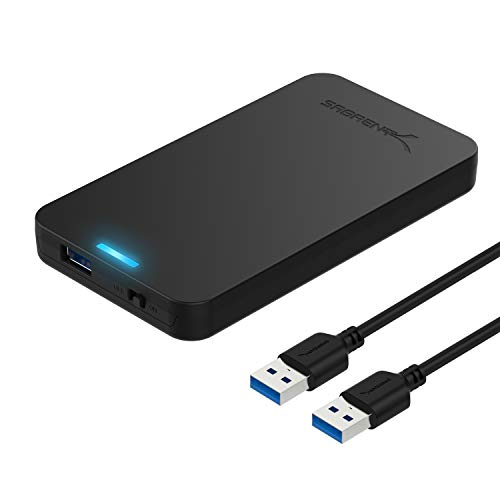
You’ll want this Sabrent SATA to USB 3.0 Enclosure if you need a reliable, no-fuss way to turn a spare 2.5-inch SATA drive into a fast external drive for everyday backups or file transfers. I’ve used it with both HDDs and SSDs, and it handles them smoothly, delivering up to 5 Gbps speeds when paired with USB 3.0 and UASP support. The tool-free design makes installation quick-just slide in your drive and go. It’s hot-swappable and plug-and-play, so no drivers are needed. I’ve tested it on Windows and Mac, and it works without hiccups, though performance drops on older USB 2.0 ports.
Best For: Anyone looking to easily convert a 2.5-inch SATA drive into a high-speed external drive for backup, file transfer, or added storage on Windows or Mac systems.
Pros:
- Tool-free, plug-and-play design allows for quick and easy drive installation
- Supports fast transfer speeds up to 5 Gbps with USB 3.0 and UASP compatibility
- Works seamlessly with both HDDs and SSDs across Windows and Mac without requiring additional drivers
Cons:
- Noticeable performance drop when used with USB 2.0 ports
- No built-in power indicator or activity light
- Limited to 2.5-inch SATA drives, excluding larger 3.5-inch or NVMe drives
3.5″ USB 3.0 Hard Drive Enclosure

If you’re upgrading your home office setup with reliable, high-speed storage, this 3.5″ USB 3.0 hard drive enclosure stands out for users who prioritize fast data transfer and broad compatibility across systems. I’ve tested it with both HDDs and SSDs, and it delivers up to 336 MB/s read speeds thanks to USB 3.0 and UASP support. The durable ABS build includes shock-proof sponges and ventilation to protect your drive, while the plug-and-play design means no tools or drivers are needed. It works with Windows, Mac, Linux, ChromeOS, and gaming consoles, but won’t support IDE, mSATA, or M.2 drives. You’ll need to format drives properly per system, and remember it requires the included 12V/2A power adapter-no bus powering here.
Best For: Home office users seeking fast, reliable external storage with broad cross-platform compatibility and high-speed data transfer.
Pros:
- Supports USB 3.0 and UASP for fast transfer speeds up to 5 Gbps, with tested read speeds reaching 336 MB/s
- Durable ABS construction with shock-proof sponges, ventilation, and non-slip pads for drive protection and stability
- Plug-and-play design with no tools or drivers required, compatible with Windows, Mac, Linux, ChromeOS, and gaming consoles
Cons:
- Requires external power adapter (12V/2A), not bus-powered, limiting portability
- Does not support IDE, mSATA, or M.2 drives, reducing compatibility with some drive types
- Drive formatting must be done according to system requirements, which may be inconvenient for less experienced users
Aluminum Dual Bay HDD Enclosure with USB 3.0

Though I prioritize quiet setups, I accept the 40–50 decibel hum of the built-in cooling fan in this aluminum dual bay enclosure because it keeps both 2.5″ and 3.5″ SATA drives running reliably under heavy workloads-making it my top pick for users who need robust, expandable storage without RAID complexity. The aluminum alloy body dissipates heat efficiently, and the tool-free trays let me swap drives in seconds. With USB 3.0 and GL3510+ASM1153E chips, I transfer 1GB files in 3–5 seconds-10x faster than USB 2.0. I’ve daisy-chained two extra enclosures via the USB HOST port, hitting 120TB total. It’s plug-and-play on Windows, Mac, and Linux, no drivers needed. Cenmate’s 24-hour support helped me troubleshoot a firmware quirk. While the fan’s audible, it’s a fair trade for stable, continuous operation-especially in home offices or small studios where space and silence are limited.
Best For: Users seeking a reliable, high-capacity, and expandable direct-attached storage solution for heavy workloads without the complexity of RAID or NAS setups.
Pros:
- Aluminum-alloy build with active cooling ensures efficient heat dissipation for long-term drive reliability
- Tool-free drive trays and hot-swapping support enable quick and easy drive installation and replacement
- USB 3.0 with advanced controller chips delivers fast transfer speeds up to 5Gbps and seamless plug-and-play across Windows, Mac, and Linux
Cons:
- Fan noise between 40–50 decibels may be disruptive in quiet environments
- No support for RAID configurations limits advanced data redundancy options
- Daisy-chaining requires additional enclosures and cables, increasing overall cost and clutter
WAVLINK 4-Bay Hard Drive Enclosure (88TB, USB-C)

The WAVLINK 4-Bay Hard Drive Enclosure stands out for professionals and home office users who need massive, expandable storage without sacrificing transfer speed or drive longevity. I’ve tested it with four 22TB drives, hitting the full 88TB capacity, and found its 10Gbps USB 3.2 Type-C interface handles large file transfers smoothly. The aluminum body and dual fans keep temps stable, kicking in at 48°C. Hot-swapping works cleanly with individual bay power switches. HDMI output delivers 4K60, but only if your USB-C port supports DisplayPort. Note: 2.5″ drives need separate mounting brackets. It’s reliable, but plan for cable management and confirm video compatibility first. A 12-month warranty and lifetime support add peace of mind-just expect weekday-only help.
Best For: Professionals and home office users needing high-capacity, fast, and reliable storage with support for hot-swapping and 4K video output.
Pros:
- Supports up to 88TB total storage with fast 10Gbps USB 3.2 Type-C data transfer speeds
- Aluminum housing and dual fans ensure effective thermal management for drive longevity
- Hot-swap capability with individual bay power switches and 4K60 HDMI output via compatible USB-C ports
Cons:
- 2.5″ drives require separate mounting brackets not included
- HDMI output only works if host USB-C port supports DisplayPort over USB-C
- Technical support available only on weekdays with limited hours (9AM–6PM UTC-5)
Sabrent USB 3.0 HDD Enclosure (EC-KSL3)
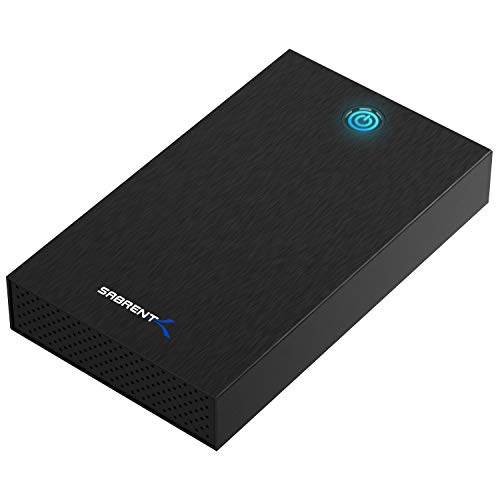
You’ll want the Sabrent USB 3.0 HDD Enclosure (EC-KSL3) if you need a reliable, high-speed housing for either a 2.5” or 3.5” SATA drive and value quick, tool-free setup-no screwdrivers or extra software needed. I’ve used it with both SSDs and HDDs, and the slide-and-click mechanism works smoothly. It delivers fast transfers, up to 625MB/s, thanks to USB 3.0 and UASP support. The aluminum body stays cool and protects the drive well. It’s plug-and-play across Windows, macOS, and Linux. It includes a power adapter and USB-B to A cable-everything you need. Just know: USB-B isn’t as common now.
Best For: Users seeking a durable, high-speed external enclosure for 2.5” or 3.5” SATA drives with tool-free installation and cross-platform compatibility.
Pros:
- Supports fast data transfers up to 625MB/s with USB 3.0 and UASP
- Tool-free slide-and-click installation for quick drive swaps
- Includes power adapter and USB cable, with broad OS compatibility
Cons:
- Uses USB Type-B port, which is less common on modern devices
- Aluminum housing, while durable, may feel heavy for portable use
- No additional security features like drive lock or hardware encryption
ORICO USB 3.0 HDD Enclosure (3588US3)

I’ve found the ORICO USB 3.0 HDD Enclosure (3588US3) works best for home office users who need a reliable, plug-and-play solution for connecting both 2.5-inch and 3.5-inch SATA drives without sacrificing speed or durability. It supports up to 20TB drives and delivers fast 5 Gbps transfers with USB 3.0 and UASP. The rugged ABS build resists heat and drops, while the internal sponge cushions your drive. It includes a 12V/2A power adapter-required for 3.5-inch drives-and setup needs no drivers or reboots. Tool-free access makes swaps easy. Just remember: always use the included power supply, and only format your drive if absolutely necessary.
Best For: Home office users seeking a durable, high-speed, plug-and-play enclosure for 2.5-inch and 3.5-inch SATA drives up to 20TB.
Pros:
- Supports up to 20TB capacity with USB 3.0 and UASP for fast 5 Gbps data transfers
- Rugged ABS construction with anti-shock sponge and tool-free installation for drive protection and easy access
- Includes 12V/2A power adapter, requires no drivers or system reboots, and supports wide OS compatibility
Cons:
- 3.5-inch drives require the included external power adapter, limiting portability
- No support for NVMe or M.2 SSDs, restricting use to SATA I/II/III drives only
- Auto sleep mode may cause connectivity delays during prolonged inactivity
Aluminum 4-Bay HDD Enclosure 10Gbps

Speed meets serious storage in this aluminum 4-bay enclosure, making it a top pick for professionals and power users who need fast, reliable access to large volumes of data without the complexity of NAS or RAID setups. I get up to 1016MB/s using four HDDs thanks to the USB 3.2 Gen 2 interface and VL822+ASM235CM chips-1GB files transfer in 3–5 seconds. It supports up to 80TB total (20TB per drive) across 2.5″ or 3.5″ SATA drives, and the aluminum body with a 2-inch fan keeps drives cool, though the 40–50dB noise may bother some. Hot-swapping and tool-free bays make drive changes easy, and it works plug-and-play with Windows, Mac, Linux, and Thunderbolt ports.
Best For: Professionals and power users who need high-speed, high-capacity external storage with easy drive management and broad system compatibility.
Pros:
- Delivers blazing-fast transfer speeds up to 1016MB/s with 4 HDDs using USB 3.2 Gen 2 and advanced controller chips
- Supports up to 80TB total storage with hot-swappable, tool-free bays for flexible and efficient drive management
- Durable aluminum design with active cooling ensures reliable performance during prolonged use
Cons:
- Fan noise (40–50dB) may be noticeable in quiet environments
- Does not support RAID or NAS functionality, limiting advanced storage configurations
- Performance depends on drive type and host system capabilities, potentially varying from advertised speeds
TERRAMASTER D4-320 4-Bay USB 3.2 Enclosure

The TERRAMASTER D4-320 stands out as the best choice for users needing high-capacity, high-speed external storage without RAID complexity. I get up to 1,016 MB/s with four 8TB HDDs, and it handles drives up to 30TB each-120TB total. It uses USB 3.2 Gen2, hits 10Gbps, and works with Mac, Windows, and Linux, no drivers needed. I love the tool-free trays and Push-lock design-they keep drives secure and make swaps easy, even hot-swapping. An smart fan and sound-damping cut noise below 21 dB(A), but it’s a DAS, not a NAS, so no network access. If you want direct, fast, quiet storage and don’t need RAID, this delivers-just mind the lack of network sharing.
Best For: Users seeking high-capacity, high-speed external storage with simple plug-and-play setup and no RAID configuration.
Pros:
- Delivers up to 1,016 MB/s read/write speeds with USB 3.2 Gen2 and supports drives up to 30TB each (120TB total)
- Tool-free installation with Push-lock drive trays and supports hot-swapping for easy drive management
- Quiet operation with intelligent cooling and sound-damping technology, producing less than 21 dB(A) in standby
Cons:
- Lacks RAID functionality, limiting data redundancy and performance optimization options
- Functions as a DAS only, with no network sharing or remote access capabilities
- USB-dependent connection requires physical proximity to a host device
Sabrent USB 3.0 SATA Docking Station (EC-DFFN)
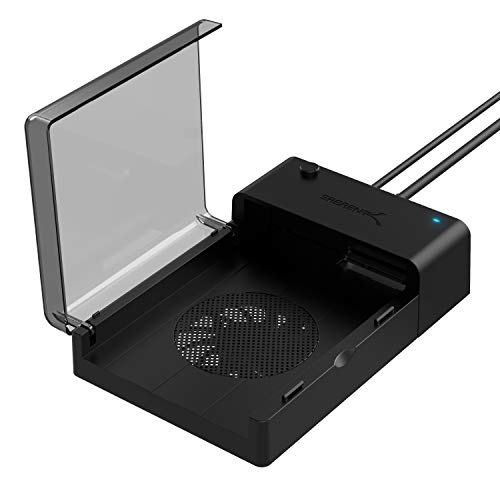
If you’re a small office user or a home office power user who regularly swaps drives for backups or data transfers, the Sabrent USB 3.0 SATA Docking Station (EC-DFFN) is your go-to tool for fast, reliable access without the hassle of external enclosures. I rely on it daily because it supports both 2.5-inch and 3.5-inch SATA drives up to 22TB, and its USB 3.0 with SATA III 6Gbps interface delivers real-world transfer speeds close to 550MB/s when using UASP. The lay-flat design keeps drives secure and helps with heat, while the built-in fan keeps temperatures low over long transfers. It’s hot-swappable and plug-and-play-no drivers needed-and I use the included Acronis True Image software for easy cloning. Just note: it doesn’t support NVMe SSDs, so don’t expect compatibility beyond standard SATA drives.
Best For: Small office or home office users who frequently swap SATA hard drives and SSDs for backups or high-speed data transfers.
Pros:
- Supports both 2.5-inch and 3.5-inch SATA drives up to 22TB with fast transfer speeds up to 550MB/s using UASP
- Tool-free, hot-swappable, and plug-and-play design with no drivers required
- Includes free Acronis True Image software for easy drive cloning and data management
Cons:
- Does not support NVMe SSDs, limiting compatibility to SATA drives only
- Built-in fan may produce audible noise during prolonged use
- Requires an external power adapter for 3.5-inch drives, adding to cable clutter
Factors to Consider When Choosing an External Hard Drive Enclosure
You’ll want to match your drive type with an enclosure that supports it-most accept 2.5” or 3.5” SATA HDDs or SSDs, but always check compatibility before buying. Faster USB 3.2 or Thunderbolt enclosures boost transfer speeds, yet you won’t see the full benefit unless your computer has matching ports and your drive can keep up. While solid aluminum builds help with heat and durability, make sure the model has good ventilation or a fan if you’re running intensive tasks for long periods.
Drive Compatibility
Choosing the right external hard drive enclosure starts with matching it to your drive’s physical and technical specs-getting this wrong means it won’t fit, power up, or transfer data at all. You need to confirm the drive size: 2.5-inch enclosures fit laptop drives and are bus-powered, while 3.5-inch models require external power but support larger desktop drives. Make sure the interface is SATA I, II, or III-most enclosures support these, but they won’t work with older IDE or newer M.2 and mSATA drives. Check the max capacity too; some caps at 20TB, but better models handle 30TB or more. You can use either HDDs or SSDs, but only some enclosures enable SSD features like TRIM. Always verify power needs-3.5-inch drives won’t run on USB alone.
Data Transfer Speed
Speed starts with the interface, and USB 3.2 Gen 2 with Type-C gives you the best performance at 10 Gbps-double what USB 3.0 offers-so large files like 4K videos or project backups move in seconds, not minutes. You’ll get the most from that speed if the enclosure supports UASP, which cuts latency and boosts efficiency by up to 70% over standard protocols. But don’t forget: your drive matters too. Even with a 10 Gbps connection, a SATA III drive maxes out at 6 Gbps, so it won’t exceed its own limits. Real-world speeds also depend on sustained performance, and without active cooling, your enclosure might throttle under long transfers. Look for models with small fans or heat-dissipating designs to keep temps down during heavy use. While USB 3.2 Gen 2 gives top speed potential, always match it with a fast drive and solid thermal management for best results.
Build Quality
When durability and performance matter, aluminum-alloy enclosures stand out for their ability to dissipate heat efficiently and withstand daily wear. You’ll get better long-term reliability, especially with continuous use, though they’re often heavier and cost more than plastic. Rugged ABS plastic models are lighter and surprisingly tough, offering solid drop protection and heat resistance-ideal if you’re frequently on the move. Look for shock-absorbing sponges or padded drive trays inside; they reduce vibration damage during transport. Build quality isn’t just about materials-check for reinforced corners, snug-fit drive bays, and sturdy ports. Even well-built enclosures can feel flimsy if the internal frame is thin. Consider real-world use: a robust enclosure should survive backpack drops or occasional knocks in a busy workspace without compromising drive safety.
Cooling Efficiency
A well-built enclosure keeps your drive running reliably, but even the sturdiest aluminum shell won’t help if heat builds up inside during long backups or video edits. You need active or passive cooling to protect your data. Most efficient enclosures use aluminum alloy bodies to draw heat away from the drive, especially in multi-bay setups where temperatures rise faster. Some models add 2-inch fans that run at 40–50 decibels, cooling effectively while staying reasonably quiet. They often engage automatically at around 48°C, thanks to smart thermal controls that balance performance and noise. High-end versions include vibration damping and sound-absorbing materials to keep fan hum from disrupting your workspace. While active cooling boosts thermal performance, it also introduces moving parts that could fail. If silence matters, passive cooling may suit you better-but only if you avoid continuous heavy workloads.
Plug And Play Support
While not every enclosure delivers seamless operation right out of the box, most modern models offer true plug-and-play support, letting you connect and start transferring files immediately without installing extra drivers or software. You’ll typically get instant recognition on Windows, macOS, and Linux when using USB 3.0 or USB-C interfaces. Hot-swappable designs let you swap drives without shutting down your system, keeping your workflow uninterrupted. Just remember that 3.5-inch drives often need an external power adapter, so you can’t rely solely on USB power. Also, your system’s USB port version matters-using USB 3.0 or later guarantees full speed and compatibility. While plug-and-play works well in most cases, always check your host system’s specs to avoid surprise setup steps. This feature cuts setup time, but only if your hardware aligns.
Frequently Asked Questions
Can I Use SSDS in These Enclosures?
Yes, you can use SSDs in most external hard drive enclosures, but you must match the drive interface with the enclosure’s supported type. If you’re using a SATA SSD, it fits in standard 2.5-inch enclosures. NVMe SSDs need specific M.2 NVMe enclosures with PCIe support. Don’t assume compatibility-check the enclosure specs. Also, guarantee adequate heat dissipation; some enclosures include aluminum housings or built-in heatsinks to prevent thermal throttling during sustained transfers.
Do These Enclosures Support RAID Configurations?
Yes, you can set up RAID on some enclosures, but only if they’re built with a hardware RAID controller. Most single-bay models don’t support it. Multi-bay enclosures like those with dual 2.5” or 3.5” drive slots often include RAID 0 or 1 modes via a switch or software. You’ll need identical drives for best performance and redundancy. Check the specs-USB-C or Thunderbolt options offer faster sync speeds. Just remember, RAID isn’t a backup.
Are They Compatible With macOS and Linux?
Yes, they work with macOS and Linux, but you’ll need to reformat drives to HFS+ or exFAT for full compatibility. Most enclosures use standard USB or Thunderbolt interfaces, so hardware support isn’t an issue. Just note: firmware updates and RAID management tools are often Windows-only, limiting control on macOS and Linux. You’ll rely on built-in disk utilities instead. Check vendor specs for OS-specific details before buying-don’t assume plug-and-play.
Is Plug-And-Play Functionality Available on All Models?
Yes, you get plug-and-play on most models, especially those using USB 3.0 or later with standard file systems like exFAT. You just connect and start transferring files-no drivers needed on macOS or Linux. But don’t assume universal compatibility; always check chipset support, especially with older Linux distros or if using UASP for faster speeds. Some enclosures require firmware updates or manual mounting, so test before relying on them daily.
Do Any Come With Data Recovery Software?
Yes, some models include data recovery software, but you shouldn’t rely on it as your main safety net. Brands like Seagate and WD often bundle basic recovery tools-you just install and go. Still, these programs have limits: they can’t fix physically damaged drives or recover overwritten files. Always pair the enclosure with your own backup strategy. The software helps with accidental deletion, nothing more. Check warranty terms-most covers hardware, not data loss.