Best Laptops for Flawless Word Processing (And Why They Win)
You get flawless word processing by choosing laptops like the HP 14 or Acer Aspire 3, which pair 8-IN RAM with Full HD IPS displays for sharp text and smooth multitasking. Responsive keyboards, anti-glare screens, and 10+ hour battery life guarantee comfort during long sessions. Avoid eMMC storage and sub-4GB RAM models-they’ll slow you down. While entry-level CPUs save power, they limit heavy workloads. These picks win not by speed, but through balanced, real-world usability that stays reliable day to day. Better choices reveal their edge the more you use them.
We are supported by our audience. When you purchase through links on our site, we may earn an affiliate commission, at no extra cost for you. Learn more. Last update on 18th July 2026 / Images from Amazon Product Advertising API.
Notable Insights
- 8GB RAM ensures smooth multitasking with word processors, browsers, and chat apps without lag.
- Full HD (1920×1080) IPS displays provide sharp text and reduce eye strain during long writing sessions.
- Anti-glare screens and narrow bezels maximize visibility and workspace in bright, mobile environments.
- NVMe SSD storage delivers fast document access, quick app launches, and efficient file saving.
- Long battery life (10+ hours) supports uninterrupted writing on campus, in cafes, or during travel.
HP 14 Laptop Intel Celeron N4020 (14-dq0040nr)
If you’re a student or casual writer who needs a no-frills laptop for typing papers, taking notes, and handling basic tasks, the HP 14 Laptop (14-dq0040nr) is a solid pick that won’t drain your battery-or your wallet. I rely on its 10–11.5 hours of battery life for long study sessions, and HP Fast Charge keeps me going quickly. The 14-inch HD screen is modest but clear, and at 3.24 pounds, it’s easy to carry. Just know: the 4 GB RAM and 64 GB eMMC storage limit multitasking and file space, and Windows 11 in S mode restricts app installs.
Best For: Students and casual users who need an affordable, portable laptop for basic tasks like word processing, web browsing, and note-taking.
Pros:
- Long battery life (10–11.5 hours) with HP Fast Charge for quick recharging
- Lightweight and portable design (3.24 lbs) ideal for on-the-go use
- Includes free one-year Microsoft 365 Personal subscription for productivity
Cons:
- Limited 4 GB RAM and 64 GB eMMC storage hinder multitasking and file storage
- Runs Windows 11 in S mode, restricting app installations to Microsoft Store only
- Low 1366 x 768 display resolution and modest processor performance for modern computing demands
HP Chromebook 11A G8 (Renewed)
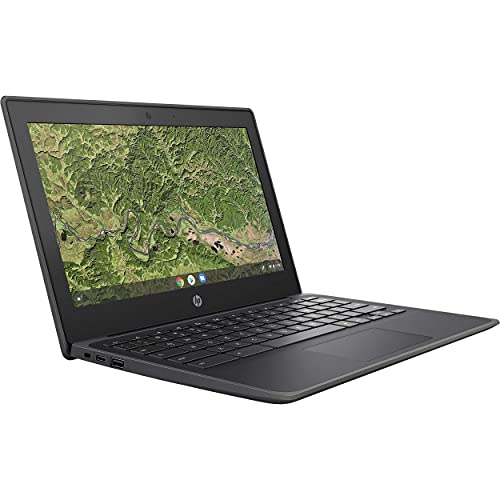
I recommend the HP Chromebook 11A G8 (Renewed) for high school students or budget-conscious users who need a reliable, durable laptop primarily for word processing and online learning. Its 11.6-inch HD anti-glare display reduces eye strain, and the spill-resistant backlit keyboard handles messy real-world use. With a 10-hour battery and 4GB RAM, it supports smooth multitasking for documents, web research, and video calls. Built to survive drops from 122 cm, it’s tough enough for daily student wear. Just note: 32GB storage means you’ll rely on cloud tools, and the older AMD A4 chip won’t handle heavy software. It’s practical, not powerful-but perfect for schoolwork.
Best For: High school students and budget-conscious users needing a durable, portable laptop for schoolwork and online learning.
Pros:
- Durable design with 122 cm drop resistance, spill-resistant keyboard, and reinforced corners ideal for student use
- 10-hour battery life and lightweight build support all-day learning on the go
- Anti-glare display and HD webcam optimized for virtual classes and eye comfort
Cons:
- 32GB eMMC storage limits local file saving, requiring reliance on cloud services
- AMD A4-9120C processor and 4GB RAM struggle with demanding tasks or heavy multitasking
- Wi-Fi 5 and Bluetooth 4.2 are outdated compared to newer wireless standards
HP Chromebook 14 Laptop (14a-na0021nr)
The HP Chromebook 14 Laptop (14a-na0021nr) suits students or casual writers who need a portable, budget-friendly device for everyday word processing tasks, especially if they rely on cloud-based tools like Google Docs. I find it handles typing, research, and video calls smoothly, thanks to its Intel Celeron N4000, 4 GB RAM, and dual array mics. The 14-inch HD anti-glare screen works well in bright rooms, and Wi-Fi 5 keeps me connected. It’s light at 3.24 lbs and lasts over 13 hours, but 32 GB storage means I depend on cloud saves. It’s ENERGY STAR certified, EPEAT Silver registered, and comes with a 1-year warranty-solid for basic use, but not for heavy multitasking.
Best For: Students or casual users who need an affordable, lightweight Chromebook for web browsing, cloud-based productivity, and everyday tasks.
Pros:
- Lightweight at 3.24 lbs with up to 13.5 hours of battery life, ideal for on-the-go use
- HD anti-glare display and dual array microphones enhance visibility and video call quality
- ENERGY STAR certified and EPEAT Silver registered for energy efficiency and environmental responsibility
Cons:
- Limited 32 GB eMMC storage requires reliance on cloud-based services
- 4 GB RAM and Intel Celeron N4000 processor struggle with heavy multitasking or demanding applications
- HD (1366 x 768) resolution is lower than modern Full HD displays, affecting visual clarity
HP 14″ Ultra-Light Laptop for Students

This HP 14″ Ultra-Light Laptop for Students earns my top nod for high schoolers and early college students who need a reliable, no-fuss machine strictly for word processing, online classes, and light everyday tasks. I love its 12-hour battery and fast charge-you’re never stranded during back-to-back Zooms. The included one-year Microsoft 365 subscription means Word’s ready to go right out of the box. The 14” anti-glare screen is modest at 1366 x 768, but it’s easy on the eyes. While the Celeron N4500 and 4GB RAM handle essays and web browsing fine, don’t expect heavy multitasking. Storage starts at 128GB total (64GB eMMC + 64GB SD), expandable via built-in reader-a helpful plus. It runs Windows 11 Home in S mode, which you can switch to standard mode. Weighing just 3.24 lbs, it’s easy to carry. Just know non-storage parts are only covered for one year-so treat it gently.
Best For: High school and early college students needing a lightweight, budget-friendly laptop for online classes, word processing, and everyday web browsing.
Pros:
- 12-hour battery life with fast charging ideal for back-to-back virtual classes
- Includes one-year Microsoft 365 subscription for immediate access to Word, Excel, and PowerPoint
- Lightweight at 3.24 lbs with expandable storage via built-in SD card reader
Cons:
- Limited performance with Celeron N4500 and 4GB RAM, unsuitable for heavy multitasking or demanding apps
- Modest 1366 x 768 display resolution with only 62.5% SRGB color gamut
- Only one-year warranty on non-storage components; delicate build requires careful handling
HP Stream 14 Laptop with 8GB RAM, 128GB UFS

A solid pick for students and casual writers who need reliable performance without overspending, the HP Stream 14 with 8GB RAM and 128GB UFS storage handles word processing smoothly while staying light and durable enough for daily campus use. I’ve found its Intel N150 quad-core processor boots Windows 11 in just 12 seconds, and Wi-Fi 6 keeps downloads fast. The 14-inch anti-glare HD display reduces eye strain, and military-grade durability means it withstands drops. You get pre-loaded Office 365, 1TB OneDrive, and Copilot AI for drafting help. Just note: UFS storage is slower than SSD, and 128GB fills fast-luckily, the microSD slot helps. The webcam and mics work well for calls, but serious writers may want more local storage.
Best For: Students and casual writers seeking an affordable, portable, and durable laptop with essential productivity tools for everyday campus tasks.
Pros:
- Fast 12-second boot time with Windows 11 and smooth performance for word processing and web tasks
- Includes pre-installed Office 365, 1TB OneDrive, and Copilot AI for enhanced productivity and collaboration
- Military-grade durability, lightweight design, and anti-glare display ideal for on-the-go use
Cons:
- UFS storage is slower than SSD and offers limited 128GB capacity
- Local storage fills quickly, requiring reliance on microSD expansion
- 720p webcam and audio are adequate but not ideal for professional content creation
AOC 15.6″ FHD Laptop 16GB RAM 512GB SSD
You’ll want the AOC 15.6″ FHD Laptop if you need a no-nonsense machine that handles word processing, web research, and multitasking without hiccups, especially when you’re working on tight deadlines or studying off campus. I rely on its 16GB RAM and 512GB SSD-they let me switch between tabs, apps, and large documents smoothly, with boot and load times under 10 seconds. The N95 processor keeps pace with daily tasks, though it’s not built for heavy software. The 15.6″ FHD IPS screen has sharp text and thin bezels, great for focus, while the 3.7-lb metal body stays easy to carry. Just know battery life is average, and Wi-Fi 5 isn’t the latest. It’s backed by a 1-year warranty and 24/7 support, which adds peace of mind.
Best For: Students, remote workers, and casual users who need a reliable, portable laptop for everyday tasks like document editing, web browsing, and multitasking.
Pros:
- 16GB RAM and 512GB SSD ensure smooth performance and fast boot/load times for daily productivity
- Lightweight metal design with a 15.6″ FHD IPS display and narrow bezels enhances portability and visual clarity
- Pre-installed Windows 11, 1-year warranty, and 24/7 customer support offer convenience and peace of mind
Cons:
- Average battery life may require frequent charging during extended use
- Wi-Fi 5 and Bluetooth 5.0 are not the latest wireless standards
- N95 processor limits performance for demanding applications or heavy multitasking
HP 15.6″ Laptop Ryzen 3 8GB RAM

For students and budget-conscious writers needing reliable tools for everyday word processing, the HP 15.6″ Laptop with Ryzen 3 and 8GB of RAM delivers solid performance without unnecessary extras. I’ve found it handles documents, web research, and video calls smoothly thanks to the efficient Ryzen 3 7320U and snappy 8GB LPDDR5 RAM. The 1366 x 768 touchscreen works well for quick edits, though it’s not as sharp as Full HD. I appreciate the built-in privacy features like the physical camera shutter and mic mute button. Just know the 128GB SSD fills up fast, so I rely on cloud storage. Windows 11 in S Mode boosts security but limits app installs. Connectivity is modern, with Wi-Fi 6 and Bluetooth 5.4, and I like that recycled materials are used in the keyboard and speakers. It won’t power heavy multitasking, but for focused writing and schoolwork, it’s dependable and thoughtfully designed.
Best For: Students and budget-conscious writers who need a reliable, privacy-focused laptop for everyday word processing, web research, and video calls.
Pros:
- Efficient AMD Ryzen 3 7320U processor and 8GB LPDDR5 RAM ensure smooth performance for basic productivity tasks
- Privacy features including physical camera shutter and dedicated mic mute button enhance security
- Modern connectivity with Wi-Fi 6 and Bluetooth 5.4, plus eco-conscious design using recycled and ocean-bound plastics
Cons:
- 1366 x 768 display resolution is lower than Full HD, limiting screen clarity
- Limited 128GB SSD storage fills up quickly, requiring reliance on cloud or external storage
- Windows 11 in S Mode restricts app installations to Microsoft Store only, reducing software flexibility
HP 15.6″ Laptop Ryzen 5 512GB SSD

This HP 15.6″ Laptop with the Ryzen 5 7520U and 512GB SSD stands out for students, freelancers, and remote workers who need a reliable companion for long writing sessions without draining the battery or slowing down during multitasking. I’ve found its 8GB LPDDR5 RAM and fast PCIe SSD make opening large documents and switching between tabs smooth. The touchscreen helps with navigation, though the 1366 x 768 resolution feels tight for extended reading. Battery life is solid, but the low screen density means text isn’t as sharp as on pricier models. It’s a smart step up from base laptops, just don’t expect premium display quality.
Best For: Students, freelancers, and remote workers needing a portable, battery-efficient laptop for writing and light multitasking.
Pros:
- Fast 512GB PCIe SSD and 8GB LPDDR5 RAM ensure quick boot times and smooth performance across multiple apps
- Touchscreen display with intuitive gesture support enhances navigation and usability
- AMD Ryzen 5 7520U delivers strong energy efficiency and solid everyday performance
Cons:
- 1366 x 768 screen resolution results in less sharp text and limited screen real estate for productivity
- HD display lacks the clarity ideal for extended reading or media-heavy tasks
- Integrated graphics limit gaming and high-performance creative work capabilities
Acer Aspire 3 Slim Laptop (A315-24P-R7VH)

The Acer Aspire 3 Slim Laptop (A315-24P-R7VH) stands out as a solid pick for students and casual writers who need a dependable, no-frills machine for everyday word processing on a budget. I appreciate its 15.6″ Full HD IPS display-it’s bright, sharp, and easy on the eyes during long typing sessions. The Ryzen 3 7320U CPU handles documents and web tabs smoothly, and 8GB of LPDDR5 memory guarantees snappy multitasking. Just know the 128GB SSD fills up fast-worth upgrading if you store lots locally. It’s lightweight and Wi-Fi 6 ready, great for campus or coffee shops, though the camera and speakers are serviceable, not stellar.
Best For: Students and casual writers seeking an affordable, portable laptop for everyday word processing and web browsing.
Pros:
- Lightweight, slim design ideal for on-the-go use
- Bright 15.6″ Full HD IPS display with sharp visuals
- Efficient Ryzen 3 7320U processor with responsive LPDDR5 memory
Cons:
- 128GB SSD offers limited storage for large files or media
- Built-in camera and speakers are only average in quality
- Onboard memory and storage may not be upgradeable depending on model
Lenovo Laptop 15.6″ FHD, 8GB RAM

Who wouldn’t want a reliable, no-fuss laptop for handling essays, reports, and spreadsheets without breaking the bank? I’ve used the Lenovo 15.6″ FHD model, and it delivers solid performance for everyday tasks with its 8GB RAM and Intel Celeron N4500. The 1920×1080 screen is sharp and anti-glare, great for long writing sessions. The full-size keyboard with a numeric keypad makes data entry easy, and the 256GB SSD boots fast and loads apps quickly. Wi-Fi 6 and USB-C add modern convenience. Just know the processor isn’t built for heavy multitasking-fine for school or basic office work, but don’t expect speed under heavy load.
Best For: Students and professionals seeking an affordable, portable laptop for everyday tasks like writing, web browsing, and light office work.
Pros:
- Crisp 15.6-inch FHD anti-glare display ideal for extended use
- 8GB RAM and 256GB SSD deliver snappy performance for basic productivity
- Modern connectivity with Wi-Fi 6, USB-C, and full-size keyboard with numeric keypad
Cons:
- Intel Celeron N4500 processor struggles with heavy multitasking or demanding applications
- Limited to 8GB RAM, which is not upgradeable in many configurations
- HDMI 1.4b output limits external display capabilities compared to newer standards
Factors to Consider When Choosing a Laptop for Word Processing
You’ll want a laptop with at least an Intel i5 or Ryzen 5 processor and 8GB of RAM to keep word processing smooth, especially if you’re working with large documents or multitasking. Look for an SSD over a traditional HDD-it boots faster and opens files quicker-but know that higher-capacity SSDs will increase the price. A 1080p display helps with readability, and a comfortable, well-spaced keyboard can make long writing sessions easier, though some budget models may cut corners on key travel or layout.
Processor Speed Importance
Performance starts with a processor that can handle real-world demands without breaking stride. You’ll want a CPU with at least a 2.8 GHz turbo boost-it speeds up document loading and formatting, so edits happen instantly. A dual-core processor is enough for word processing, especially when you’ve also got email or tabs open. Higher base clock speeds cut launch times and keep typing smooth during long sessions. When you’re working with big files or complex layouts, a responsive chip reduces lag and keeps momentum. Look for efficient designs with integrated graphics-they stay cool and avoid slowdowns over hours of writing. Just don’t overspend on ultra-high-end chips; they offer minimal gains for writing tasks. Balance matters: strong performance now, without heat or battery trade-offs later.
Ram Capacity Needs
While basic word processing doesn’t demand high-end specs, getting the right amount of RAM guarantees your workflow stays smooth as tasks grow more complex. You’ll need at least 4 GB for lightweight documents, but that’s bare minimum-expect hiccups if you open more than a few apps. For real comfort, go with 8 GB; it lets you run your word processor, browser, and chat apps together without lag. If you regularly handle large files or stack multiple programs, 16 GB is ideal and future-proofs your setup. Look for DDR4 or LPDDR5 RAM, since faster memory speeds up loading and editing. Just be cautious with systems that share RAM between the OS and integrated graphics-this cut can leave you with less usable memory, slowing things down when you’re juggling documents and apps.
Storage Type Impact
If you’re serious about efficiency in your word work, prioritize an NVMe SSD-it delivers the quickest document access and near-instant app launches, making your workflow noticeably smoother. You’ll save real time: NVMe SSDs offer the fastest transfer rates, so large files open and save almost instantly. They outperform even standard SSDs, which already beat eMMC storage by up to 15x in app launch speed. While UFS is a step up from eMMC and fine for light multitasking, it still lags behind SSDs in consistency. Avoid eMMC if you regularly handle big documents-it slows boot times and app switching. But if budget’s tight, a basic SSD still beats eMMC. NVMe’s speed shines when juggling word processors, browsers, and cloud sync. Just note: faster storage often costs more and may come with lower capacities. Balance speed with space based on your file volume. Stick to NVMe for serious work-you’ll feel the difference daily.
Display Clarity Factors
A sharp, well-designed display makes a noticeable difference when you’re spending hours editing documents, offering clearer text and a more comfortable experience than even the fastest storage can provide. Aim for at least 1920×1080 resolution-anything less strains your eyes over time. Higher pixel density (PPI) means crisper text, essential when working with small fonts. Choose an IPS panel for consistent clarity, even if you’re viewing the screen from an angle. Matte or anti-glare finishes cut down reflections, making a big difference in bright rooms or near windows. A screen-to-body ratio above 75% gives you more workspace without bulk, helping you scroll through long documents smoothly. Just don’t assume bigger is always better-balance size with portability. Some budget models skimp on panel quality despite high resolution, so check reviews for real-world clarity. You’ll save your eyes without overpaying.
Keyboard Comfort Design
Your hands spend more time on the keyboard than any other laptop component, so prioritize a design that supports speed and comfort. Look for a full-size layout with at least 1.5mm key travel-this guarantees responsive feedback and reduces fatigue during long writing sessions. Keys with a matte finish and slight concavity improve grip and accuracy, cutting down on typos. If you regularly input numbers, a built-in numeric keypad boosts efficiency, though it may mean a larger chassis. Anti-ghosting technology lets you type quickly without missed keystrokes, a real win for fast writers. Backlit keys with adjustable brightness help in dim settings, but avoid overly bright levels that strain your eyes. Keep in mind: compact models often sacrifice key spacing or travel, so test typing feel before buying. Comfort isn’t universal-what works for one writer might not suit another.
Battery Life Expectations
While battery life varies by model and usage, most laptops deliver between 8 and 14 hours of word processing on a single charge-enough to cover full workdays without constant access to an outlet. You’ll get the best results from models with low-power processors and energy-efficient displays, which stretch every watt-hour of battery capacity. Smaller screens and lower resolutions typically extend runtime, so if you prioritize endurance, consider 13- to 14-inch FHD panels over larger, sharper ones. Keep in mind that screen brightness, background apps, and constant Wi-Fi use-especially cloud syncing-can drain power quickly, sometimes cutting life by 20%. A higher Wh rating usually means longer use, but real-world performance depends on how well the system manages power. Always check independent battery tests under writing workloads, not just manufacturer claims, to see how long the laptop actually lasts when you’re drafting, editing, and saving on the go.
Operating System Compatibility
What if your laptop couldn’t run the version of Word you actually need? You’d lose formatting, miss key tools, and struggle with document fidelity. Windows gives you the full desktop version of Microsoft Word, with offline access and advanced features-ideal for heavy writing. But watch out: devices in S mode only allow Store apps, so you might not install the software you want. macOS runs Word smoothly, too, with native support and solid iCloud integration for syncing across Apple devices. Chrome OS is simpler but limited-its web and Android apps lack many desktop features, so it’s best for basic tasks. Linux can work using compatibility tools or alternatives like LibreOffice, but expect setup headaches and occasional formatting glitches. Pick your OS not just for price or speed, but for whether it reliably handles the Word experience you actually need.
Frequently Asked Questions
Can These Laptops Handle Gaming Alongside Word Processing?
You can handle light gaming, but don’t expect high frame rates on modern AAA titles. These laptops pack integrated graphics or entry-level discrete GPUs, so they run older or less demanding games at medium settings. You’ll get smooth performance for word processing and web tasks daily. For serious gaming, you’d need a dedicated gaming laptop with better cooling and a stronger GPU. Always check RAM and storage specs-they impact multitasking and load times in both apps and games.
Are Chromebooks Compatible With Microsoft Office?
Yes, Chromebooks run Microsoft Office through the web apps or Android versions of Word, Excel, and PowerPoint. You can create, edit, and share files just like on Windows, but some advanced features may be limited. Offline access works if you enable it, and files save automatically to OneDrive. However, heavy add-ins or macros won’t function, and performance depends on your Chromebook’s specs. For basic to moderate use, it’s reliable-but not ideal for complex Office tasks.
Do Any Models Support External Monitors?
Yes, many Chromebook models support external monitors using HDMI or USB-C ports. You’ll get clear 1080p or even 4K output, which helps if you multitask or want a larger screen. Most modern Chromebooks, like the Acer Spin 714 or Dell Latitude 5430, handle this well. Just confirm the model has video-out capability. Keep in mind, some cheaper models may limit resolution or refresh rate, so check the specs first.
How Long Do These Laptops Typically Last on Battery?
You get 8 to 12 hours of real-world battery life from most models, with ultrabooks like the Dell XPS 13 or MacBook Air hitting the upper end. You’ll see those numbers drop if you connect an external monitor or use demanding apps. Battery longevity over time depends on usage, but expect a noticeable decline after 2–3 years. Always check charge cycles and warranty coverage-few brands offer battery replacements past 12 months.
Is Antivirus Software Necessary for These Laptops?
Yes, you do need antivirus software on these laptops-no exceptions. Even with solid build quality and efficient processors like Intel Core i5 or AMD Ryzen 5, your device remains vulnerable to malware. Windows machines especially benefit from real-time protection, so you should install trusted software like Bitdefender or Windows Defender. Macs aren’t immune either, though they’re targeted less. Skip third-party bloatware, and avoid “free” antivirus tools that slow down word processing performance.