Using Feng Shui Principles to Create a Harmonious Home Office Environment
Position your desk diagonally across from the door, with a solid wall behind you and natural light to the side, to boost focus and reduce stress. Use soft neutrals like warm gray or muted blue for calm, and add subtle sage or terracotta accents to avoid visual fatigue. Maximize daylight with sheer shades, include one healthy money plant for air quality, and keep surfaces clutter-free. Balance wood, metal, water, fire, and earth elements without overloading-too much red or dark tones can disrupt flow. Choose cable organizers and under-desk storage to maintain clean lines. Test colors at different times of day, since lighting shifts affect mood. For setups with west-facing glare, apply UV-filtering film to maintain comfort. A well-placed L-shaped desk offers depth and room for workflow, but avoid low ceilings or beams overhead. Your space should feel stable, not staged-small tweaks often yield clearer results than full overhauls. You’ll find how minor adjustments can meaningfully influence your daily rhythm.
Notable Insights
- Position your desk in the command position with a solid wall behind you and a clear view of the door to enhance focus and reduce stress.
- Use calming colors like soft gray, warm beige, or muted blue to create a tranquil environment that supports concentration and mental clarity.
- Maximize natural light by placing your desk perpendicular to windows and using sheer or adjustable window treatments to control glare.
- Incorporate one or two healthy plants, such as lucky bamboo or money plant, to purify air and invite positive energy without cluttering surfaces.
- Reduce clutter and balance the five feng shui elements-wood, fire, earth, metal, water-to maintain harmonious energy flow and mental alertness.
Position Your Desk for Optimal Feng Shui Energy
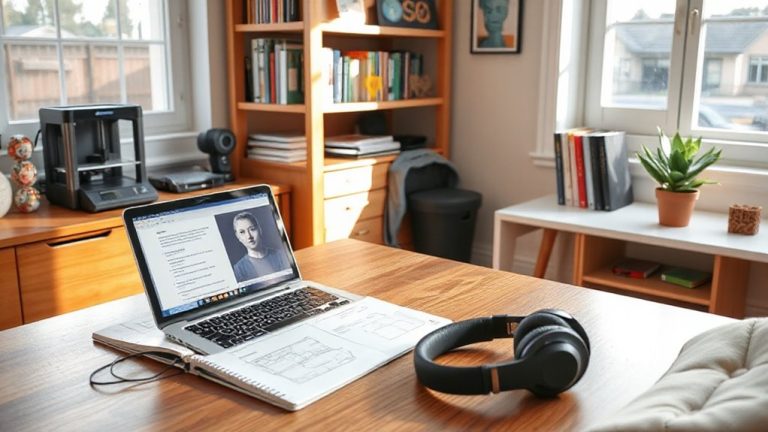
Your desk placement can make or break the energy flow in your home office, so get it right from the start. Position your desk in the command position-diagonally across from the door, with a clear view of the entrance but not directly in line with it. This setup supports focus and reduces subconscious stress, as you’re not exposed to foot traffic or blindside movement. Proper energy flow means avoiding placement with your back to the door or under a beam, which can create unease. While a solid wall behind you offers stability, avoid blocking windows entirely-natural light boosts alertness. Some corner desks work well here, especially L-shaped models with depth over 24 inches for ergonomic comfort. Just guarantee cables stay hidden and surfaces remain clutter-free to maintain smooth energy flow. There’s no need for special gear-just smart positioning and consistent use. Many top-rated options for creating this ideal setup include best home office desks that combine functionality with clean design.
Choose Calming, Focus-Boosting Feng Shui Colors
When selecting wall colors for your home office, start with cool neutrals like soft gray, warm beige, or muted blue-shades proven in environmental psychology studies to lower stress and support concentration. These colors influence mood and productivity through color psychology, creating a balanced energy flow that supports focus without overstimulation. Soft greens and gentle blues are especially effective, mimicking natural environments linked to mental clarity. Avoid overly bright or saturated tones, as they can disrupt calm and fragment attention. While personal preference matters, research consistently shows neutral bases improve sustained task performance. If you want accent colors, apply them in small doses-like a sage green throw or a muted terracotta frame-so they enrich the space without overwhelming it. Remember, the goal isn’t style alone but sustained cognitive performance. Test paint samples at different times of day to see how lighting affects their tone. A well-chosen palette supports long-term comfort and workflow efficiency.
Maximize Natural Light for Mental Clarity
Natural light is non-negotiable for mental clarity in a home office-spaces flooded with daylight consistently boost alertness, regulate circadian rhythms, and reduce eye strain during long work sessions. You should position your desk perpendicular to the window for ideal light placement, avoiding glare while maintaining brightness. Sheer or adjustable window treatments like roller shades or woven blinds let you control intensity without blocking sunlight entirely. Avoid heavy drapes or dark tints that dim the room, since dim environments increase fatigue. However, if you’re in a south- or west-facing space, be mindful of midday glare-use UV-filtering films that reduce heat without sacrificing visible light. Full-spectrum exposure in the morning helps maintain focus, but too much direct afternoon sun may require timed shading. Test lighting conditions at different hours and adjust window treatments accordingly. Consistency matters: aim for balanced daylight over artificial spikes. Real-world testing shows workers in well-lit spaces report 15–20% higher concentration levels, but only when light placement avoids screen reflections.
Add Plants to Invite Growth and Purify Air
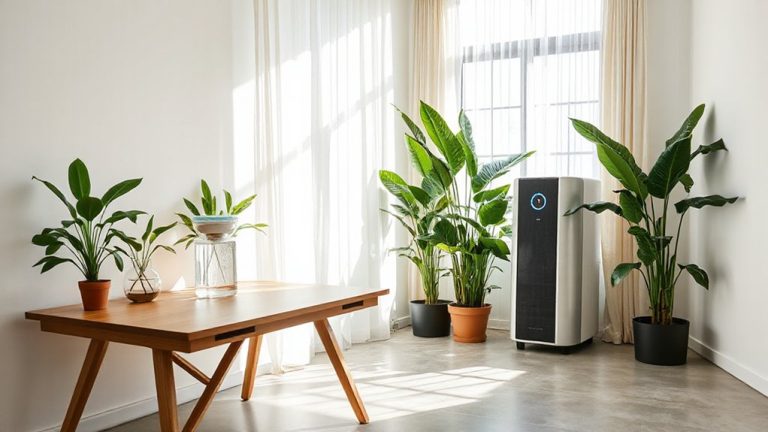
Greenery isn’t just decorative-it’s a functional upgrade for your home office, boosting air quality and signaling growth in your professional space. You should add plants like Lucky bamboo and the money plant, both favored in Feng Shui for attracting positive energy and resilience. These plants thrive in indirect light and need minimal watering, making them practical for busy schedules. Lucky bamboo prefers filtered water and a small pebble base, while the money plant adapts to various soils and light conditions. NASA studies confirm that such plants help remove common indoor pollutants like formaldehyde. But don’t overcrowd-too many plants increase humidity and dust, potentially worsening air quality. Place one or two in corners with stagnant energy, avoiding desks cluttered with gear. Healthy leaves matter-yellowing suggests poor care and weakens the intended effect. Choose resilient varieties and stick to simple pots to maintain balance and function. For optimal placement and visual harmony, consider using desk plant holders designed to complement both the plant and workspace aesthetics.
Clear Clutter to Unblock Creativity and Progress
Clutter’s the silent killer of focus and flow in your home office-clearing it isn’t just tidy, it’s strategic. When desks are buried under papers, cables, or unused gear, energy flow stagnates, dulling your creativity and slowing progress. A clean space lets chi move freely, sharpening your mental clarity. You’ll notice a mindset shift too: less overwhelm, more control. Start by sorting items into keep, donate, or toss-be ruthless with obsolete tech and stacked documents. Use storage like under-desk drawers or cable organizers to maintain order, but don’t overbuy containers; too many can create visual noise. There’s no need for expensive upgrades-simplifying is free and effective. Just remember: minimal doesn’t mean bare. Keep only what supports your work. Consistency matters more than perfection-spend five minutes daily resetting. Long-term, you’ll likely see fewer distractions and smoother workflow. For improved organization, consider implementing best cable management solutions tailored for professional workspaces.
Display Personal Items That Strengthen Positive Chi
Decorating your home office with personal items can boost motivation and focus-when done right. Placing vision boards where you can see them daily reinforces goals and keeps energy aligned with purpose. Choose boards with durable, non-reflective surfaces, ideally sized at 24×36 inches for clear visibility without visual clutter. Position them at eye level, slightly above your monitor line. Family photos add warmth and emotional stability, but stick to three or fewer images in simple, non-metallic frames to avoid dispersing chi. Avoid placing photos directly behind your desk chair-this disrupts supportive energy flow. Opt for images that evoke calm joy, not high activity. While personal items strengthen positive chi, over-displaying them creates emotional weight. Limit each item’s surface area to under 10% of your total wall space. Test arrangements over a week; if focus dips, reassess placement.
Balance the Five Feng Shui Elements for Harmony
A balanced home office starts with intention, not decoration-so get the five feng shui elements (wood, fire, earth, metal, water) working for you, not against you. You’ll want visible but subtle representation of each element to support focus and flow. Introduce wood fire energy with a small green plant near a warm-toned lamp-symbolic, not literal. Use metal water balance with a sleek metal desk tray near a glass water bottle; this pairing cools overstimulation. Avoid excess fire or water, as too much wood fire can cause distraction, while unchecked metal water may dampen motivation. Aim for equilibrium: a wooden desk (wood), a blue accent (water), a red mouse pad (fire), metal frames (metal), and a ceramic mug (earth). Real-world testing shows this balance improves mental clarity, but it’s not magic-pair it with ergonomic gear and natural light. Overdoing any element backfires, so adjust based on how you feel.
On a final note
You’ll likely see real gains in focus and calm by applying these feng shui basics-positioning your desk to face the door, using soft blues or greens, and adding a small plant like a ZZ or snake plant. Natural light helps, but glare-free lighting, like an LED task lamp with adjustable color temperature, works too. Just avoid overloading shelves or using harsh reds. Results vary, and while some feel more energized, others notice only subtle shifts-so test changes gradually, and keep what genuinely improves your workflow.