Maximizing Your Space: Furniture Choices That Enhance Home Office Functionality
You can create a functional home office in tight spaces by choosing compact, well-built furniture. Go for wall-mounted drop-leaf or corner desks-they save floor space and support dual monitors if sized right. Foldable tables with locking legs offer flexibility, while hidden storage in ottomans or benches keeps clutter low. Just remember: multi-functional pieces may compromise comfort or durability. Prioritize ergonomic chairs with mesh backs, adjustable arms, and lumbar support-look for 5+ year warranties. Use vertical shelving or wall-mounted units anchored into studs for reliable 25 lbs/ft+ storage. Floating or corner shelves free up floor space and work well when staggered. Mobile desks with locking casters add flexibility but test stability first. Balance smart choices with real limitations to get the most out of every square foot-there’s more to think about if you’re planning long-term use.
Notable Insights
- Use wall-mounted drop-leaf desks to save floor space and easily clear the area when not in use.
- Choose corner workstations to maximize dead space and support dual monitors with proper angling.
- Opt for foldable tables with locking legs and 24-inch depth to balance functionality and quick storage.
- Install floating or wall-mounted corner shelves that anchor into studs and support 25+ lbs per foot.
- Select ergonomic chairs with adjustable features and a modest 25-inch width to fit tight spaces comfortably.
Choose Desks That Maximize Small Home Offices
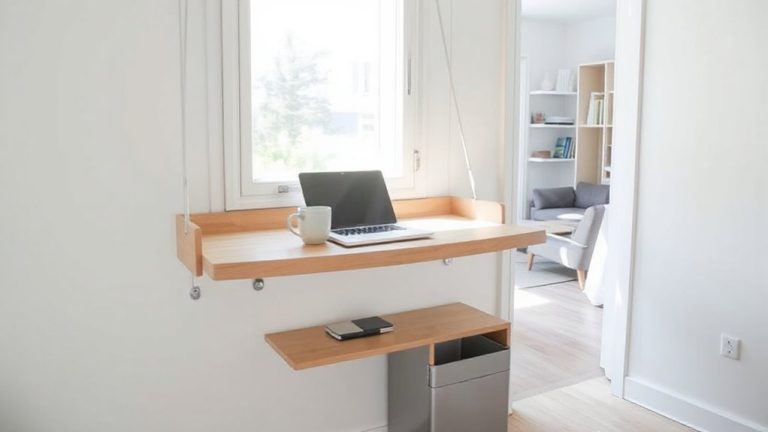
If you’re setting up a home office in a tight space, your desk choice can make or break the room’s functionality-go with a compact, wall-mounted drop-leaf desk if floor space is under 50 square feet, as it frees up legroom and disappears when not in use. Compact desks like these are ideal for strict spatial limits, though they limit simultaneous equipment. For slightly larger areas, corner workstations use otherwise dead space efficiently and support dual monitors if angled properly. Most models range from 30–45 inches diagonally and require at least 36 inches of clearance for chair movement. Solid wood versions last longer but cost 20–30% more than engineered options. Check for weight ratings-cheap wall mounts sometimes support only 25 pounds. While space-saving, these desks offer minimal surface, so they’re best for light, task-focused work. Test stability in person if possible, as some wobble under typing pressure. For top performance in tight spaces, consider one of the best small desks recommended for home offices.
Pick Multi-Functional Furniture for Dual-Purpose Rooms
Many of today’s home offices double as guest rooms, living spaces, or dining areas, making multi-functional furniture not just convenient but essential. You’ll save space and improve flow by choosing pieces that serve more than one purpose. Foldable tables are ideal-they’re easy to set up and tuck away when not in use. Look for ones with locking legs and at least 24″ depth for comfortable work. Hidden storage in ottomans, benches, or desks helps stow supplies or linens out of sight. However, these pieces often sacrifice some durability or comfort for versatility. Always check weight limits and mechanism reliability. A sturdy folding office chair can provide both comfort and space-saving functionality when not in use.
| Feature | Benefit |
|---|---|
| Foldable tables | Free up floor space instantly |
| Hidden storage | Keep clutter hidden yet accessible |
| Dual-purpose design | Maximize utility in tight areas |
Test the mechanism multiple times before buying.
Store Smarter With Vertical Shelving and Wall Units
When floor space is limited, going vertical with shelving and wall units is one of the smartest moves you can make-just make sure you install them right. Floating shelves free up floor area and keep essentials within reach, especially when mounted at varied heights to suit screens, books, or supplies. Wall-mounted corner units maximize underused space without blocking movement, making them ideal for tight rooms. Look for units rated to hold at least 25 lbs per foot, and anchor them into wall studs to prevent sagging or collapse. While floating shelves offer a clean look, they’re less suited for heavy equipment unless properly braced. Corner units often require precise measurement-measure your space and equipment first to avoid fit issues. Opt for units with adjustable brackets or modular designs so you can reconfigure as needs change. Done right, vertical storage keeps your office functional and uncluttered-just don’t overload beyond weight limits.
Invest in Comfortable, Space-Smart Office Chairs
A good office chair isn’t just about comfort-it’s a space-saving cornerstone of smart workspace design. You need one with proper ergonomic design to stay productive and avoid strain. Look for breathable mesh backs and adjustable armrests-they help maintain posture without overheating. Lumbar support is non-negotiable; it should align with your lower back to reduce fatigue during long sessions. Many models offer depth and height adjustments, letting you customize fit for your body and desk clearance. Chairs with a modest footprint-around 25 inches wide-fit snugly in compact areas without sacrificing movement. Be mindful of weight limits and base durability; reinforced nylon or aluminum bases typically last longer. Warranties of at least five years signal better build quality. Test chairs if possible-long-term comfort varies by user. Some premium picks cost more but often outlast budget options by years. For those watching their spending, best budget ergonomic chair alternatives offer reliable support without breaking the bank.
Use Mobile and Adjustable Furniture for Flexibility
While your layout might shift over time, choosing mobile and adjustable furniture guarantees your space stays functional without constant rework. Rolling desks let you reposition workstations quickly-ideal for shared rooms or shifting light patterns. Just make sure the casters lock securely; cheaper models wobble or scratch floors. Modular units offer similar benefits, letting you reconfigure storage or surfaces as needs evolve. Look for steel frames and verified weight ratings-many fail under heavy monitors or books. Test height adjustments yourself; some mechanisms feel stiff or lack fine control. Though pricier than fixed furniture, the long-term flexibility often justifies the cost. But don’t overdo it-too many moving parts can create clutter or instability. Balance mobility with stability: anchor major pieces when possible. With thoughtful picks, rolling desks and modular units adapt cleanly to changing demands, making your office feel larger and more intentional over time.
On a final note
You’ll boost both space and productivity by choosing compact desks, multi-functional pieces, and wall-mounted shelving. Adjustable sit-stand desks with steel frames last longer but cost more-look for at least a 5-year warranty. Mobile pedestals offer flexibility but need solid casters to avoid wobbling. Prioritize ergonomics: chairs with lumbar support reduce strain, even in tight corners. Test load ratings on floating shelves. Balance function, size, and durability-small sacrifices in style often mean big gains in real-world performance.