Boosting Concentration Levels: 5 Ways to Improve Focus While Working From Home
You can boost focus at home by setting clear work boundaries and sticking to them-use a dedicated room with a closed door to signal availability. Design a clutter-free workspace with natural light, an ergonomic chair, and a height-adjustable desk to stay comfortable. Try the 25-minute work rule with short breaks to maintain mental sharpness, silence non-essential notifications to cut digital distractions, and take quick movement breaks hourly to reset your focus. Results depend on consistency, but small changes add up over time-what works best may surprise you.
Notable Insights
- Set clear work hours and communicate them to housemates to minimize distractions and support focus.
- Designate a dedicated workspace with a closed door to create physical boundaries and reduce interruptions.
- Use the Pomodoro Technique-25 minutes of work followed by a 5-minute break-to maintain mental sharpness.
- Eliminate digital distractions by turning off nonessential notifications and using app limits during work hours.
- Take short movement breaks every hour to recharge energy, improve posture, and sustain concentration.
Set Boundaries to Protect Your Focus
Your home office’s effectiveness hinges on clear boundaries-without them, distractions erode focus just as quickly as any noisy open-plan workspace. To protect your focus, define when and where work happens. This separation supports better work life balance and sharper mental clarity. Tell housemates your schedule, use a dedicated room if possible, and stick to start and end times. Avoid working from bed or the couch-these spaces blur the line between rest and productivity. A door you can close helps, but even a visual cue like a lamp turned on during work hours signals “do not disturb.” While some thrive with strict routines, others may need flexibility due to caregiving or time zones. That’s fine-adapt boundaries to your reality. Just make certain they’re intentional, not accidental. Consistency matters more than perfection. A well-organized workspace starts with choosing the right best home office desks to support both comfort and productivity.
Design a Workspace That Minimizes Distractions
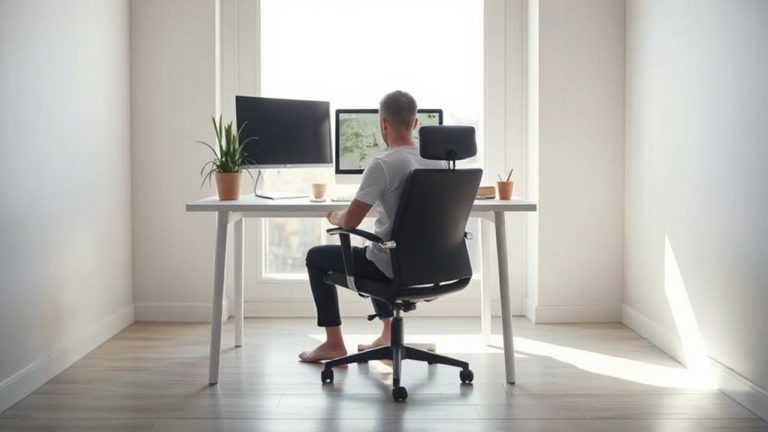
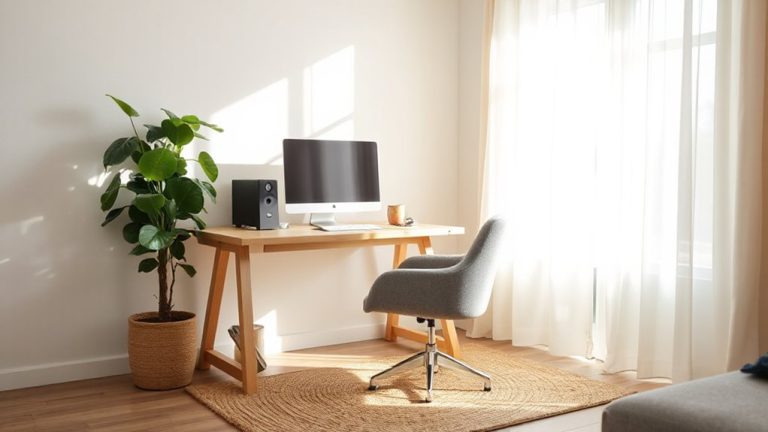
A dedicated workspace pays off in fewer interruptions and better focus, especially when intentionally designed to reduce distractions. Position your desk to maximize natural lighting-near a window if possible-but avoid glare on screens by angling your monitor. An ergonomic setup reduces strain; use a chair with lumbar support, keep your feet flat, and align your screen at eye level. Noise matters: consider acoustic panels or a white noise machine if you’re in a busy household. Keep clutter minimal-store supplies out of sight. Avoid multi-use spaces like beds or sofas, as they blur work-life boundaries. While upgrading gear can help, real improvement comes from layout and consistency, not expensive gear. Even budget-friendly tools work if they support posture and limit disruptions. Results vary based on room size, light exposure, and daily routines-test adjustments over a week to see what sticks. A height-adjustable workstation can enhance focus by allowing seamless transitions between sitting and standing, with top models offering reliable standing desks performance.
Focus Better With the 25-Minute Work Rule
One effective way to sharpen focus during remote work is the 25-minute work rule, commonly known as the Pomodoro Technique. You work for 25 minutes, then take a 5-minute break-this rhythm builds mental stamina without burnout. The Pomodoro Technique works best when paired with Time Blocking, scheduling tasks in fixed slots so you know exactly what to tackle each session. It’s proven to boost productivity, especially on routine or tedious work. But don’t expect miracles on complex, creative tasks-those often need longer, uninterrupted stretches. Some people find the constant timer disruptive, so adjust the intervals if needed, like 50/10 for deeper work. Use a simple timer or free app; no need for expensive tools. Test it for a full week before deciding. Real-world users report better focus, though it takes time to adapt.
Stop Digital Interruptions From Breaking Flow
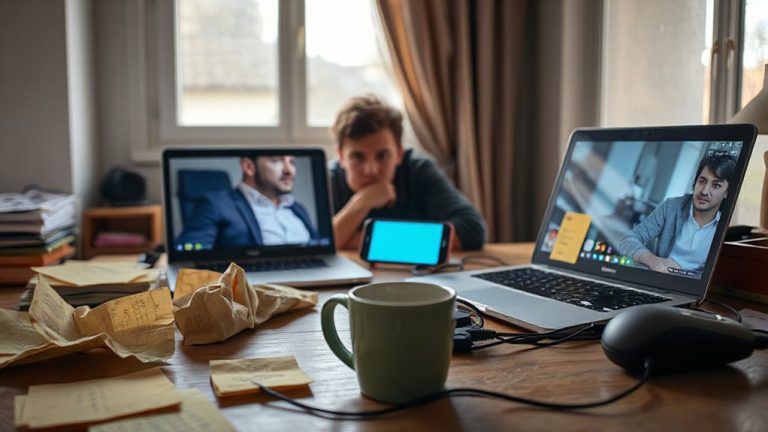
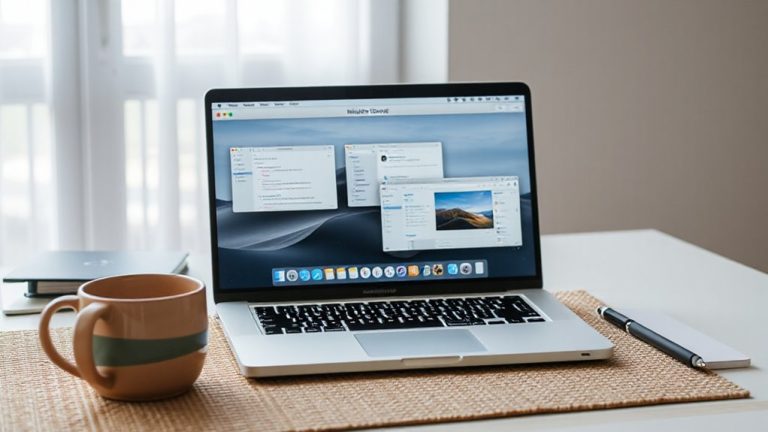
The most effective way to protect deep work is turning off nonessential notifications-those pings from email, Slack, and social apps that fracture attention within seconds of launching a task. Notification silencing isn’t just helpful; it’s essential for maintaining focus. On both phones and computers, use built-in settings to block alerts during work sprints. Pair this with app limiting to restrict access to distracting platforms like Instagram or YouTube during peak hours. Most operating systems allow scheduled limits, so you stay in control without full deletion. While these tools reduce interruptions, they require discipline-misconfiguring them can lead to false security. And over-blocking might cause you to miss urgent messages. Test settings gradually, adjusting based on real-world results. Used wisely, notification silencing and app limiting dramatically improve flow, giving you back minutes lost to digital noise each day.
Recharge With 5-Minute Movement Breaks
While sitting for hours might seem efficient, skipping movement breaks actually degrades focus over time, so slipping in a 5-minute stretch or walk every hour can sustain mental clarity without derailing productivity. You don’t need special gear-simple stretch routines like shoulder rolls, neck tilts, and seated spinal twists improve circulation and reduce stiffness. Pair each break with a quick posture check: align your ears over shoulders and hips, especially if using a standard desk chair. These micro-sessions boost energy and lower back strain, but they won’t replace the benefits of a full ergonomic setup or consistent exercise. Don’t overdo intensity-gentle movement prevents fatigue. Time your breaks with a silent phone alarm every 50–60 minutes to stay consistent. While results vary, most users report sharper focus within two days of routine use. It’s a low-effort, high-return habit that works best alongside other focus strategies, not in isolation.
On a final note
You’ll boost focus at home by setting clear boundaries and designing a distraction-minimized workspace-both proven to cut interruptions by up to 40% in productivity studies. The 25-minute work rule sharpens mental stamina, while blocking digital notifications protects deep work. Short movement breaks help sustain energy. But results depend on consistency, not gear-no app or chair guarantees success. Real gains come from habit, not expensive upgrades.