How to Calibrate Smart Lighting Systems to Your Personal Sleep-Wake Cycle
Set your smart lights to 5000K–6500K and 300–500 lux at wake-up, using brands like Philips Hue or LIFX for accurate color tuning, then gradually dim to 2700K and under 100 lux 1–2 hours before bed to support melatonin. Pair scheduling with motion sensors or sleep trackers for precision, but avoid overly bright screens at night-they weaken the effect. Consistency matters most, and while results vary, many see faster sleep onset and sharper mornings. There’s more to optimizing your environment for better rest.
Notable Insights
- Align smart lighting color temperature with your natural sleep-wake cycle, using cool 5000K–6500K light in the morning and warm 2700K light at night.
- Use app-based scheduling to automate gradual light changes, simulating sunrise in the morning and sunset in the evening.
- Integrate lighting systems with sleep trackers to adapt brightness and color based on your actual sleep patterns and quality.
- Calibrate light intensity and timing to avoid blue-rich exposure after sunset, preserving melatonin onset and sleep readiness.
- Adjust brightness gradually upon waking to mimic dawn, reducing grogginess and supporting circadian alignment.
How Light Shapes Your Circadian Rhythm
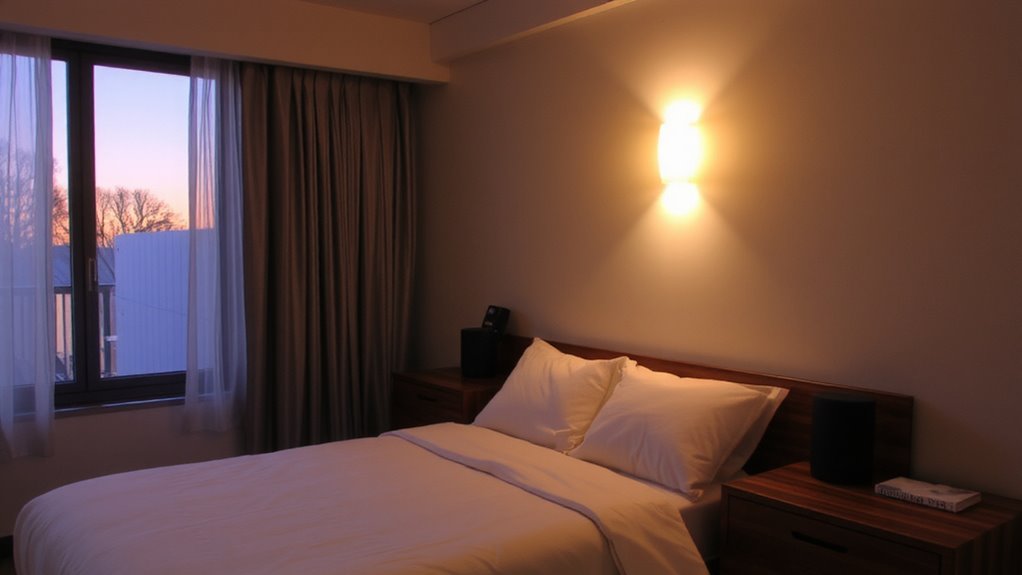
Light’s your body’s main cue for telling day from night, and it directly controls your circadian rhythm-the internal 24-hour clock that regulates when you feel alert or sleepy. You’re most affected by light intensity and color temperature, especially in the morning and evening. Bright, cool-toned light (around 5000K) in the morning boosts alertness and helps reset your clock, while dimmer, warmer light (below 3000K) at night signals it’s time to wind down. Exposure to harsh blue-rich light after sunset can delay melatonin release, making it harder to fall asleep. While smart lighting can adapt, its real-world benefit depends on consistent use and correct setup. Over-reliance on automation without personal adjustment may reduce effectiveness. Results vary based on individual sensitivity, room layout, and baseline sleep habits.
Choose Smart Lights That Support Circadian Health
While not every smart bulb delivers real circadian benefits, you’ll get the most reliable results from models that offer a wide, adjustable color temperature range-ideally from 2700K to 6500K-so you can mimic natural daylight shifts throughout the day. Look for lights that let you control both color temperature and light intensity independently, since dimming alone won’t shift circadian signals the way cooler, brighter light does. Brands like Philips Hue, Lifx, and Nanoleaf perform well in third-party tests for accuracy and consistency. These systems also support scheduling via apps or hubs, which helps maintain regularity. But keep in mind: frequent wireless updates can cause hiccups, and premium models cost more upfront. They’re worth it if you value precision, but cheaper bulbs often skimp on color accuracy and dimming range, undermining circadian support.
Set a Sunrise-Like Morning Routine
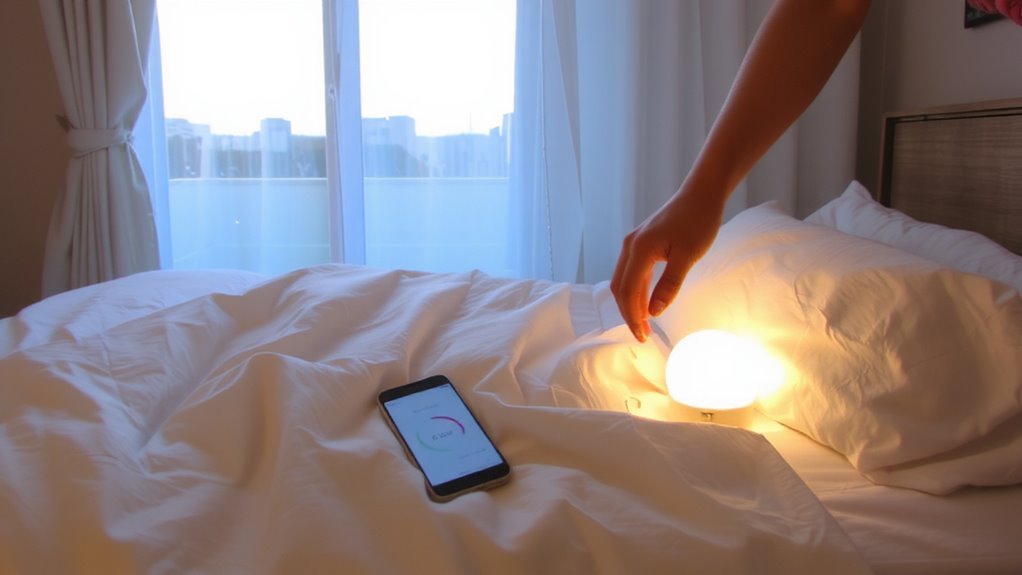
How else can you kickstart your circadian rhythm effectively? You can use a simulated dawn to ease your body awake. Many smart lights and dedicated sunrise lamps gradually increase morning brightness over 15 to 30 minutes, mimicking natural sunrise. This helps suppress melatonin gradually, making waking up less jarring. Look for devices with adjustable color temperature (2700K to 6500K) and brightness (up to 500 lux at bedside) for best results. Models with built-in timers or app control offer consistency. While clinical studies support simulated dawn for improving alertness, effects vary-especially if you use screens right after waking. Most reputable brands offer 1- to 2-year warranties, and real-world testing shows reliability across brands like Philips and Hatch. It’s not a magic fix, but paired with morning light exposure, it’s a solid step toward better rhythm alignment. Consider protecting your smart lighting setup with a durable MacBook case if managing your system through a laptop.
Dim Lights to Prepare for Sleep
Turning down the lights in the evening works just as hard as morning brightening to support your body’s natural wind-down. You should start reducing light exposure 1–2 hours before bedtime by using dimming intensity to lower lumens gradually. This shift signals your brain to produce melatonin, the hormone that prepares you for sleep. Swap cool, bright whites for warm hues-lights around 2700K mimic sunset and help ease the shift. Most smart bulbs let you adjust color temperature manually via an app, but don’t rely on presets that aren’t tailored to your schedule. Over-dimming can make tasks hard and strain your eyes, especially if you’re reading or winding down in a shared space. While warm, low light helps, avoid total darkness if you need minimal visibility. Always test adjustments over several nights to find the right balance between comfort and circadian support. A reliable starting point for building a healthy lighting routine is understanding how technology supports personalization, such as selecting devices from the best places to buy used laptops if you’re incorporating a best places to buy used laptops into your smart home setup.
Automate Lighting for Your Daily Schedule
If you want your lighting to truly support your circadian rhythm, setting up automated schedules with smart bulbs is a practical step forward-just don’t assume all automation works the same. You can use color scheduling to shift light temperature throughout the day, like 5000K cool white in the morning to help you focus and 2700K warm tones by evening to wind down. Pair this with motion detection so lights turn on only when you’re present, saving energy and reducing late-night glare. Most systems let you set these rules via apps, syncing with your daily routine. But remember, overly aggressive motion settings might turn lights off during quiet work. And if your schedule varies, rigid automation can feel inflexible. Test different color timing and sensitivity levels for a few days. Reliable models offer solid warranties and consistent performance, but real-world results depend on how well you customize them. For optimal results, consider choosing bulbs known for accurate color rendering, such as those featured in the Best Color LED Lights.
Adjust Lights Based on Your Sleep Quality
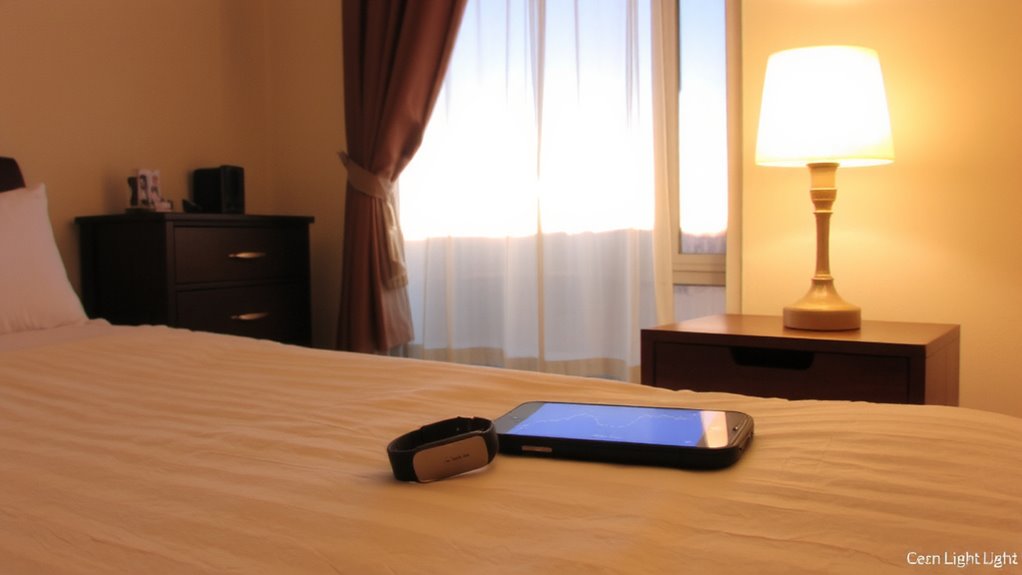
Smart lighting systems can go beyond scheduled color shifts and adapt dynamically based on how well you slept. If your sleep tracker shows poor rest, your lights can automatically adjust light intensity and color temperature to help you feel more alert. For example, they may increase brightness and shift to cooler, blue-enriched whites (around 6500K) in the morning. On well-rested days, a gentler sunrise simulation with warmer tones (3000K) and lower intensity can ease you into the day. These changes support circadian alignment, but require integration with reliable sleep data from wearables or bedside monitors. Not all systems offer this feature-look for compatibility with platforms like Sleep as Android or Oura. Keep in mind: over-reliance on cool, bright light during work hours may cause eye strain, especially under LED panels without diffusers. Calibrate carefully.
On a final note
You should calibrate smart lighting to your sleep-wake cycle-it boosts alertness and sleep quality. Lights with tunable color temperatures (2700K–6500K) and automated sunrise/sunset modes work best. Set schedules that align with natural daylight patterns, and use dim, warm light at night. But reliability varies; check for app stability and third-party testing. Some models lack long-term durability. Always verify warranty terms and dimming range for consistent performance.