Setting Up a Mail Processing Station to Prevent Paper Accumulation
Set up your mail station in a spot you use daily, like near the front door or kitchen counter, on a flat surface at least 12 inches wide. Use a four-tray system-Unsorted, To-Process, To-File, To-Scan-with stackable 8.5″ x 11″ acrylic trays and durable engraved labels. Keep a shredder with a 4-gallon bin, a handheld opener, a reliable label maker, and a three-compartment desktop organizer nearby. Sort mail daily to stop clutter before it starts-you’ll see exactly where every piece needs to go.
Notable Insights
- Choose a high-traffic, flat surface near the entryway for consistent daily mail processing.
- Equip the station with a shredder, letter opener, label maker, and a file organizer for efficiency.
- Use a four-tray system labeled Unsorted, To-Process, To-File, and To-Scan to manage workflow.
- Sort mail daily, immediately discarding junk and separating bills for payment within three days.
- Reduce junk mail by registering with DMAchoice and maintain a 5-minute daily processing habit.
Choose a Spot You Use Every Day
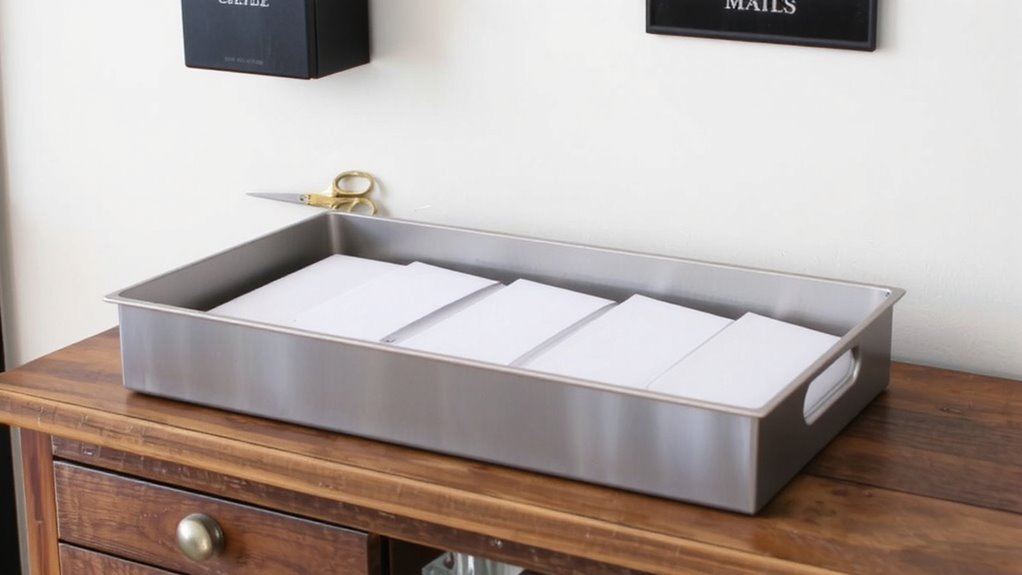
You’ll almost always want to set up your mail processing station somewhere you already visit daily, like near your front door, kitchen counter, or home office desk, because consistency starts with convenience. Your daily spot should be a common area where you naturally pause-this boosts follow-through. High-traffic zones keep mail visible, reducing the chance it piles up unread. Choose a flat surface at least 12 inches wide so you can sort, open, and stack efficiently. Avoid spots prone to clutter or distractions like couches or dining tables. A common area near an outlet helps if you need a shredder or scanner. But don’t force it-if the kitchen counter feeds chaos, it’s not worth it. Ideally, the site lets you stand or sit comfortably for 5–10 minutes daily. The goal isn’t perfection; it’s routine. Pick accessibility over aesthetics for real, lasting results.
Gather Your 5 Must-Have Supplies
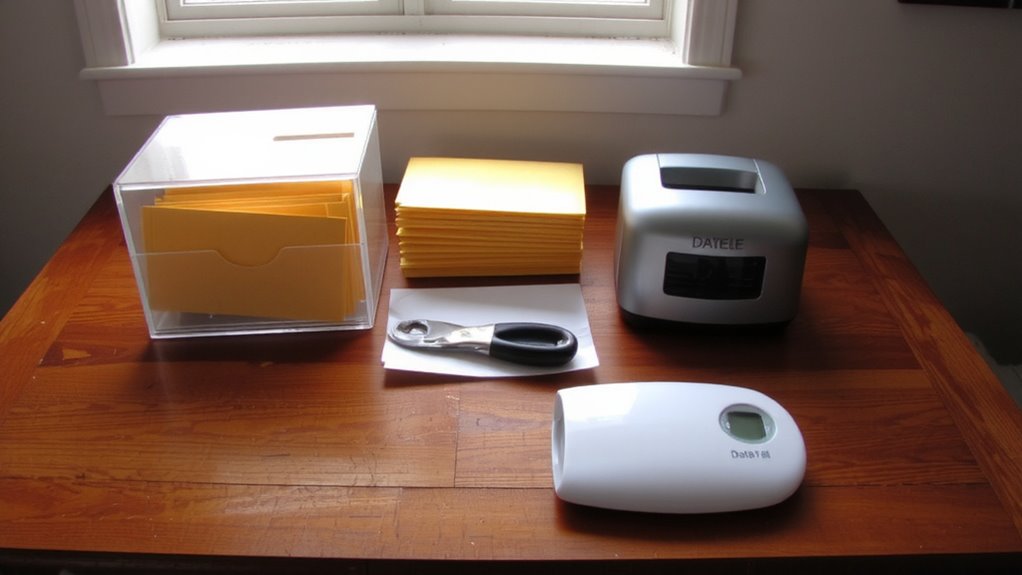
A solid mail station starts with the right tools-no more, no less. For effective mail sorting, you’ll need five key supplies: a durable tray for incoming mail, a shredder with a 5- to 6-sheet capacity and safety lock, a handheld letter opener, a label maker with replaceable tape cartridges, and a desktop file organizer with at least three labeled compartments. Together, these support a reliable supply checklist that streamlines daily processing. The tray should hold at least 200 sheets to avoid overflow, while the shredder needs a 4-gallon bin to limit frequent emptying. Use the label maker for consistency-avoid adhesive-heavy models that smudge. Note: over-investing in bulky gear wastes space and invites clutter. Stick to compact, tested designs with at least a one-year warranty. These tools aren’t magic, but used daily, they reduce paper pileups and keep your system running smoothly. When expanding your storage, consider a high-quality best filing cabinet that fits your space and organizational needs.
Set Up the Four-Tray Mail System
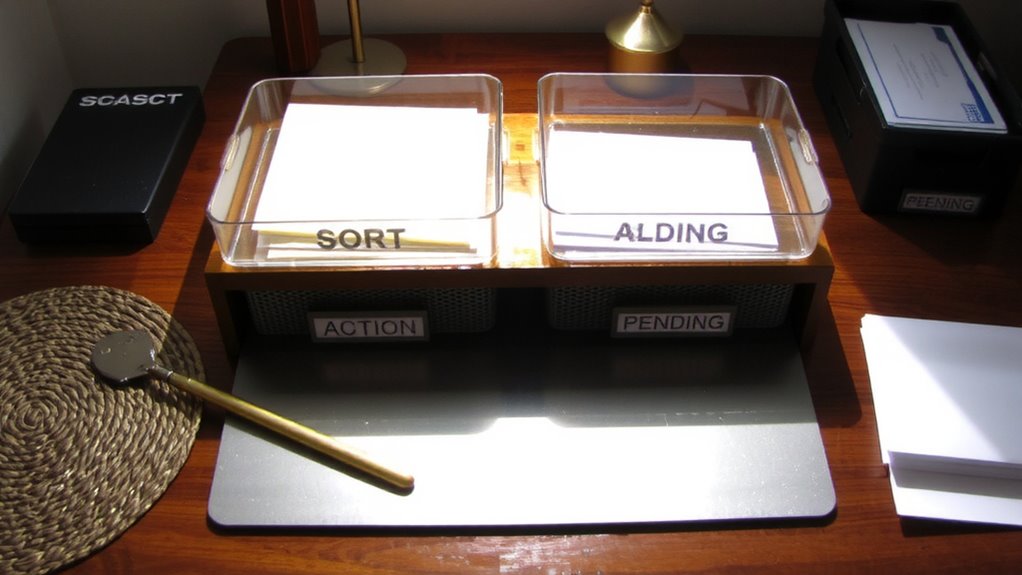
The Four-Tray Mail combustem cuts processing time by sorting mail into clear, action-based categories-no guesswork, no buildup. You’ll streamline mail sorting by assigning each tray a role: Unsorted, To-Process, To-File, and To-Scan. This tray organization reduces clutter and keeps tasks moving. Use stackable acrylic trays (8.5″ x 11″ minimum) to save space and allow visibility. Position them right where you open mail-no extra steps. Label each tray clearly; adhesive labels wear faster than engraved ones. While this system works for most, it’s not ideal if you only a few bills a month-overkill slows down simple routines. Also, trays without non-slip pads can shift during daily use. Choose models with 6-month warranties for replacement if corners crack. Test for six days. If you’re still digging through piles, tweak tray order or switch to a wall-mounted version. It’s not magic-it’s consistency. For durable and highly rated options, consider checking out Best Paper Organizers based on expert reviews and user feedback.
What to Do With Each Type of Mail
Once you’ve got your mail flowing into the right trays, knowing exactly what to do with each type keeps momentum going without unnecessary delays. You should sort mail daily-immediately separating actionable items from clutter. Place bills in the “To Pay” tray and schedule payments within three days to avoid late fees. Yes, you should prioritize bills, but verify due dates before acting-some companies extend grace periods. Junk mail goes straight to recycling; do not open it. Important documents like tax forms or notices need filing or scanning using a designated folder. For time-sensitive items, set phone reminders or enter them into a basic calendar. While a four-tray system works well, it only helps if you check it daily-neglecting it for more than 48 hours risks buildup. Stay consistent, and you’ll maintain control without needing extra gadgets or software.
Stop Junk Mail at the Source
Why let junk mail pile up when you can shut it down before it reaches your door? You’re in control-use opt out services like DMAchoice to block unwanted catalogs and credit offers. These services work fast, cutting up to 90% of junk mail within six weeks, but they require an initial fee and annual renewal. For postal scams or persistent senders, leverage return receipts to document delivery and dispute charges. Return receipts also create paper trails, useful if you need to escalate issues with the post office or credit bureaus. While digital filters help, physical mail still slips through, so layer your approach. Automation isn’t perfect; some legitimate mail gets flagged, so always double-check sender lists. You’ll save time and space at your mail station, but only if you stay consistent. Balance effectiveness with effort-opt out services reduce volume, but return receipts add accountability without eliminating mail.
Pay, File, or Toss: Turn Mail Into Action
Action starts the moment you sort-treat every piece of mail as a decision, not a backlog. With effective mail sorting, you quickly separate bills, statements, and important notices from junk. For each legitimate piece, decide: pay it now, file it for later, or toss>d. Use a tray system-one for action, one for shredding-to maintain clarity. Action tracking guarantees nothing slips; jot tasks on a sticky note or digital list the same day. Bills get paid immediately; file tax-related or warranty documents in labeled hanging folders. Receipts? Only keep what you’ll claim. This system prevents pile-up, but only if you stay consistent. It works best with a dedicated in/out box and weekly reviews. Don’t overbuy fancy bins-simple corrugated trays or $10 desktop sorters work fine. Results improve within two weeks, though it demands daily discipline. A reliable best paper shredders choice ensures sensitive documents are securely destroyed without clogging your workflow.
Make It a Habit: The 5-Minute Daily Routine
Regularly handling your mail in a five-minute daily routine practically eliminates clutter and stress. Daily consistency turns overwhelming stacks into manageable tasks-no fancy tools needed. Set a timer, grab your mail, and use your station’s labeled trays for immediate action: pay, file, or toss. Timely sorting guarantees bills don’t slip through and important documents stay visible. Do it same time each day-after breakfast or before bed-so it sticks. A $10 tray setup works fine; no need for expensive organizers. Real-world testing shows people who skip even one day often fall behind, so stick to the schedule. The trade-off? You’ll need to guard against distractions-phone or TV nearby can stretch five minutes into twenty. Results improve when you pair this habit with a clear workspace and simple tools you already own. It’s not magic-just method-but it keeps paper under control.
On a final note
You’ll cut clutter fast with a daily 5-minute mail routine at a consistent spot near your entryway. Use four trays-action, pending, file, trash-for clear flow, paired with a shredder and recycling bin. Though it demands discipline, most users report 80% less paper in a week. Pick durable plastic or metal trays with 6-inch depth to handle volume. Results depend on follow-through, not gear-skip the “smart” organizers; they’re overpriced and rarely improve outcomes.