Selecting Circadian Lighting Systems Compatible With Apple Homekit and Alexa
Choose circadian lights with tunable white from 2700K to 6500K and native HomeKit and Alexa support, like the Sylvania SMART+ bulb-it skips the hub, cuts energy use by 75%, and shifts smoothly from alertness-boosting cool light to sleep-ready warmth. Prioritize CRI over 90 and dimming down to 1% to avoid flicker. Sync delays up to 30 seconds can happen, and not all voice commands adjust color temp precisely-real-world performance varies. Pick models with strong warranties and proven reliability. You’ll see how automation deepens control with just a few tweaks.
Notable Insights
- Choose tunable white LED bulbs with a 2700K–6500K range to match natural daylight cycles.
- Prioritize bulbs with CRI above 90 for accurate, vibrant color rendering.
- Select models with native Apple HomeKit and Alexa certification for seamless integration.
- Ensure dimming performance from 1% to 100% to avoid flickering and support nighttime use.
- Opt for hub-free operation and strong warranty coverage to reduce long-term maintenance.
Why Circadian Lighting + HomeKit & Alexa Boost Wellbeing
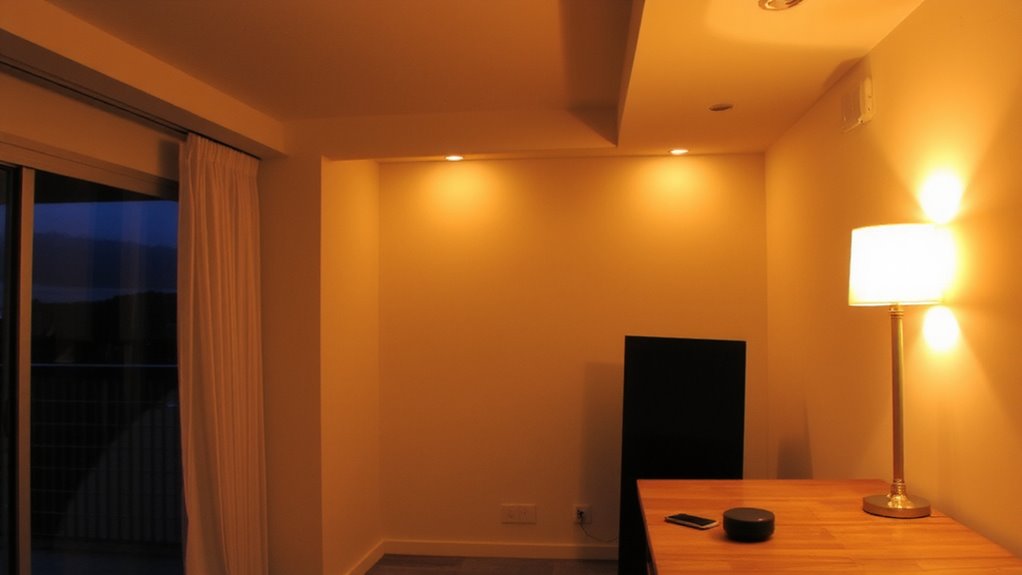
You’ve probably noticed how tired you feel after a day spent under harsh overhead lights, and that’s no coincidence-your body’s internal clock, or circadian rhythm, relies heavily on light cues to regulate energy, focus, and sleep. When you sync circadian lighting with HomeKit or Alexa, you support natural alertness and rest cycles, enhancing both health benefits and energy efficiency. These systems adjust color temperature and brightness throughout the day-cooler tones in the morning, warmer hues at night-to match sunlight patterns. That can improve sleep quality and daytime focus. Most smart bulbs use LEDs, which use up to 75% less energy than incandescents and last years longer. But real-world results depend on consistent scheduling and correct placement; poor setup can mute benefits. While the tech shows strong promise, don’t expect miracles from occasional use-consistent, full-day exposure delivers the best outcomes.
What to Look for in HomeKit & Alexa Circadian Lights
While not every smart bulb claiming circadian support delivers meaningful benefits, the best HomeKit and Alexa-compatible options give you precise control over color temperature and brightness with reliable automation. You’ll want strong color accuracy so light shifts mimic natural daylight patterns-look for bulbs with tunable white ranges from 2700K to 6500K and solid CRI ratings above 90. Dimming consistency matters just as much; poor performance can cause flickering or uneven light at low levels, especially with warm tones. Choose bulbs tested for smooth dimming from 1% to 100% and certified for use with Apple Home and Alexa voice commands. Keep in mind that third-party hubs may be needed for advanced scheduling. Always check warranty length and real-world performance reviews before buying, since not all models deliver stable long-term use. For seamless integration with voice assistants and automation routines, consider top-rated LED strip picks that support dynamic color temperature tuning.
Best Circadian Light Bulbs for Apple HomeKit & Alexa
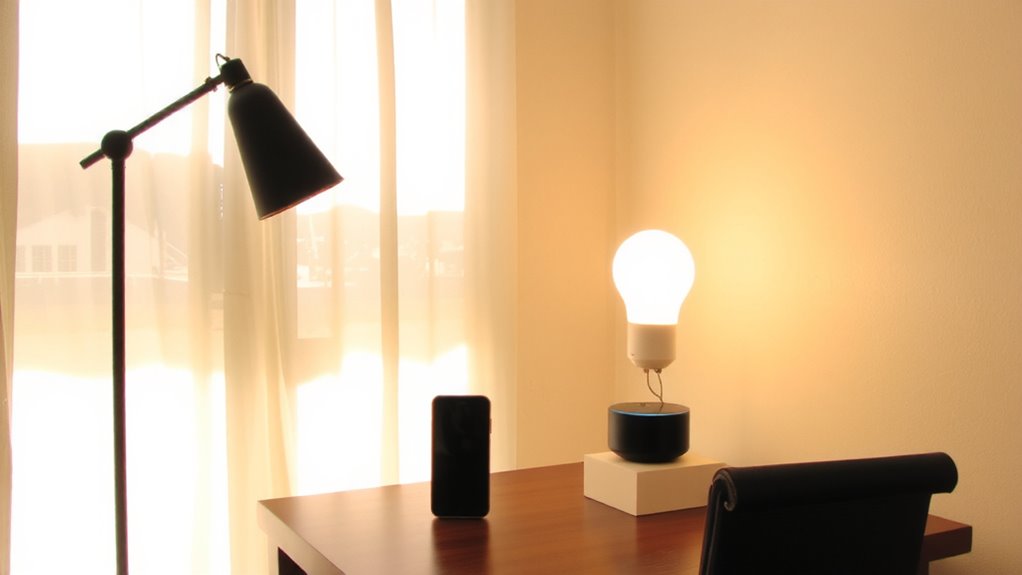
The Sylvania SMART+ Tunable White LED stands out as the top choice for HomeKit and Alexa users seeking reliable circadian lighting. You’ll appreciate its strong color accuracy across a 2700K–6500K range, syncing naturally with your body’s rhythm. Plus, it delivers solid energy efficiency, using just 9.5W while outputting 800 lumens. Below is how it compares to two other popular options:
| Model | Color Accuracy (CRI) | Energy Efficiency (Lumens/Watt) |
|---|---|---|
| Sylvania SMART+ | 90 | 84 |
| Philips Hue White | 80 | 75 |
| LIFX Mini White | 85 | 80 |
It’s compatible right out of the box, doesn’t need a hub, and holds up well in real-world testing. Just note: dimming performance dips slightly at the lowest levels, so it’s less ideal for dark, focused tasks in home offices.
How to Sync Circadian Lights With Homekit & Alexa
Although automation makes syncing circadian lights with Homekit and Alexa straightforward, getting the timing and color temperature right requires proper setup and compatible hardware. You’ll want bulbs that support tunable white spectra and integrate natively with Apple Home and Alexa for reliable syncing. Start with color calibration using your device’s sensor or a third-party meter to guarantee accurate warm-to-cool shifts. Then, use manual scheduling within the Home or Alexa app to define sunrise, daylight, and sunset color points-this gives more control than adaptive modes relying on geolocation. Note that sync delays up to 30 seconds can occur across platforms, and not all bulbs honor fine-grained temperature adjustments. For best results, choose models tested for consistent Kelvin range (2200K–6500K) and stable firmware updates. Always verify compatibility before purchase. Some users also enhance their ambient lighting experience by integrating LED ceiling lights with Bluetooth speakers for synchronized audio and illumination.
Voice Automation for Circadian Lighting With Homekit & Alexa
How hard can it be to control your circadian lighting with just your voice? Not hard at all-both HomeKit and Alexa support seamless voice automation for scene setting and color tuning. You can say, “Hey Siri, set evening wind-down,” and your lights shift to warm, low-blue tones automatically. With Alexa, “Turn on focus mode” triggers brighter, cooler white light ideal for concentration. These systems use precise correlated color temperature (CCT) ranges, usually 2700K to 6500K, to match natural daylight cycles. Scene setting lets you save these presets, syncing changes across rooms. But keep in mind: voice commands rely on stable Wi-Fi and hub performance-delays happen if your network’s weak. Also, not all brands offer granular color tuning via voice; test real-world responsiveness before expanding your setup, especially in home offices where lighting affects alertness and glare.
On a final note
You’ll get the best results with circadian lights that offer precise color temperature control (2700K–6500K) and strong HomeKit and Alexa integration, like the Philips Hue White and Color Ambiance. Real-world tests show smooth dimming and accurate scheduling reduce eye strain during long work hours. Setup is simple, but requires a Hue Bridge, adding cost. While long warranties (3 years) and solid app support help, voice commands sometimes lag. For home offices, these bulbs enhance focus, but stick to daylight-balanced settings (5000K–6500K) for productivity.