How to Spot Early Signs of Cable Insulation Deterioration in High-Traffic Areas
Look for yellowing or browning insulation-early signs of heat or UV exposure-especially in high-traffic areas where cables bend often. Cracks or splits near plugs mean structural wear; even small ones can expose live wires. If the jacket feels stiff or chalky, it’s likely brittle and close to failing. A burning smell means damage has already started, even if you can’t see it. Check for frayed copper and use thermal scans to spot hot spots. Replace questionable cords immediately-safety’s not worth risking. You’ll see how simple checks prevent bigger issues down the line.
Notable Insights
- Discoloration like yellowing or browning in high-traffic areas may signal early exposure to heat, sunlight, or chemicals.
- Check for small cracks or splits near connectors and elbows, where repeated flexing accelerates insulation damage.
- Feel insulation regularly for brittleness; stiff or chalky texture indicates advanced degradation even without visible cracks.
- A burning smell near cables or outlets indicates overheating and early-stage insulation breakdown.
- Monitor for exposed conductors or fraying, which increase shock risk and often precede thermal hot spots.
Spot Discoloration in Cable Insulation
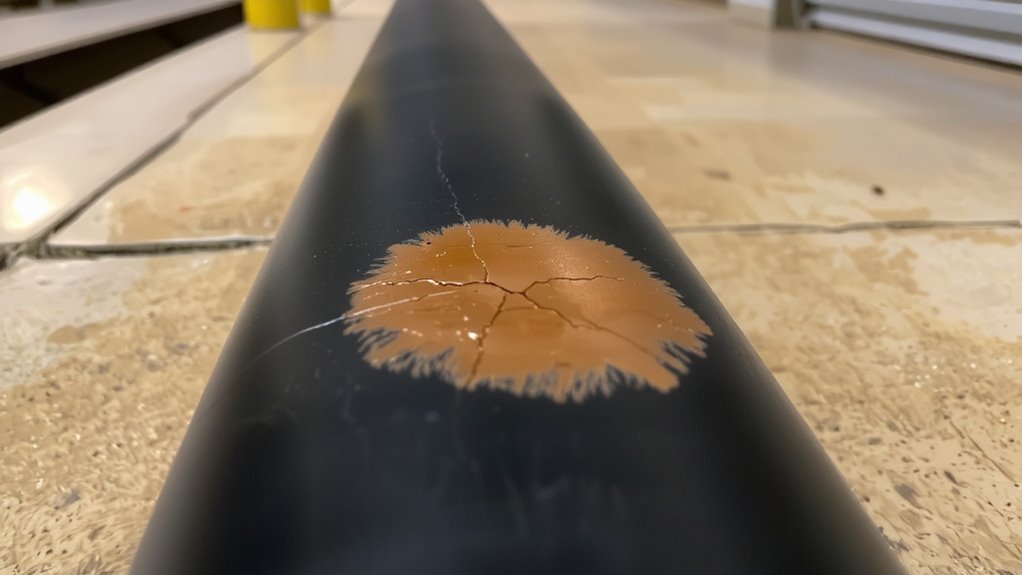
A good way to catch cable insulation problems early is by checking for discoloration, which often signals exposure to heat, sunlight, or chemicals. You’re likely seeing the effects of environmental exposure, especially in high-traffic areas where cables face constant stress. Discoloration along the sheathing-like yellowing or browning-can point to material fatigue, meaning the insulation is weakening over time. This isn’t just cosmetic; it’s a warning that flexibility and dielectric strength may be compromised. While UV light and ozone accelerate this breakdown, visible changes often appear before cracks form. Still, discoloration alone doesn’t guarantee danger-some materials naturally degrade in hue without losing function. Inspect cables in direct sunlight or near heat sources first, and prioritize replacement if stiffness or brittleness accompanies color shifts. Regular checks help, but don’t assume all discolored cables are failures-assess usage context and physical condition.
Look for Cracks or Splits in Wiring
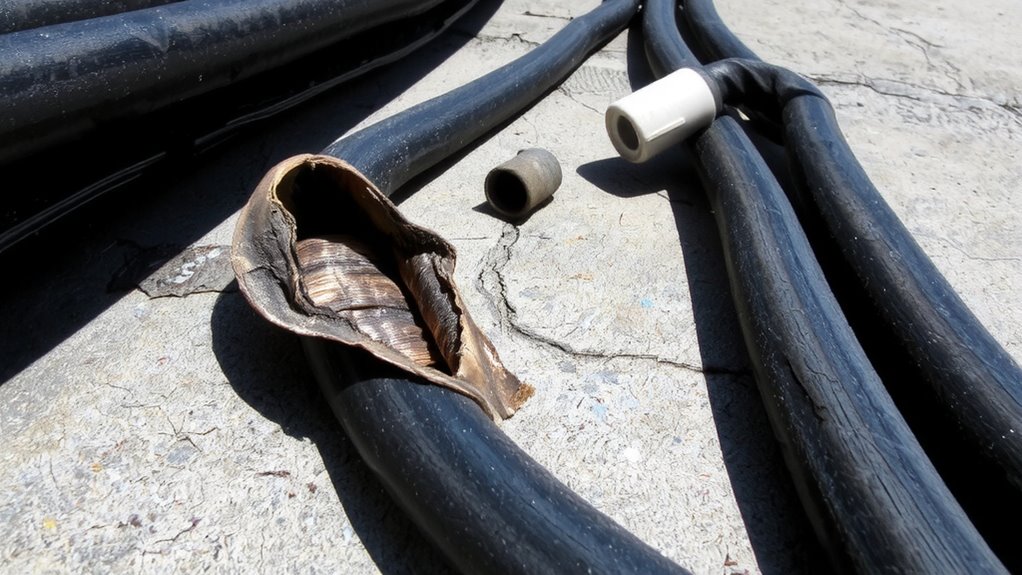
You’ve already learned to catch discoloration as an early red flag, and while color changes often come first, actual cracks or splits in wiring take the warning to a more serious level. When insulation develops visible breaks, it’s likely been subjected to ongoing mechanical stress or surface abrasion from repeated bending, crushing, or contact with sharp edges. These gaps expose conductors, increasing shock and fire risks-especially in high-traffic areas where cables cross walkways or get pinched by furniture. Inspect zones near connectors and elbows, where flexing is most common. Even small splits matter; they often expand quickly under continued use. While ruggedized cables with reinforced jackets resist such damage better, no insulation lasts forever under constant strain. Don’t rely solely on brand reputation-check actual wear patterns. If you spot cracks, replace the cable promptly. Prevent recurrence by routing wires safely, using cable protectors, and minimizing tension during daily use. Implementing effective cable management solutions can significantly reduce physical stress on wiring in busy office environments.
Feel for Brittle or Cracking Insulation
Texture tells the tale when it comes to cable health-run your fingers along the insulation and check for stiffness or a chalky feel, because brittle sheathing is a sure sign of aging or environmental stress. You’re looking for texture changes that suggest the material can no longer flex safely under movement or pressure. If the insulation cracks when bent slightly, it’s already undergone physical deformation and won’t last long in high-traffic areas. Don’t rely on sight alone; some damage isn’t visible until it’s too late. Cables in frequently used paths or near equipment with constant vibration are especially prone to this. While flexible insulation doesn’t guarantee longevity, brittleness almost always precedes failure. Be cautious-applying pressure can worsen weak spots. If you detect severe stiffness or surface fractures, plan for replacement. Regular tactile checks help catch issues before they lead to shorts or hazards. Pair these inspections with effective cable management solutions to reduce strain and extend cable life.
Smell Burning? Check for Insulation Damage
What if the faint scent of burning isn’t coming from your coffee maker but your cables? If you catch a foul odor near outlets or cords, especially in high-traffic areas, it’s a red flag. That smell likely means insulation is breaking down under heat or stress, producing an electrical burning scent. You’re not imagining things-overheated insulation emits distinct odors before failure. Don’t ignore it. Shut off power to the circuit and inspect plugs, outlets, and connected devices. Persistent electrical burning smells can signal serious risks, including fire. While some cables handle heat better-like those with thermoplastic elastomer jackets-no cord lasts forever under constant flexing or load. Replace any cable giving off a foul odor, even if it looks fine. Preventive swaps are cheaper than repairs. Test new cables under load for warmth, and verify they’re rated for your equipment’s power draw. Safety’s not worth the gamble. Proper cable management solutions can reduce stress on cords and prevent premature wear.
Watch for Exposed or Fraying Conductors
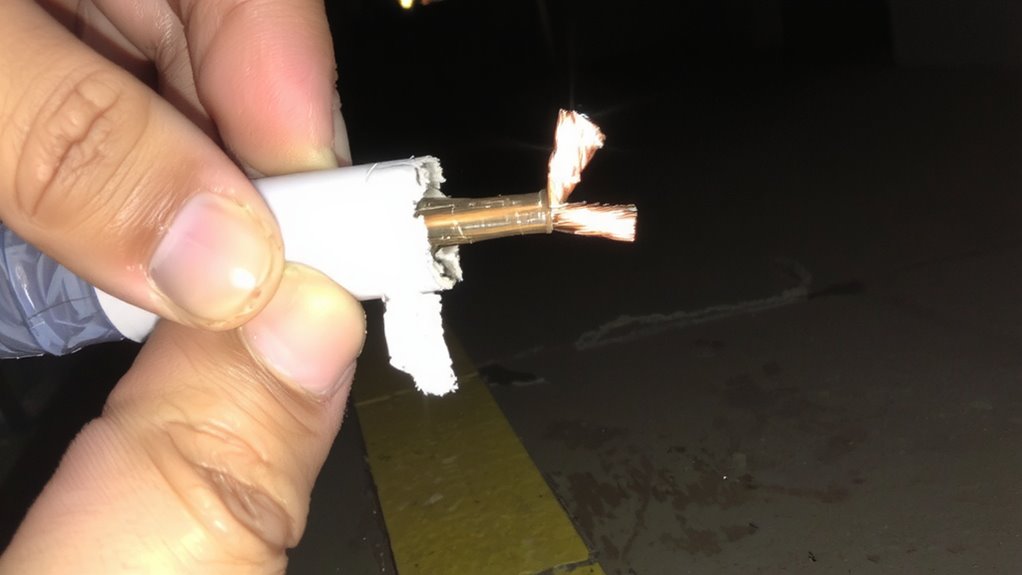
Frayed wires aren’t just an eyesore-they’re a clear warning sign. When you see exposed or fraying conductors, it usually means the insulation has failed due to prolonged mechanical stress or excessive cable tension. In high-traffic areas, constant movement, foot traffic, or pinching in doors can wear down jackets faster. You might notice broken strands or copper poking out-don’t ignore it. That damage exposes live conductors, raising shock and short-circuit risks. Inspect cords regularly, especially where they bend or connect to devices. If you spot fraying, stop using the cable immediately. Temporary fixes like tape won’t hold under continued stress. Replace the cable with one rated for frequent use, ideally with a braided nylon jacket and reinforced stress relief. Keep runs clear of sharp edges and high-traffic pinch points. Prevention beats repair when safety’s on the line.
Track Heat Near Damaged Cable Sections
If you’ve already spotted frayed wires or exposed conductors, the next thing you need to check is heat buildup near those damaged sections-because damaged insulation doesn’t just expose live parts, it also increases electrical resistance, which generates excess heat. You’ll want to use thermal imaging to quickly scan for hot spots along the cable run; these often show up before failures occur. Thermal cameras let you see temperature differences as small as 0.1°C, making them reliable for early detection. Pair that with resistance testing to confirm if the conductor’s integrity is compromised-higher resistance means more heat. While thermal imaging is non-invasive and fast, it can miss issues behind conduit shielding. Resistance testing gives hard data but requires power shutdown. Both methods complement each other, but neither replaces routine visual checks. Always de-energize before close inspections.
Test Cables Proactively With Inspection Tools
You can stay ahead of cable failure by using inspection tools that detect hidden flaws before they lead to downtime-tools like insulation resistance testers and time-domain reflectometers give you hard data on cable health, so you’re not just guessing. Regular voltage testing helps identify weak spots where current leaks, which often means insulation resistance is dropping. When resistance falls below recommended levels-usually 1 megohm for most industrial cables-it’s a red flag. Insulation resistance tests, done semi-annually or after heavy use, provide reliable trends. Just remember, surface moisture or dirt can skew readings, so clean and dry cables before testing. These tools aren’t foolproof, but they catch problems visual checks miss. While they require training and time, the payoff in avoided outages is real. Use them as part of a broader maintenance plan, not a standalone fix.
On a final note
You should check cables in high-traffic areas often-you’ll catch issues before they become hazards. Discoloration, cracks, or stiffness mean it’s time to replace the line. Don’t rely only on looks; test with a multimeter for continuity and resistance. Good cables last years, but constant bending or pulling wears even braided jackets fast. A warranty helps, but prevention and early action matter more.