How to Align Dual Monitors Symmetrically With a Centered Primary Display
Use identical 24- to 27-inch monitors for a balanced setup, positioning them flush with your desk’s front edge to reduce neck strain. Center your primary display directly in front of you, with secondary screens angled 30 degrees inward for smooth eye movement. Match screen heights and tilt using adjustable arms, and align display settings in Windows or macOS to reflect the physical layout. Keep in mind desk depth and sightline alignment-small gaps in setup can disrupt workflow. Optimizing each detail guarantees effortless shifts, and there’s more to reflect on for long-term comfort.
Notable Insights
- Use identical 24 to 27-inch monitors for visual consistency and balanced desk layout.
- Align both monitors flush with the front edge of the desk to reduce neck strain.
- Position the primary display centered directly in front of your seating position.
- Angle secondary monitors 30 to 45 degrees inward for minimal head turning.
- Match screen arrangement in Windows or macOS display settings to reflect physical layout.
Match Monitor Sizes for Symmetrical Dual Setup
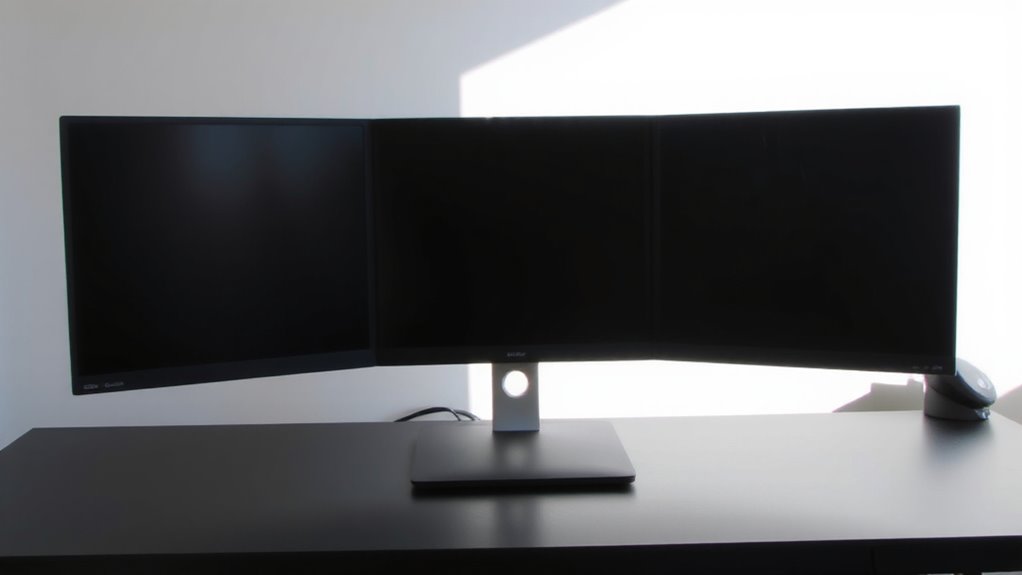
Matching monitor 실수 sets the foundation for a balanced dual-monitor workspace-24 to 27 inches is the sweet spot for most desks. You’ll get a clean, symmetrical look that makes multitasking easier and reduces eye strain. Identical models simplify monitor calibration, ensuring colors and brightness match across screens without extra software. It also streamlines cable management since you can use the same mounts, stands, and port layouts. But if you mix sizes, bezels and resolutions might clash, creating visual jumps when dragging windows. Even with matching panels, factory calibration varies, so plan to manually adjust gamma, white point, and brightness. Built-in cable routing helps, but don’t rely on it alone-Velcro straps or sleeves keep cords tamed long-term. Warranties rarely cover calibration drift, so check review data on panel longevity. Real-world testing shows matching units deliver consistent performance, but demand careful setup. For those on a tight budget seeking reliable performance, a well-reviewed option like the best laptops under $20,000 can provide the necessary computing power to drive a dual-monitor setup efficiently.
Align Monitors Flush on Your Desk
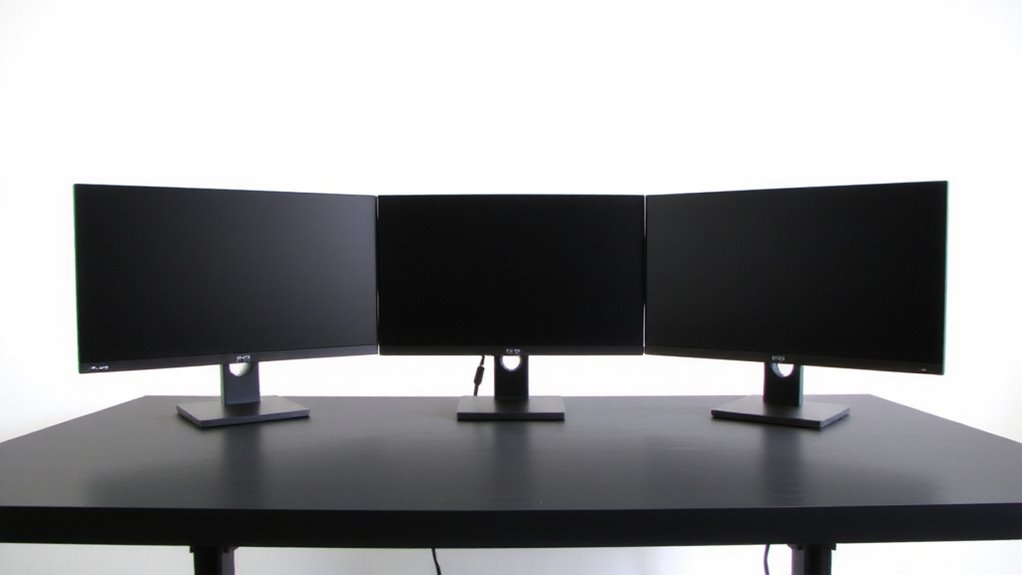
Getting your monitors level with each other starts with positioning them flush along the front edge of your desk-this creates a clean visual plane that reduces neck strain and makes scrolling between screens feel seamless. Aligning them this way also simplifies cable management, letting cords run straight back to your PC or power strip without awkward bends. It works best if your desk has consistent depth across the span of both monitors. Watch out for uneven surfaces or obstructions like drawers, which might force compromises. Proper workspace lighting helps too-position the setup to avoid glare on the screens, especially if using glossy displays. Flush alignment looks clean and professional, but only if your desk supports it. If your surface is too shallow or crowded, slight setbacks may be necessary. The goal is comfort and function, not perfect symmetry at the cost of usability.
Center Your Primary Display Between Screens
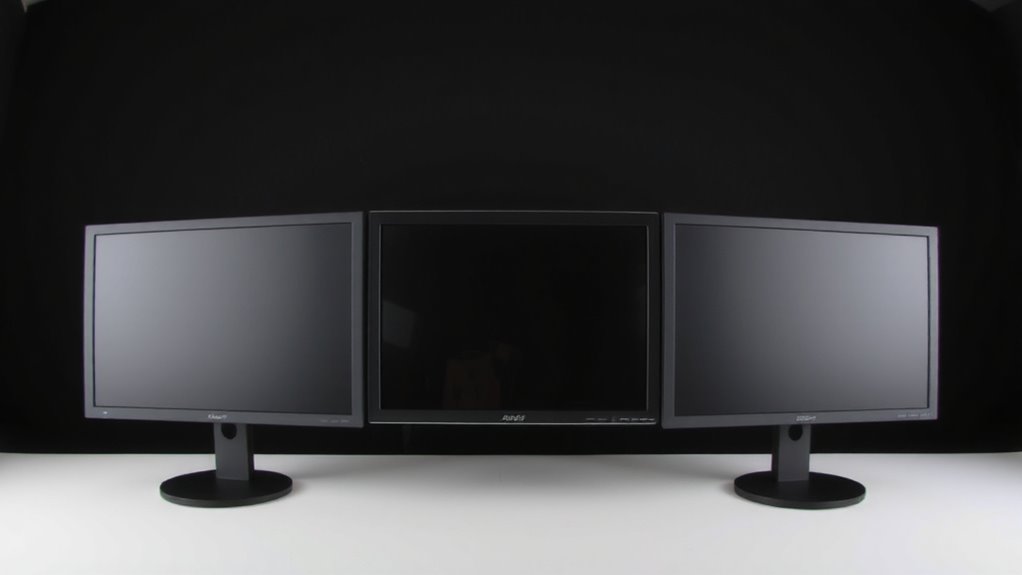
While symmetry might seem ideal, centering your primary display between two screens actually improves focus and reduces eye strain-especially during long work sessions. Proper screen placement positions your main monitor directly in front of you, aligning with your natural line of sight, while the secondaries sit at measured angles-typically 30 to 45 degrees-to support seamless glances without head turning. This setup enhances visual balance by anchoring your workflow in the center, where eye movement is minimal and attention stays sharp. It’s not just about looks; centered primary monitors reduce neck fatigue and improve productivity over time. Just be sure your desk is wide enough-usually at least 55 inches-to avoid crowding. Mounting arms can help fine-tune depth and height. Note that this layout sacrifices perfect symmetry, but the ergonomic advantages outweigh the aesthetic trade-off for most users. For optimal adjustability and stability, consider using best monitor arms designed for dual-screen setups.
Align Screens in Windows or macOS Display Settings
Proper alignment of your dual monitors in operating system settings guarantees what you see matches how the screens are physically arranged, making cursor movement intuitive and reducing navigation errors. On Windows, drag the display thumbnails in Settings > System > Display to mirror your desk setup, ensuring the primary monitor is centered between the two. macOS users can adjust arrangement in System Settings > Displays > Arrangement by dragging screen icons into correct positions. This step supports accurate screen calibration and smooth visual shifts. For best results, enable color matching across both displays using built-in profiler tools or third-party software like DisplayCAL. Keep in mind that slight bezel or size differences may limit perfection. Always verify alignment by moving the cursor across edges-it should feel natural, not jarring. Misalignment causes eye strain, so double-check after any layout change.
Tweak Angles and Heights for Seamless Eye Movement
If your monitors aren’t positioned to match your natural line of sight, even perfectly aligned displays can strain your eyes over time. You need proper ergonomic positioning to maintain visual continuity across both screens. Angle each monitor slightly inward so their edges point toward your nose-about 30 degrees works for most setups. This reduces head turning and keeps content flowing smoothly from one display to the next. Match the top of both screens to your eye level; if one’s too high or low, it forces neck strain. Use monitor arms with height and tilt adjustments for precision. Remember, a seamless experience depends more on your posture and alignment than hardware quality. While arms are ideal, stands can work if finely adjustable. However, fixed stands often limit long-term flexibility, so consider that trade-off before buying. For added ergonomic support, consider pairing your setup with a portable standing desk stool.
On a final note
You’ll get the cleanest dual-monitor setup by matching screen sizes and centering the primary display between them. Align the bezels flush on your desk, then adjust tilt and height so your eyes move smoothly across screens. In display settings, drag the monitor icons to mirror their physical layout. Just remember, perfect symmetry can strain necks if viewing angles aren’t customized to your seating position.