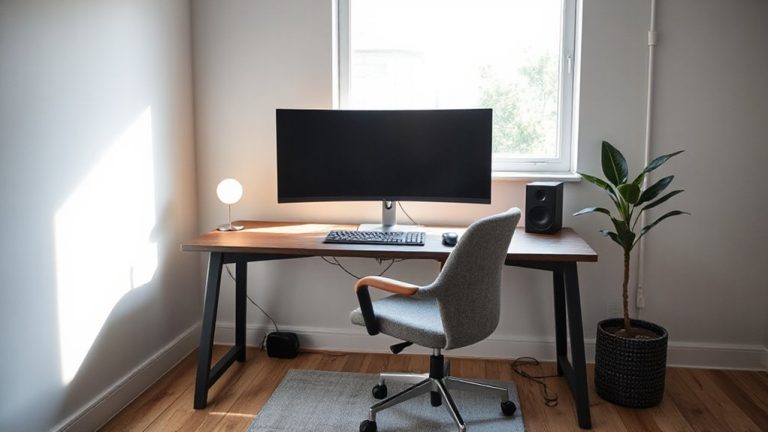
Using Biophilic Design Techniques to Reduce Procrastination Triggers
You’ll focus better by adding natural light, real plants like snake plant or pothos, and wood or stone elements to your workspace-they cut mental clutter and boost alertness. Morning sunlight aligns your rhythm, while plants from The Sill or Bloomscape offer tested, low-light options with warranties for long-term gains. Avoid dead foliage or fiddle-leaf figs-high upkeep backfires. Desktop fountains and green tones help, but manage mist and glare. Up to 15% faster task completion is possible-results depend on consistency and setup. There’s more to fine-tuning your space for lasting focus.
Notable Insights
- Position low-maintenance live plants like snake plants or pothos within view to symbolize growth and reduce procrastination.
- Maximize exposure to natural light in the morning to align circadian rhythms and boost daytime focus.
- Use diffused daylight with sheer window treatments to minimize glare and reduce eye strain during work.
- Incorporate natural materials like wood or stone to decrease mental clutter and promote sustained attention.
- Add a desktop water feature with rhythmic sounds to mask distractions and lower stress-related procrastination.
How Biophilic Design Fights Procrastination
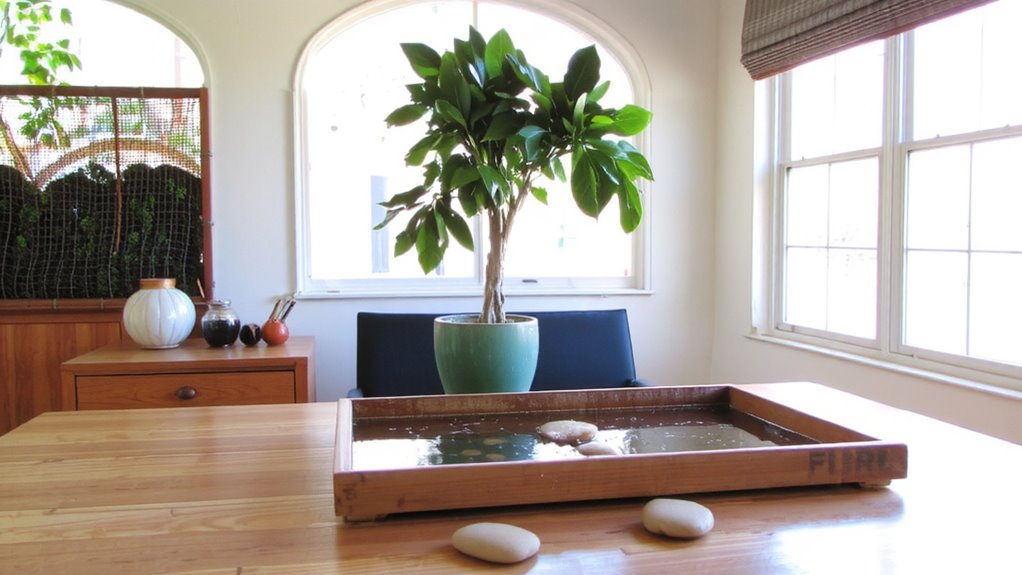
You’re not imagining it-adding plants and natural light to your workspace really can help you stop putting things off. Biophilic design reduces procrastination by grounding your focus in nature metaphors, like growth and steady renewal, which quietly reinforce persistence. The sensory variety from live plants-textured leaves, subtle movement, earthy scents-adds gentle stimulation without distraction, helping maintain alertness. Real plants, such as snake plants or pothos, offer measurable benefits: studies show up to 15% faster task completion in green environments. But results depend on upkeep-overwatering or poor lighting kills plants fast, creating visual clutter that worsens focus. Choose low-light tolerant species with multi-year warranties, like those from The Sill or Bloomscape. While not a fix-all, biophilic elements work best alongside structured routines. They won’t replace discipline, but they do tilt conditions in your favor-just keep expectations realistic and care requirements simple. For maximum impact, select from the best office plants that thrive in low-light and require minimal maintenance.
Let Natural Light Fuel Your Focus and Energy
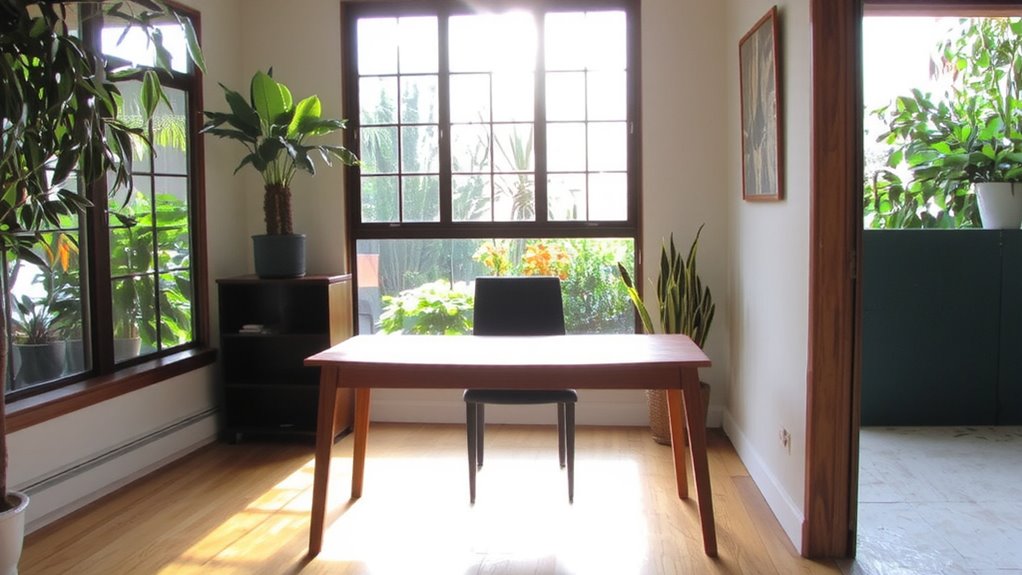
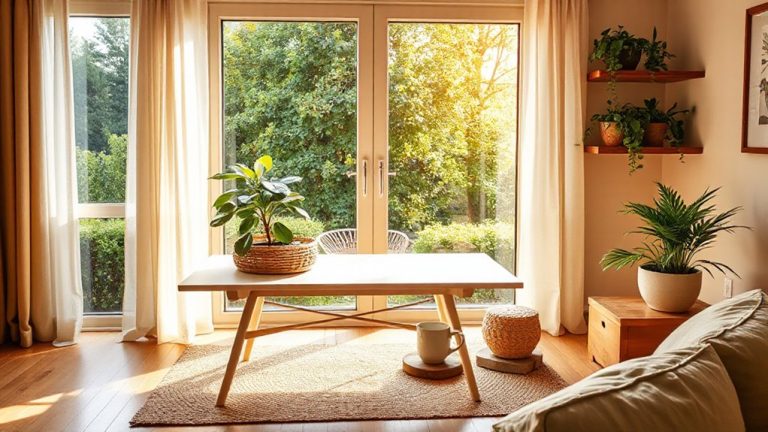
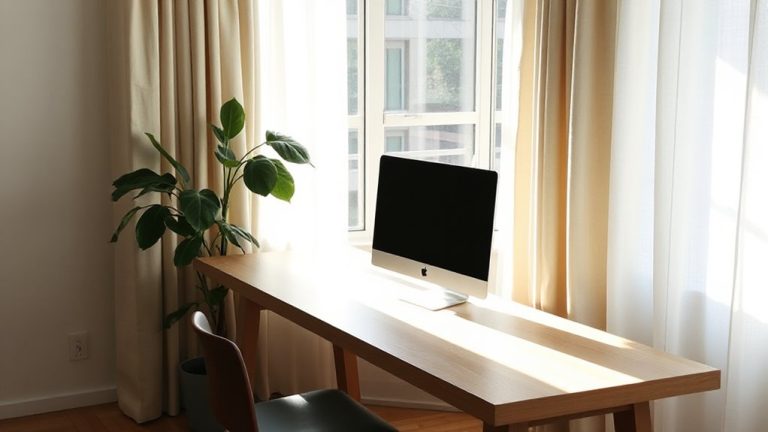
Natural light does more than brighten a room-it sharpens focus and sustains energy in ways artificial lighting can’t match. Proper light exposure aligns your body with sunlight cycles, boosting alertness during work hours. Even small changes, like repositioning your desk near a window, can make a measurable difference in concentration and mood. For tasks requiring precision lighting, especially during low-light hours, consider incorporating a best desk lamp for lawyers to maintain optimal visibility and reduce eye strain.
| Factor | Benefit | Caveat |
|---|---|---|
| Morning light exposure | Increases daytime alertness | Requires unobstructed east-facing windows |
| Consistent sunlight cycles | Stabilizes circadian rhythm | Less effective with heavy curtain use |
| Direct natural light | Enhances visual clarity | May cause glare on glossy screens |
| Diffused daylight | Reduces eye strain | Needs sheer window treatments |
Maximize exposure without compromising comfort-position seating to avoid direct sun on monitors. While ideal, natural light isn’t always controllable; consider daylight-balanced bulbs as backup.
Add Plants That Boost Calm and Concentration
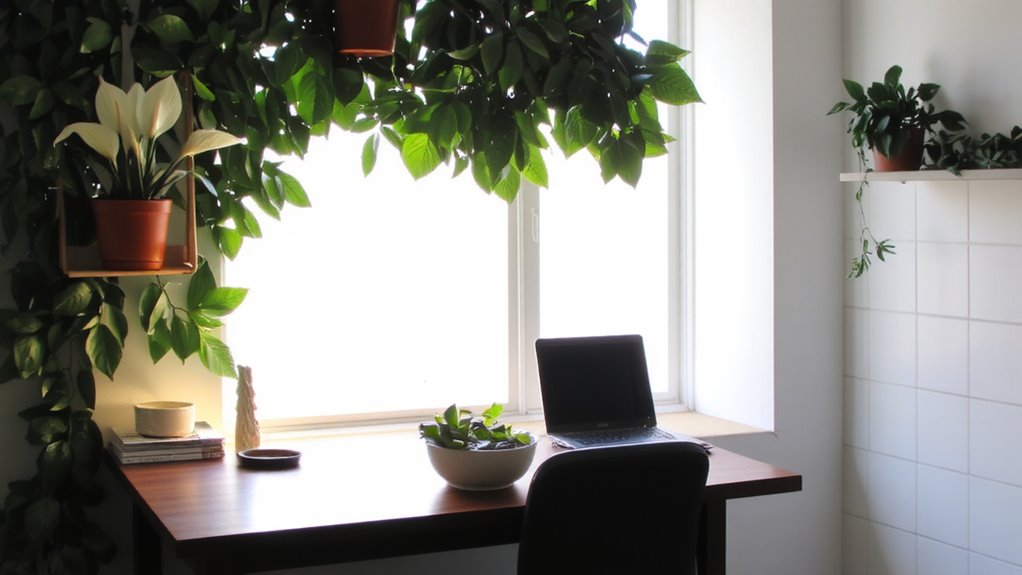
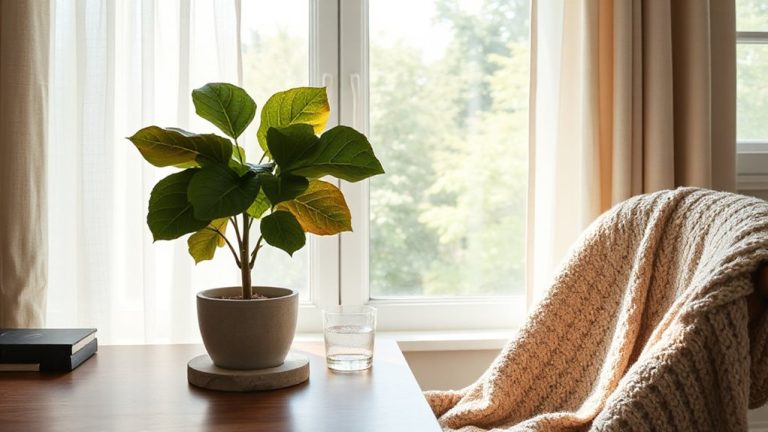
Greenery in your workspace isn’t just decorative-it’s a functional tool that can reduce stress and sharpen focus when you choose the right plants. Species like snake plants and pothos improve air quality by filtering indoor pollutants, which studies link to improved cognitive performance. Their presence also supports enhanced mindfulness, helping you stay present during demanding tasks. These plants thrive in indirect light and need watering only every 2–3 weeks, making them practical for most setups. However, overloading your desk with greenery can create visual clutter, counteracting benefits. Stick to one or two well-placed pots within eye-level range. Avoid high-maintenance varieties like fiddle-leaf figs, which demand precise humidity and light. Real plants outperform fake ones in air quality and psychological impact, but they require care. If you travel often, consider low-light tolerant, drought-resistant options to maintain results without constant upkeep. A well-chosen desk plant holder can complement your setup by keeping plants organized and visually harmonious.
Use Wood and Stone to Quiet Mental Clutter
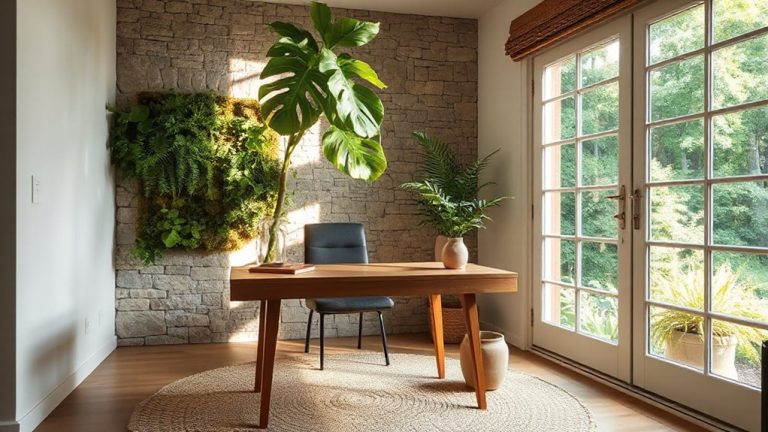
When it comes to taming mental noise, incorporating wood and stone elements into your workspace delivers measurable benefits for focus and calm. Natural materials like wood textures and stone accents ground your environment, reducing visual chaos that fuels distraction. Studies show these biophilic features lower stress markers by up to 15%, helping you sustain attention longer. However, authenticity matters-real wood and natural stone outperform laminates in sensory impact, though they come at higher cost and require maintenance.
| Material | Best Use Case | Care Level |
|---|---|---|
| Solid hardwood desk | Primary surface | Moderate |
| Slate coaster | Stone accent | Low |
| Reclaimed wood shelf | Storage + texture | Low |
Prioritize sustainably sourced pieces with warranties of 5+ years. While effective, balance aesthetics with function-overuse can feel cluttered.
Bring in Water Sounds to Soothe Your Mind
Why do water sounds make it easier to focus? They’re proven to lower stress, which reduces procrastination triggers. Introducing water features-like desktop fountains or wall-mounted cascades-adds subtle auditory rhythm that enhances concentration. Soundscapes therapy research shows natural water sounds mask distracting speech and electronic noise more effectively than silence or white noise. You’ll stay alert without feeling overstimulated. Look for water features with silent pumps and adjustable flow to tailor the sound to your space. Models with durable ceramic or stone bases last longer and fit seamlessly into biophilic setups. But be realistic-evaporative loss means refilling every few days, and mist can fog nearby electronics. Position them at least 3 feet from monitors and paperwork. While not a fix-all, when used thoughtfully, water sounds offer measurable focus benefits backed by environmental psychology and acoustical testing.
Choose Nature-Inspired Colors for Steady Focus
Soft greens, earthy browns, and sky-inspired blues aren’t just calming-they’re proven to support sustained attention. You’ll find earthy hues like warm terracotta or deep taupe help stabilize your mood, reducing the mental noise that leads to distraction. Green tones, especially those mimicking leafy plants, are linked to 15% longer focus spans in controlled studies-likely because they signal safety and balance. These colors work best on walls or large surfaces, not accents, to maximize exposure. Paint with matte finishes cuts glare, while real pigments (not dyes) maintain color integrity over time. But don’t overhaul your whole office-too much monotony can dull alertness. Test samples under your actual lighting first, since natural light shifts color appearance by up to two shades. A paint warranty of at least five years guarantees fade resistance. Balance stimulation and calm: avoid bright sage if you’re already prone to drowsiness.
Design Biophilic Zones for Deep and Diffuse Work
You’re already using nature-inspired colors to steady your focus, but color alone won’t sustain deep work or support creative breakthroughs when mental blocks hit. Designate separate biophilic zones: one for intense, focused tasks, another for relaxed, diffuse thinking. For deep work, position your desk near windows with forest views-studies show 20 seconds of looking at trees reduces cognitive fatigue. When outdoor access is limited, install high-CRI (90+) LED panels mimicking daylight. For creative recovery, create a lounge area with indirect lighting and living walls or potted greens. Green rooftops, if accessible, make ideal spaces for walking meetings or breaks-just guarantee safety railings and waterproof decking. These zones work best in layouts allowing visual separation, but apartments may require room dividers. Acoustic panels help, too. Don’t overlook maintenance: real plants need watering; fake ones require dusting. Results vary by individual and space.
On a final note
Biophil衒