How to Use Circadian Lighting to Support Jet-Lagged Remote Workers Across Time Zones
Sync your lighting to local work hours, not sunrise-use 5000K at 500 lux for morning focus if you’re in EST, 4500K/450 lux in CET afternoons, and 4000K/400 lux for IST evenings. A 10,000-lux light therapy lamp at wake-up helps reset your rhythm, but only with consistent sleep habits. Avoid blue-rich light after work to protect melatonin. Smart bulbs with 2700K–6500K ranges can automate this, though many underdeliver on brightness-test your setup. Top models like Verilux or Lumie offer reliable performance and 1–2 year warranties, but timing matters more than brand. You’ll see better results when routines and light work together.
Notable Insights
- Align lighting with local work hours using 5000K and 500 lux for EST, 4500K and 450 lux for CET, and 4000K and 400 lux for IST.
- Use 10,000 lux light therapy lamps within an hour of waking to reset circadian rhythms and improve alertness.
- Pair light therapy with strong sleep hygiene, including consistent bedtimes and reduced screen exposure.
- Employ smart bulbs or tunable lamps to match local sunrise and sunset, reducing jet lag effects.
- Apply blue-enriched light (5000–6500K) during work hours and shift to warm, dim light (<150 lux, 2700–3000K) in the evening.
Use Circadian Lighting to Fight Jet Lag in Remote Teams
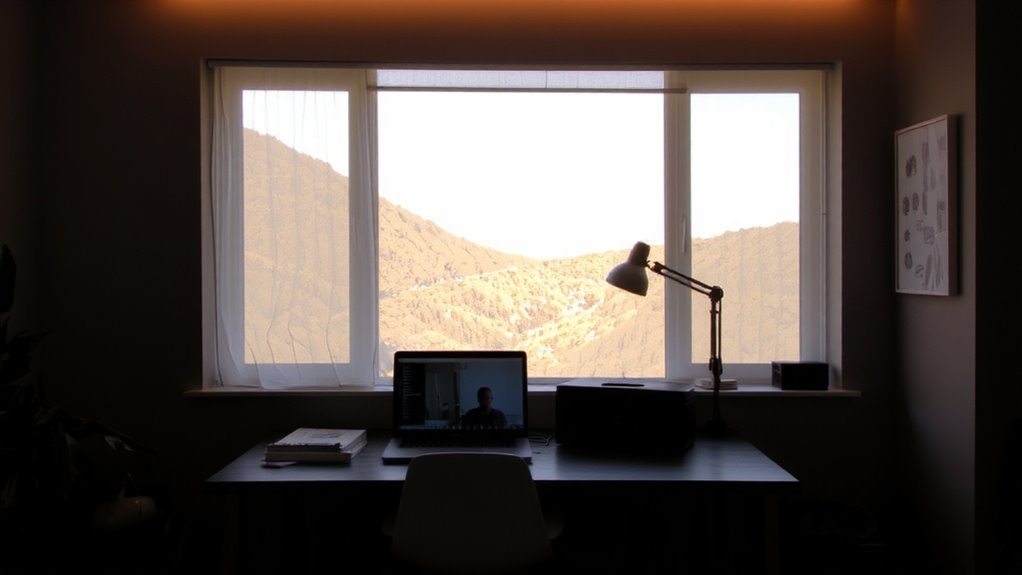
How do you stay sharp when your team spans time zones and your sleep schedule pays the price? Use circadian lighting to align your body’s rhythm with your work demands. Light therapy lamps that emit 10,000 lux of full-spectrum light can help reset your internal clock-use one within an hour of waking for 20–30 minutes. These devices mimic natural daylight, boosting alertness and improving mood. But they only work if paired with solid sleep hygiene: consistent bedtimes, screen limits before bed, and dark, cool rooms. While models like the Verilux HappyLight or Lumie Brazil are well-reviewed, results vary by individual. Some users report mild eye strain or headaches. Most come with 1- to 2-year warranties. Effectiveness depends on correct usage and timing-misuse can worsen fatigue. It’s not a magic fix, but with discipline, it’s a strong tool. For home use, consider top-rated natural light lamps that support circadian health.
Align Light With Work Hours by Time Zone
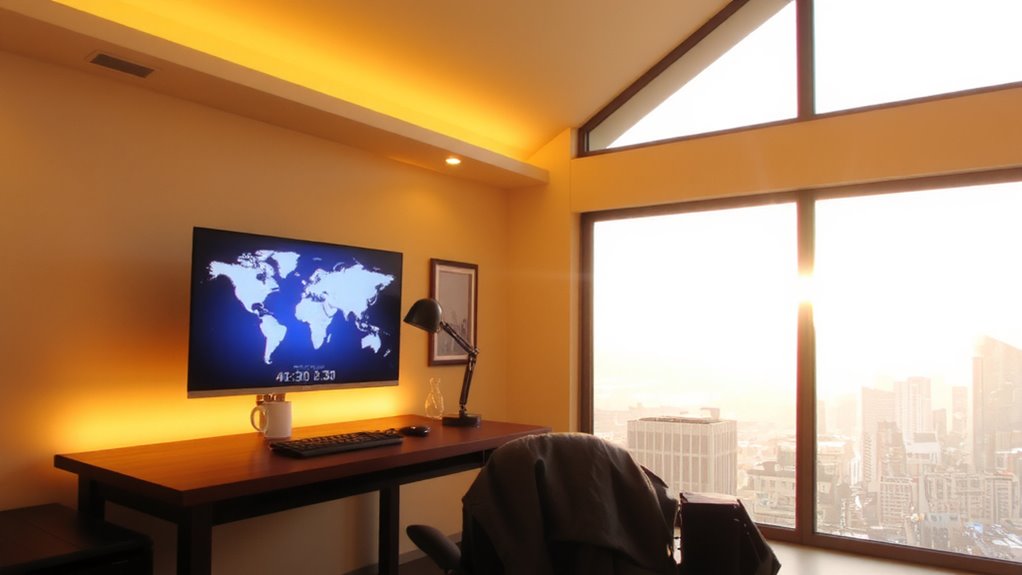
You get the best results from circadian lighting when you sync it with your actual work hours, not just your local sunrise and sunset. Proper light synchronization supports alertness and focus during your designated work window, especially when working across time zones. Time alignment matters because your body responds to light cues even if your schedule defies local daylight. For remote teams, this means adjusting light intensity and color temperature based on when work happens-not geography.
| Time Zone | Work Hours (Local) | Recommended Light Setting |
|---|---|---|
| EST | 9 AM – 5 PM | 5000K, 500 lux |
| CET | 2 PM – 10 PM | 4500K, 450 lux |
| IST | 7 PM – 3 AM | 4000K, 400 lux |
| PST | 6 AM – 2 PM | 5000K, 500 lux |
Misalignment risks fatigue. Use tunable LEDs with scheduling features. Not all bulbs offer precise control-check dimming range and app reliability.
Set Circadian Lights for Remote Workers’ Local Time
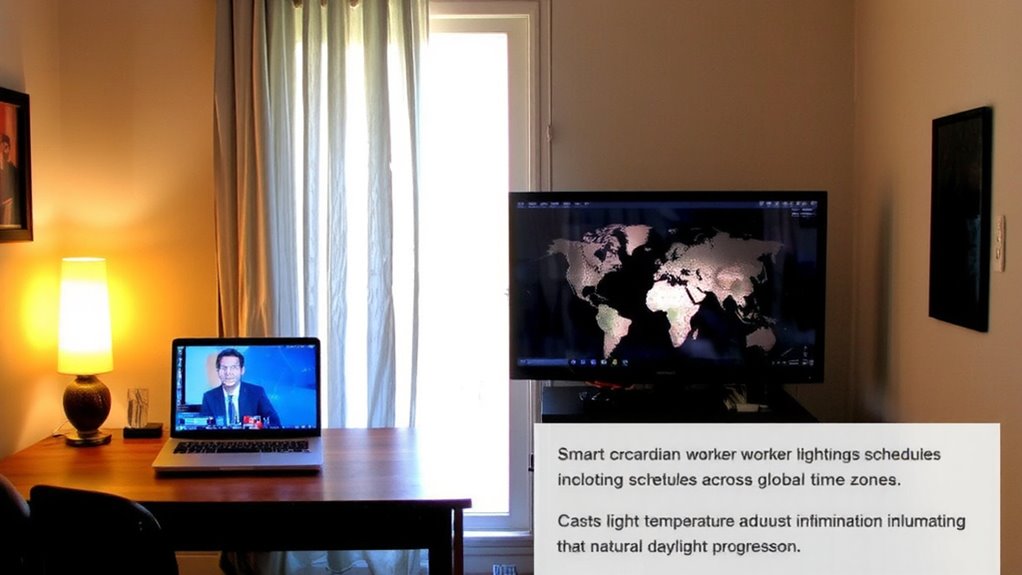
Why should your office lighting bend to your team’s clocks instead of your ceiling’s default settings? Because remote workers operate on personal schedules shaped by their local time zones. Setting circadian lights to match each worker’s local sunrise and sunset supports natural rhythms, helping reduce jet lag and boost alertness. Light customization isn’t just convenient-it’s essential for distributed teams. Smart bulbs or tunable desk lamps can adjust color temperature and brightness automatically, aligning with regional daylight patterns. These devices typically offer apps to sync with time zones, ensuring accurate daily cycles. Look for models with at least a 2700K–6500K range, reliable scheduling, and strong warranties. However, personal setups vary-some may find constant adjustments disruptive. Test different systems first. Results can be significant, but only if light customization fits actual work habits and home environments. For optimal results, consider using a best light therapy lamp that supports dynamic circadian tuning throughout the day.
Use Blue Light to Boost Focus (and Avoid It at Night)
Blue light sharpens focus during work hours by mimicking midday sunlight, which keeps your alert deficiencies up-especially helpful if your circadian lighting already adjusts to your local time zone. You get a real focus boost from cooler, 5000–6500K color temperatures found in quality LED panels or task lights, especially during your natural midday dip. These lights suppress melatonin, helping you stay sharp during high-concentration tasks. But timing matters-use blue light only during active work hours. Prolonged exposure into the evening disrupts sleep, undercutting recovery and next-day performance. Look for fixtures with adjustable color temperature and solid dimming controls, ideally backed by at least a 3-year warranty. Real-world tests show users report better concentration, but only when light is properly timed and intensity capped around 500 lux to avoid glare. Misuse can cause eye strain or delayed sleep onset-so pair your blue light use with behavioral discipline. For video calls, consider a desk lamp with consistent color rendering to maintain a professional appearance, as top models are evaluated for performance in real-world conferencing scenarios, including best desk lamps.
Create Light-Based Mornings and Evenings
Though natural sunlight remains the ideal regulator of circadian rhythms, you can effectively simulate its daily pattern indoors with well-timed artificial lighting-especially if your schedule involves shift work, frequent travel, or office environments with limited windows. To create light-based mornings, use high light intensity (at least 500 lux at eye level) and a color temperature of 5000–6500K, which mimics morning daylight and helps suppress melatonin. This setup boosts alertness and resets your internal clock. For evenings, reduce light intensity below 150 lux and shift to a warmer color temperature (2700–3000K) to signal wind-down mode. While some smart bulbs and daylight lamps deliver these ranges reliably, check product specs for tested output-many fall short in real-world use. Consistency matters more than gear: even basic lamps can work if you follow the timing and intensity guidelines closely.
Watch Your Team’s Energy to Fine-Tune Lighting
How do you know if your lighting strategy is really working? You watch your team’s energy. Real adjustments start when energy tracking becomes part of your team culture. Use simple tools-daily check-ins, pulse surveys, or app-based logs-to spot dips or spikes in focus and mood. If someone in Tokyo logs fatigue at 10 a.m. their time, but the lighting schedule assumes peak hours, you’ll miss the mark. Adjust brightness or color temperature in 30-minute increments and measure response over three to five days. Look for sustained attention, not just quick boosts. While tunable LED panels offer precision, cheap bulbs often flicker or misrepresent color temps, hurting more than helping. Always test lighting against real work output. Results vary-what helps one person’s rhythm might disrupt another’s. Track consistently, tweak thoughtfully, and remember: consistency beats perfection in long-term energy support.
On a final note
Use circadian lighting to help jet-lagged remote teams, but choose tunable LED bulbs or smart lamps that adjust color temperature and brightness. Set them to 5000K cool white light during work hours to boost alertness, then shift to 2700K warm light at night. Look for models with precise scheduling, like Philips Hue or Nanoleaf, backed by solid warranties. Results vary-some users report better focus, but setup takes time and consistency.