Creating a Lighting Backup Plan With Battery-Powered Options for Power Outages
You’ll want reliable, battery-powered lights like the Streamlight ProTac HL X-it’s compact, delivers 1000 lumens, and handles drops and harsh weather with IP68 and two-meter impact ratings. Use AA or AAA for longer runtime, or CR123/18650 for peak brightness, knowing real-world performance often falls short of claims. Pair high-output lights with lower settings to stretch battery life, and rotate or remove batteries to prevent damage. A mix of lanterns, headlamps, and motion-sensor lights covers key areas without overreliance on one solution. Pick models with proven durability and test them yearly to stay ready-your plan’s only as strong as its weakest link. There’s more to optimizing each component based on your home’s layout and outage history.
Notable Insights
- Choose durable, battery-powered lights like the Streamlight ProTac HL X with IP68 rating for reliability during outages.
- Opt for flashlights using AA or AAA batteries to ensure longer runtime and easy replacement.
- Use adjustable brightness settings to conserve battery life and extend usable runtime.
- Store spare batteries in a cool, dry place and rotate them every 18 months to maintain capacity.
- Test all backup lights monthly and recharge or replace batteries to ensure readiness.
Top Battery-Powered Lights for Power Outages
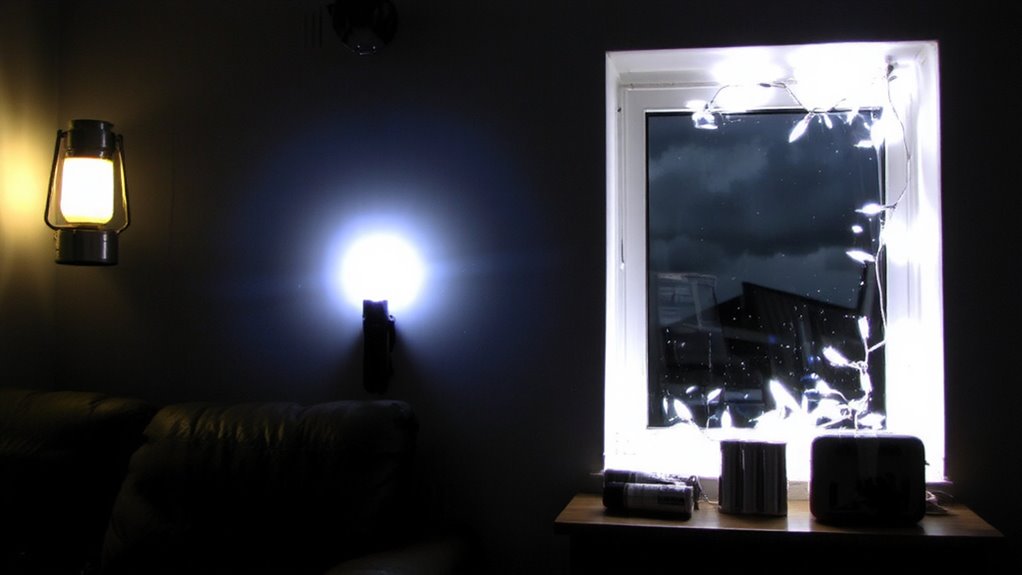
A solid choice for reliable lighting during outages is the Streamlight ProTac HL X, and it’s one you’ll appreciate when the power cuts out unexpectedly. You’ll value its compact size and lightweight aluminum body-strong portability features that make it easy to carry or store in a drawer. It delivers up to 1000 lumens, offering multiple brightness levels so you can switch between high output for dark rooms or low for battery savings. The tactical tail switch allows one-handed operation, useful in stressful moments. It’s impact-resistant up to two meters and IP68-rated for dust and water resistance, verified in real-world tests. However, its high-output mode drains power quickly-something to weigh when relying on it long-term. The five-year warranty adds peace of mind, but note that the premium build costs more than basic flashlights.
Match Lights to Your Needs: Battery Type & Runtime
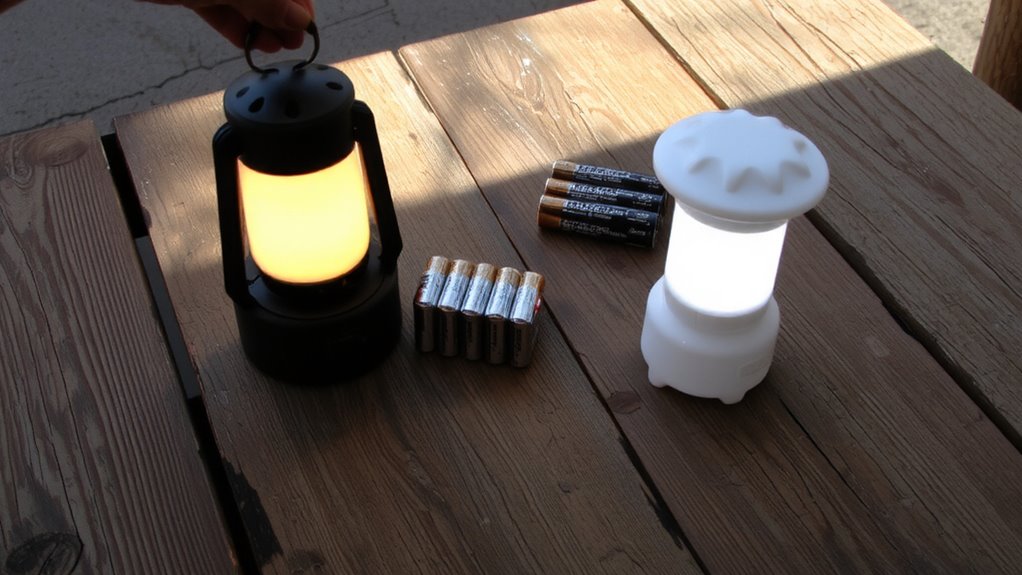
How do you balance brightness and battery life when choosing a flashlight for emergencies? Prioritize battery efficiency and lighting durability based on your needs. If you need prolonged runtime, opt for LED models that use AA or AAA batteries-they’re widely available and offer reliable performance. High-output flashlights with CR123 or 18650 rechargeables deliver intense brightness but often sacrifice runtime. For most households, a mid-output LED flashlight (200–500 lumens) with a runtime of 8–12 hours strikes the right balance. Check manufacturer runtime charts, but remember real-world use usually shortens claims. Look for lights with impact resistance and IPX7 ratings for durability. While rechargeables save money long-term, they require charging before outages-so if you forget maintenance, stick with alkaline-powered options. Your ideal light matches your usage, not just specs.
Make Every Battery Last: Emergency-Saving Tips
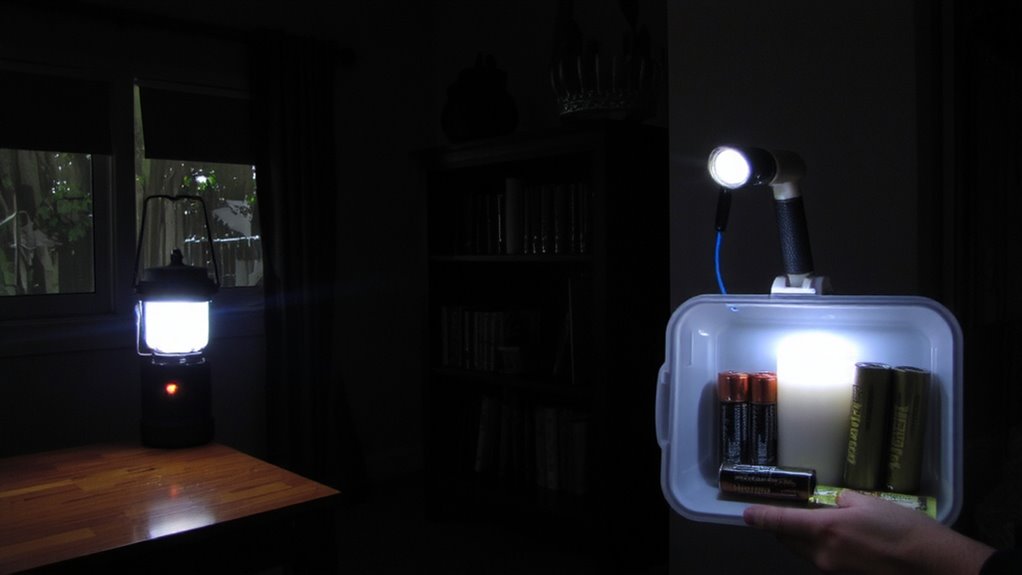
Don’t leave battery life to chance-your flashlight runtime in an emergency depends on how carefully you manage power. Prioritize battery conservation by using the lowest effective brightness setting; high modes drain power fast and aren’t always necessary. Opt for lights with adjustable output to match the task, improving power efficiency. Remove batteries when not in use for long periods to prevent leakage and parasitic drain. Store spare batteries in a cool, dry place-extreme heat or cold reduces capacity. LED bulbs are more efficient than incandescent, but even LEDs vary; check lumens-per-watt if specs are available. Avoid relying solely on built-in rechargeables unless you can regularly top them off. Real-world testing shows some lights lose 15–20% runtime over six months, even in storage. Warranties rarely cover battery degradation, so rotate stock every 18 months for best results.
Build a Home Lighting Backup Plan
While power outages can strike without warning, having a structured home lighting backup plan means you won’t be left in the dark-literally. Start by mapping out light placement strategies for key areas: entryways, stairs, and kitchen spaces. Combine portable lanterns, headlamps, and wall-mounted LED backups for coverage. Practice emergency lighting drills every few months so everyone knows where lights are stored and how to activate them. Below is a simple plan to distribute lighting where you need it most.
| Location | Fixture Type | Runtime (hrs) |
|---|---|---|
| Living Room | Rechargeable lantern | 12 |
| Kitchen | LED under-cabinet | 8 |
| Hallway | Motion-sensor plug-in | 5 |
| Bedrooms | Headlamps (stored) | 10 |
| Basement | Waterproof flashlight | 7 |
Balanced placement guarantees safety without over-relying on single devices.
Test Your Emergency Lights Before the Next Outage
When was the last time you checked if your emergency lights actually work? Regular light maintenance isn’t just smart-it’s essential for effective outage preparation. Turn on each flashlight, test every lantern, and confirm your headlamp still holds a charge. Battery-powered options lose power over time, especially if stored unused for months. Check expiration dates on sealed batteries and replace them annually. Rechargeable models should be cycled every few months to preserve battery life. For lanterns with multiple brightness settings, verify output doesn’t drop markedly on low mode. Motion-sensor lights must trigger reliably in total dark. Don’t assume waterproof ratings mean dust resistance-check IP ratings carefully. Remember, a light that fails during testing is one that won’t help when the power goes. Test now, avoid surprises later.
On a final note
You’ll want reliable battery-powered lights for outages, and LED models with AA or lithium-ion power offer the best mix of runtime and brightness. Look for ones with 200+ lumens and 10+ hour performance in tests. Rugged designs and 2-year warranties add peace of mind. Just remember: brightness cuts runtime, and rechargeables need charging before use. Test monthly to avoid surprises.