Using Environmental Psychology Principles to Combat Isolation Effects During High-Demand Tasks From Home
You can reduce isolation during intense work by designing your space with solid wood desks and natural light-position your desk in a south-facing room to maximize indirect sunlight, which supports focus and circadian rhythms. Add a wool rug or potted plant for warmth and mental relief, but avoid overcrowding surfaces, as clutter hinders clarity. Use shared Spotify playlists with steady 70–80 BPM instrumentals to create subtle co-presence, and switch to lavender scent in the evening to signal downtime, knowing that consistency in these cues matters more than high-end gear. The real benefit kicks in when you align each sensory detail with daily routines.
Notable Insights
- Use natural materials like solid wood and wool to create a warm, personal workspace that fosters emotional connection.
- Position your desk to maximize natural light, reducing fatigue and supporting focus during high-demand tasks.
- Schedule brief, camera-on virtual coffees to simulate informal social interactions and reduce feelings of isolation.
- Play shared focus playlists with minimal vocals and steady tempo to create a sense of invisible co-presence.
- Use scent cues like rosemary during work and lavender at night to condition the brain for task and rest modes.
Design Your Home Office to Reduce Isolation
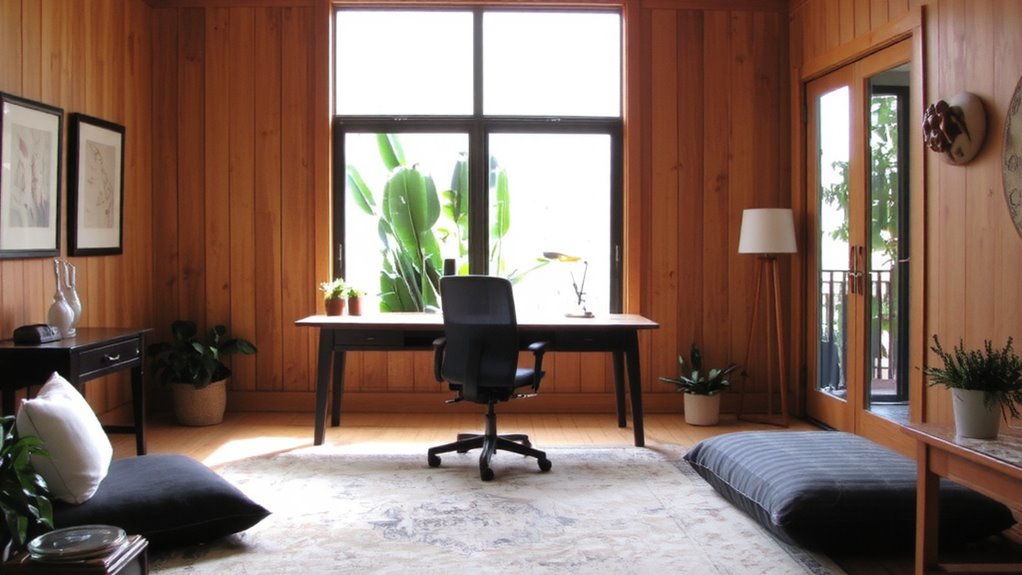
While you might think a home office is just about saving space or cutting commute time, how you design it can actually make or break your sense of connection-and isolation-during the workday. Choosing natural materials like solid wood desks or wool rugs adds warmth and subtle texture, helping your brain register the space as welcoming, not confining. Pair these with personal artifacts-photos, books, handmade items-that quietly reinforce your identity and relationships. These elements anchor you to real-life connections, reducing mental strain over time. But don’t overfill the room; clutter disrupts focus. Opt for open shelving with curated items, not packed drawers. Note: while natural materials often cost more upfront, many last over a decade with care. Personal artifacts don’t need to be fancy-just meaningful. Balance matters. A too-personal space can distract; a sterile one deepens isolation. Test changes over two-week intervals to assess emotional impact. For durability and aesthetic appeal, consider desks made from best wood for desks, such as oak or maple, which provide long-term resilience and natural beauty.
Use Light and Layout to Stay Focused
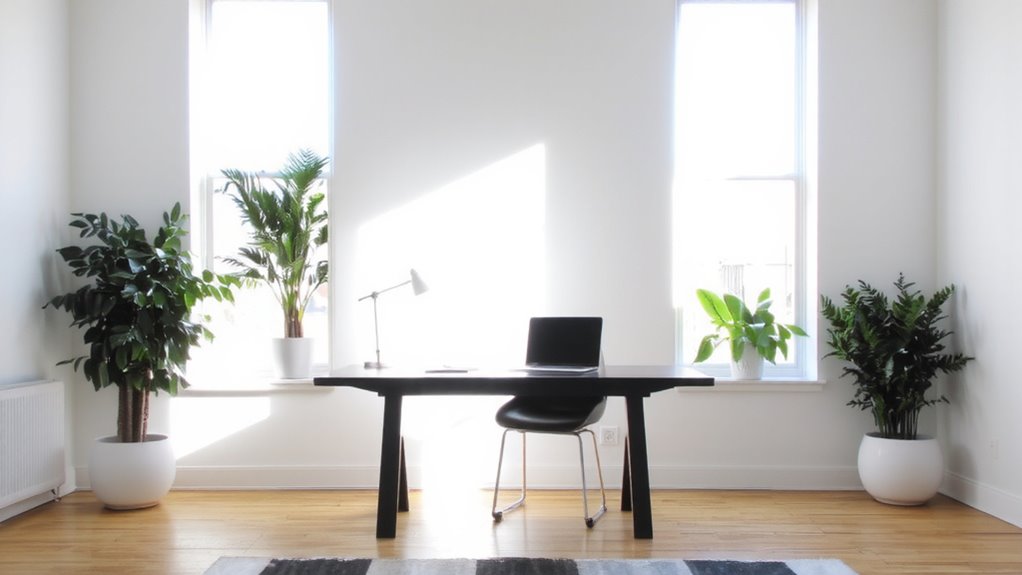
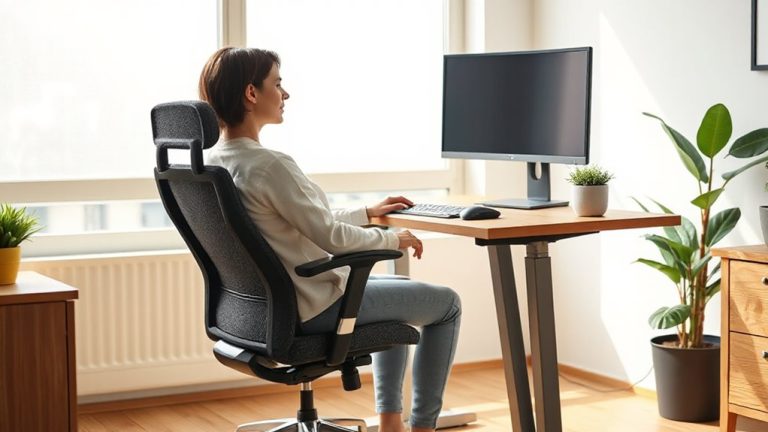
How often do you feel your focus slipping just a few hours into your work day? You’re not alone-and your environment might be the culprit. Positioning your desk to maximize natural lighting can markedly reduce eye strain and mental fatigue. Facing windows with indirect sunlight during peak hours helps maintain circadian rhythms, which supports alertness. Room orientation matters: south-facing rooms typically offer consistent daylight, while east or west exposures can create glare or uneven brightness. Avoid backlighting screens, which increases visual load. If natural lighting is limited, supplement with full-spectrum bulbs at 5000K color temperature, mounted above or beside your monitor. However, don’t rely solely on lighting upgrades-poor layout, like facing a wall or high-traffic area, disrupts concentration. Balance visual stimulation with minimal distractions. Test configurations over three to five workdays to assess focus and adjust accordingly. For tasks requiring precision, consider using a drafting desk lamp with adjustable brightness and color temperature to enhance visibility and comfort.
Add Subtle Social Cues to Stay Connected
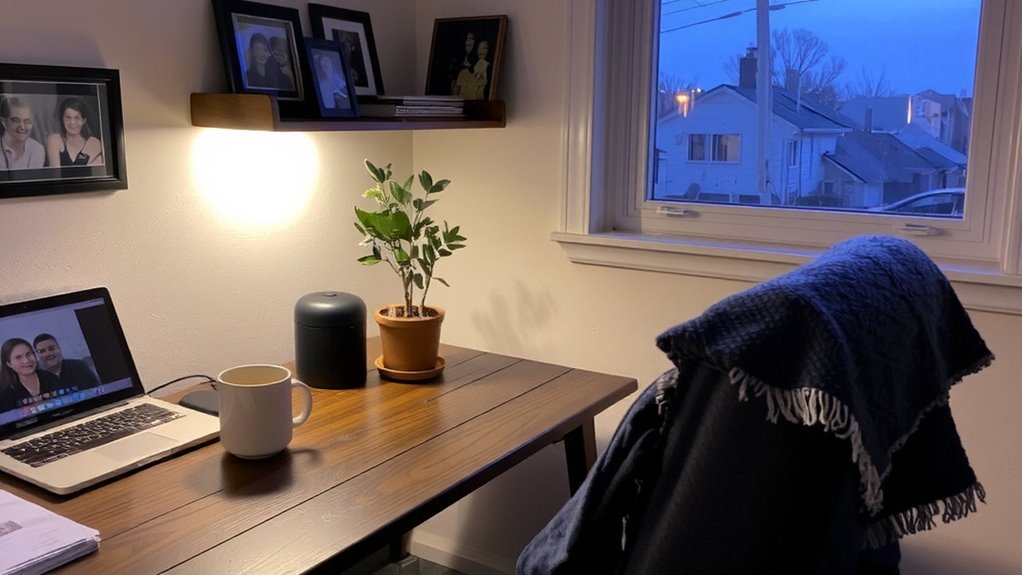
Your home office’s quiet can start feeling lonely after a few weeks, but subtle social cues can keep you feeling connected without disrupting focus. Schedule a weekly virtual coffee with teammates-just 15 minutes, camera-on, no agenda. It’s not forced fun; it mimics hallway chats and reinforces belonging. You’ll likely feel more anchored, though don’t overbook these-too many become distractions. Try shared playlists with coworkers, updated monthly, using a service like Spotify; name it “Focus Flow” or “Low Light Work.” Shared audio environments create invisible co-presence. Pick one with minimal vocals and steady tempo-around 70–80 BPM-ideal for concentration. These cues work best when they’re background, not foreground. Playlists lose effect if changed weekly or packed with personal tastes. Keep them simple, predictable. No gear upgrade needed-just consistency.
Create Spaces That Support Mental Resilience
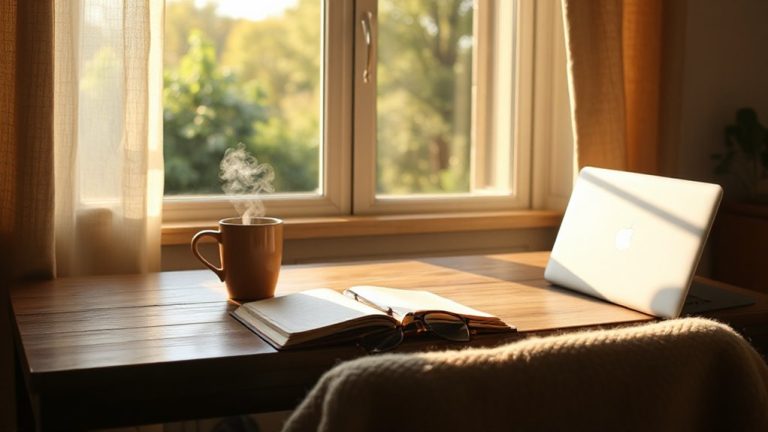
A well-designed workspace doesn’t have to mean expensive gear or a full remodel-just small, intentional changes that support focus and recovery. You can boost mental resilience by prioritizing nature integration and acoustic comfort. Place a potted plant on your desk or position your chair near a window with a view of trees; studies show even modest contact with nature reduces mental fatigue. For acoustic comfort, use a solid-core door or add weatherstripping to block household noise, and consider a white noise machine at 45–55 dB to mask distractions without causing strain. While some invest in soundproof panels, even thick curtains can help. Keep lighting balanced-natural during the day, warm artificial at night. Avoid overly bright overhead lights that heighten stress. These tweaks aren’t magic fixes-results depend on consistency and individual needs-but over weeks, they support long-term cognitive stamina and mood stability. Adding best office plants can further enhance air quality and well-being in your workspace.
Use Environmental Cues to Mark Work and Rest
Designing distinct environmental cues helps your brain separate work mode from rest mode, especially when both happen in the same space. Use scent cues like citrus or rosemary essential oils during work hours, then switch to lavender in the evening-your brain will start linking scents to tasks. Create sound zones with headphones playing focus playlists or white noise at your desk, then silence or soft ambient tunes elsewhere. This isn’t about buying the most expensive diffuser or noise-canceling headphones; it’s consistency that matters. Even affordable speakers or a $15 oil diffuser work if used the same way daily. Keep volume moderate-above 85 dB risks hearing fatigue. Results vary; some people adapt quickly, others notice little. Test routines for at least two weeks. There’s no universal fix, but structured cues reduce mental bleed-through between roles when space is limited.
On a final note
You can reduce isolation and stay focused during demanding remote work with smart environmental choices. Arrange your desk to face a window or use a 10,000-lux light box to regulate circadian rhythms, improving alertness. Add a virtual background with subtle human figures or use open shelving to create visual warmth-these cues help lower psychological strain. Choose chairs with lumbar support and a five-year warranty for long-term comfort. But test changes gradually; what boosts focus for one person may distract another, especially in shared spaces. Balance is key.