Creating a Vertical Desk Layout to Maximize Floor Space in a Tiny Room
You can free up floor space by mounting a vertical desk to your wall-opt for a 24–30-inch model secured into studs that supports up to 30 pounds. Use a fold-down bracket or floating shelf design to tuck it flat when not in use. Keep supplies organized with pegboards and narrow shelves. Position your screen at eye level and use an external keyboard for better ergonomics. Just confirm wall structure and level installation to avoid wobble or damage. Strong setup means lasting function-know the details behind each choice.
Notable Insights
- Mount the desk to wall studs for stability and optimal space-saving in compact rooms.
- Choose a foldable design that pivots down when in use and tucks away when not.
- Use a depth of 20–24 inches to balance workspace usability and wall clearance.
- Install slim wall organizers and pegboards to store supplies without cluttering floor space.
- Position monitor at eye level and use external peripherals for ergonomic comfort.
Build a Vertical Desk to Save Floor Space
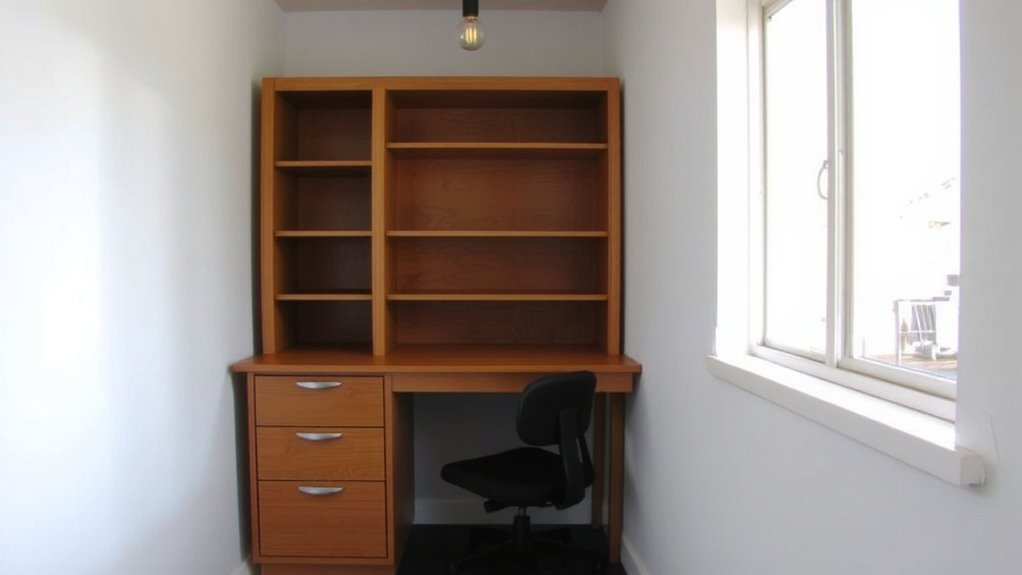
While you might not have enough room for a traditional desk, building a vertical desk could be the most effective way to free up floor space in a small room. This approach prioritizes space efficiency by shifting work surfaces upward, using wall-mounted structures that support laptops, monitors, and essential tools. With smart wall organization-like shelves, pegboards, or track rails-you keep items accessible without cluttering tight areas. Most DIY vertical desks fit within 24–30 inches wide and support up to 30 pounds when anchored properly into studs. However, you’ll need consistent wall access and may sacrifice some ergonomic flexibility. Installation requires a level, stud-finding, and secure fasteners-shortcuts risk damage. While it’s not ideal for large equipment, it’s a realistic option if you value minimal footprint and clean layout. Test stability before loading it fully. For alternative space-saving solutions, consider best foldable desks that offer portable and compact workspaces.
Pick a Space-Saving Wall-Mounted Design
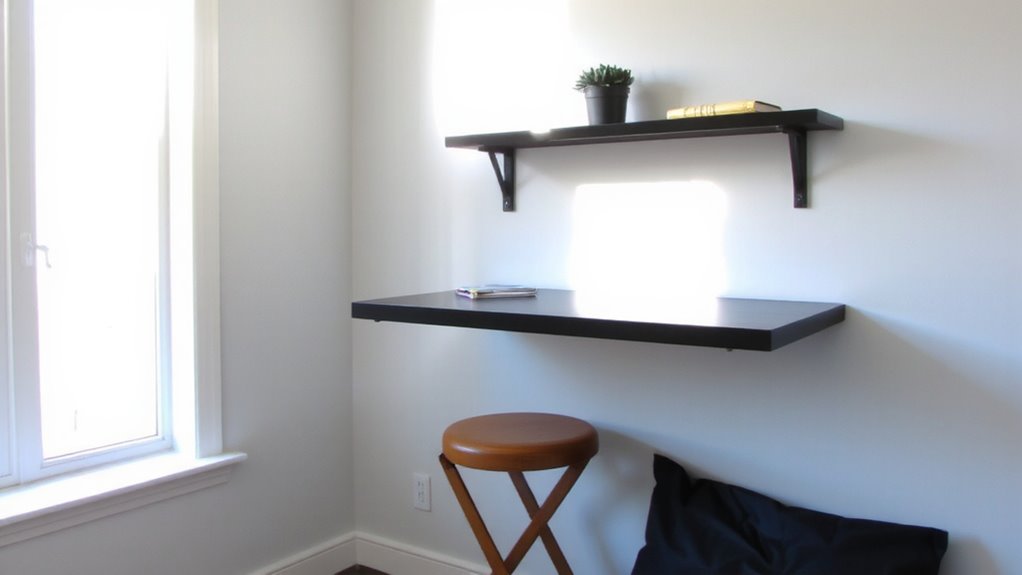
A well-chosen wall-mounted desk can transform how you use space in a small room, giving you a stable work surface without sacrificing floor area. You’ll want a design that’s both sturdy and easy to adjust-look for models with a foldable bracket system that allows the desk to pivot down when in use and tuck tightly against the wall when not. A floating shelf unit with built-in support arms offers a clean look and decent weight capacity, usually up to 50 pounds, but always check wall stud alignment before installing. These desks typically extend 20–24 inches, giving enough depth for a laptop and notebook, though larger monitors may feel cramped. Remember, a foldable bracket limits under-desk storage, and you’ll lose quick access to peripherals. Install with toggle bolts if you can’t hit studs, and test wobble before loading it up.
Store Supplies for Your Vertical Desk
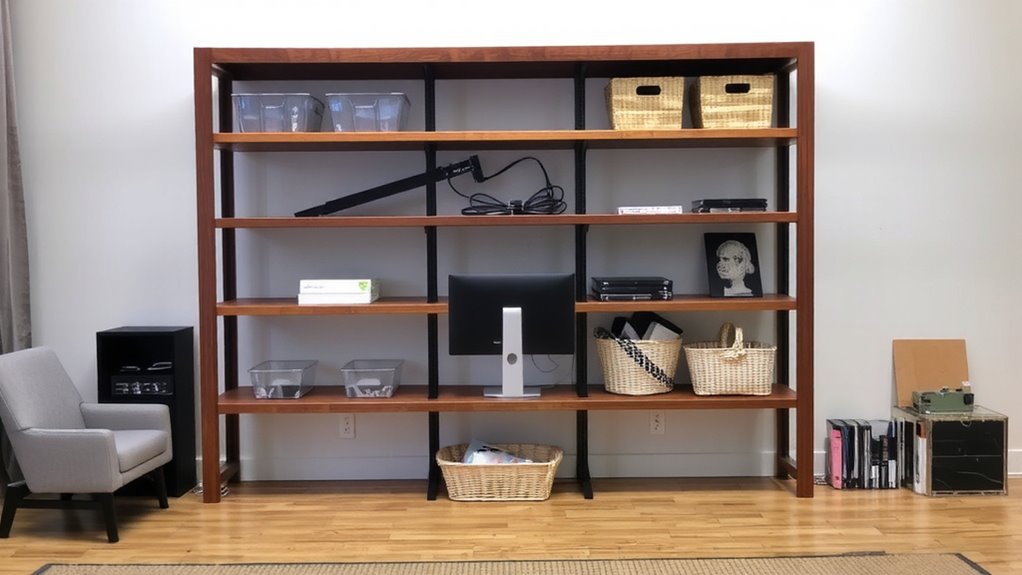
Since your vertical desk limits floor and surface space, you’ll need smart storage solutions that stay within arm’s reach without cluttering your wall-mounted setup-pegboards and slim-profile organizers mounted above or beside the desk are ideal. Vertical storage keeps supplies visible and accessible while minimizing depth-aim for systems under 6 inches deep to avoid leaning. Wall shelving adds space for books or binders but should be narrow (8–10 inches) and mounted at or slightly above eye level to prevent obstruction. Use labeled bins or small drawers on shelves to reduce visual clutter. Avoid overloading above-desk areas; weight limits on anchors and drywall matter-always check manufacturer specs. Most pegboards support 10–20 lbs per hook, but real-world performance drops if anchors are improperly installed. Test stability before loading. These systems save space but take planning-measure your tools first, then choose modular pieces that let you reconfigure as needs change. Consider placing a compact best USB keyboard to maintain a clean, efficient workspace without sacrificing functionality.
Set Up an Ergonomic Vertical Desk
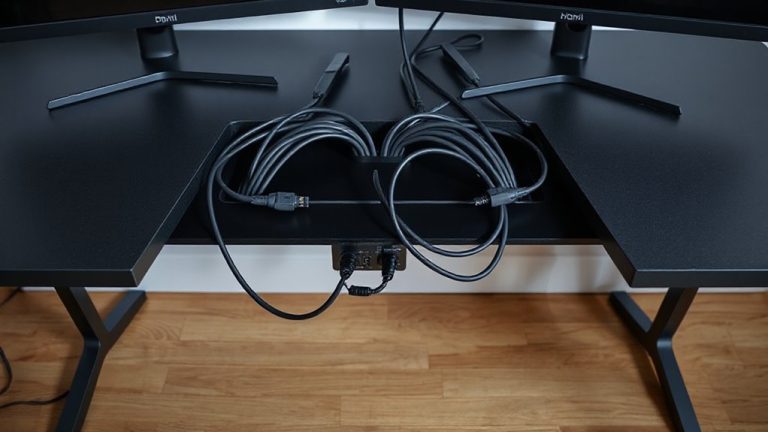
How do you make a vertical desk work for your body without sacrificing comfort or long-term health? You position your screen at eye level, about 20–28 inches from your face, to avoid neck strain. Keep your elbows at 90 degrees when typing, using an external keyboard and mouse mounted slightly below desk height. Proper cable management isn’t optional-it prevents clutter and keeps cords out of your workspace, reducing tripping hazards. Use adhesive clips or braided sleeves to route wires neatly. Task lighting matters too: position a glare-free LED lamp to the side of your screen to reduce eye fatigue. Avoid placing it directly in front or behind your monitor. While vertical setups save floor space, they demand tighter ergonomics-small adjustments make a real difference. Test positions over 2–3 days. A warranty of at least one year on mounts adds peace of mind. For reliable support, consider choosing one of the best monitor mounts based on stability, adjustability, and user reviews.
Install Your Vertical Desk in 3 Easy Steps
Getting your vertical desk securely in place is straightforward if you follow a clear sequence-start by choosing a mounting surface that’s both flat and structurally sound, like a stud-reinforced wall or a solid wood partition. First, mark and pre-drill holes for wall anchors; using heavy-duty ones guarantees long-term desk stability, especially with frequent adjustments. Second, attach the mounting bracket firmly, confirming it’s level to prevent uneven stress on the mechanism. Third, slide the desk into the bracket and lock it in place, then test the motion to guarantee smooth operation. Desk stability depends heavily on correct hardware-don’t skip wall anchors even in solid walls, as vibrations from typing add cumulative strain. Most manufacturers recommend specific anchor types, often toggle bolts for drywall. If your model includes a warranty, improper installation can void it. Take time to follow specs; rushing risks damage or injury, but done right, it saves floor space without sacrificing function.
On a final note
You should build a vertical desk if you need to free up floor space in a small room. Wall-mounted units save space and keep your gear organized. Use sturdy steel brackets rated for at least 50 lbs and anchor into studs. Position the desktop at elbow height to avoid strain. However, standing for long periods can tire you-use an anti-fatigue mat. It’s a smart, tested solution, but only works if your walls are strong and you need minimal surface area.