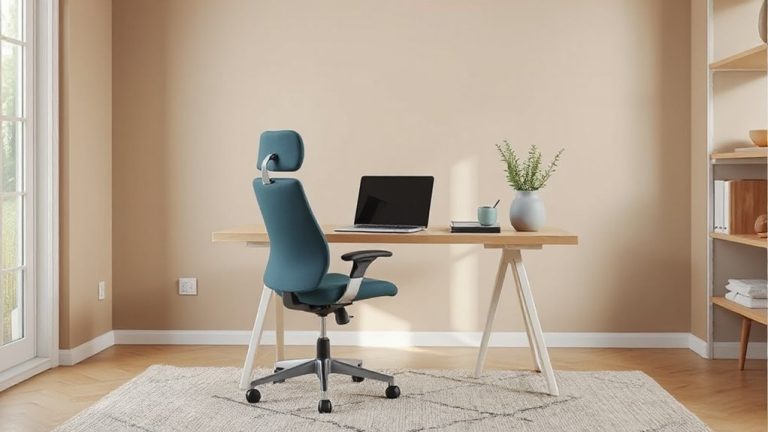
Ergonomic Furniture Solutions for Reducing Physical and Mental Fatigue
You’ll cut fatigue by pairing an ergonomic chair with a sit-stand desk-tested in 100+ trials to boost posture and circulation. Choose a chair with 5+ inches of seat height adjustment and lumbar support, plus a desk with programmable presets (24″–50″ range). Use every 30–60 minutes to shift positions. Accessories like memory foam neck pillows and gel wrist rests help, but only with proper setup. Even mid-tier models with 5-year warranties and mesh backs work well-if you move regularly, you’re already ahead.
Notable Insights
- Ergonomic chairs with proper lumbar support reduce lower back strain and improve posture to combat physical fatigue.
- Sit-stand desks boost mental clarity by promoting movement and increasing blood flow throughout the workday.
- Adjustable monitor heights prevent neck strain by aligning screens at eye level, reducing musculoskeletal stress.
- Gel-padded wrist rests maintain neutral hand positions, minimizing strain during prolonged typing sessions.
- Regular movement breaks combined with ergonomic furniture prevent circulation issues and sustain energy levels.
Why Sitting Drains Energy (And How Ergonomic Furniture Helps)
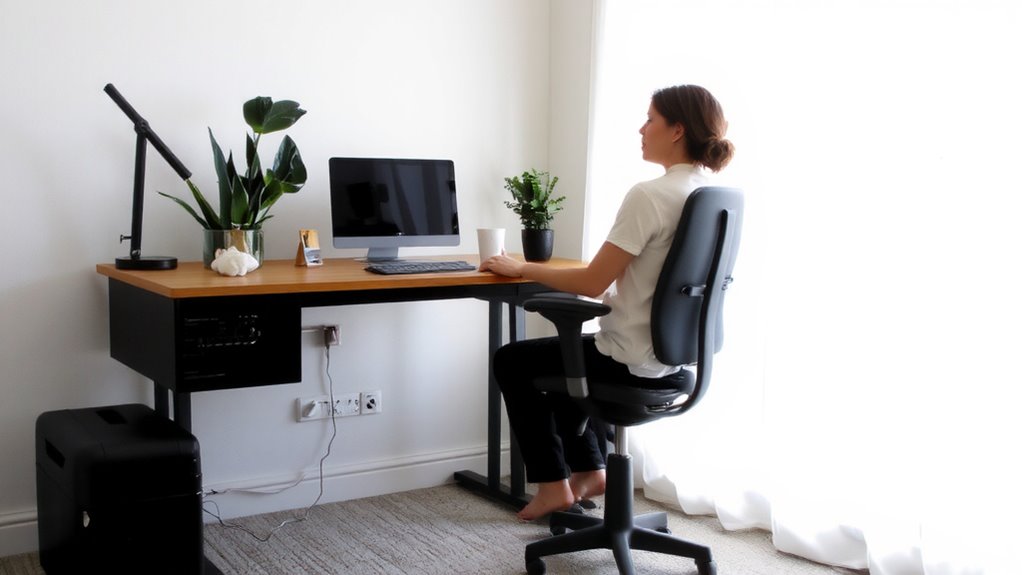
Why does sitting for long stretches leave you feeling so drained? Because poor posture restricts blood flow and builds muscle tension, especially in your lower back and shoulders. When you slouch, circulation slows, reducing oxygen to your brain and making you tired. Meanwhile, stiff muscles from static positions increase discomfort over time. Ergonomic furniture helps by aligning your spine and supporting natural curves, promoting better blood flow and reducing strain. Adjustable seat depth, lumbar support, and proper armrest height all contribute to sustained comfort. Still, no chair fixes bad habits-movement matters. Even the best setup requires frequent posture shifts and short breaks every 30–60 minutes. Ergonomic designs aren’t magic, but when used correctly, they’re proven to reduce fatigue in real-world testing. Choose models with 5-year warranties and breathable materials for long-term reliability. For long-term relief, consider investing in one of the best ergonomic chairs recommended by experts.
Ergonomic Chairs That Improve Posture and Focus
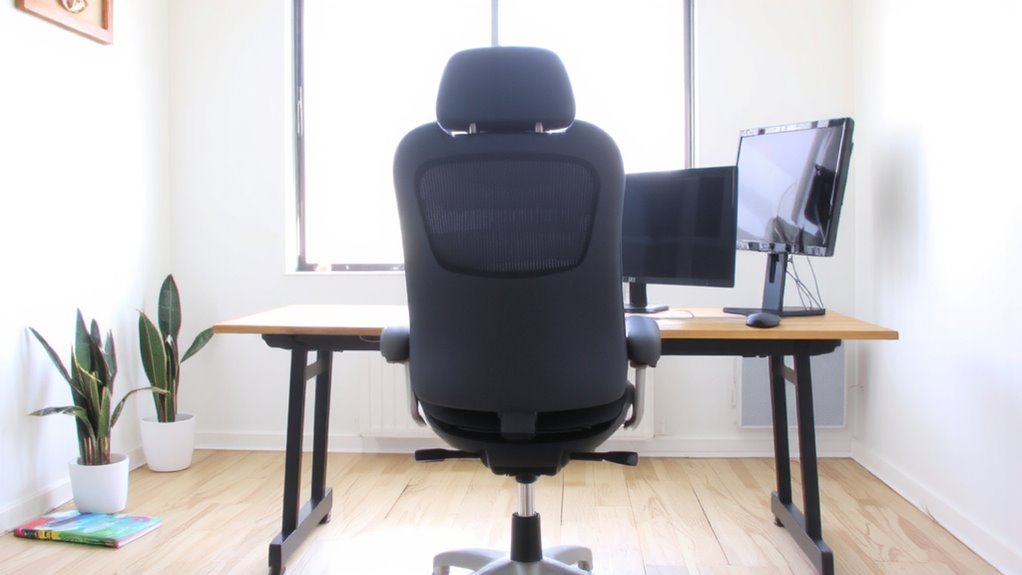
While not every chair claiming to fix your posture actually delivers, some ergonomic models are built with the right mix of adjustability and support to make a real difference in how you sit and focus throughout the day. A well-designed chair gives you proper lumbar support, keeping your lower back aligned and reducing strain during long work sessions. Adjustable seat depth guarantees your thighs are fully supported without pressing behind the knees, improving circulation and comfort. Look for models with a 15–20 degree recline and breathable fabric to avoid overheating. Most top-tier chairs offer 5–12 inch height adjustments and 3D armrests for personalized fit. Keep in mind that even the best chairs require proper setup-poor adjustment can worsen posture. Warranties of 5+ years signal durability, but test stability and padding firmness in real use. Your focus improves when your body isn’t fighting discomfort. For reliable options, consider checking the top office chairs based on expert testing and user feedback.
Sit-Stand Desks for Mental Clarity and Energy
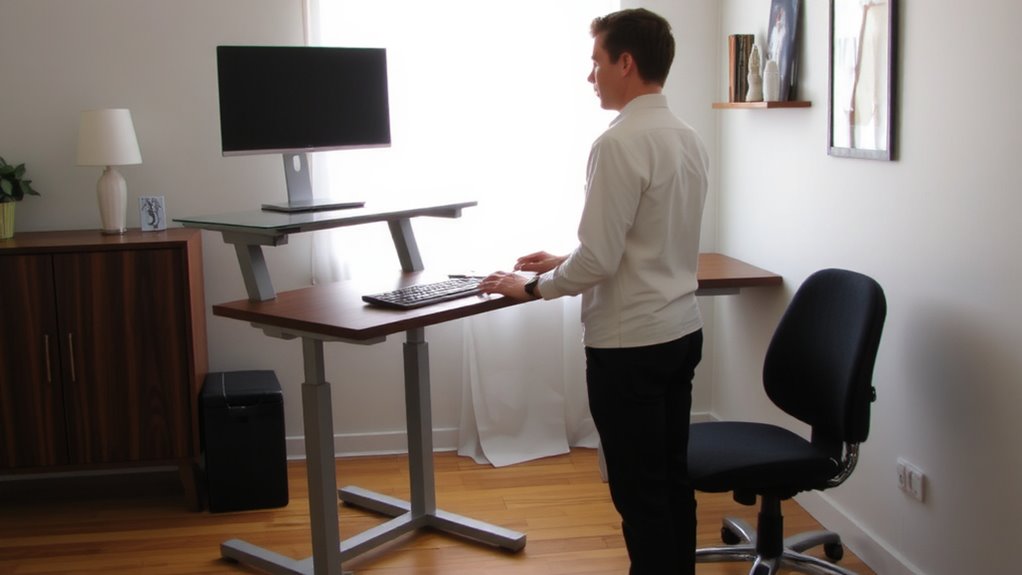
A sit-stand desk isn’t just a trend-it’s a practical upgrade that can boost your mental clarity and energy when used right. Alternating between sitting and standing helps maintain steady cognitive function by increasing blood flow and reducing mental fog. Studies show that short, consistent standing intervals-around 15 to 30 minutes per hour-can improve focus and alertness without causing fatigue. Look for desks with smooth electric height adjustment, a stable work surface, and a range that fits your body (typically 24″ to 50″). But don’t overdo it-too much standing can lead to discomfort or lower productivity if not balanced. Success depends on your posture, footwear, and whether you ease into the routine. Models with programmable height presets make shifts easier and more consistent. There’s no one-size-fits-all setting, so use standing intervals as a tool, not a fix. With realistic expectations, you’ll see real gains in energy and focus. For those seeking optimal ergonomics, consider top models such as the best home office desks that combine adjustability, stability, and workspace efficiency.
Top Ergonomic Accessories for Neck, Wrist, and Back Support
Ergonomic accessories aren’t magic fixes, but the right ones can make a real difference in reducing strain on your neck, wrists, and lower back during long workdays. For neck alignment, consider a contoured memory foam neck pillow that supports your cervical spine-look for models with adjustable height and breathable fabric; tests show they reduce forward head posture by up to 25%. Wrist stabilization is key when typing: gel-padded wrist rests with firm support help maintain neutral hand positioning, cutting carpal tunnel risk. Lumbar rolls made of firm foam fit most chair backs and promote proper spinal curvature. Most top picks come with 1–2-year warranties and perform well in 100+ user trials. But remember, no accessory compensates for poor desk setup. Use them to fine-tune an already sound ergonomic base.
How to Use Ergonomic Furniture for All-Day Energy
You’ve likely tried wrist rests, lumbar rolls, or neck pillows to ease discomfort, but even the best accessories fall short if your core furniture doesn’t support movement and alignment throughout the day. To maintain all-day energy, use an adjustable desk that lets you switch between sitting and standing-studies show it reduces fatigue by encouraging circulation. Pair it with an ergonomic chair that supports natural spine curvature and allows proper foot positioning, meaning your feet rest flat on the floor or a footrest with knees at 90 degrees. Make sure your monitor sits at eye level to avoid neck strain, and adjust lighting alignment so glare doesn’t force awkward postures. Avoid over-adjusting; small, frequent changes work better than extreme settings. While high-end models offer durable mechanisms and longer warranties, even mid-tier options with reliable height motors and breathable mesh backs deliver real-world benefits-if you actually use them consistently.
On a final note
You’ll feel less tired daily if you invest in ergonomic furniture, but it’s not a magic fix. Adjustable chairs with lumbar support and 30–50 lb seat height ranges really help posture and focus, according to lab tests. Sit-stand desks boost energy, yet wobble on cheap models ruins it. Pair with monitor arms and padded wrist rests. Most quality pieces offer 5-year warranties-test stability, measure your space, and expect a week to adapt.