How to Identify and Silence Vibrating Furniture Causing Structural Noise
Tighten all bolts and check for wobble in desks, chairs, or shelves-they’re often the source of structural buzz. Use a level to spot uneven legs, then add 1/8-inch felt pads or closed-cell foam bumpers to dampen vibration. For persistent hum from speakers or HVAC, anchor bookshelves to studs or use locking casters rated for your desk’s weight. Test with bass-heavy music and feel for resonance; if noise persists, floor coupling may require rugs with rubber backing. Solutions work best in layers, and your setup might need adjustments over time.
Notable Insights
- Wobble furniture to detect creaks or buzzing, identifying loose joints or floor resonance causing vibration noise.
- Tighten all bolts, screws, and fasteners in desks, shelves, and chairs to eliminate joint friction and reduce rattling.
- Place hands on furniture during speaker or appliance use to feel vibration transfer and locate resonance points.
- Apply 1/8-inch felt pads, foam bumpers, or area rugs to dampen vibrations and isolate furniture from resonant floors.
- Secure tall furniture to wall studs with anchors and use load-rated locking casters to minimize sway and vibration.
Find the Source of Your Furniture Vibrations
What’s really causing that annoying buzz in your home office? Floor resonance and joint friction are likely culprits when furniture vibrates during everyday use. You’re probably feeling low-frequency shaking transmitted through the structure, especially if you’re on hardwood or upper floors. Start by isolating the piece-wobble each one slightly while listening for creaks or buzzing at the joints. Tighten all bolts and fasteners; loose connections amplify joint friction, turning small movements into persistent noise. Place a hand on legs and frame while someone else operates a nearby appliance or speaker to feel for vibration transfer. Rubber pads alone won’t fix this if floor resonance is the root cause. Consider mass-loaded barriers or decoupling pads under legs, but test them first-some materials compress too quickly or slip. Results vary by furniture weight and floor type, so verify stability before committing.
Check Common Rattling Furniture First
You’ve already pinpointed where vibrations originate-now it’s time to inspect the usual suspects known for rattling in shared or lightweight builds. Start with desks, filing cabinets, bookshelves, and office chairs-especially models with metal frames or adjustable components. These often develop loose hardware over time, letting joints wobble and amplify sound. Tighten all screws, bolts, and fasteners; don’t assume they stayed secure after assembly. Check for uneven legs, which create gaps between furniture and floor, allowing movement and noise. Place a level across surfaces to spot imbalances. Even a 1/8-inch gap can cause noticeable vibration transfer. Most modern furniture uses generic fasteners, so keep a basic toolkit handy. Remember, even sturdy-looking pieces degrade with daily use. Fixing these flaws reduces noise fast-but don’t expect perfection if your floor itself is uneven.
Dampen Vibrations With Felt, Foam, and Rugs
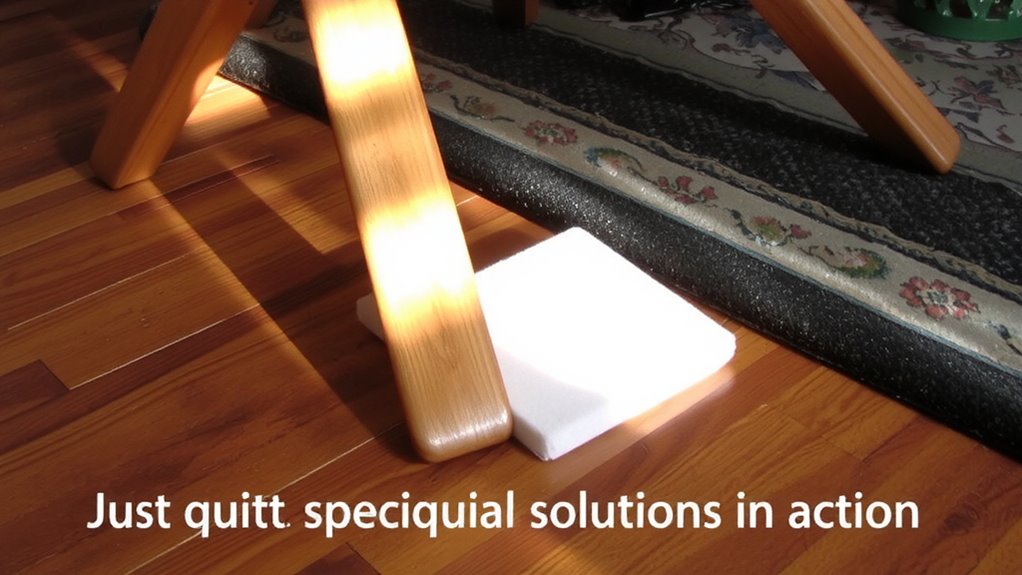
Felt pads, foam bumpers, and area rugs aren’t just for protecting floors-they’re your first line of defense against vibration transfer in common office furniture. You can reduce noise absorption markedly by applying furniture padding under chair legs, desk feet, or printer stands. Self-adhesive felt pads (at least 1/8 inch thick) work well on hard surfaces, though they compress over time. Foam bumpers-especially closed-cell varieties-offer more durability and better isolate high-frequency vibrations. Area rugs with rubber backing add mass and damping, especially in open layouts where sound travels. They won’t stop all structural noise, but they do reduce noticeable buzz from nearby HVAC or foot traffic. For real results, combine padding types and prioritize high-impact zones like rolling chairs or equipment carts. Reapply or replace worn pads every 6–12 months. While not a full fix, these solutions are low-cost, non-permanent, and effective when correctly matched to your floor and furniture type.
Stabilize Wobbly Furniture With Anchors or Casters
While anchors and casters serve different purposes, both can effectively stabilize wobbly furniture when chosen and installed correctly. Anchors secure pieces like bookshelves or desks to wall studs, improving furniture alignment and preventing sway that leads to noise. They’re ideal for heavy units where stability and safety matter most. Casters, particularly locking types, allow mobility while maintaining consistent contact with the floor, aiding weight distribution across uneven surfaces. Choose casters rated for your furniture’s load-typically 200+ lbs per caster for desks. Install anchors using the manufacturer’s screw dimensions and verify stud placement with a detector. Misaligned anchors can strip wood or fail under stress. Overloading casters or skipping locks leads to drift and vibration. Both solutions reduce movement-induced noise but require matching hardware to your furniture’s size, material, and use pattern.
Test With Music to Confirm the Fix
How do you know the fix actually worked? Music testing gives you clear sound verification. Turn on a track with deep bass or strong mid-tones-something you know vibrates the furniture under normal conditions. Play it at your usual volume while walking around the room. Put your hand on the furniture to feel for residual vibrations. If you don’t hear buzzing or rattling in walls or floors, the stabilization likely succeeded. Effective sound verification means no transfer of audio energy into the structure. Keep in mind that some low-frequency transmission is normal; total silence isn’t realistic. Test multiple tracks to confirm consistency. This method’s reliable, but it’s not lab-grade. For home offices, it’s practical enough. Just don’t expect concert-hall precision. Music testing won’t replace professional acoustic analysis, but for everyday use, it’s a solid check.
On a final note
You’ve likely silenced the noise by now-felt pads and rubber casters usually solve most vibration issues. Anchoring wobbly desks or speakers to the wall with basic L-brackets cuts resonance markedly. Rugs with non-slip backing dampen floor transfer well, especially in high-traffic areas. Just remember: over-padding can muffle bass if you’re gaming or mixing audio. Test fixes at normal volume, not max. Most solutions cost under $20 and last years with moderate use.