Incorporating Biophilic Elements Into Furniture Placement and Layout Designs for Home Offices
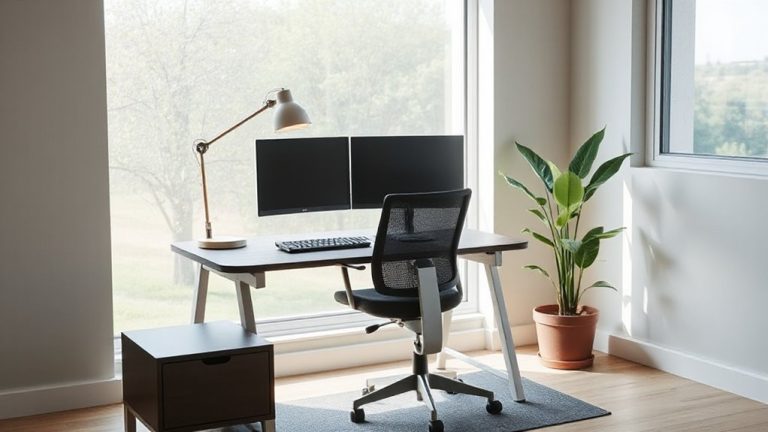
Place your desk perpendicular to a window for steady daylight without glare, using sheer shades to maintain views. Choose solid wood or cork surfaces-they lower stress better than laminates. Add a snake plant or peace lily in the corner for cleaner air, but switch to realistic artificial greens if you neglect watering. Use zones: keep focus areas clear, include a rest chair, and leave a 3×3-foot space for movement. Authentic textures work best; avoid clutter. You’ll see how small changes align with deeper strategies.
Notable Insights
- Position the desk perpendicular to windows to maximize natural light while minimizing screen glare.
- Use solid hardwood desks and cork or stone accents to create a grounding, stress-reducing workspace.
- Place 1–3 low-maintenance plants like snake plants in visible areas to improve air quality and reduce stress.
- Arrange furniture to define focus, rest, and movement zones for balanced cognitive and physical well-being.
- Incorporate authentic natural textures like linen, bamboo, and woven cork to engage the senses subtly.
Start With Biophilic Design: Here’s Why It Works
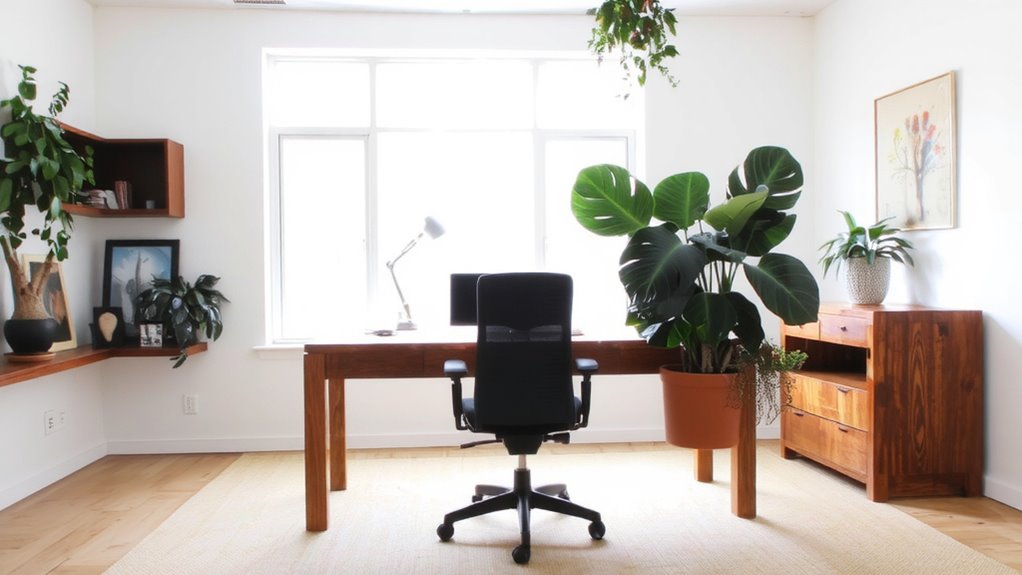
While you might think adding plants to your workspace is just about looks, starting with biophilic design actually delivers measurable benefits for focus and stress-backed by studies showing up to a 15% improvement in cognitive function when natural elements are present. You’ll see real gains by integrating nature patterns-like leafy wall prints or woodgrain desktops-that subconsciously signal calm. Pair those with sensory textures such as woven bamboo trays, cork pinboards, or linen desk pads to engage touch without distraction. These aren’t just aesthetic tweaks; they ground your environment in organic rhythm, proven to lower cortisol. Still, avoid overloading surfaces-each texture should serve a purpose, not clutter workflow. Cheap imitations can look artificial and backfire, so choose real materials where possible. Results vary based on lighting and space size, but even small, well-placed elements yield measurable focus and mood benefits.
Position Your Desk for Light and Outdoor Views
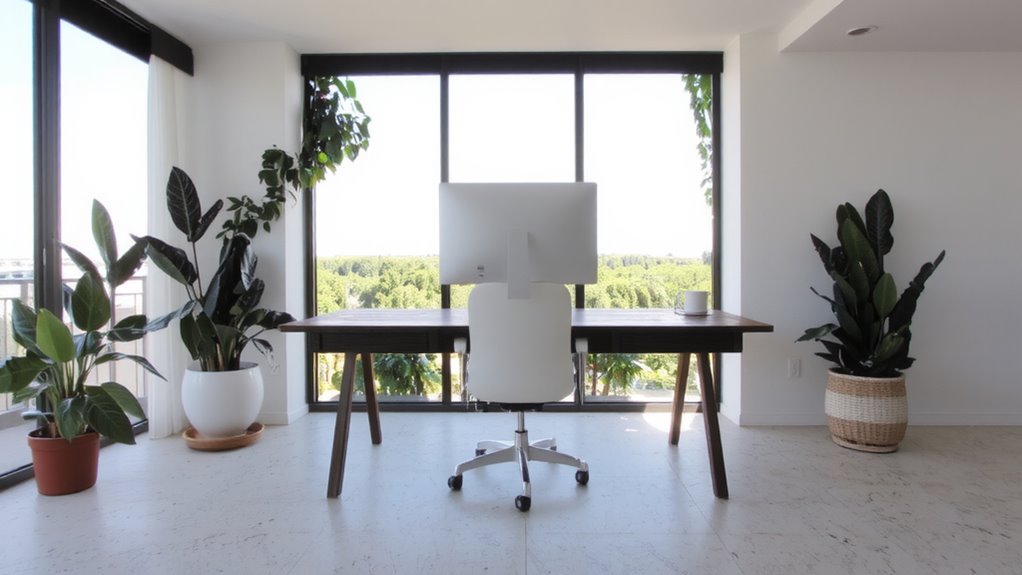
Position your desk directly in front of a window to maximize natural light and outdoor views-it’s one of the most effective moves for boosting alertness and reducing eye strain during long work sessions. You’ll maximize sunlight this way, especially if you orient your desk to face east or south, depending on your climate and glare tolerance. Natural light supports circadian rhythms, but avoid placing the screen directly in front of or opposite the window to prevent glare. Use sheer blinds or adjustable shades for control. Framing views-aligning trees, gardens, or skyline-creates a visual anchor that reduces mental fatigue. A desk flush with the window often frames views best, but guarantee at least 30 inches of walkway space on all sides for practicality. While corner placements save floor space, they often limit access to both light and full scenic benefits.
Choose Wood, Stone, and Natural Materials for Calm
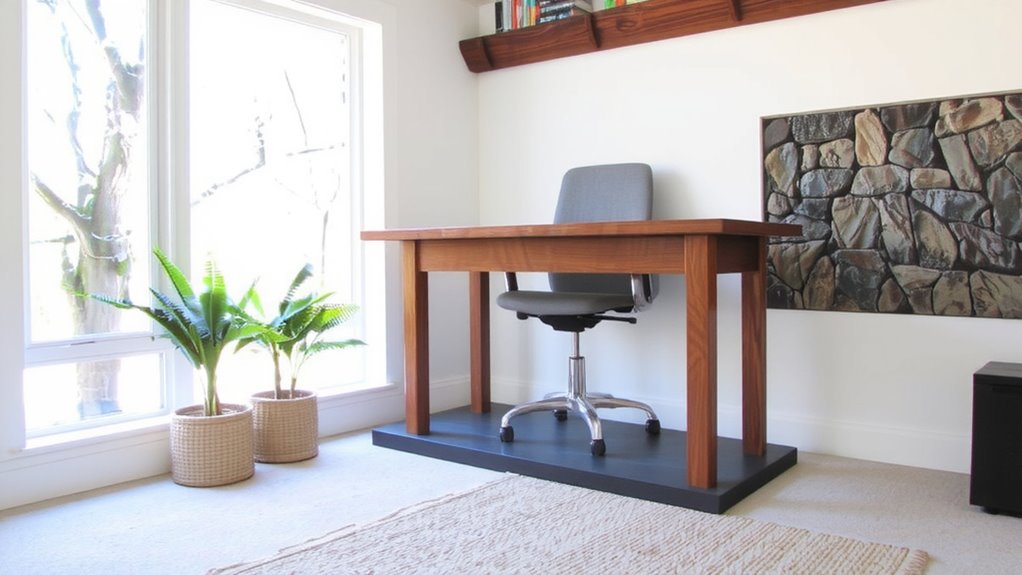
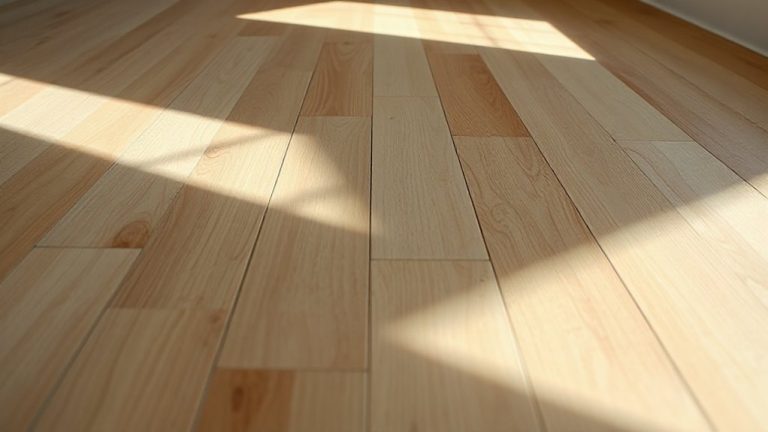
Wood, stone, and natural materials bring a grounding presence to your home office-choose solid hardwood desks, stone accent surfaces, or cork paneling to support mental calm and reduce sensory overload. You’ll benefit from the subtle complexity of wood textures, which studies show can lower heart rate and stress hormones compared to laminates. Stone accents, like a slate desktop organizer or marble shelf trim, add cool, durable contrast that feels stable and timeless. Opt for FSC-certified wood to guarantee sustainability, and verify stone is sealed to prevent staining. While these materials often cost more-hardwood desks range from $600–$1,200 and require occasional oiling-they outlast engineered alternatives by decades. Avoid overly polished finishes that create glare; matte or hand-scraped options blend better with biophilic goals. Real materials wear gracefully, developing a patina that reflects use without looking deteriorated. They’re not low-maintenance, but their long-term comfort and aesthetic depth make them worth considering-if your budget allows. Top picks for durability and beauty include best wood for desks like walnut, oak, and maple.
Add Plants to Clean Air and Reduce Stress
Plants do more than decorate your workspace-they actively improve air quality and lower stress when placed thoughtfully in your home office. They contribute to air purification by absorbing common indoor pollutants like benzene and formaldehyde, with species such as snake plants and peace lilies showing measurable efficiency in controlled studies. For stress reduction, having greenery within your line of sight can lower cortisol levels, helping you stay focused and calm. Position plants at desk corners or on shelves where they’re visible but not obstructive. Keep in mind, overwatering is a common issue-choose low-maintenance varieties if you tend to forget care routines. While real plants offer the best benefits, high-quality artificial ones still support visual comfort if upkeep is unmanageable. Don’t overcrowd; 1–3 well-placed plants are enough for most setups. Consider selecting from the best office plants to ensure both aesthetic appeal and functional benefits.
Bring the Outdoors in With Natural Colors and Light
While you can’t move your desk into a forest, you can design your home office to mimic the calming effect of natural environments by using earth-inspired colors and maximizing daylight. Choose natural hues like soft greens, warm beiges, and muted browns-they reduce visual strain and support focus without feeling sterile. Pair these shades with daylight optimization: position your desk near south- or east-facing windows to capture consistent morning light. Use sheer blinds or adjustable shades to control glare without blocking useful illumination. Paint finishes with low VOCs and matte finishes help diffuse light evenly, reducing eye fatigue during long screen sessions. While skylights or light tubes offer strong daylight optimization, they require structural changes and clear roof access. Smart lighting systems with circadian tuning can supplement when natural light falls short, though setup complexity and cost may outweigh benefits for casual users. Prioritize passive solutions first.
Create Zones for Focus, Rest, and Movement
A well-organized layout is your best tool for balancing productivity, comfort, and energy throughout the workday-start by dividing your home office into three distinct zones: focus, rest, and movement. Your focus zone needs acoustic privacy, so position your desk away from high-traffic areas and use bookshelves or fabric panels to dampen sound. Pair this with an ergonomic balance-adjust your chair height, monitor position, and keyboard angle to reduce strain. The rest zone should include a cozy chair or small sofa, letting you recharge without leaving the space. For movement, clear at least 3×3 feet for stretching or placing a compact standing mat. Avoid overcrowding; tight spaces limit flow and hurt long-term comfort. While zoning improves function, it demands careful measurement and flexibility-especially in smaller rooms where multi-use furniture becomes essential.
Arrange Furniture to Connect With Nature
You can boost focus and reduce mental fatigue by aligning your desk and seating to maximize natural views and daylight, using furniture placement as a direct link to the outdoors. Position your desk perpendicular to windows to reduce glare while still benefiting from ambient light. Use window seating-like a built-in bench or compact daybed-as a quiet spot for reading or breaks, reinforcing daily contact with natural light cycles. Frame outdoor views intentionally with furniture to create nature framing: place your desk so trees, sky, or gardens fill the sightline, improving visual relief during long work sessions. Avoid placing monitors directly in front of or behind glass to prevent reflections and overheating. While these layouts improve mood and concentration, they require careful lighting balance-sheer curtains or adjustable blinds help. Not every room allows ideal positioning, so prioritize views during peak daylight hours for best results.
On a final note
You should incorporate biophilic design into your home office-it boosts focus and lowers stress. Position your desk near natural light, ideally within 10 feet of a window, to regulate circadian rhythms. Use solid wood or stone furniture for durability and calm. Add plants like snake or pothos for air purification. Choose nature-inspired colors and full-spectrum lighting. Just make sure plants don’t raise humidity too much, and avoid clutter-balance matters.