Designing a Workspace That Fits Inside a Closet With Lighting and Ventilation
You can fit a functional workspace in a closet by starting with precise measurements-leave vents clear and guarantee the door swings freely. Install a foldable or corner desk (36–48 inches) with a steel frame and 30+ lb capacity. Use wall-mounted shelves secured into studs to save space. Add 4000K LED task lighting with dimming and a CRI above 90. Include a 20–40 CFM USB or ductless exhaust fan near the ceiling, and consider a mini dehumidifier in humid areas. Check warranties-three years for lighting and desk, one for the fan-and inspect mounts regularly. There’s more to optimizing comfort and workflow just beyond these basics.
Notable Insights
- Measure closet dimensions accurately, ensuring space for ventilation and door clearance.
- Install a foldable or corner desk with sturdy build and ergonomic height for comfort.
- Use wall-mounted shelves and door organizers to maximize storage without clutter.
- Add LED task lighting with 4000K color temperature and dimmable, high-CRI options.
- Place a quiet USB or ductless fan (20–40 CFM) near the top for proper airflow.
Clear and Measure Your Closet First
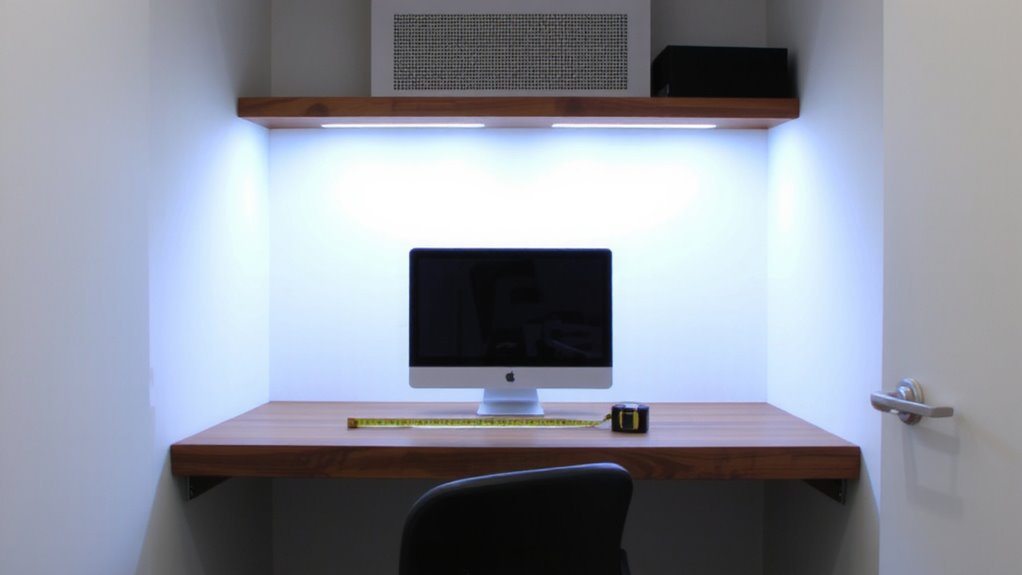
Start with an empty closet-your future workspace’s success hinges on what you remove first and how accurately you measure what’s left. Clear out old clothes, boxes, or storage bins to create a blank slate. Measure height, depth, and width precisely, noting any obstructions like shelves or rods. This step guarantees your desk and chair will fit without crowding. Proper dimensions also help you maximize airflow by leaving space around vents or windows. Never block existing ventilation; doing so compromises air quality and could overheat equipment. To guarantee safety, check for electrical outlets nearby and avoid overloading circuits. Confirm the closet door opens freely and won’t hit your chair. Poor clearance creates daily frustration and can pinch cords or limbs. Accuracy now prevents costly adjustments later. Measuring twice isn’t just advice-it’s essential for a functional, breathable, and safe micro-office.
Choose a Space-Saving Desk for Your Office
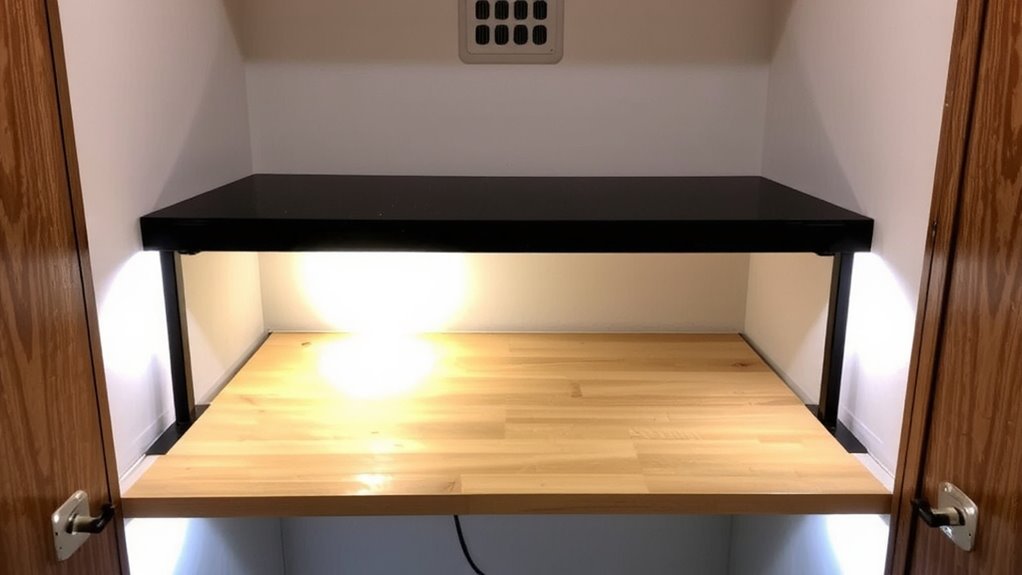
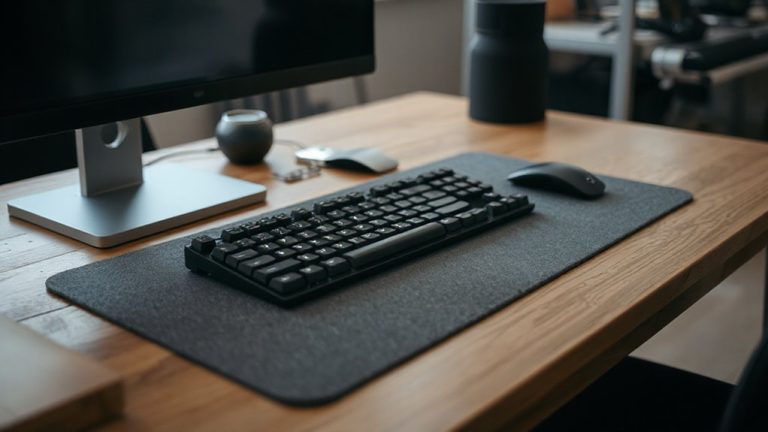
A compact desk isn’t just a convenience-it’s the backbone of a functional closet office. You’ll want to prioritize space-saving designs like foldable desks or corner workstations to maximize every inch. Foldable desks mount to the wall and swing out when needed, freeing floor space when closed-ideal for tiny closets under 30 inches deep. Look for models with steel frames and at least 30 pounds weight capacity to support your monitor and laptop. Corner workstations fit snugly into angled spaces, letting you use otherwise wasted corners for typing or writing. Most range from 36 to 48 inches wide, offering enough surface without crowding. Just remember: smaller surfaces mean limited room for extras, so keep accessories minimal. Always check height adjustability and depth-your elbows should rest at 90 degrees when typing. A rigid build with a solid warranty (three years or more) guarantees long-term durability without wobble. For top-performing options, explore the Best Home Office Desks to find models that combine durability with compact design.
Use Vertical Storage to Avoid Clutter
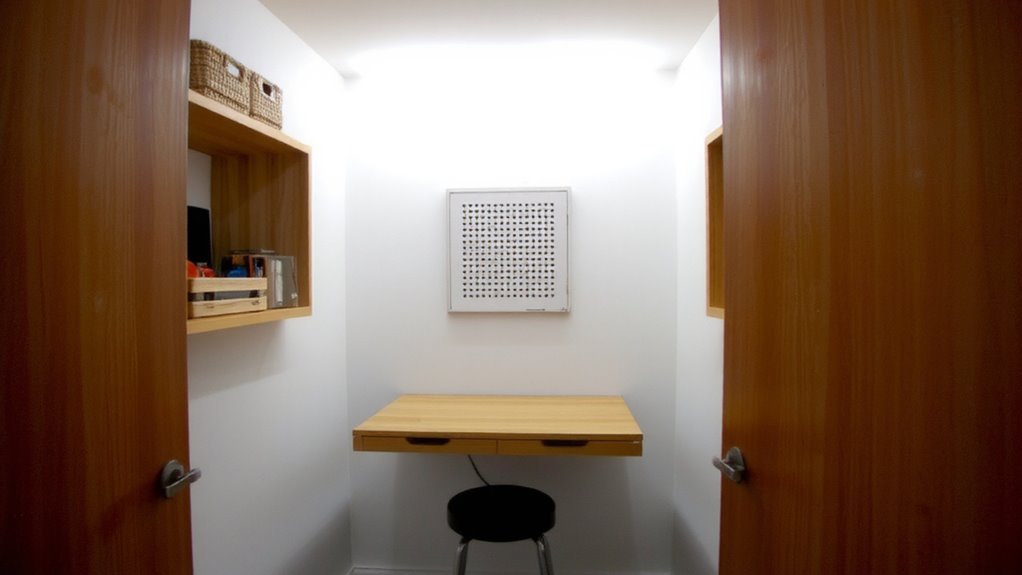
Though your closet office is small, you can still maximize storage by going up instead of out-vertical storage keeps essentials within reach while preserving precious surface space. Install wall mounted shelves above your desk or along side walls to hold books, supplies, or a monitor. They’re sturdy and free up desk area, but make sure your wall studs support the load-drywall anchors alone may not hold heavy items over time. Use foldable organizers on the back of the door for cables, notebooks, or headphones; they stay hidden when not in use. While vertical solutions cut clutter, overloading shelves creates visual chaos and risk. Stick to frequently used items only. Keep weight under manufacturer limits and check hardware every few months. Balance function and safety-you gain space but must stay mindful of what you store and how. A well-organized workspace can include a Top Bulletin Board Picks & Buying Guide to help manage tasks and inspiration efficiently.
Install Bright, Adjustable Lighting
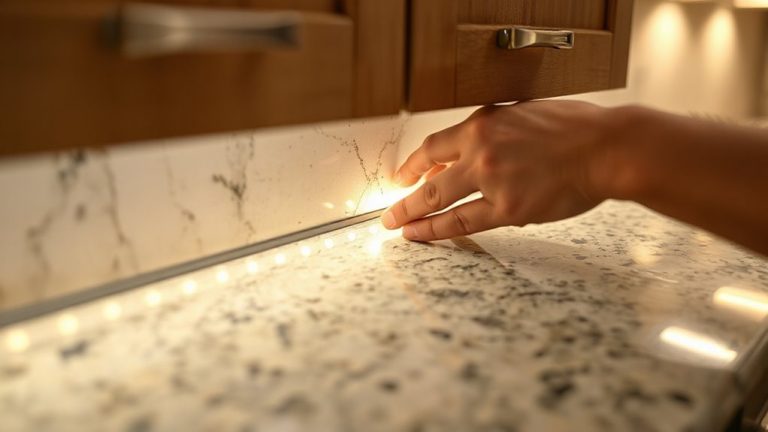
Good lighting makes a real difference in a closet workspace, especially after you’ve cleared surface clutter with vertical storage-now it’s time to guarantee you can actually see what you’re doing. Install bright, adjustable task lighting that lets you focus on your work without glare or shadows. LED strip lights under shelves or a swing-arm desk lamp work well, offering direct illumination where you need it. Aim for a color temperature around 4000K-this balanced white light boosts alertness without feeling harsh. Avoid bulbs above 5000K; they can cause eye strain over time. Make sure the fixtures have dimming options so you can adjust brightness based on the time of day or task. Look for lights with high CRI (90+) to render colors accurately. Mount them to avoid taking up desk space, and check warranty length-3+ years is ideal for long-term use. Poor placement can create shadows, so test angles before finalizing. For targeted workspace illumination, consider a best desk lamp with flexible positioning and consistent light output.
Add Ventilation to Prevent Stuffy Air
Even a small workspace can overheat or feel stuffy without proper airflow, so adding ventilation isn’t just comfortable-it’s essential for focus and long-term use. You’ll want to prioritize airflow optimization by installing a small ductless vent fan or a USB-powered exhaust fan near the top of the closet, where hot air collects. These units typically move 20–40 CFM, enough to refresh air without noise distractions. For humidity control, especially in basements or humid climates, consider pairing the fan with a mini dehumidifier that maintains levels below 60%. While passive vents are quieter and require no maintenance, they offer less airflow optimization than active systems. Active fans need power and may require drilling, but real-world testing shows they reduce perceived stuffiness within minutes. Just make certain your setup won’t interfere with existing wiring or insulation. Warranties on small fans average one year, so choose models with replaceable filters and solid reviews.
Include Personal Decor for Comfort
You’ve got the basics of airflow sorted, but a closet workspace shouldn’t feel like a utility closet-adding personal decor helps turn a tight, functional zone into a space you actually want to work in. Thoughtful touches create a cozy ambiance without clutter. A small shelf can display personal mementos-photos, a favorite mug, or a figurine-adding warmth and identity. Stick to a few items that fit within 6–8 inches of shelf space to avoid crowding. Soft lighting, like a fabric-covered LED puck light, enhances comfort without generating heat. Avoid adhesive-heavy decorations; they can damage paint or leave residue. Items with nonslip pads stay secure and reduce noise. While decor boosts morale, overfilling cuts into workspace efficiency. Balance is key-choose pieces that reflect you but don’t interfere with keyboard access or cable routing. The goal is comfort that supports focus, not distraction disguised as style.
On a final note
You can turn a closet into a functional workspace, but only if you’re strategic. Measure first-most closet desks are under 48 inches wide. Use a wall-mounted fold-down desk to save space. Install LED task lighting with 4000K color temperature for focus. Add a small USB-powered fan for airflow. Shelves optimize vertical storage. Just remember: limited square footage means tight ergonomics-sit tall, take breaks, and test comfort over hours, not minutes.