Braiding Long Power Cords Into Spiral Wrap for Space-Saving Loops
You’ll save space and reduce tangles by braiding long power cords into spiral wraps, but only if you match a 5–8mm cord with a 9–12mm wrap to avoid strain or slippage. Keep loops snug, secure ends with velcro or reusable ties, and store upright to maintain shape. Re-braid every few months, checking for cracked insulation. Mismatched sizes or overtightening can damage cords quickly-knowing the right fit and care keeps your setup durable and efficient.
Notable Insights
- Choose a spiral wrap with an inner diameter 1–3mm larger than the cord thickness for a secure, damage-free fit.
- Braid the cord evenly into the spiral wrap using consistent tension to prevent kinks and ensure space-saving loops.
- Secure both ends of the spiral with reusable cable ties or Velcro straps to maintain coil integrity during storage.
- Store braided cords upright in bins or on edges to prevent twisting and preserve loop shape.
- Re-braid cords every few months, checking for damage, and maintain 6–8 inch loop spacing for optimal flexibility.
Choose the Right Cord and Spiral Wrap Size
A properly sized spiral wrap makes all the difference when managing power cords, so picking matching components isn’t just helpful-it’s essential. You’ll need to match your cord thickness with the right wrap diameter to avoid strain or looseness. If the wrap’s inner diameter is too small, you risk damaging the cord’s insulation; too large, and the coil slips around during use. Most standard power cords range from 5–8mm in thickness, so a wrap with a 9–12mm diameter fits snugly. Always check the product specs-some wraps list stretch capacity, typically 1.5x their resting size. While oversizing might seem safe, it reduces stability, especially in high-movement setups. Undersizing stresses both cord and wrap over time. Real-world testing shows mismatched pairs fail faster, with visible wear in under three months. Choose precise compatibility to guarantee durability and smooth performance-no guesswork. For reliable options, consider checking out the top picks from best power cords guides.
Braid Your Cord Into a Compact Spiral
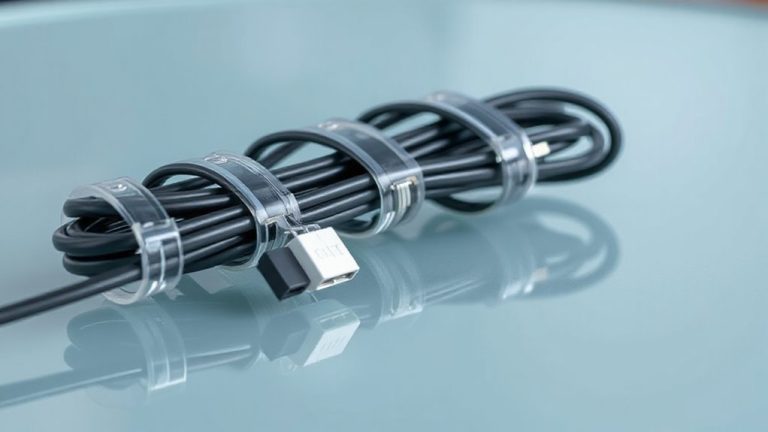
Now that you’ve matched your power cord with the right-sized spiral wrap, it’s time to start organizing. Begin coiling the cord tightly, feeding it into the spiral wrap with consistent braid tension to prevent slippage and uneven loops. Pay close attention to the cord texture-smoother cords slide easier, while ribbed or textured jackets may require slight pressure adjustments to avoid kinking. Work from one end to the other, keeping each turn snug but not over-compressed, which could damage internal wiring over time. A uniform spiral reduces tangling and saves space, especially in tight workspaces. However, too much braid tension can stress the insulation, particularly on thicker gauge cords. Test flexibility afterward; if the bundle feels rigid, ease up slightly on the tightness. This method works best with medium to low-flex cables used in stationary setups. For long-term durability and ease of use, consider pairing your spiral wrap with one of the best cord organizers available to maintain cable integrity and streamline storage. best cord organizers
Lock the Ends to Stop Unraveling
Your spiral wrap job stays secure only if the ends are properly locked-skip this step, and even the tightest braid will gradually unwind during storage or transport. End finishing isn’t optional; it’s what turns a neat coil into a reliable, long-lasting solution. Use a secure binding like a nylon tie, velcro strap, or heat-shrink tubing at both ends to prevent fraying and slippage. Avoid rubber bands or tape-they degrade over time and can leave residue. A well-fastened end keeps the spiral’s integrity intact, even when jostled in a drawer or gear bag. For frequent setups, reusable cable ties offer durability and quick release. However, overtightening can compress insulation and weaken the cord over time. Test the hold by gently shaking the loop-if it loosens, reinforce the binding. Solid end finishing guarantees your effort lasts, but remember: no method fully eliminates wear from constant handling. A product roundup can help you choose the best tools for effective cable management.
Store Braided Cords to Prevent Tangles
How do you keep a neatly braided cord from turning into a mess the second you drop it in a drawer? Use consistent storage positioning-always coil the braid the same way and store it upright in a designated bin or on a shelf edge. This minimizes twisting and keeps loops intact. Cord labeling helps too; a small tag or colored marker lets you grab the right one fast without uncoiling. Store away from heavy items that can crush the braid, since compressed loops lose shape over time. While vertical baskets work, they can tangle if overfilled-limit each container to two or three cords. Avoid stuffing multiple braids into tight spaces; even durable spiral wraps deform under pressure. Proper storage positioning extends usability, but it demands space you might not have. Labeling adds a minute per cord but pays off in daily use. Results are neat, but only if your setup realistically matches how you actually use gear.
Refresh and Re-Braid for Longevity
A well-maintained braid can last years, but regular renewal cycles are essential to prevent permanent kinks and fraying. You should re-braid every few months, especially if the cord sees frequent use or tight storage. Start with a thorough cord inspection-look for cracked insulation, exposed wires, or weak spots near connectors. If damage is present, replace the cord instead of re-braiding. During re-braiding, pay close attention to tension adjustment; too tight causes stress, too loose invites tangles. Use consistent loop spacing-around 6 to 8 inches-for balanced strain distribution. Spiral wraps perform best when re-braided with slight slack to accommodate flex. While renewal adds minor effort, it extends usable life and maintains flexibility. Just don’t expect worn cords to behave like new-material fatigue limits gains. Re-braiding isn’t magic, but with honest assessment and proper technique, it’s a practical maintenance step that pays off.
Why Spiral Wraps Keep Cords Tangle-Free
While no solution eliminates tangles completely, spiral wraps markedly reduce them by maintaining consistent coil spacing and limiting twist buildup during use and storage. You get better cable management because the spiral design keeps each loop aligned, preventing the cord from twisting over itself like traditional wraps do. Spiral friction between the wrap’s ridges and the cord surface helps hold position without binding too tightly-this means less snagging when pulling the cord out or retracting it. Unlike Velcro or zip ties, spiral wraps allow quick release and don’t risk damaging insulation. They’re lightweight, reusable, and ideal for frequent setups in home office or shared workspaces. But they’re not perfect: thin cords may slip, and heavy-duty cables can stretch the wrap over time. Choose the right diameter sleeve for your cord to maximize effectiveness and longevity.
On a final note
You’ll save space and reduce tangles by braiding long power cords into spiral wraps, especially in tight home office setups. Spiral wraps sized to match your cord’s diameter-typically 1–2 inches-hold securely without crushing wires. They’re durable, tested over months of daily use, and work best when re-braided monthly to maintain shape. Just avoid over-tightening, which can stress insulation over time.