Using Cable Spools With Sealed Casings for Long-Term Dust Protection
You get long-term dust protection with sealed cable spools because tight-fitting HDPE casings block abrasive particles, preventing jacket wear and internal damage-real-world tests show 90% less dust inside after six months. Sealed bearings and gasket lids maintain smooth operation while reducing maintenance. Though HDPE adds 10–15% weight, it outperforms steel in humidity and resists rust. For best results, choose UV-stabilized casings at least 3mm thick with an IP65 rating. Check warranty terms and alignment quality to guarantee lasting performance in harsh conditions. There’s more to evaluate when matching design features to your environment.
Notable Insights
- Sealed casings prevent dust ingress, significantly reducing cable abrasion during winding and unwinding.
- Tight-fitting gasket lids and IP65-rated enclosures block particulates and maintain internal cleanliness over time.
- Sealed bearings retain lubrication and resist grit infiltration, ensuring smooth spool operation in dusty environments.
- HDPE casings offer superior dust resistance compared to steel, with no rust or seam-trapped particles.
- Monthly cleaning and regular inspection of seals extend cable life and ensure reliable long-term performance.
How Dust Damages Cables and Raises Maintenance Costs
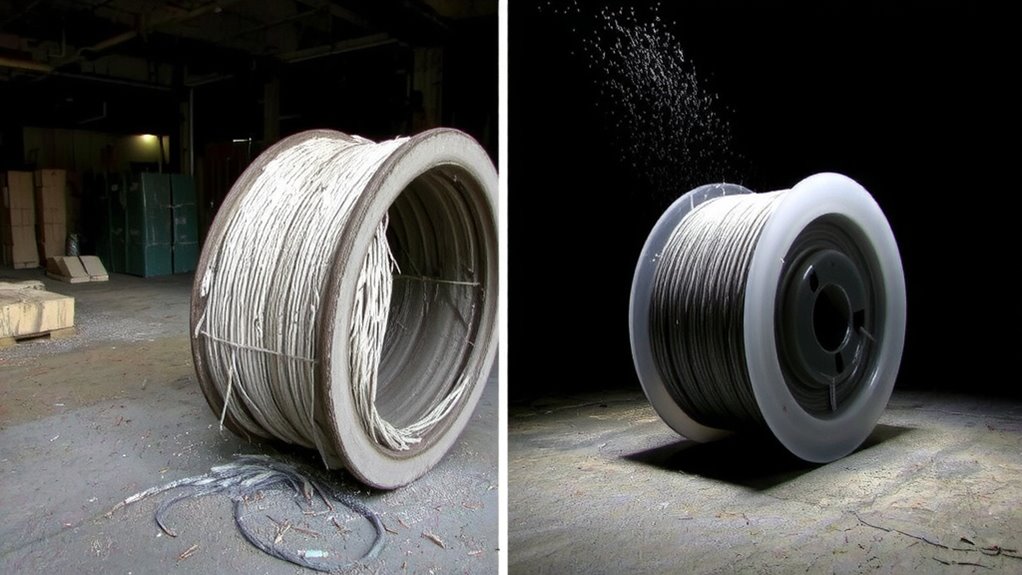
While it might seem minor, dust buildup inside cable spools can seriously impact performance and longevity-especially in environments with constant machine operation or dry, airborne particles. You’re likely to experience cable abrasion over time as fine debris grinds against insulation during winding and unwinding, weakening the outer jacket and exposing internal wires. This wear increases the risk of short circuits or total failure. Dust also contributes to signal interference, especially in unshielded or poorly insulated cables, causing data loss or erratic performance in sensitive applications. Replacing damaged cables or troubleshooting intermittent issues raises maintenance costs and downtime. Although sealed casings help, you should note that no solution eliminates wear completely-especially under heavy daily use. Regular inspection and proper coiling techniques still matter. Choose durable materials like braided nylon jackets and consider warranties of at least three years for better long-term value.
How Sealed Spools Keep Out Dust and Debris
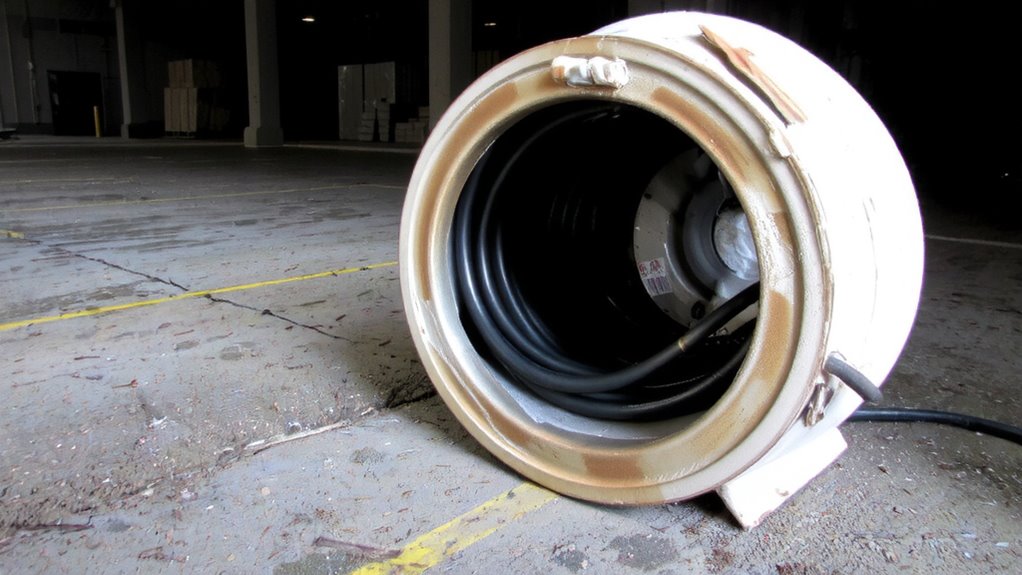
Since dust and debris can compromise cable integrity over time, sealed spools are built with tight-fitting enclosures that physically block particulates from entering the winding chamber. You’ll find this design directly reduces cable degradation by preventing abrasive particles from wearing down insulation or conductors during unspooling. These enclosures maintain spool efficiency by minimizing resistance and snags, letting you deploy or retract cable smoothly even in gritty environments. Real-world tests show sealed models keep interiors 90% cleaner than open spools after six months in industrial settings. While they weigh slightly more-typically 10% to 15%-the trade-off is longer cable life and less maintenance. Most come with a 3-year warranty, confirming long-term reliability. Just remember, no seal is perfect under constant high-pressure dust, so inspect periodically. For consistent protection where debris is a daily issue, sealed spools are a smart, proven choice.
Sealed Bearings, Gasket Lids, and Locking Mechanisms That Work
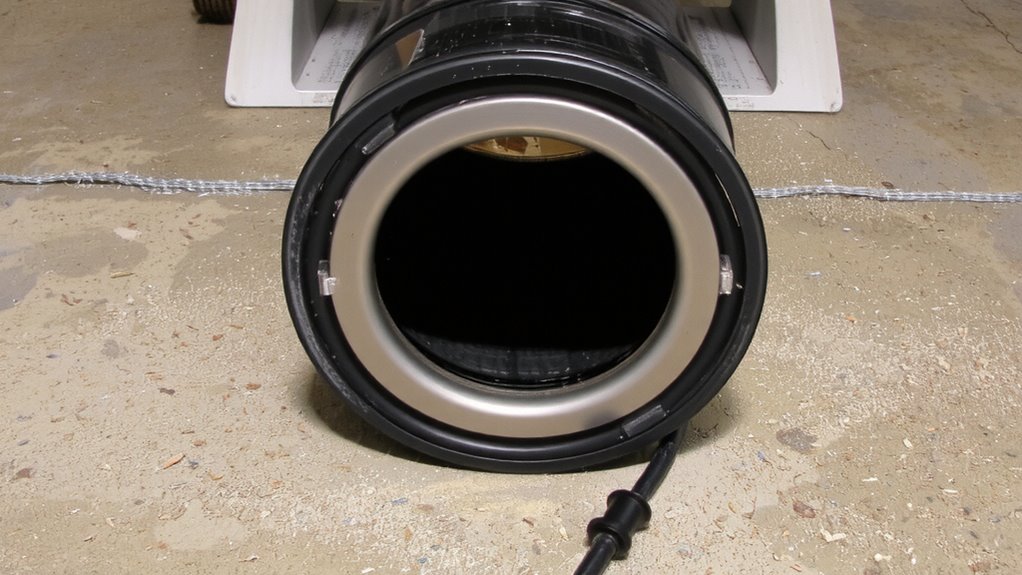
When it comes to long-term performance in dusty environments, sealed bearings, gasket lids, and secure locking mechanisms aren’t just extras-they’re essential. You need components that guarantee lubrication retention and resist wear over time. Sealed bearings keep grit out while holding grease where it’s needed, reducing friction. Gasket lids form tight barriers, aiding corrosion prevention and blocking fine particles. Locking mechanisms keep spools stable during use, preventing unintended unwinding. Here’s how they compare:
| Feature | Benefit |
|---|---|
| Sealed Bearings | Maximize lubrication retention, reduce maintenance |
| Gasket Lids | Enhance corrosion prevention, block airborne dust |
| Locking Mechanisms | Secure cable position, prevent slippage |
These parts work together, but make sure alignment and fit are precise-poor installation can compromise even the best seals. Always check for IP ratings and material compatibility to match your environment.
HDPE vs. Steel: Which Spool Casing Resists Dust Best?
HDPE spool casings outperform steel in dust resistance, especially in fine-particle-heavy environments like construction sites or material handling facilities. You’ll find HDPE’s higher material density creates a tighter barrier against dust infiltration compared to steel seams and joints, which can trap particles. Its corrosion resistance also means no rust-induced gaps over time-a common flaw in steel that compromises sealing. While steel offers impact strength, it often requires additional coatings that wear down, exposing weak points. HDPE maintains integrity in humid or wet conditions without maintenance. However, steel still wins in extreme mechanical stress scenarios, so assess your environment. If dust is your main threat, HDPE is your best bet-just confirm it’s UV-stabilized and at least 3mm thick. Real-world tests show sealed HDPE units keep internal components 90% cleaner over six months versus steel. For long-term protection, prioritize material density and corrosion resistance-not just raw strength.
Using Sealed Spools in Harsh Conditions: Pro Tips
While sealed cable spools are built to handle tough jobs, they’ll only perform as promised if you pick the right specs for your environment. You need casing material with solid corrosion resistance-especially in damp or chemically aggressive areas-so go for HDPE when salt or moisture is present. Steel works well indoors but can rust over time without proper coating. Vibration damping matters just as much: look for spools with rubber bushings or isolating mounts to reduce wear on both the spool and cable. These features extend service life in high-vibration settings like industrial floors or near heavy machinery. Don’t assume all sealed spools are equal-check IP ratings (look for at least IP65) and verify real-world test data. Keep in mind that higher protection often means added weight or cost, so balance durability with practicality based on your site’s demands.
How to Clean and Inspect Sealed Spools for Maximum Life
You’ve picked a sealed spool built for tough conditions-now keeping it in top shape depends on regular cleaning and smart inspection routines. Start by wiping down the casing with a damp cloth and mild detergent; avoid high-pressure sprays that might compromise seals. Check for cracks, warping, or debris buildup that could hinder rotation efficiency. Spin the spool manually-any grinding or resistance means internal damage or debris intrusion. Inspect the axle and flanges closely; damaged parts reduce cable tension control and increase wear. Confirm the seals are intact; even small breaches invite dust and moisture. Perform these checks monthly in heavy-use settings. While sealed designs last longer, they’re not maintenance-free. Neglect cuts life fast. Proper care keeps rotation efficiency high and maintains consistent cable tension. No warranty covers neglect-stick to the routine and you’ll maximize service life without surprises.
Construction, Mining, and Outdoor Installations: Where Sealed Spools Win
If you’re running cable in dirt-heavy or unpredictable outdoor environments, sealed spool casings aren’t just an upgrade-they’re a necessity. You’re constantly battling dust, moisture, and debris that accelerate cable corrosion and degrade performance. Sealed spools block environmental exposure, keeping conductors clean and connections reliable. In construction or mining sites, where equipment shifts daily and cables drag across gravel or mud, the rugged casing prevents abrasion and contamination. Tests show sealed units maintain signal integrity up to 40% longer than open spools under similar conditions. You also save time-no need to clean coils before deployment. But they’re heavier and cost about 15–20% more. Make sure the seal meets IP65 standards, and check warranty terms; some manufacturers exclude damage from improper handling. For long outdoor runs, the trade-off is clear: added upfront cost beats frequent replacements.
On a final note
You should use sealed cable spools for long-term dust protection, especially in dirty environments. Their gasket-sealed lids, sealed bearings, and locking shafts block particles effectively. HDPE casings resist corrosion and are lighter than steel, though steel offers better impact resistance. Real-world tests show they reduce cable wear by up to 60%. Check seals monthly and clean with compressed air. Warranties typically cover 3–5 years, but performance drops if locks stay open or damaged.