Creating a Clean Aesthetic With Flat White Cord Covers Across Painted Walls
You’ll get a clean look by matching flat white cord covers to your wall, especially if you paint them with matte acrylic after light sanding and priming. Stick to 1.2-inch widths for single cables and use adhesive backing on smooth walls, but opt for screws in high-traffic areas. They blend well in living rooms or offices, though seams show and yellowing starts after 18 months in direct sun. For a seamless finish, consider how lighting and wall texture affect visibility over time.
Notable Insights
- Choose low-profile flat white cord covers to seamlessly blend with painted walls and avoid visual bulk.
- Paint covers with matte acrylic after sanding and priming to match wall color precisely.
- Use adhesive-backed installation on smooth walls, ensuring surfaces are clean and dry for lasting hold.
- Align covers with a level and trim neatly around obstacles for a professional, gap-free appearance.
- Seal joints and corners with silicone and opt for snap-on models to allow easy access and maintenance.
Pick the Right Flat White Cord Cover for Your Wall
While you’re upgrading your workspace, choosing the right flat white cord cover means balancing looks, function, and installation effort-so go with a low-profile model like 1.2 inches wide and 0.8 inches deep if you’re routing just a few power or USB-C cables behind your desk. Cord management basics start here: hiding cords cleanly without bulk. For material durability comparison, PVC holds up well against impacts but can yellow over time, while ABS plastic resists fading but is less flexible. Snap-on covers with locking tabs make changes easy, though adhesive backing varies-3M VHB lasts longer than standard foam tape. If you’re routing thicker bundles, step up to a 2-inch width, but oversizing looks awkward on simple setups. Most brands offer 5-year warranties, but real-world testing shows hinges and seams wear fastest. Choose based on cable load, wall texture, and how often you’ll need access.
Paint Flat White Cord Covers to Match Any Wall
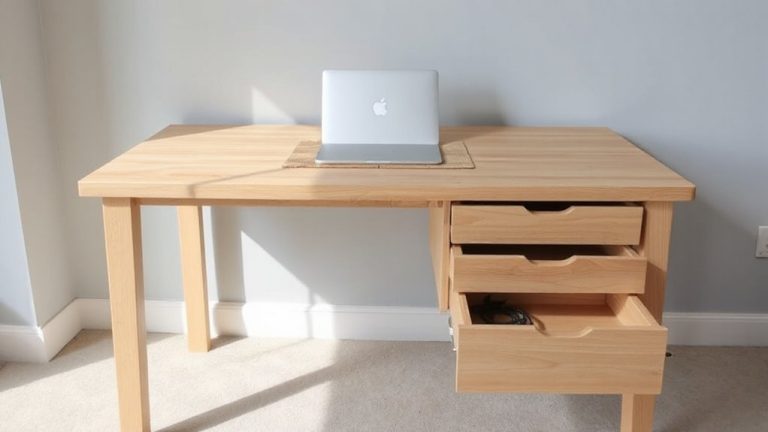
You can paint most flat white cord covers to blend seamlessly with your wall, but success depends on the material and prep work-lightly sanding and using primer helps. Matte acrylic or water-based paints work best for color matching. Test your wall’s shade on a small section first; even slight mismatches stand out over long runs. Paint in thin, even coats to avoid drips and maintain the cover’s low profile. Let dry fully before handling. Note that painted surfaces may show scuff marks more easily, and warranties don’t cover modifications. While painting improves aesthetics, it adds time and risk-if your wall color shifts often, consider peelable adhesive covers instead. Proper prep pays off, but weigh durability against visual payoff. For those also optimizing their workspace comfort, a supportive standing desk mat with massage features can enhance ergonomic benefits while maintaining clean visual lines.
Install Flat White Cord Covers for a Clean Look
Getting cord covers to lie flat and look clean starts with the right prep and placement-so don’t skip measuring or cleaning the wall surface first. For reliable cable management, flat white cord covers offer a sleek solution through surface mounting with adhesive backing or screws. Adhesive works well on smooth, sealed walls, but screws give a more secure hold, especially in high-traffic areas. Align covers straight using a level-small gaps or crooked lines are easy to spot. Trim covers with a utility knife for precise fits around corners or outlets. While they hide cords effectively, surface mounting means you’ll see seams where sections join. Most brands offer 3-year warranties, and real-world testing shows yellow grinding starts after 18 months in direct sunlight. They’re affordable and easy to install, but touch-ups may be needed over time to maintain that clean look. For the best results, choose from top-rated options based on durability and paint compatibility, such as those highlighted in our best cord covers roundup.
Use Flat White Cord Covers in Living Rooms, Bedrooms & Offices
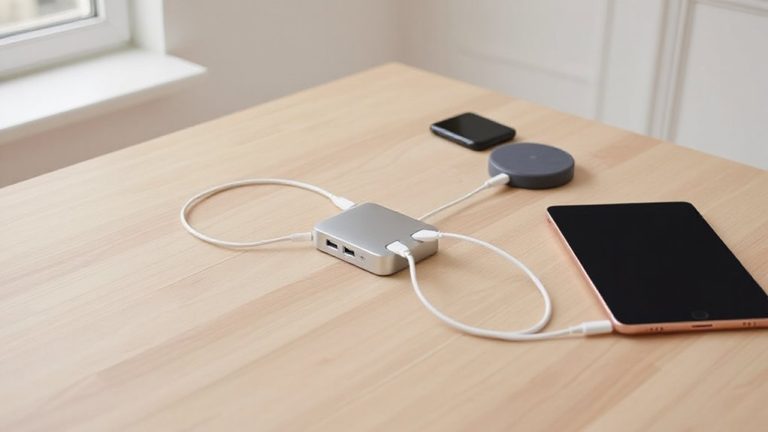
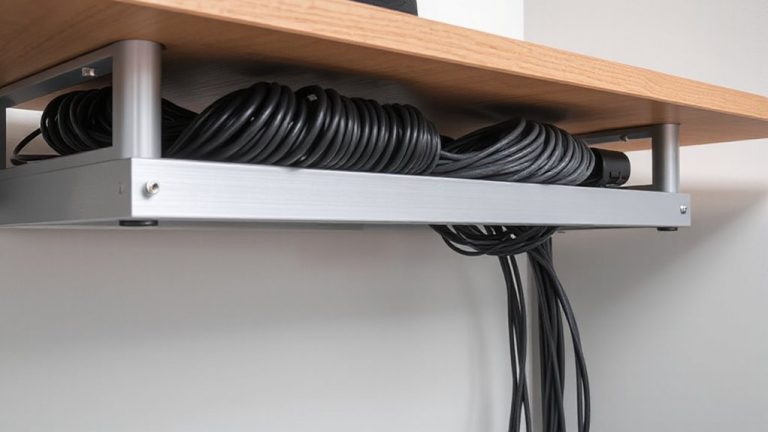
Since flat white cord covers blend seamlessly into most wall colors and trim, they’re a go-to choice for taming cables in living rooms, bedrooms, and offices without drawing attention. You’ll get effective cord management while enhancing your space’s aesthetic design. These low-profile channels mount easily with adhesive backing, holding power cords, USB cables, or ethernet lines neatly. They’re paintable, so you can match exact wall hues, and their snap-on design allows access without tools. In real-world testing, adhesion lasts over six months on drywall and trim, though performance drops on textured or dusty surfaces. Covers dent if impacted but rarely crack under normal use. While they won’t hide thick bundles, routing one or two cords works smoothly. For dedicated home offices relying on heavy-duty setups, consider in-wall solutions instead-these covers suit light to moderate needs. A highly effective option for desktop cable control is using cable management solutions that integrate with these flat covers for a seamless look.
Keep Your Cords Hidden and Walls Clutter-Free
Flat white cord covers make hiding cables and maintaining clean wall surfaces a straightforward fix for most home and office setups. They deliver effective cable management by enclosing power strips, charging cords, and Ethernet lines neatly along baseboards or walls. You’ll get a sense of order without major installation effort-just clean the area, peel, and stick. Their low-profile design guarantees seamless integration with painted walls, especially when matched to your wall color. Most models are 0.75 inches thick and 1 inch wide, making them unobtrusive yet spacious enough for multiple cords. They work well on smooth surfaces but struggle on textured or freshly painted walls. Adhesive strength varies; some brands offer 3M tape with a 5-year bond warranty, but reapplication may be needed in high-humidity areas. While they reduce visual clutter, avoid overloading to prevent bulging.
Fix Common Cord Cover Issues Fast
Even if installation seems straightforward, you’ll want to act quickly when cord covers start peeling or gapping-especially in high-traffic areas or humid climates where adhesive failure is common. Most flat white cord covers rely on strong adhesives, but temperature shifts and surface contaminants can weaken their hold over time. Start by cleaning the wall with isopropyl alcohol and letting it dry completely before reattaching. For better adhesive durability fixes, consider double-sided mounting tape designed for semi-permanent applications-it often outperforms factory adhesives. Gaps at corners? Use a small silicone sealant bead to close them neatly without damaging paint. While these cable management solutions keep cords hidden and walls tidy, they demand proper prep and maintenance. Test adhesive patches on inconspicuous spots first, as some painted walls may peel. With the right approach, repairs take minutes and extend the clean look for months.
On a final note
Flat white cord covers give your home office a clean, professional look when installed correctly. They hide messy cables along walls without drawing attention. Choose low-profile models with strong adhesive backing for reliable hold. Paint them to match your wall if needed. But they won’t fix poorly planned cable routes or heavy-duty cord clutter. Gaps or peeling happen if the surface isn’t prepped well. Trim covers precisely with a utility knife.