Creating a Lighting Maintenance Schedule to Ensure Long-Term Performance and Safety
You should create a lighting maintenance schedule to keep your space safe and energy use predictable. Assess fixture types, placement, and age-replace those near 15,000–50,000 rated hours. Clean fixtures every 3–6 months to prevent up to 30% lumen loss, and group replacements by location usage. Match bulbs to specs, check for flicker or loose wiring, and track lumens and watts over time. Consistent upkeep avoids hazards and cuts long-term costs. There’s more to optimizing performance where light hours and environment intersect.
Notable Insights
- Assess lighting quality and layout to identify inefficiencies and ensure adequate illumination levels.
- Group fixtures by usage area to set appropriate maintenance frequencies and optimize resource allocation.
- Clean fixtures regularly to prevent light output loss and maintain energy efficiency.
- Replace bulbs proactively based on rated life and usage to avoid unexpected failures.
- Inspect electrical connections and components routinely to ensure safety and system reliability.
Assess Your Lighting System Before Starting Maintenance
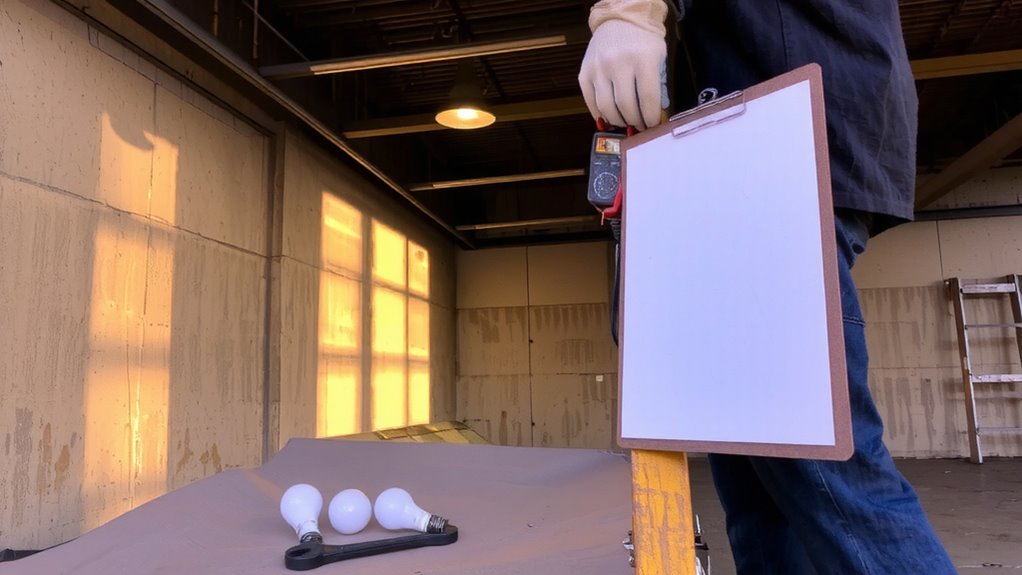
While it might be tempting to jump straight into repairs or replacements, you’ll get better long-term results if you start by thoroughly evaluating your current lighting system. Begin by checking light quality-assess color temperature, flicker, and brightness (measured in lumens)-to see if fixtures deliver consistent, comfortable illumination. Poor light quality can strain eyes and reduce productivity. Next, map out the system layout, noting fixture types, spacing, and placement relative to work areas. An outdated or uneven layout may create shadows or glare, even with high-performing bulbs. Compare your findings to recommended lighting levels-typically 300–500 lux for offices. If multiple fixtures are near end-of-life (check manufacturer-rated hours, usually 15,000–50,000), plan upgrades strategically. Skipping this step risks mismatched components and wasted spending, especially if you later discover wiring or voltage issues.
Create a Lighting Maintenance Schedule by Fixture and Location
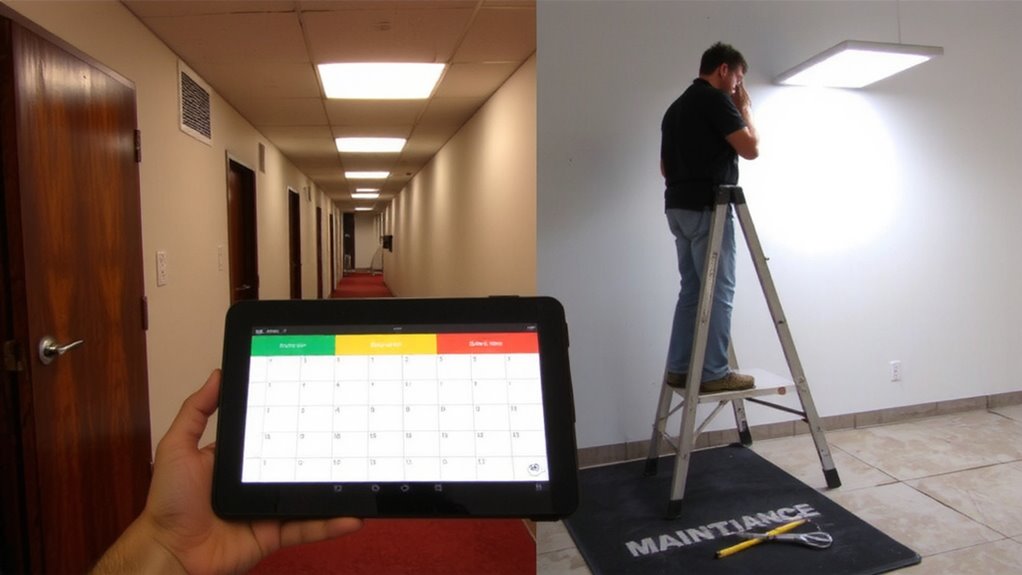
You’ve assessed your lighting system’s performance and layout-now it’s time to build a maintenance schedule that matches each fixture to its location and use. Group fixtures by usage patterns and environment, since a high-traffic warehouse bay light needs more frequent checks than a low-use storage closet luminaire. Your luminaire layout directly affects access and replacement efficiency, so map each fixture’s position and note its color temperature to maintain visual consistency across spaces. Rapid shifts in color temperature can disrupt task performance and comfort.
| Location | Maintenance Frequency |
|---|---|
| Office Areas | Every 6 months |
| Exterior Fixtures | Every 4 months |
| Industrial Zones | Every 3 months |
This method keeps lighting reliable and aligned with safety standards. While detailed tracking takes effort, it reduces downtime. Just remember-over-scheduling wastes labor, under-scheduling risks performance.
Clean Fixtures, Replace Bulbs, and Check Electrical Connections
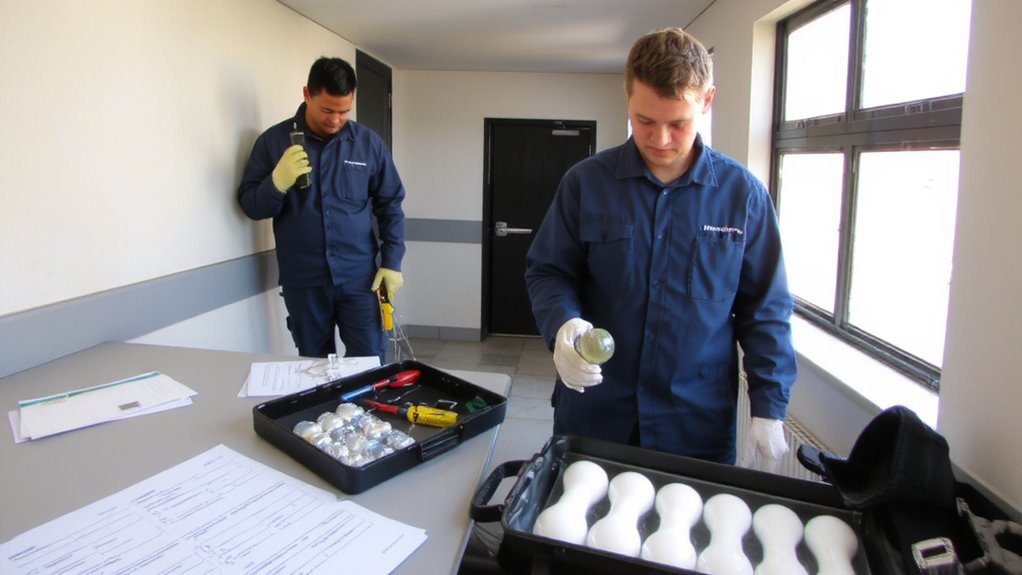
Once you’ve mapped your lighting layout and set a maintenance timeline, it’s time to tackle the core tasks: cleaning fixtures, replacing bulbs, and checking electrical connections. Lamp cleaning removes dust and grime that reduce light output by up to 30%, so use a microfiber cloth and non-abrasive cleaner every few months. For consistent brightness and longevity, implement bulb rotation-swap out lamps in high-use areas before they fail, even if they still work. That prevents sudden outages and balances wear across fixtures. Always match replacement bulbs to the manufacturer’s specs for voltage and wattage. While LED bulbs last longer, they still degrade over time. Check electrical connections periodically for looseness or corrosion, especially in damp or industrial spaces. Tighten fixtures and replace frayed wires immediately to prevent hazards. These steps keep your system efficient, but they require time and attention-skip them, and performance drops fast.
Keep Lights Safe and Efficient With Routine Maintenance
If you want your lighting system to deliver reliable performance over time, sticking to a disciplined maintenance routine isn’t just smart-it’s essential. Regular upkeep guarantees consistent light output, extends fixture life, and supports energy savings by preventing inefficiencies from dirt buildup or failing components. It also maintains safety compliance, reducing risks like electrical shorts or overheating from worn parts. You’ll want to inspect wiring, gaskets, and mounting hardware periodically-especially in high-traffic or industrial areas. While routine work takes time, skipping it often leads to higher utility bills and potential code violations. Some LED fixtures last years, but even they degrade if ignored. Don’t assume new tech eliminates maintenance; seals fail, sensors drift, and dust affects performance. A disciplined approach balances effort with measurable gains in reliability and compliance, not just convenience.
Track Performance and Adjust Your Lighting Maintenance Plan
How do you know if your lighting maintenance plan is actually working? Use lighting analytics and performance benchmarking to track results over time. These tools help you spot trends, spot inefficiencies, and justify schedule changes with real data-not guesses.
| Metric | Goal | Why It Matters |
|---|---|---|
| Light output (lumens) | ±10% of initial | Guarantees consistent visibility |
| Energy use (watts) | No unexplained spikes | Controls costs and load |
| Fixture uptime | >95% | Reduces disruptions |
| Maintenance frequency | Stable or decreasing | Shows plan effectiveness |
| User feedback | Positive trend | Reflects real-world satisfaction |
If metrics drift, adjust cleaning intervals, re-lamping cycles, or sensor settings. Don’t wait for failures-use data to act early. Just remember, even great analytics can’t fix a poorly designed layout. Pair insights with practical checks to keep performance reliable and costs predictable over time.
Fix Flickering, Overheating, and Voltage Issues Early
Flickering lights, overheating fixtures, and voltage fluctuations aren’t just annoyances-they’re early warning signs that can undermine even the most data-driven maintenance plan. You need to address them quickly using proper electrical diagnostics to pinpoint loose connections, failing ballasts, or incompatible dimmers. Ignoring these issues risks reduced lamp life, wasted energy, and even fire hazards. Implementing power stabilization solutions-like surge protectors or voltage regulators-can prevent damage across sensitive fixtures. Test circuits regularly with a multimeter and track results to catch irregularities early. While LED retrofits often help, mismatched drivers or poor-quality components can worsen flicker. Always verify compatibility and adherence to voltage specs before installation. Some systems offer built-in diagnostics, but they aren’t foolproof. Relying solely on automation may delay real fixes. Combine tech tools with hands-on checks for best results. Safety comes first-shut off power before inspecting fixtures.
On a final note
You’ll keep your office lights performing safely and efficiently by sticking to a clear maintenance plan. Clean fixtures every 6 months, replace bulbs before they burn out, and check connections annually to prevent flickering or overheating. Use LED fixtures with 50,000-hour ratings and 5-year warranties for reliability. But remember: even good gear fails without attention. Track usage hours and adjust schedules based on actual performance-this isn’t overkill, it’s prevention.