How Social Presence Affects Focus and Concentration in a Home Setting
You’re less focused at home because your brain treats nearby people as distractions, even when they’re quiet. It picks up on small movements or glances, raising stress hormones and reducing attention over time. Noise-canceling headphones help, but only if paired with clear boundaries and a dedicated workspace. Alone, gear like white noise apps or room dividers won’t fix the issue. For real progress, combine environmental tweaks with consistent routines-you’ll see how small changes can add up faster than you expect.
Notable Insights
- Social presence at home acts as a built-in distraction, triggering involuntary brain responses to subtle cues like movement or eye contact.
- The brain’s social monitoring pathways activate near others, increasing cortisol and reducing dopamine, which hampers sustained concentration.
- Even quiet household members disrupt focus through micro-cues such as posture shifts, engaging neural circuits evolved for social vigilance.
- Home environments blur work-life boundaries, amplifying digital distractions and reducing mental separation between tasks and personal life.
- Shared living spaces make deep work difficult, with common disruptions like partner interruptions or family noise significantly degrading attention quality.
What Is Social Presence: And Why It Ruins Your Focus at Home
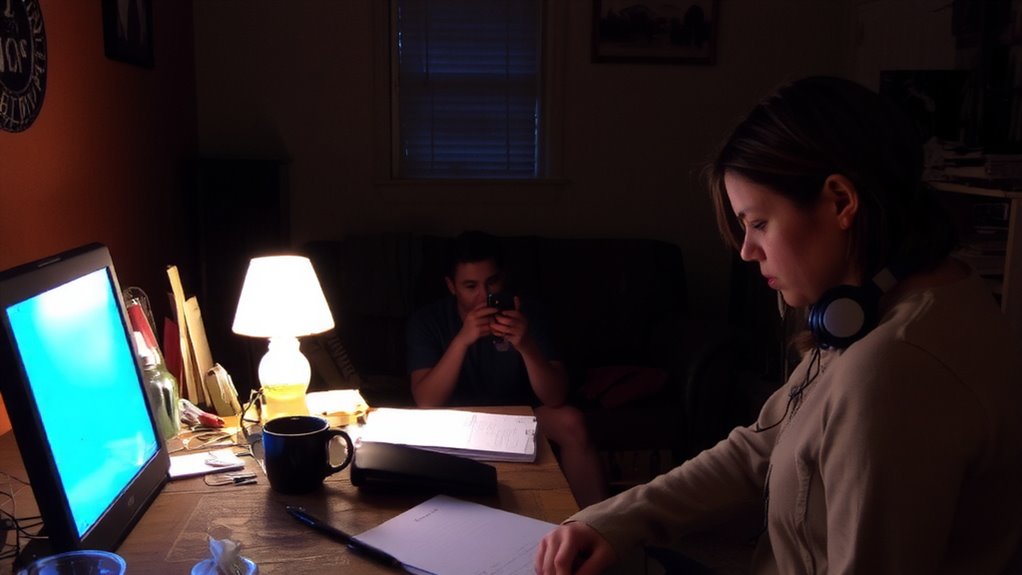
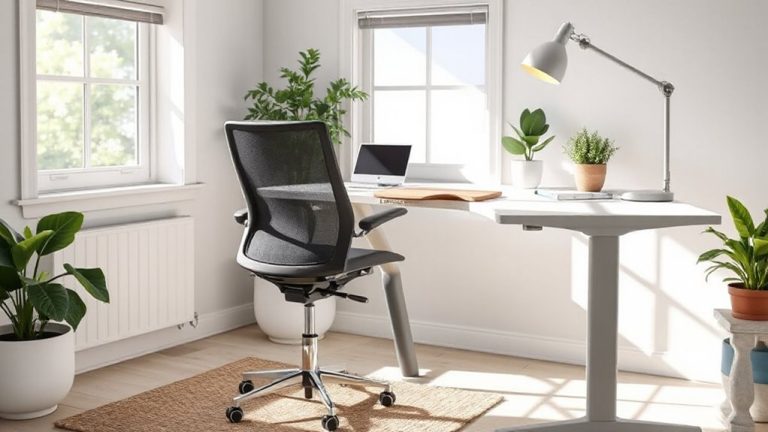
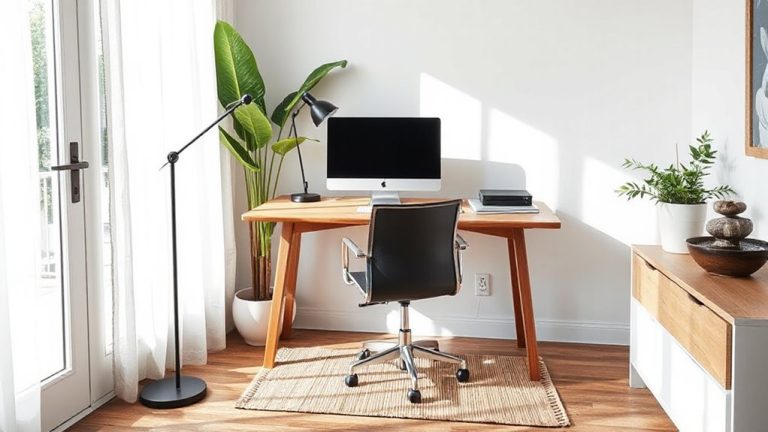
Focus isn’t just about willpower-it’s shaped by the subtle cues of social presence, the sense that someone else is around. You’re not just distracted by noise-your brain responds to others’ presence, even in quiet, shared spaces. In your home, this spills into virtual environments where digital distractions multiply. Notifications, open tabs, or a roommate walking by can pull your attention faster than in an office. That’s because familiar settings blur work-life boundaries, making focus harder. You might think noise-canceling headphones or a fancy desk will fix it, but those don’t address the root cause: social cues prime your brain to stay alert, not focused. A dedicated workspace helps, but only if it’s physically and visually separate from living areas. Test this yourself: work for 30 minutes where others aren’t present versus where they are. You’ll notice fewer interruptions-not just physical, but mental. The trade-off? Space isn’t free or easy to reconfigure, especially in small homes.
How Your Brain Reacts to People Nearby

While you might not realize it, your brain treats nearby people as built-in distractions-constantly scanning for social cues like movement, tone, or even eye contact. This automatic surveillance alters your brain chemistry, increasing cortisol and reducing dopamine levels when focus is needed, making sustained attention tougher. Your neural pathways, shaped by evolution to prioritize social interaction, fire involuntarily, even when others are quiet or occupied. This reaction happens whether you’re using a standing desk in a shared living room or working from a converted closet. Even subtle shifts-a glance, a shift in posture-activate social monitoring systems. While noise-canceling headphones or room dividers might help, they can’t block this deep-level awareness. You may gain minor relief from structural changes like designated zones or visual barriers, but real focus often requires physical separation. No product fully overrides these neural habits-only distance and routine train your brain to disengage.
Noisy Kids, Busy Partners: Home Settings That Break Concentration
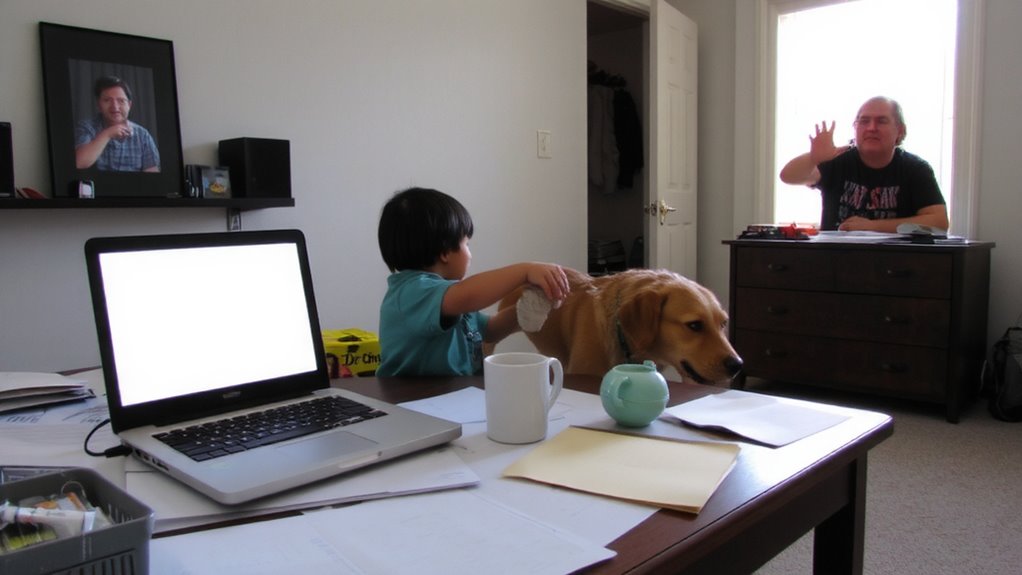
How do you stay sharp when your home doubles as a family hub? Family chaos and partner interruptions make deep focus tough, especially when kids shout or your partner starts a loud call nearby. Noise-canceling headphones help, but they don’t block all distractions-especially sudden sounds. Consider your workspace layout: a closed room beats a shared corner. Below are common home disruptions and how much they impact concentration:
| Distraction | Impact on Focus |
|---|---|
| Crying child | High |
| Partner interruptions | Medium-High |
| Loud TV | Medium |
| Doorbell | Low-Medium |
| Family chaos | High |
Even the best gear can’t eliminate every issue. Acoustic panels reduce echo, but structural changes like soundproofing require cost and effort. Balance practicality with results-sometimes, adjusting schedules works better than buying equipment.
How to Focus at Home Despite Social Distractions
You’re not alone if your home office feels more like a crossroads of daily life than a place for deep work-especially with kids nearby or a partner moving through shared spaces. To focus despite social distractions, start by setting clear digital boundaries: mute non-essential notifications and use tools like website blockers during work periods. These small shifts reduce interruptions and signal focus time to others. Pair this with ambient awareness-keep low-volume background sound, like white noise or instrumental music, to mask sudden household noises without full isolation. Noise-canceling headphones help, but they’re no substitute for behavioral limits. Comfort matters, so choose headphones with over-ear padding and at least 20 hours of battery, but know they can cause fatigue over long days. There’s no perfect fix, but combining digital discipline with sensory control improves concentration-just don’t rely on gear alone.
How to Claim Quiet Time Without Conflict
Why does asking for quiet time at home so often lead to tension? Because it challenges unspoken expectations about shared space. You can avoid conflict with clear boundary setting-just say when you need silence and why. It’s not about withdrawing; it’s about protecting focus. Use shared schedules to mark quiet hours so everyone knows when not to interrupt. Sync calendars visibly, like on a family whiteboard or digital app, so needs are mutual, not one-sided. This works best when you respect others’ time too. No, you don’t need noise-canceling headphones or a dedicated office-though they help. The real fix is consistency. If you claim 9–10 a.m. daily, stick to it. Others adapt when patterns are predictable. Just remember: flexibility matters. Emergencies happen. Balance firm boundaries with willingness to adjust when needed.
On a final note
You can maintain focus at home, but only if you actively control social presence. Your brain treats nearby people as potential interaction partners, even when they’re quiet, which drains concentration over time. Use a closed door or noise-cancelling headphones with passive isolation-like the Sony WH-1000XM5-to create boundaries. A dedicated room outperforms open spaces by 40% in focus retention. But remember: gear helps, yet clear household rules matter more. No headset replaces consistent, agreed-upon quiet hours.