Designing a Desk That Converts Into a Dining Table for Studio Apartments
You’ll want a convertible desk that locks securely at 30 inches high and uses reinforced hinges rated for 50,000 cycles-it handles both work and meals without wobbling under 100 lbs. Pick one 48–60 inches wide with a 30-inch depth for real workspace, solid hardwood or powder-coated steel for lasting durability. Cheaper models often fail within a year due to weak linkages or chipping laminate. Confirm stability with floor tape testing and check for at least a 5-year warranty-there’s more to get right than just the mechanism.
Notable Insights
- Combine desk and dining functions in one compact unit to maximize limited studio space.
- Use a robust rotation mechanism with a safety latch and secure lock for reliable daily transformations.
- Install high-cycle hinges rated for 50,000+ uses to ensure long-term durability and smooth operation.
- Design with a minimum 48-inch width and 30-inch depth for ergonomic workspace and dining comfort.
- Choose solid hardwood or powder-coated steel for durability, and add built-in storage to reduce clutter.
Why Small Spaces Need a Desk That Becomes a Table
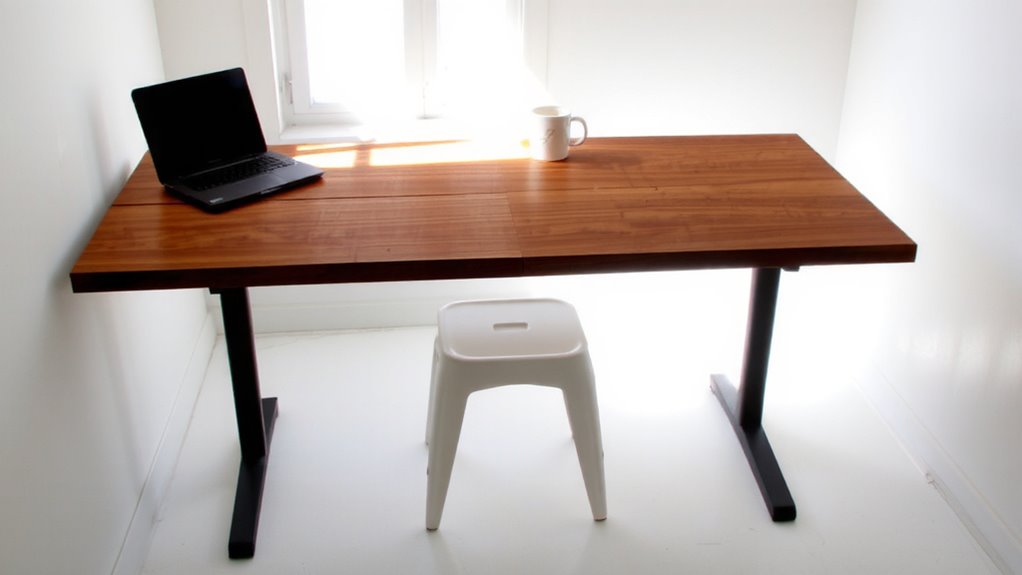
A desk that doubles as a dining table isn’t just a space-saving trick-it’s a practical solution for studio living where every square foot counts. You need space efficiency, and this setup delivers through smart multi functionality. By serving as both a work surface and a meal spot, it cuts down on clutter and eliminates the need for separate furniture. Most models measure around 48–60 inches wide, fitting neatly against a wall or in a corner. Real-world testing shows they handle laptops, notebooks, and daily meals without wobbling. Look for steel frames and scratch-resistant laminate for durability. While they save space, keep in mind the compromise: smaller work areas than standard desks, and limited seating unless you add stools. Check for warranties of at least one year. Some lack built-in cable management, so plan your device setup ahead. For those prioritizing ergonomics and adjustability, consider models inspired by the best home office desks for a productive workspace.
How Convertible Desks Actually Transform
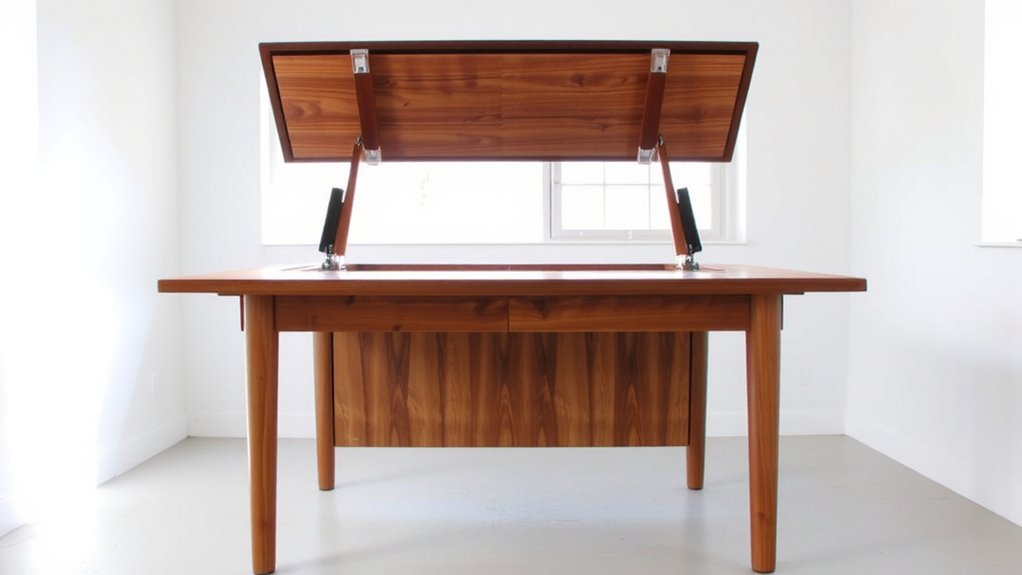
When you’re tight on space, the way a convertible desk transforms can make or break your daily routine. The key lies in the rotation mechanism and mechanical linkage built into the frame. These components smoothly shift the surface from a horizontal work desk to a raised dining height with minimal effort. Below is how the transformation typically unfolds:
| Step | Action |
|---|---|
| 1 | Release the safety latch |
| 2 | Engage the rotation mechanism |
| 3 | Lift and pivot via mechanical linkage |
| 4 | Lock into dining table position |
| 5 | Confirm stability at 30” height |
You’ll appreciate the seamless shift, but verify the mechanism is rated for daily use-some models wear down in under a year. Check warranty terms and load capacity. While the best designs support up to 100 lbs, cheaper versions wobble under pressure. Always test stability before loading with dinnerware or work gear.
Hinges That Make Switching Effortless
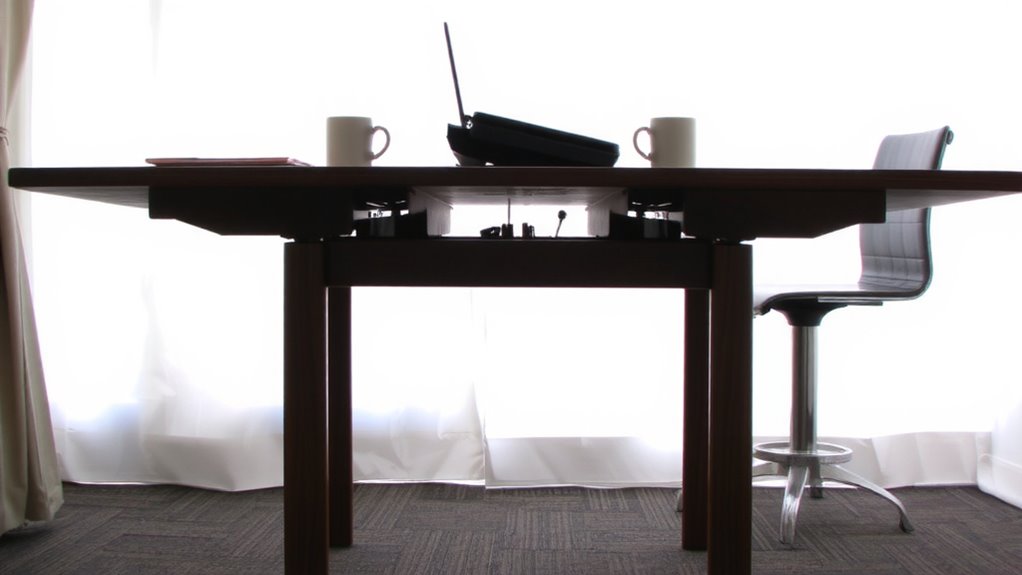
The hinges on a convertible desk aren’t just hardware-they’re the pivot point between function and frustration. You want smooth shifts that feel almost automatic, not a struggle of wobbles and misalignment. High-quality concealed hinges or continuous (piano) hinges deliver this when paired with hidden mechanisms that keep the design sleek. Look for ones rated for at least 50,000 cycles-durability matters with daily use. Soft-close dampers add control, preventing sudden drops. But don’t assume all premium hinges are equal; some prioritize silence over strength, risking sag over time. Test the movement: the action should feel fluid, not stiff or loose. Keep in mind, complex hinges can complicate assembly or reduce under-desk clearance. Pair robust steel hinges with precise installation-misalignment here undermines even the best design. Warranties of 5+ years signal confidence, but weigh them against real-world ease.
Sizing Your Convertible Desk for Daily Use
Think of your space first-most studio dwellers need a desk that’s at least 48 inches wide to handle daily tasks comfortably, whether you’re typing, sketching, or eating. You’ll want at least 30 inches of depth for proper desk clearance, giving room for a keyboard, mouse, and notebook without crowding. For daily ergonomics, aim for a height of 28–30 inches so your forearms stay level when seated. If you plan to dine, check legroom and folding extensions-they shouldn’t compromise stability. A wider surface suits dual use but watch footprint limits in tight corners. Don’t assume bigger is better; excess bulk reduces walkway space and makes repositioning harder. Always measure your clearance zone, including chair swing and wall proximity. Test the layout with tape on the floor first. Some designs sacrifice workspace width for portability, weakening daily function. Prioritize dimensions that support both postures-work and mealtime-without forcing awkward angles or constant rearranging.
Durable Materials for a Convertible Desk-Table
Solid wood tops your list for a reason-real hardwood like oak or birch handles daily wear far better than particleboard, resisting dents and maintaining structure over years of folding, lifting, and dining. You’ll want that kind of material longevity when transforming your desk into a dining table daily. Its surface resistance stands up to hot mugs, sharp utensils, and frequent cleaning without degrading. Laminate over plywood is cheaper and offers decent surface resistance, but edges chip over time, exposing less durable layers. Metal frames in powder-coated steel support heavy loads without wobbling, though they can dent if impacted. Aluminum’s lighter but less rigid. Look for warranties of at least five years to verify long-term confidence. Finish matters-oil-rubbed or sealed wood enhances durability without high maintenance. While solid wood costs more upfront, its lifespan in a dual-use piece justifies the investment. You’ll skip replacements and enjoy consistent performance. Best wood for desks includes hardwoods known for both beauty and resilience.
Styling a Desk That Doubles as a Table
You nailed the durability piece-choosing solid wood or sturdy laminate means your desk-table won’t buckle under daily use, but now it’s time to make that same piece work visually in both work and meal modes. A cohesive look hinges on minimalist decor and smart color coordination. Stick to clean lines and neutral tones-think matte white, warm gray, or walnut finishes-that blend with both your workspace and dining setup. Avoid bulky accessories; instead, use removable placemats or a simple runner to shift its role. Coordinate your chair style and nearby storage to maintain flow. Be careful not to overcrowd the surface-visual clutter kills function. Keep cable management hidden but accessible. Real-world testing shows that consistent styling reduces the mental switch between work and leisure. While aesthetics won’t strengthen the build, they do affect daily satisfaction-just don’t sacrifice usability for looks. For inspiration on selecting multipurpose furniture, explore top-rated options like those in the best home office desks roundup.
Smart Storage in Your Convertible Desk
Storage makes or breaks a convertible desk-it’s not just about stashing supplies, but doing so without adding bulk or slowing down your shifts. You’ll want integrated under bed compartments for bulkier items like linens or off-season clothing, keeping them accessible yet out of sight. Wall mounted racks above your desk double as display and storage for headphones, notebooks, or charging cables, reducing surface clutter. These solutions save floor space but require solid wall anchors-drywall won’t cut it. Built-in drawers under the desktop work well for pens, chargers, or notebooks, but avoid overloading them; glides can sag over time. Sliding trays add convenience but may reduce legroom. Always check weight ratings: most wall mounted racks support 10–15 lbs max. Under bed compartments with wheels help, but only if clearance is at least 6 inches. Test mechanisms repeatedly-poor hinges ruin even smart designs.
On a final note
You’ll get the most out of a convertible desk if you prioritize sturdy hinges and solid wood or laminated particleboard over flimsy MDF. Look for models tested to support at least 50 lbs evenly, with a warranty of 5 years or more. While space-saving is a clear win, don’t expect the dining setup to replace a full table for four-comfort drops past two people. Measure your clearance before buying.