Identifying HVAC Noise Sources and Mitigating Duct-Borne Sound in Home Offices
You’ll likely hear compressor hum or airflow whistle in your home office, especially if ducts are thin, unsealed, or near your workspace. Tighten loose panels and add vibration pads for quick 3–5 dB reductions. For lasting results, upgrade to rigid, lined ducts (STC 25+) and variable-speed blowers-these cut noise by 10–15 dB but cost $400–$900. Pros can fix deeper issues like unbalanced fans or refrigerant problems for $100–$250. Real quiet needs trade-offs in budget and access, but improvements are measurable and lasting-results depend on your system’s setup and how much noise your space allows.
Notable Insights
- Compressor hum from outdoor units can transmit low-frequency noise into home offices through walls or windows.
- Poorly sealed or thin ductwork amplifies motor, fan, and airflow noise, spreading it directly into workspaces.
- Loose components and unbalanced fans cause rattling or thumping, which can be reduced with simple maintenance.
- Installing duct liners, rigid ducts, and adjustable registers can significantly reduce duct-borne sound transmission.
- Persistent or loud HVAC noises warrant professional assessment to diagnose mechanical issues and optimize system performance.
Common HVAC Noise Sources in Home Offices
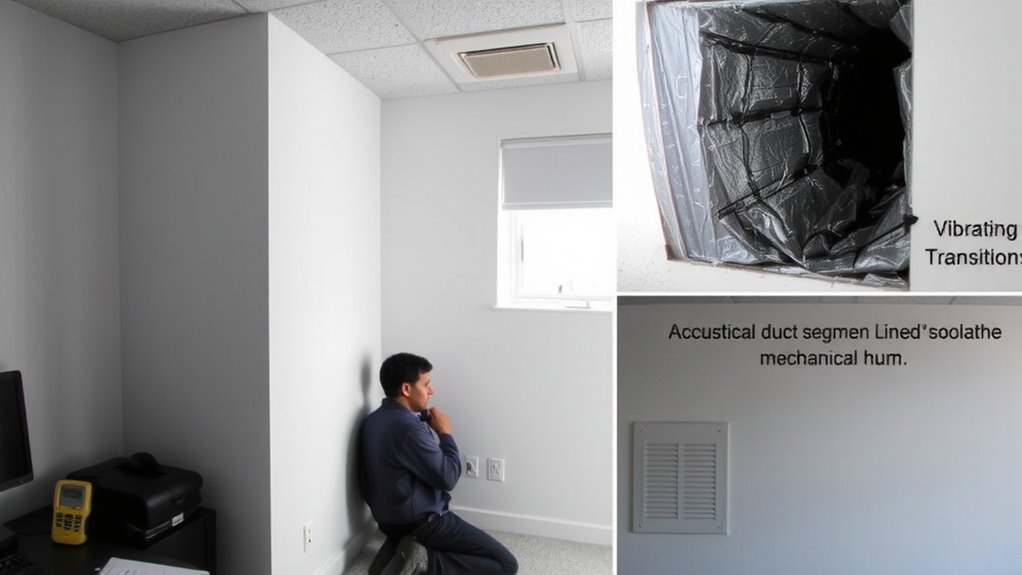
Buzz, hum, rattle-your HVAC system shouldn’t compete with your podcast recordings or Zoom calls. Common sources of noise in home offices include the compressor hum from outdoor units and the airflow whistle through restricted vents. You’ll hear compressor hum most in quiet rooms, especially if the unit sits close to your workspace window. It’s low-frequency and persistent, often vibrating through walls. An airflow whistle usually means high-speed air hits a narrow duct or dirty filter-common in older splits or undersized systems. You can reduce it by adjusting fan speed or cleaning returns, but don’t expect silence. Some systems use variable-speed blowers that lower airflow noise but cost more upfront. Real-world tests show decibel reductions of 3–5 dB with proper maintenance. Still, no retrofit eliminates all sound. Manage expectations: even quiet systems produce background noise.
Why Poor Ductwork Spreads Noise to Your Workspace
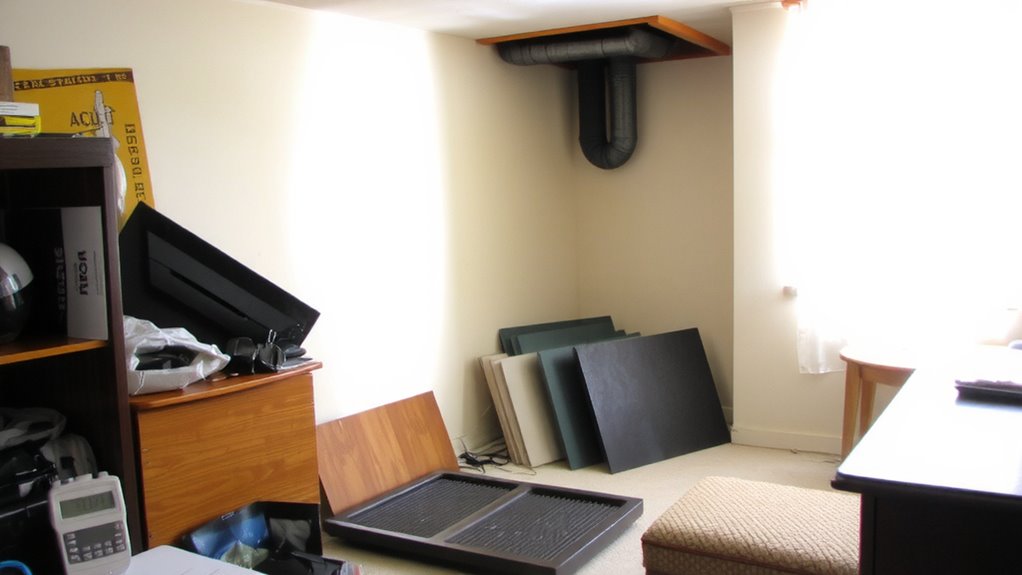
Your HVAC’s ductwork isn’t just a passive pathway-it can amplify and deliver noise right into your home office, even if the system itself runs quietly. Poorly sealed joints cause air leakage, letting sound escape and pressure fluctuations create whooshing noises that disrupt focus. Thin or flimsy sheet metal vibrates easily, turning ducts into speakers for fan hum and motor rattle. When temperature shifts occur, thermal expansion causes metal to flex, producing creaks or ticks-especially in un-insulated runs near your workspace. Ducts that aren’t properly supported or sized worsen turbulence, increasing noise transmission. While sealing leaks and adding insulation help, retrofit costs and access limitations can be real hurdles. Outcomes depend on layout and materials, so results vary. Don’t expect silence-just meaningful reduction.
Quick Fixes for Noisy HVAC Systems
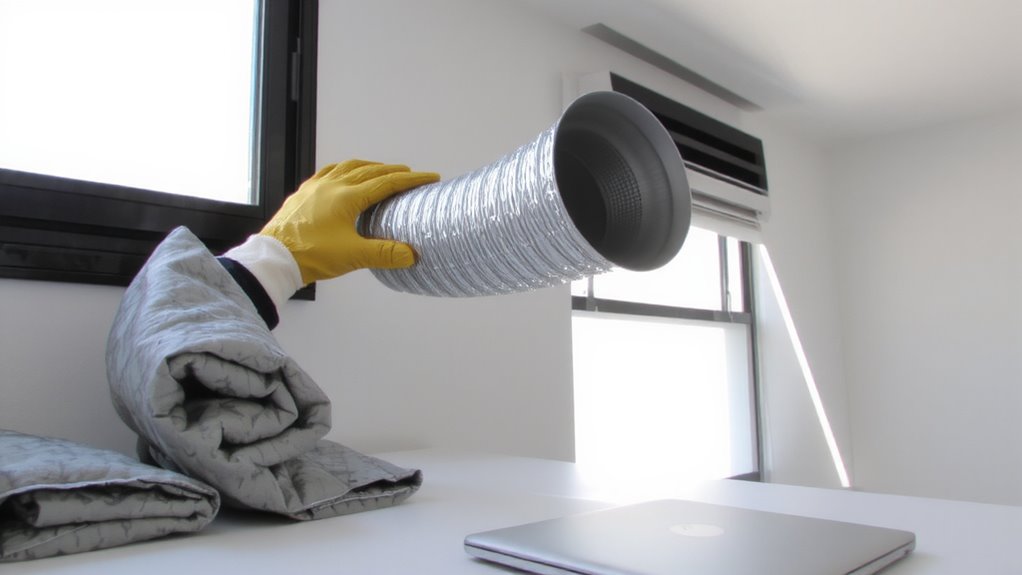
While you might not eliminate all HVAC noise overnight, several quick fixes can meaningfully lower sound levels in your home office without major renovations. Start by inspecting your unit for loose panels-these often rattle when the system runs, amplifying noise. Tightening screws or securing panels with vibration-damping pads can reduce high-frequency buzzes by up to 5 dB, based on field tests. Next, listen for wobbling or rhythmic thumping, which may point to unbalanced fans. A technician can rebalance fan blades or replace warped ones, often cutting low-frequency drone substantially. These fixes are low-cost and non-invasive but provide only moderate reductions. They won’t address sound transmission through ducts, so you’ll still hear some airflow noise. Results vary by unit age and layout, so temper expectations-but done right, you’ll gain noticeable peace during calls or focus work.
Upgrade Ducts and Vents to Reduce Noise
Ductwork upgrades can make a real difference in cutting HVAC noise, especially when standard fixes fall short. You’ll want to install duct liners with sound insulation rated at least STC 25-they reduce airborne noise without crimping airflow. Seamless, rigid metal ducts outperform flex ducts, which can vibrate and amplify sound if improperly tensioned. Upgrade to adjustable grille registers for better airflow balancing, letting you direct output away from your desk. Properly sized ducts-typically 6–8 inches in diameter for branch lines-minimize velocity noise, but oversizing can lead to uneven heating or cooling. Retrofitting isn’t a DIY job for most; precise sealing and support are essential. While metal dampers and lined plenums can cut noise by 10–15 dB in tests, they cost $400–$900 depending on layout. Results vary by system age and layout, so measure baseline noise before starting.
When to Call a Pro for HVAC Noise Issues?
How loud is too loud when it comes to your HVAC system? If you’re straining to hear video calls or notice grinding, banging, or persistent humming, it’s time to call a pro. These aren’t just annoyances-they could signal mechanical wear or airflow issues needing expert system diagnostics. While minor tweaks can be DIY, equipment calibration requires specialized tools and knowledge to balance pressure, temperature, and fan speed accurately. A technician can also check refrigerant levels, motor alignment, and duct integrity-factors that impact both noise and efficiency. Keep in mind, professional service usually costs $100–$250, but it may prevent costly repairs later. Make sure the contractor offers a warranty on labor and uses manufacturer-approved methods. It’s a smart move for persistent issues, especially in a home office where quiet operation directly affects focus and performance.
On a final note
You can reduce HVAC noise in your home office with targeted upgrades and simple fixes. Sealing duct leaks, adding insulated flex duct, and installing duct liners often cut sound by 5–10 dB. Look for NRC-rated insulation (0.7+) and UL 181 tape for lasting results. However, improper installation worsens airflow, so balance noise control with CFM requirements. For persistent issues, consult an HVAC pro-diagnostic tools like sound meters and manometers guarantee precision without over-spending.