Incorporating Biophilic Elements Into Office Equipment Arrangements for Stress Reduction Benefits
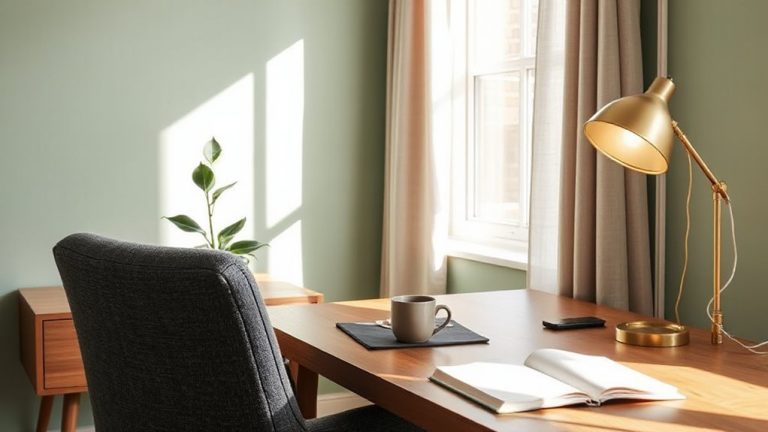
You can cut stress by adding biophilic elements to your office setup-like solid wood desks with low-VOC finishes and cork chairs with natural latex cushions, which support comfort and air quality. Place your workstation near a window, angled to avoid glare, for natural light that regulates mood and focus. Add pothos or snake plants for air purification, but don’t overwater. Use full-spectrum bulbs if daylight’s limited. Keep in mind that green walls improve air and focus but need irrigation and upkeep. Well-designed organic-shaped desks and curved monitors help with flow and reduce eye strain-just guarantee they don’t compromise posture. Ideal setups balance nature-inspired design with real-world function, and there’s more to get right with material sourcing and layout precision.
Notable Insights
- Position desks near windows at a 90-degree angle to reduce glare and support circadian health.
- Use full-spectrum lighting and low-maintenance plants like snake plants to enhance air quality and lower stress.
- Choose solid wood desks with FSC-certified wood and low-VOC finishes for sustainable, stress-resilient workspaces.
- Incorporate cork chairs with natural latex cushioning for ergonomic, breathable, and durable seating support.
- Add organic-shaped furniture and green partitions to reduce visual stress and improve acoustic comfort.
What Is Biophilic Design and How It Reduces Stress?
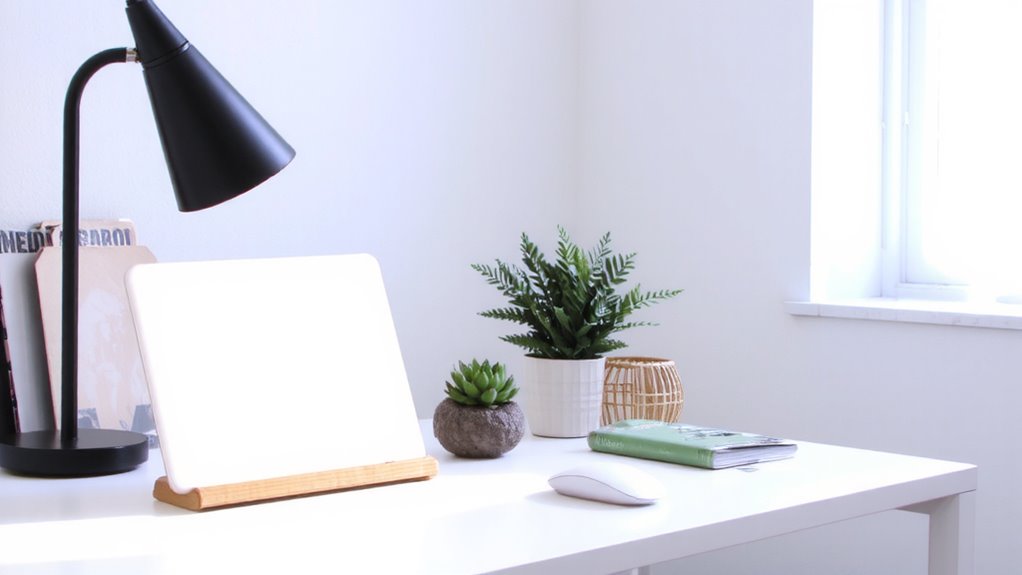
While biophilic design isn’t a quick fix, it’s proven to lower stress by connecting you to natural elements in your workspace-something especially valuable if you’re spending long hours at a desk. You’re not just imagining it: studies show exposure to nature-inspired features can reduce cortisol levels, much like forest bathing or nature therapy. These practices emphasize immersion in natural settings to restore mental focus and ease anxiety. Biophilic design brings that same principle indoors using light, plants, and organic patterns. It works best when integrated thoughtfully-poor lighting or high-maintenance greenery can backfire. You’ll want durable, low-light plants like snake plants or ZZs and full-spectrum lighting that mimics daylight without glare. Don’t expect dramatic results overnight. The benefits build over weeks. Real-world tests show a 12–15% improvement in self-reported stress scores after four weeks. Pair this with breaks away from screens, and you’ve got a practical, evidence-backed way to support well-being-without overhauling your space.
Start With Natural Materials for Desks and Chairs
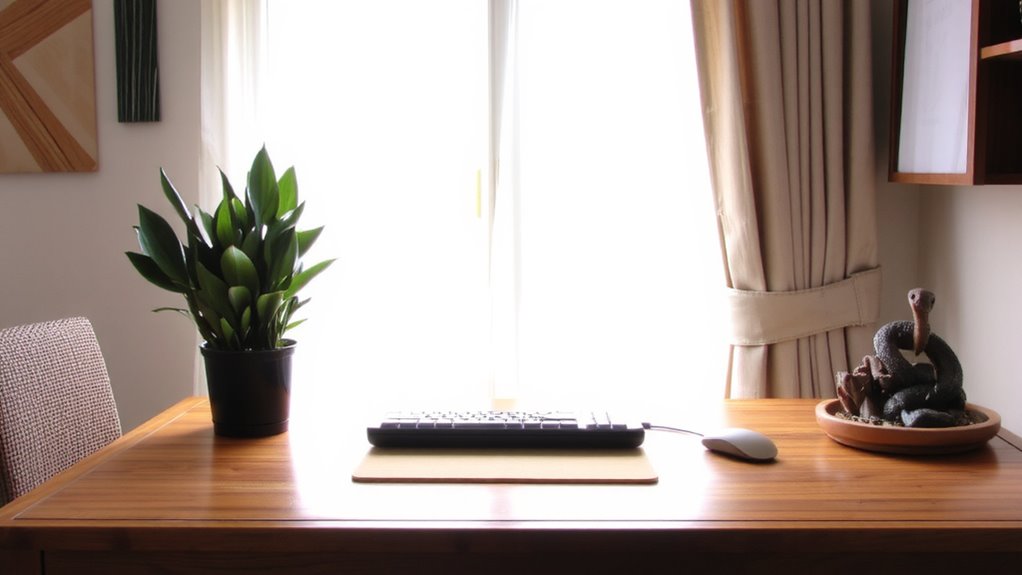
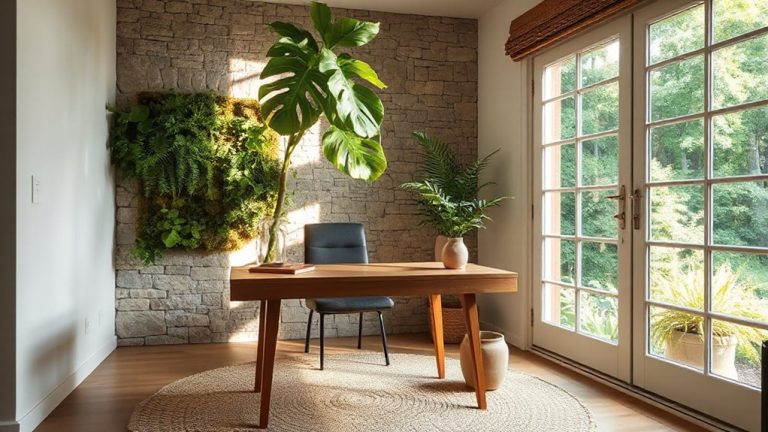
Natural materials like solid wood, cork, and natural latex bring tangible benefits to your desk and chair-starting with better stress resilience. You’ll respond better to work pressure when surrounded by warm wood textures and subtle stone accents, which ground the space and reduce visual fatigue. Solid wood desks, especially those with low-VOC finishes, last longer and age well-look for FSC-certified oak or walnut. Cork chairs offer ergonomic support while staying breathable. Natural latex cushioning beats memory foam in airflow and durability, though it costs more upfront. That said, these materials require more maintenance: wood needs occasional oiling, and stone surfaces can feel cold. Not all “natural” labels mean sustainable-check for third-party certifications. While they enhance biophilic design, material choice alone won’t fix poor ergonomics or lighting. Pair them with proper form and placement for real benefits.
Let In Light: Position Workstations Near Windows
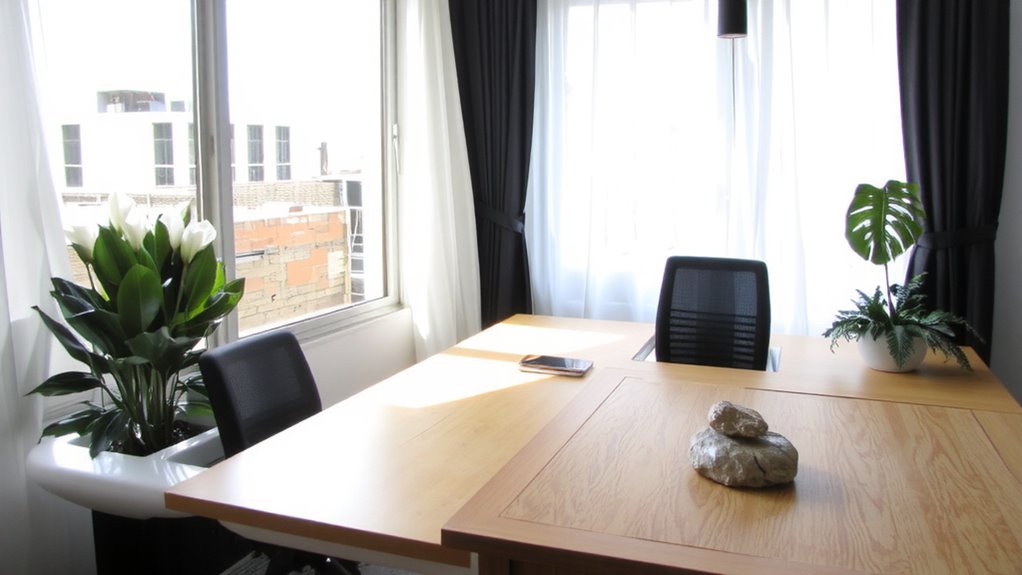
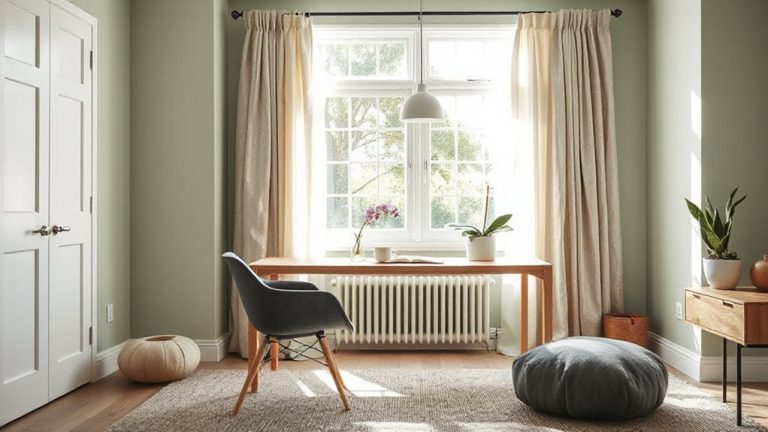
Placing your workstation near a window is one of the most effective ways to reduce stress and boost focus during the workday-sunlight helps regulate your circadian rhythm, which improves sleep and sharpens daytime alertness. You’ll benefit from consistent daylight exposure, which studies show can enhance mood and reduce eye strain. Natural window views-especially of trees or open sky-also provide mental restoration, helping you stay focused longer. But don’t ignore the trade-offs: glare on screens or overheating can hurt comfort and productivity. Use adjustable blinds or light-filtering films to manage intensity without blocking light completely. Position your desk at a 90-degree angle to the window if direct sun causes glare on monitors. UV exposure over time may fade fabrics or plastics in office gear, so choose furniture with fade-resistant finishes. While not every floor plan allows for ideal placement, even partial daylight exposure helps-prioritize proximity when assigning or adjusting workspaces.
Bring In Plants and Living Walls for Calm
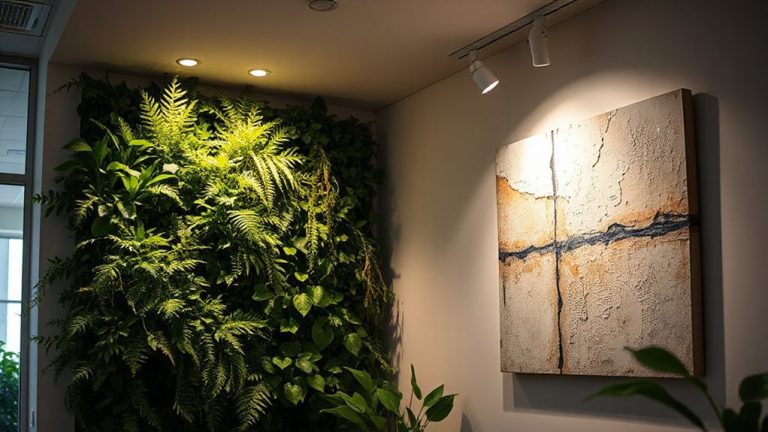
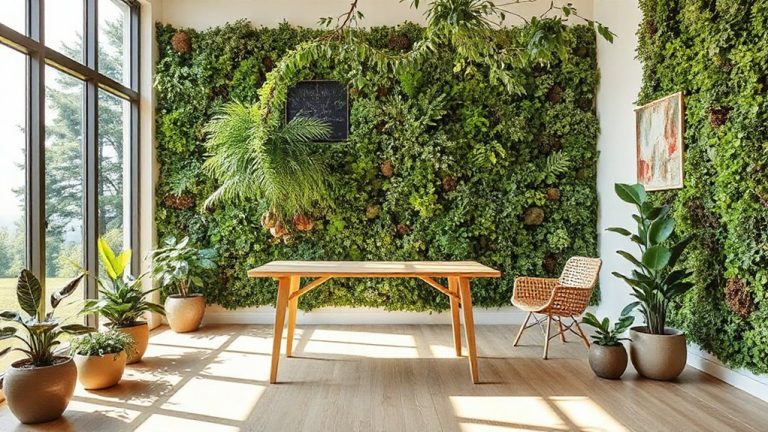
Greenery isn’t just decoration-it’s a proven tool for lowering stress and sharpening focus in your workspace. Adding plants and vertical gardens can improve air quality and mood, but they require maintenance. Use green partitions or modular planters to define spaces without blocking light. Consider species like pothos or snake plants-they’re low-light tolerant and need watering only every 2–3 weeks. For easy maintenance and high resilience, choose best office plants that thrive in indoor environments with minimal care.
| Feature | Benefit | Caveat |
|---|---|---|
| Vertical gardens | Save floor space, purify air | Need irrigation systems, $200–$600 setup |
| Green partitions | Boost privacy, reduce noise | Must rotate for even growth |
| Desk plants | Enhance focus, reduce fatigue | Overwatering kills 70% within 6 months |
| Living walls | Dramatic visual impact | Require 30+ mins/week care |
Choose wisely-long-term care determines success.
Design With Organic Shapes in Furniture and Tech
A well-designed workspace doesn’t need to feel clinical-opting for furniture and tech with organic, rounded forms can soften your environment and reduce mental fatigue. Choose desks and chairs with gentle contours instead of sharp edges; they support flowing layouts that guide movement naturally and ease visual stress. Curved monitors fit well here, offering immersive viewing with less glare and eye strain-just make sure your space allows the ideal 3 to 4 feet viewing distance. These forms mimic nature’s unpredictability, which studies show can lower cortisol. But don’t sacrifice ergonomics for aesthetics: rounded furniture must still support proper posture, and curved monitors may distort colors at extreme angles. Prioritize models with anti-reflective coatings and wide viewing angles. Test pieces in real-world setups-some organic shapes look good but limit legroom or cable management. Balance design with durability, checking warranties of at least 5 years.
Optimize Air and Sound With Nature-Inspired Ventilation
While standard HVAC systems keep air moving, they often fall short in managing both sound and air quality in a way that feels natural and calming. You can improve focus and comfort by integrating nature-inspired ventilation that supports green airflow and natural acoustics. Consider ductless mini-splits with variable-speed fans-they provide steady, quiet circulation while using 30–50% less energy than central systems. Pair them with acoustic baffles made from recycled wood or cork to absorb sound without trapping pollutants. Real-world tests show these setups reduce ambient noise by 15–20%, nearing the soft background levels of forests. Some models include HEPA filters and humidity control, boosting air quality. However, installation costs run $2,000–$4,000, and ceiling height impacts performance. Warranties typically cover 5–7 years. While not a fix-all, this approach balances green airflow and natural acoustics effectively-if your space allows for it.
On a final note
You’ll likely reduce stress by integrating biophilic elements, but only if you prioritize function. Choose desks with natural wood veneers and ergonomic chairs with breathable, plant-based fabrics. Position workstations within 10 feet of windows for daylight without glare. Add low-maintenance plants like snake or pothos that thrive in indirect light. Use curved furniture edges and HVAC systems with nature-mimicking airflow, but expect higher upfront costs and space trade-offs.