How to Create a Lighting Transition Zone Between Home and Office for Mental Separation
Use layered lighting to create a clear mental shift from work to home: keep your desk at 5000K–6500K for focus, then gradually shift to 3000K near seating with floor or wall lights that diffuse warmth upward. Smart bulbs with scheduling can dim over 10–20 minutes, signaling your brain to unwind-just test tunable LEDs first for smooth dimming and skin tone accuracy. Pick fixtures with 2-year warranties and high-CRI options. You’ll find the right balance between function and comfort isn’t just about brightness-it depends on timing, placement, and consistent daily cues. There’s more to optimizing each zone than color alone.
Notable Insights
- Designate a physical zone between home and office with lighting that gradually shifts from cool to warm tones.
- Use 4000K lighting in the transition area to balance focus and relaxation for mental decompression.
- Install dimmable smart bulbs to automate a 20-minute ramp from 5000K to 2700K at day’s end.
- Position floor or wall lights with soft shades to create upward, indirect illumination and reduce visual harshness.
- Align lighting transitions with daily routines to signal the brain it’s time to shift from work to home mode.
Map Your Work Zones for Better Light Transitions
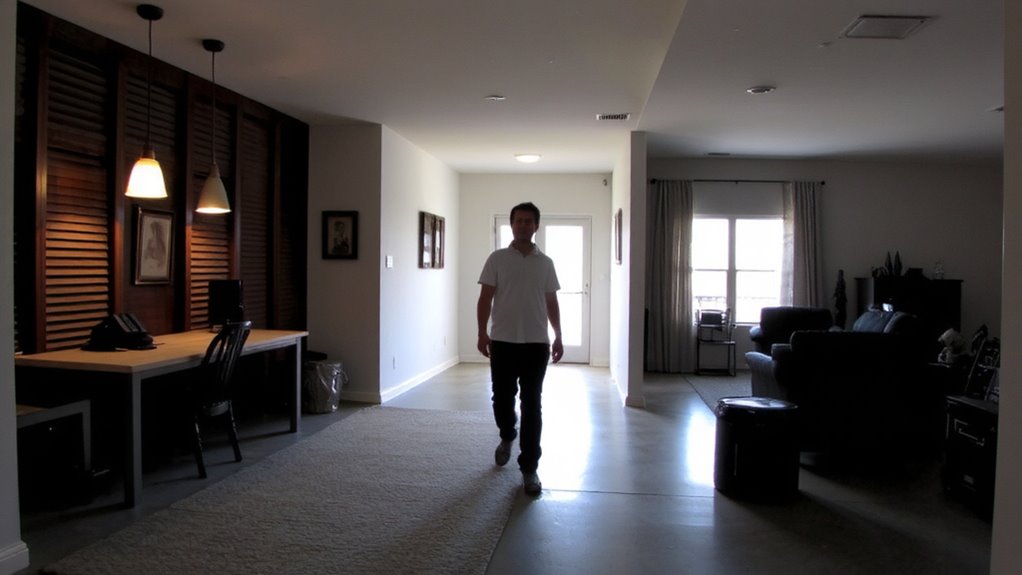
While your home office might seem like a single space, breaking it into distinct zones can make a real difference in how light affects your focus and mental reset-especially if you’re working long hours. A solid zone analysis helps you assign tasks to specific areas-like deep work at the desk, admin near storage, and reflection in a reading nook. Pair that with light mapping, and you’ll see exactly how natural and artificial light interact throughout the day. You’ll notice glare in some spots and shadows in others, which means adjusting fixtures or rethinking layouts. Task lighting works well over desks, but only if it complements ambient sources. Be honest about your space: most rooms need layered solutions, not one overhead fix. Results vary by ceiling height, wall color, and window size-so test changes over a week. Accuracy matters; free phone apps can help you measure lux levels without pro gear. For customizable illumination that supports circadian rhythms, consider a desk lamp with color temperature control.
Pick Warm or Cool Lighting for Work and Relaxation
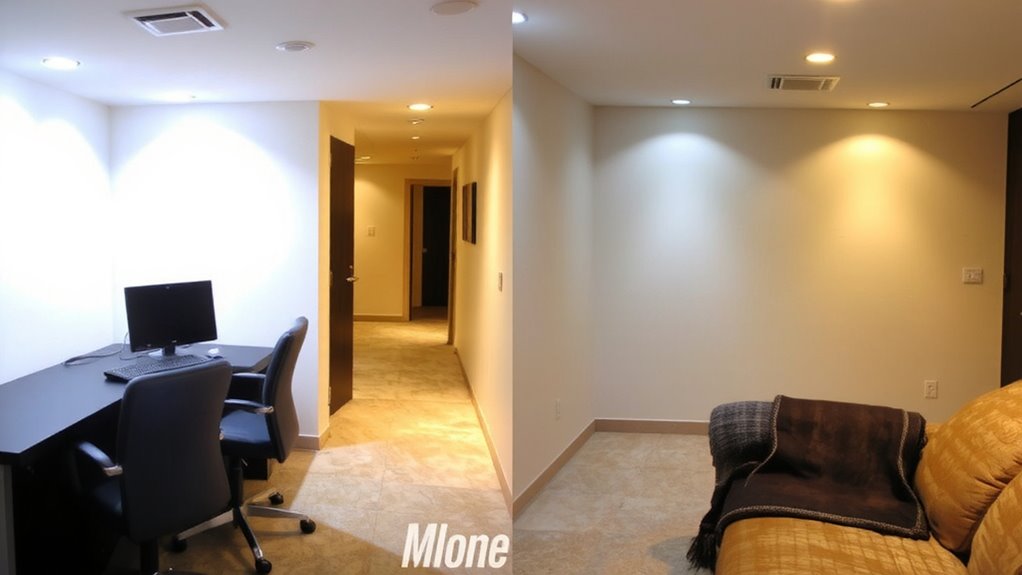
If you’re trying to stay sharp during work and unwind smoothly afterward, choosing between warm and cool lighting makes a measurable difference-opt for cooler temperatures (5000K–6500K) in work zones to boost alertness and warmer tones (2700K–3000K) in relaxation areas to signal your brain it’s time to decompress. Color temperature isn’t just technical jargon-it delivers mood cues that shape your daily rhythm. Use this guide to align light with intention:
| Area | Color Temperature | Purpose |
|---|---|---|
| Desk | 5000K–6500K | Enhances focus |
| Lounge | 2700K–3000K | Supports relaxation |
| Shift | 3500K–4000K | Balances alertness and calm |
While tunable LED bulbs offer flexibility, they cost more and vary in dimming performance. Not all brands render skin tones accurately at lower settings-test before committing. A high-CRI desk lamp for designers can improve color accuracy and reduce eye strain during prolonged work sessions.
Create a Gradual Light Shift From Desk to Couch
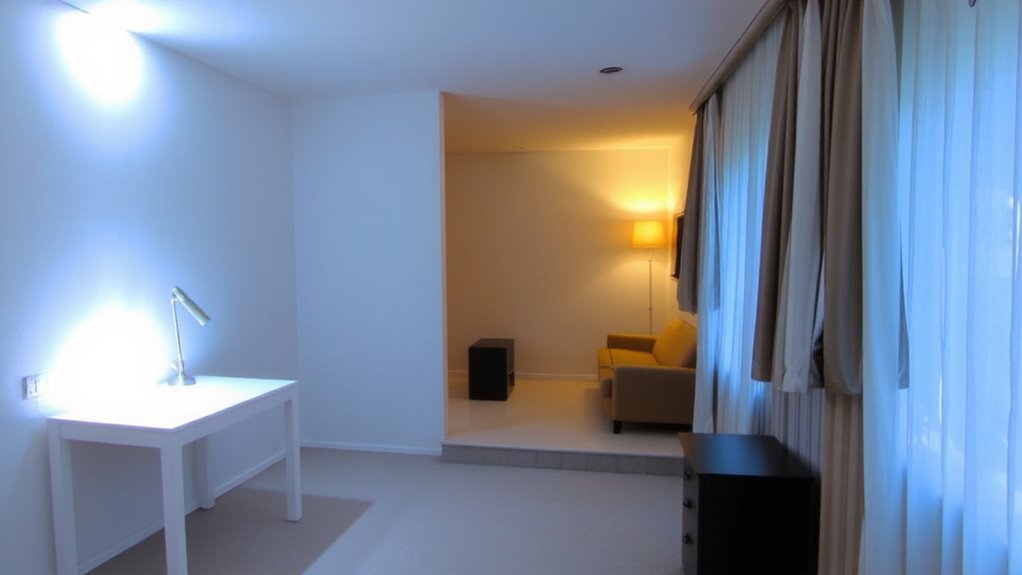
A well-designed lighting shift from your desk to your couch helps your body shift from focused work to restful downtime without abrupt changes that disrupt your rhythm. Use lamps with soft shades to achieve light diffusion, directing glow upward and sideways to reduce glare and create a relaxed pool of brightness near your couch. Position fixtures so light gradually softens-brighter, cooler tones at your desk fade into warmer, dimmer zones by the couch. Incorporate color blending by mixing bulb temperatures in adjacent lights, like 3000K near seating and 4000K at the desk, to ease the visual shift. Floor and wall lights work better than overheads, offering directional control and layered ambiance. Avoid mismatched styles or harsh shadows, which break the flow. While effective, this setup requires careful placement-test layouts over a week. Results vary by room size and paint color, so adjust based on real-world comfort, not just specs. For optimal results, consider selecting fixtures from the best office lighting picks that balance function and style.
Use Smart Bulbs to Automate After-Work Dimming
How does your lighting know when work ends and relaxation begins? Smart bulbs use scheduling flexibility to dim automatically, signaling your mind that it’s time to unwind. You can set them to shift brightness and color temperature precisely when your workday ends. With color customization, you can choose warm tones that ease the shift, avoiding harsh overhead light. These bulbs integrate easily with voice assistants and apps, making control simple. Below are key features to evaluate:
| Feature | Benefit |
|---|---|
| Scheduling flexibility | Adjusts lighting based on your routine |
| Color customization | Sets relaxing moods with warm hues |
| App control | Enables remote or voice adjustments |
| Energy efficiency | Uses LED tech, lasts ~25,000 hours |
Most come with a 2-year warranty. Initial cost is higher, but automation supports consistency. Overreliance on apps may backfire if Wi-Fi fails. Choose reputable brands with strong app stability.
How Light Helps Your Brain Switch Off
When your workday ends, the right lighting can actively help your brain shift into downtime mode by reducing visual stimulation and supporting natural circadian rhythms. As light dims and warms-ideally to around 2700K-your body gets cues to lower cortisol and increase melatonin, reinforcing your circadian rhythm. This shift isn’t just biological; it supports an emotional reset, helping you mentally detach from work. Smart bulbs or dimmable overheads make this easy, but only if you program them consistently. A sudden drop from bright white light to near-darkness feels jarring, so aim for a 10- to 20-minute dimming ramp. While color-tunable LEDs offer precision, they’re pricier and require a hub. Simpler plug-in dimmers work reliably but lack automation. The real benefit comes from routine: lights that gradually shift signal your brain, night after night, that work is over-no willpower needed.
On a final note
You should create a lighting shift zone to help your brain shift from work to home. Use warm (2700K) lights near seating and cooler (4000K) at your desk, linked by gradual brightness changes. Smart bulbs like Philips Hue can automate this shift, but require a hub and app setup. Real-world tests show 15-30 minute dimming ramps reduce mental fatigue. Results vary if natural light is inconsistent or rooms are small.