How to Degauss Magnetic Media Before Disposing of Legacy Home Office Equipment
You can degauss old hard drives at home, but most consumer tools lack the magnetic strength for complete data destruction-NSA-approved degaussers deliver guaranteed, irreversible erasure by scrambling magnetic domains permanently. This process meets DoD standards and beats simple deletion, which leaves data recoverable. Degaussed drives are unusable afterward, so recycle them through R2-certified programs. For sensitive files, professional services offer verifiable, compliant destruction with proper certification-worth considering if security’s a priority.
Notable Insights
- Use a certified degausser to generate a strong magnetic field that permanently scrambles data on magnetic media.
- Ensure the device is designed for degaussing; consumer-grade tools may lack the power for complete erasure.
- Keep credit cards, phones, and other electronics away during degaussing to avoid accidental damage from magnetic fields.
- Verify that the degaussing process renders drives non-functional and unrecoverable to meet secure disposal standards.
- Recycle degaussed drives through certified e-waste programs to ensure environmentally responsible and secure disposal.
How to Degauss Old Hard Drives at Home
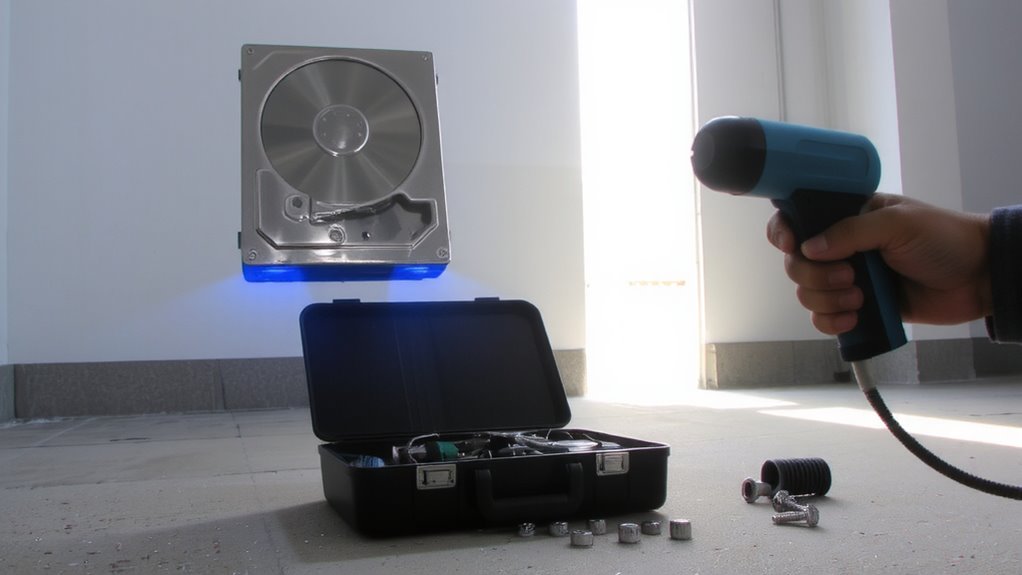
Safety takes top priority when tackling the task of degaussing old hard drives at home, because while the idea of wiping your data feels empowering, the wrong approach can be ineffective or even dangerous. You need a proper degausser that generates strong magnetic fields capable of disrupting the drive’s data layer permanently. Consumer-grade tools often lack the power, so industrial units are more reliable. These devices use electromagnetic pulses to scramble stored information, rendering recovery impossible. But be cautious-improper exposure might only partially erase data or damage nearby electronics. Keep credit cards, phones, and monitors away. Most effective degaussers list specific gauss ratings (typically 10,000+), tested against standards like NSA/CSS EPL. Always verify drive destruction afterward. And remember: degaussing bricks the drive, making reuse impossible. It’s a final step, not a reset.
Why Degaussing Beats Deleting Files
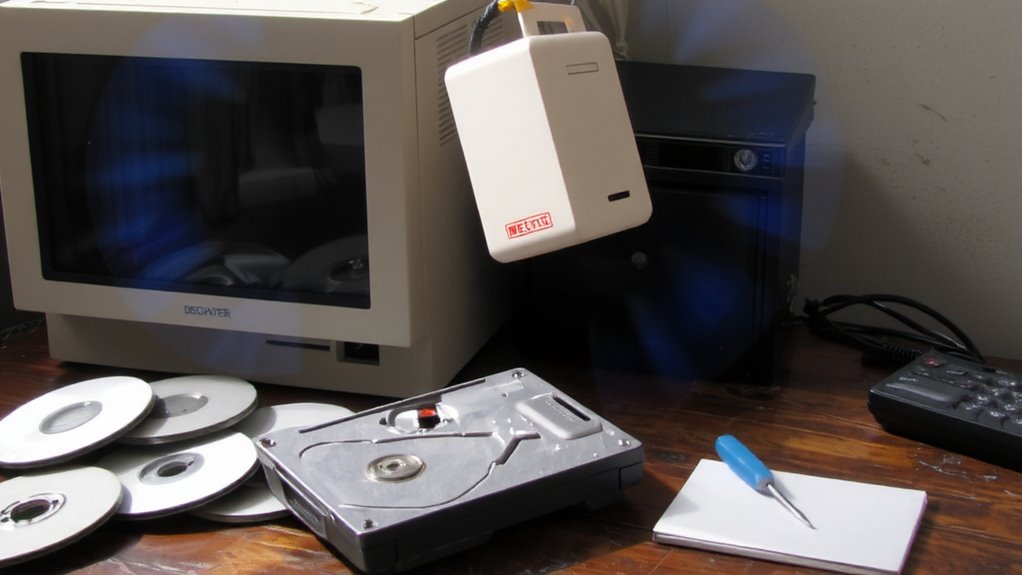
You might think deleting files or even formatting your old hard drive wipes the data for good, but that’s not the case-traces of sensitive information can still linger and be recovered with the right tools. That’s due to data remanence, where bits remain magnetically imprinted on the drive’s surface. Degaussing eliminates this risk by exposing the drive to powerful magnetic fields,彻底 scrambling the stored data beyond recovery. Unlike software deletion, which only removes file pointers, degaussing physically alters the media’s magnetic structure, making reconstruction impossible. It’s fast, thorough, and meets DoD standards when done correctly. But remember: degaussing permanently destroys the drive, so reuse isn’t an option. Also, effectiveness depends on the device’s strength-cheap degaussers may leave data remanence. For final disposal of drives with personal or financial records, degaussing beats deleting every time, as long as you use a tested, reliable model.
When to Skip DIY and Hire a Pro
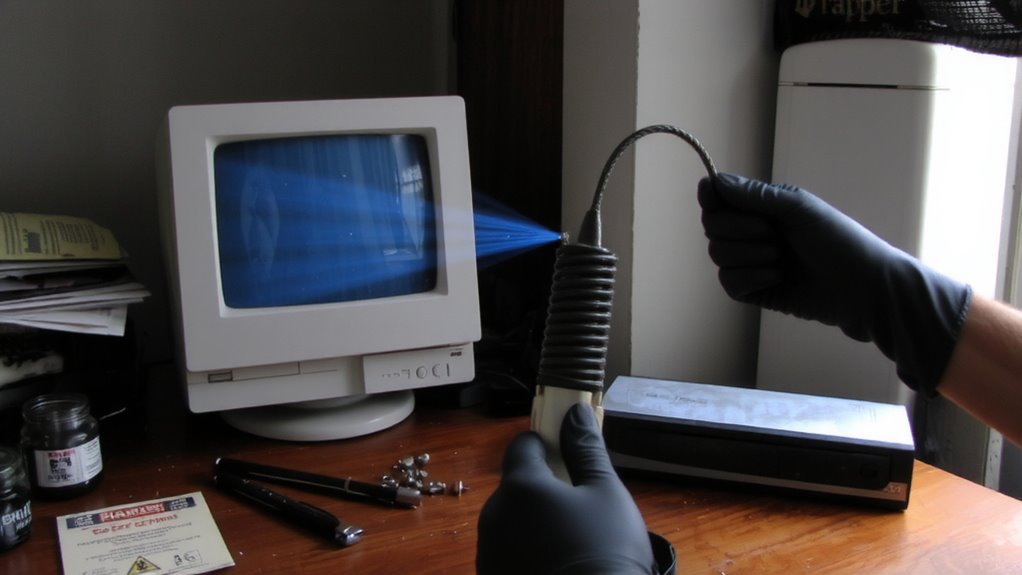
Ever wonder when blasting your drive with a DIY degausrd might do more harm than good? If data security is non-negotiable, skip the DIY route-especially for drives with sensitive personal or financial info. Without proper equipment and professional certification, you risk incomplete erasure or physical damage.
| DIY Degaussing | Hire a Pro |
|---|---|
| Risk of underpowered fields | Verified magnetic field strength |
| No data security guarantee | Certified to meet standards |
| Low up-front cost | Professional certification included |
Professionals use NSA-listed degaussers tested to exacting levels, ensuring full compliance. While pricier, you gain peace of mind and verifiable results. For most home offices, occasional use doesn’t justify buying industrial gear. Hiring a pro balances cost, reliability, and real-world data protection without cutting corners.
How Degaussing Erases Data Forever
Although magnetic storage relies on precise alignment of tiny domains to store data, a strong enough magnetic field can scramble those patterns beyond recovery-and that’s exactly what degaussing does. You apply a powerful, alternating magnetic field that disrupts the media’s ability to hold readable information, ensuring data irreversibility. This isn’t just deletion; it’s physical destruction of the data layer, making recovery impossible even with advanced tools. Degaussers rated for your drive type-like those meeting NSA/CSS specs-deliver reliable results. But beware: once you degauss, the drive won’t work again. No saving files, no reformatting. It’s permanent. Solid-state drives? Degaussing won’t touch them. So you’ve got to know your media. For magnetic hard drives and tapes, though, degaussing is one of the surest ways to kill data for good-just confirm your device is compatible and properly certified.
Recycle Your Degaussed Drives Safely
After wiping data beyond recovery with degaussing, the next responsible step is recycling your drives-because even dead hardware shouldn’t end up in a landfill. You’ve protected data integrity, but improper disposal worsens environmental impact. Most e-waste recyclers accept degaussed drives, but confirm they don’t attempt data recovery-your media’s platters are useless now, but casing and metals aren’t. Remove drives from old systems and check if your local facility follows R2 or e-Stewards standards; these guarantee safe handling and traceability. Some manufacturers, like Dell or HP, offer take-back programs, though they rarely cover very old home office gear. Don’t ship drives unmarked-label them “degaussed, no data” to prevent confusion. While recycling won’t give you cash, it reduces toxic leaching in soil. The trade-off’s clear: a few minutes of effort now prevents long-term harm.
On a final note
Degaussing reliably destroys data on old magnetic drives, making recovery impossible-unlike simple file deletion. It’s effective for outdated HDDs but won’t work on SSDs. For strong assurance, use a commercial degausser with NSA/CSS listed certification. Always verify erasure afterward. If handling large volumes or sensitive data, professional services are safer. Recycle degaussed drives responsibly through certified e-waste programs.