How to Integrate Natural Light Optimization With Office Feng Shui Principles
Position your desk diagonally from the entrance with left-side natural light to boost focus and chi, aiming for 300–500 lux at the surface. Use sheer roller shades or frosted films to diffuse light evenly and prevent glare, avoiding plastic panels that distort or overheat. Keep windows at least 80% clear and place mirrors at 45-degree angles to reflect daylight-never direct sun or clutter. Balance lighting with elements: add plants near east windows, warm-toned LEDs in the south, and glass or ceramic decor to ground metal and earth. Test setups during peak daylight and adjust seasonally for sustained comfort and energy flow-small tweaks can markedly enhance both performance and ambiance, revealing deeper ways to align light, layout, and elemental balance.
Notable Insights
- Position your desk diagonally from the entrance with left-side natural light to boost focus and right-brain creativity.
- Use sheer roller shades or frosted films to diffuse sunlight evenly, reducing glare while maintaining optimal 300–500 lux levels.
- Place a mirror at a 45-degree angle opposite the window to reflect and spread natural light without creating hotspots.
- Keep at least 80% of windows unobstructed to ensure strong chi flow and consistent daylight penetration.
- Balance natural light with the five elements by placing plants in east windows and using warm lamps in south-facing zones.
Leverage Natural Light to Enhance Office Chi
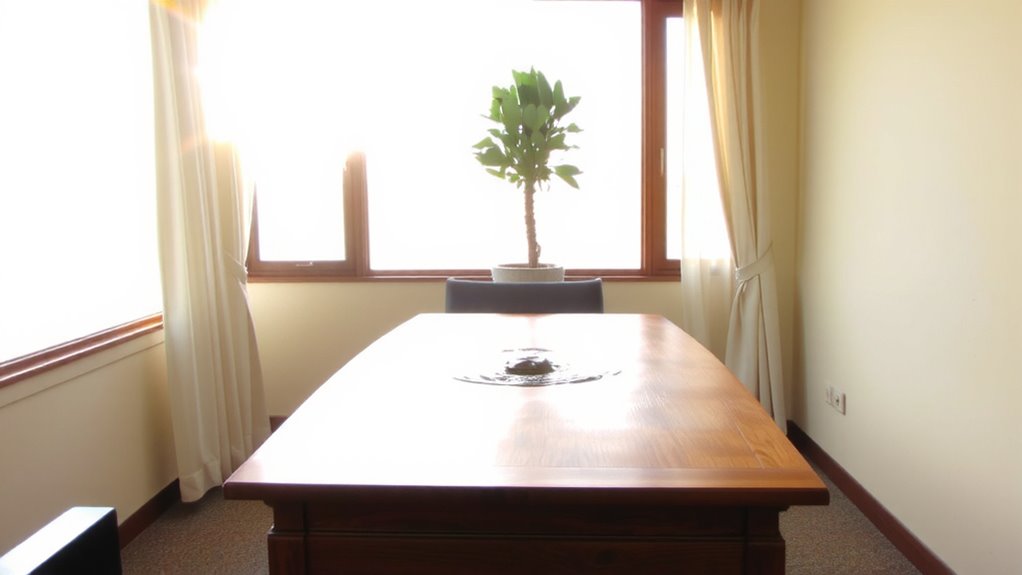
While natural light can considerably boost mood and focus in your workspace, you’ll want to balance it carefully to avoid glare or overheating-especially near desks facing south or west. You’re aiming to enhance office chi, and natural light plays a key role. Choose window treatments that offer light diffusion, like sheer roller shades or frosted films, to soften harsh rays without blocking them entirely. Mind the color temperature of incoming light-it shifts from warm in mornings to cooler at midday, affecting how alert or relaxed you feel. Avoid plastic panels that distort light or create glare; opt for materials tested for even diffusion. Real-world tests show a 20–30% drop in eye strain when diffusion is optimized. Remember, too much direct sunlight disrupts thermal balance, countering feng shui benefits. Measure light levels with a lux meter app-aim for 300–500 lux at the desk surface during work hours.
Find the Best Desk Position for Sunlight and Flow
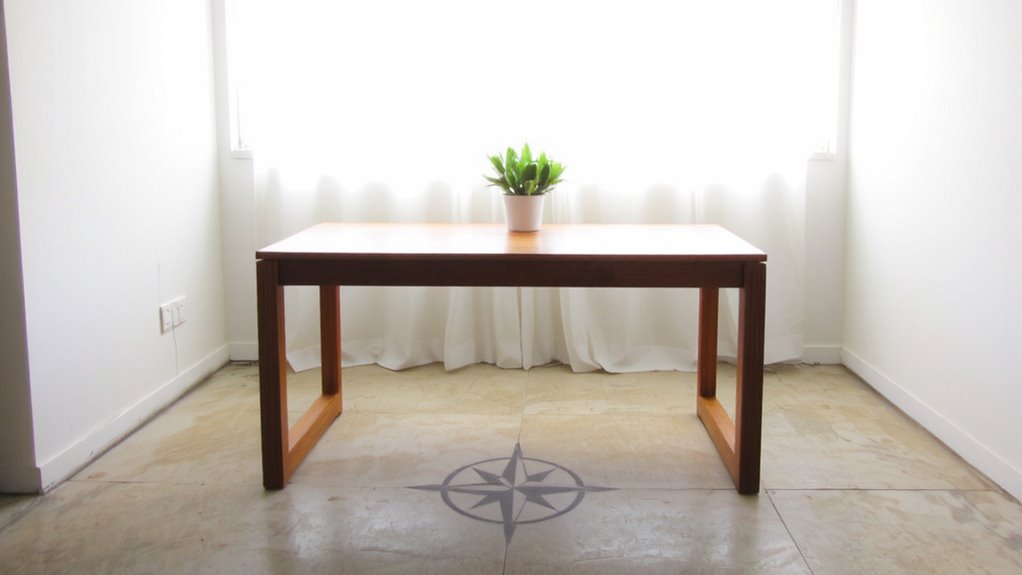
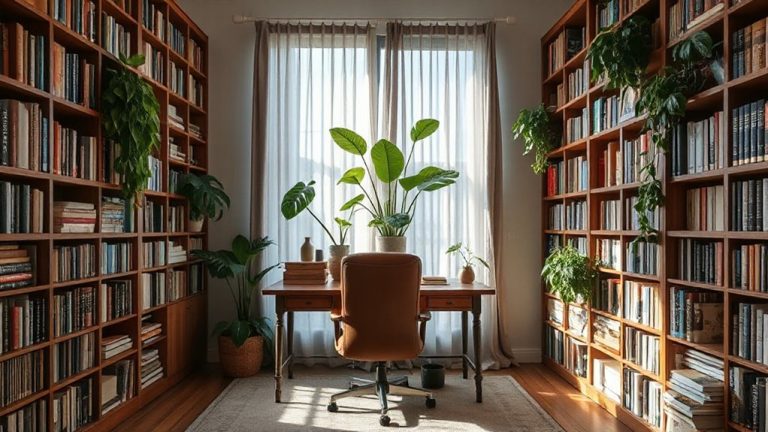
Since your desk position shapes both light exposure and energy movement, place it diagonally across from the entrance and with natural light coming from the side or left-this setup supports alertness and workflow without creating glare or distraction. Proper desk orientation improves sunlight alignment, which boosts circadian rhythm and reduces eye strain during long work hours. Avoid direct sunlight on your screen to prevent glare, and use adjustable blinds for control. Choosing the right desk design can enhance ergonomics and support ideal positioning, such as best home office desks that offer height adjustability and ample surface area.
| Position | Benefit |
|---|---|
| Diagonal from door | Clear view of entrance, better focus |
| Left-side light | Enhances right-brain activity |
| Away from direct sun | Prevents overheating, screen washout |
You’ll need enough clearance behind the chair for unobstructed movement. If your room’s layout limits ideal placement, even small adjustments in desk orientation can improve both sunlight alignment and focus over time.
Use Mirrors to Spread Natural Light and Chi
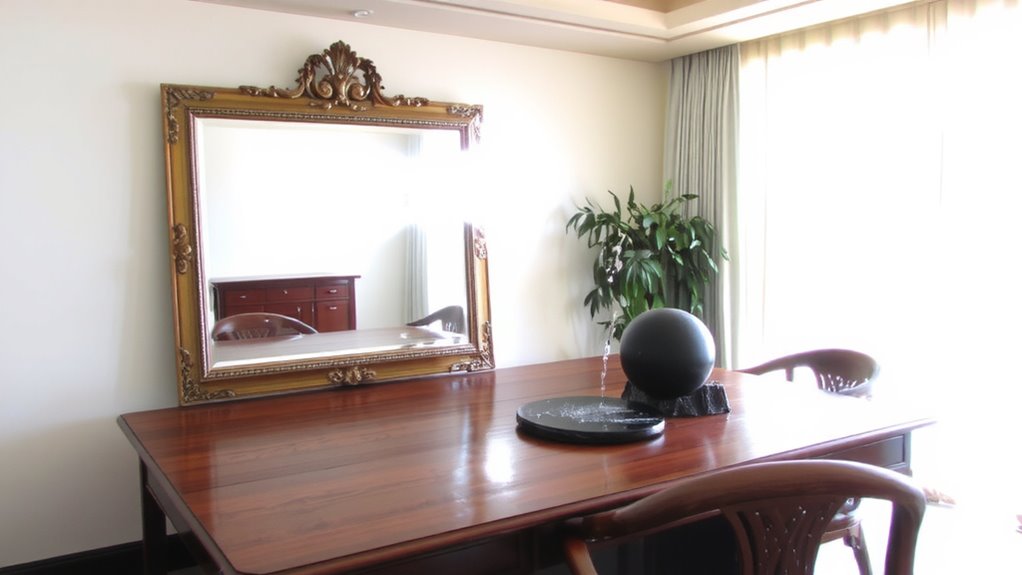
A well-placed mirror can effectively amplify natural light and enhance chi flow in your home office, but only if positioned with intention. You’re aiming for reflective surfaces that support energy amplification without causing glare or visual chaos. Position a mirror directly across from a window to bounce daylight deeper into the room, ideally at a 45-degree angle to maximize spread. Choose mirrors with simple, natural frames-avoiding overly metallic or sharp-edged designs-to maintain balanced chi. While mirrors can brighten dim corners, improper placement can scatter energy or create discomfort. Avoid reflecting clutter or direct sunlight into your eyeline, as this disrupts focus. Reflective surfaces work best when they enhance illumination evenly, not when they create hotspots. Test different placements during peak daylight hours to assess real-world performance. Use mounting hardware that allows small adjustments, ensuring long-term adaptability.
Keep Windows Clear for Better Energy Flow
Clear windows aren’t just about a tidy look-they’re essential for strong chi flow and natural light in your home office. You need unimpeded window placement to maximize daylight and support focus, so avoid furniture or storage that creates a view obstruction. Natural light boosts mood and alertness, but blocked windows weaken energy circulation, making the space feel stagnant. Keep at least 80% of the glass surface clear at all times-this isn’t optional if you want measurable improvements in ambiance and productivity. While some might stack files or position bookshelves near windows for convenience, doing so disrupts both light access and chi movement. Remember, even partial blockages can diminish results. There’s no warranty against poor design choices. Test this yourself: remove clutter and notice if the room feels more balanced. It usually does-but be honest about trade-offs in storage versus environmental quality.
Choose Sheer or Adjustable Coverings for Light Control
While heavy drapes might seem like a quick fix for glare, you’re better off choosing sheer curtains or adjustable blinds to manage light without killing your office’s energy flow. These options let you fine-tune brightness while maintaining airy openness-a key Feng Shui principle.
| Feature | Sheer Curtains | Adjustable Blinds |
|---|---|---|
| Light Diffusion | Soft, even glow | Directional control |
| Privacy | Limited (daytime) | High (angle-adjustable) |
| Material Quality | Polyester or voile (50–100 gsm) | Aluminum or composite (0.15–0.20 mm thickness) |
| Warranty | Typically 3–5 years | Often 5–10 years |
Sheer curtains work best in north-facing offices with low glare, but fade after 2–3 years in direct sun. Adjustable blinds offer precision and durability, though cheap models warp. Go for cordless, medium-slat blinds if you prefer flexibility. Both choices support light balance-just match them to your window’s exposure.
Balance Light With the Five Elements in Your Office
You’ve controlled the flow of natural light with sheer curtains or adjustable blinds-now it’s time to shape that light in a way that aligns with the Five Elements of Feng Shui: Wood, Fire, Earth, Metal, and Water. You can enhance Wood energy by adding indoor plants near east-facing windows where morning light supports growth and clarity. To maintain Fire balance, use warm-toned LED desk lamps with dimmer switches in south-facing zones, avoiding glare during peak sun. Reflective surfaces like glass desktops or mirrored decor activate Metal, while ceramic accessories ground Earth energy near artificial lights. Water elements-like small tabletop fountains-should stay in north corners, away from direct sunlight to prevent overheating. Be cautious: overloading one element disrupts harmony. Test lighting setups at different times of day to guarantee consistent elemental interaction. Adjust seasonally, since natural light angles shift. No single setup works year-round-flexibility guarantees lasting balance. For optimal task lighting that supports Fire energy without strain, consider pairing your setup with one of the top LED desk lamps recommended for ergonomic workspaces.
On a final note
You should position your desk to capture morning light, boosting focus and energy without glare. Use sheer curtains or adjustable blinds to control brightness while keeping chi flowing. Mirrors across from windows can spread light deeper into the room. Just avoid reflective surfaces that create visual chaos. Balance natural light with wood, metal, and earth elements to stabilize energy. Test light levels at different times-over-illumination causes eye strain. Warranties on quality window treatments typically cover 3–5 years.