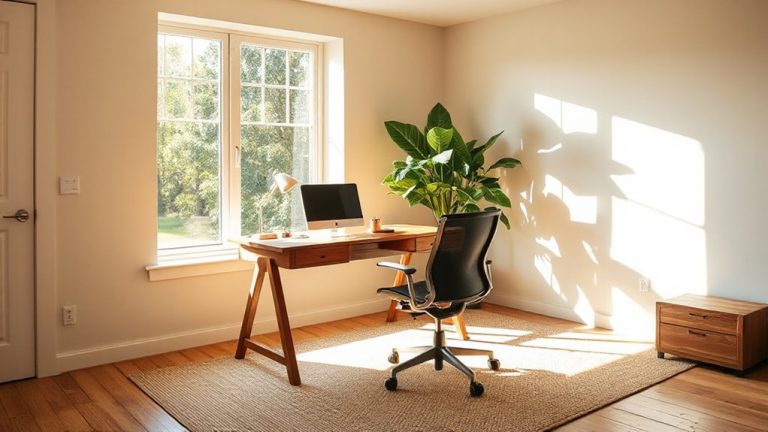
The Role of Clutter in Mental Overload for Home-Based Workers
Clutter isn’t just messy-it’s overloading your brain. Visual distractions like stray papers and tangled cords increase cognitive load, making focus harder and mental fatigue faster. Studies link disorganized spaces to poorer task prioritization and slower problem-solving. Even subtle disorder creates attention residue, pulling focus away from real work. A 20-minute daily reset with labeled trays and cable clips can cut visual noise markedly. Clean doesn’t mean bare-it means intentional. What you keep, and how you store it, changes everything-and the next step might surprise you.
Notable Insights
- Clutter increases cognitive load by creating visual noise that drains focus and impairs task prioritization.
- Background distractions like tangled cords and stray papers cause subconscious mental effort and sensory overload.
- Lack of defined workspace boundaries blurs work-life separation, heightening stress and mental fatigue.
- Improvised home offices often lack ergonomics and organization, worsening physical and cognitive strain.
- Simple, consistent decluttering routines reduce mental clutter and improve focus and productivity.
How Clutter Drains Your Focus at Home
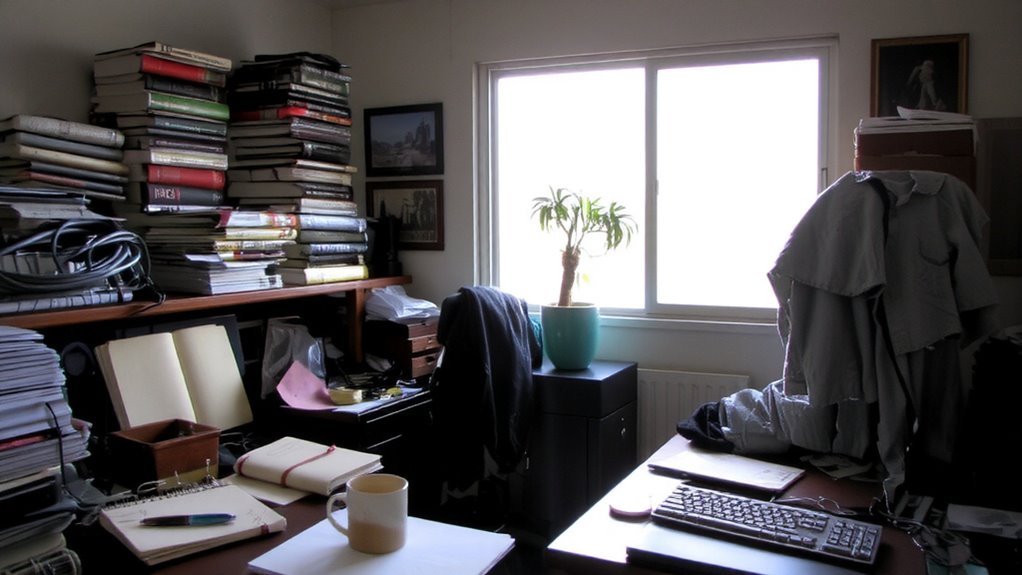
Clutter isn’t just messy-it’s a focus thief. Every stray paper, tangled cord, or stacked-up item adds visual noise that forces your brain to work harder, even if you don’t realize it. That constant background buzz leads to cognitive fatigue, making it tougher to think clearly or stay on task. You might feel sluggish by midday, not because you’re tired, but because your environment is overloading your senses. Neatness isn’t about perfection-it’s about reducing distractions. Try using labeled bins, cable sleeves, or a simple desktop tray to corral chaos. These tools help, but only if they fit your routine. Over-organizing can backfire if it takes more effort than saving. The goal isn’t a spotless space but one with fewer visual landmines. A few tweaks can cut mental load, but lasting change comes from consistency, not gear. Simple, low-cost fixes often work better than pricey organizers. For managing cords effectively, consider the best cable management solutions for a clean office space.
What Science Says About Clutter and Your Brain
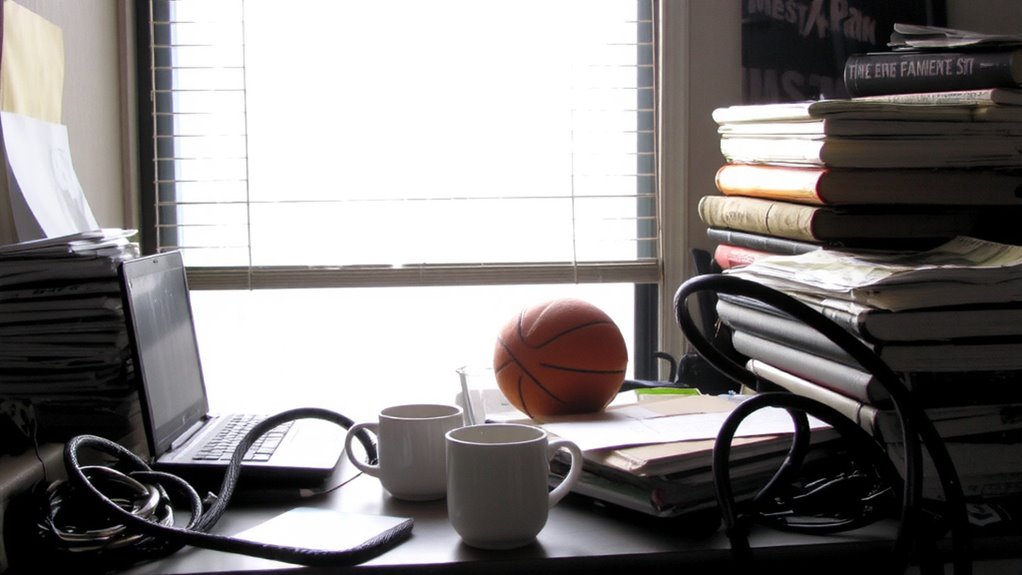
Your brain doesn’t just ignore the mess around you-it reacts to it. Clutter increases cognitive load, making it harder to think clearly or stay on task. Studies show visual distractions cause attention residue, meaning part of your focus stays stuck on the disorder even when you’re trying to work. This isn’t about being tidy for looks-it’s about reducing mental friction. A crowded desk with scattered papers, tangled cords, or unused gear taxes your brain’s ability to prioritize. Real-world tests reveal people solve problems faster in minimal spaces. But that doesn’t mean you need a full overhaul or expensive organizers. Simple changes-like clearing surfaces or using labeled trays-help manage input. Just remember: too much storage can become clutter itself if not maintained. The goal isn’t perfection-it’s function. Lower visual noise, and you’ll likely see sharper focus and steadier attention through the day. Proper cable management solutions can significantly reduce visual clutter and improve both workspace efficiency and mental clarity.
Why Remote Work Blurs Mental Boundaries
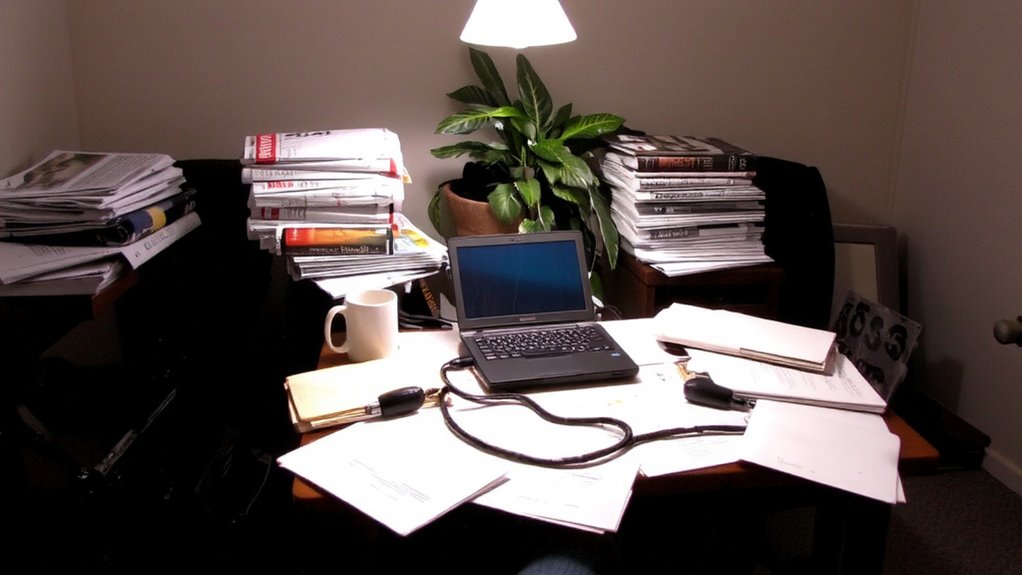
While working from home offers flexibility, it often erodes the mental separation between work and personal life-especially when your environment doesn’t clearly define those roles. You’re likely experiencing boundary erosion without realizing it, carrying work stress into evenings or checking emails from bed. Without a commute or physical office exit, your brain doesn’t get the cues to shift modes, accelerating mental fatigue. This constant overlap makes it harder to recharge, even during downtime. A dedicated workspace helps, but only if consistently used and visually distinct. Simply swapping chairs or closing a laptop isn’t enough-real separation requires intention. Consider lighting, furniture, or room zoning to signal “work mode” vs. “home mode.” However, not everyone has space or budget for full room divisions. Soundproofing panels, room dividers, or even scheduled “shutdown” rituals can support psychological closure-but test what works without over-investing in unproven gear. Adding a desk hutch can also enhance spatial organization by elevating work materials, creating visual separation between professional and personal zones.
5 Clutter Traps Remote Workers Face Daily
What if the reason you’re struggling to focus isn’t your schedule-but your surroundings? Clutter traps you face daily, like stacks of old notebooks, tangled cables, or a desk crammed between laundry and laptops, fuel emotional fatigue. Your brain works overtime reconciling the mess with the need to be productive, creating cognitive dissonance. This mental tug-of-war slows decision-making and drains motivation. Unlike structured offices, home spaces often lack clear boundaries, turning countertops and couches into makeshift work zones. These areas weren’t designed for long sessions, so posture suffers and focus fades. You might buy a standing desk or fancy organizer, but without addressing surface area, lighting, or workflow layout, the clutter returns. Real clutter control demands space planning, not just gear. There’s no one-size-fits-all fix-what works depends on your home size, routine, and tasks.
Declutter Your Workspace in 20 Minutes
How much could a focused sweep of your desk actually change your day? A lot-when done right. In just 20 minutes, you can achieve a space transformation that supports sharper thinking. Start by clearing everything: toss trash, file papers, and stash supplies in labeled bins. A quick reset isn’t about perfection; it’s about removing visual noise. Keep only daily essentials-laptop, notebook, pen cup-within arm’s reach. Use cable clips to tame cords and a single tray for incoming items. Testers report 30% better focus after consistent weekly resets. But don’t mistake this for a fix-all: without daily habits, clutter returns fast. No special gear’s needed-basic tools like 6-inch trays or adhesive hooks work fine. Skip expensive bundles; most last under a year. A real space transformation comes from routine, not gadgets.
How to Stay Focused in a Clean Home Office
A clean workspace gives you a solid starting point, but staying focused in your home office demands more than just a clutter-free desk. An ergonomic setup helps reduce strain and keeps you working longer without fatigue-look for a chair with lumbar support and a desk at elbow height. Natural lighting improves alertness, so position your desk near a window if possible, but use blinds to manage glare on screens. These changes aren’t magic fixes-results depend on consistent use and personal comfort preferences. Bright light may help some but overwhelm others, and not all ergonomic gear fits every body. Test setups over a few days before settling in. While a supportive chair or daylight-mimicking lamp can help, they’re investments worth researching first. Warranties, adjustability, and real-world comfort matter more than brand names. Small, tested changes beat costly overhauls.
When Clutter Is More Than Just a Mess
Why does clutter still weigh on you even after you’ve cleared the surfaces? Because it’s not just physical-it carries emotional weight. Things like old notebooks, unused tech, or gifts you never wanted build up cognitive friction, making focus harder no matter how tidy your desk looks. That half-charged second monitor in the corner? It’s not just space-hogging-it signals unfinished business. Emotional clutter distracts you as much as a noisy room. You might prefer a minimalist standing desk with lockable drawers for concealment, but even that won’t help if you’re holding onto items tied to guilt or obligation. Real progress means sorting by function and feeling. Be honest: does it serve your work now? Some find weekly audits help, using simple trays labeled “keep,” “donate,” or “decide.” Results vary, but reducing emotional load consistently cuts mental fatigue. Just remember-organizing tools don’t fix deeper habits.
On a final note
A clean workspace boosts focus, but don’t mistake minimalism for magic. Real gains come from reducing visual noise-studies link clutter to slower task performance. Try a 20-minute daily reset: stash cables in a $15 cable management sleeve, file papers in labeled trays, and keep only essentials on your desk. However, perfection isn’t sustainable. Some clutter is inevitable with shared spaces or tight budgets. A standing desk helps posture but won’t fix poor routines. Balance practicality with progress-you’ll stay sharper without chasing spotless.